This post contains spoilers for episode eight of Marvel's 'What If…?'
In physics there’s what’s known as the “observer effect,” wherein an object or system is changed merely by observing it. On Marvel’s What If…? each episode has been witnessed by an apparently omniscient narrator known as The Watcher, who seemingly believes himself to be above this simple rule. He’s seen the Avengers murdered, zombies overrun the galaxy and Steven Strange completely destroying his own universe, but the Watcher has always refrained from doing anything that would change the outcome — until now.
The twist in this episode is that in Age of Ultron, the titular villain managed to get control of the Vision body before it awakened as the hero we all know and love, taking it over and then, the world and even gaining the Infinity Stones. Somewhere in all this the Avengers are killed, with the exception of Natasha and Clint, finally giving us that Black Widow and Hawkeye adventure we should have had years ago. I haven’t been the biggest fan of either character, but here they’re a lot of fun despite the grim circumstances.
Marvel Studios
The real star here, however, is Jeffrey Wright’s Watcher character. We still know little about him, or the faction he serves. The Watchers, as a group, have only appeared in live-action during a brief scene in Guardians of the Galaxy Vol. 2. What If…? has been our first proper introduction to the concept and, after eight episodes, we’re still mostly in the dark about them.
But this week’s installment did shed some light, at least. We know that our Watcher has taken an oath to never interfere with the things he sees, though to whom we still don’t know, nor are we made aware of possible consequences of breaking that vow. And we now know he’s emotionally invested in the universes he observes, if only based on his reaction to Clint not finding the folder they need in the KGB archives (luckily, Natasha is there to save the day).
Marvel Studios
However, that observer effect comes into play regardless of the Watcher’s intentions, as his omniscient narration is overheard by the powered-up Ultron, who seeks him out and attacks. In the process Ultron becomes aware of the multiverse, which explains his sudden appearance at the end of last week’s episode. Previews for the finale hint at some sort of multiversal team-up, one involving Captain Carter, Party Thor and the other altered characters we’ve met over the first eight episodes.
While it’s certainly a fun concept — there’s an entire comic series called Exiles about a multi-reality team such as this — it raises questions about what, exactly, season two will be about. It’s already been confirmed, but Marvel has shown it’s not really interested in running What If…? as an anthology series like the comic it’s based on. The instance on making it part of the larger canon has led to the show having its own internal continuity, though it’s unlikely it will be needed to understand the larger Marvel Cinematic Universe.
Marvel Studios
At least we hope it remains a side-story of the MCU: the power levels in the battle between The Watcher and Infinity Ultron puts even the massive conflicts shown in the last two Avengers films to shame. (Especially after Thanos is offed rather unceremoniously.) It’s a weird escalation in scale given that the teased villain of Phase IV, Kang the Conqueror, hasn’t even made a proper appearance yet.
Marvel Comics has a deep, expansive mythology and it’s nice to see the MCU finally explore some of those outer reaches. But right now the current approach to continuity feels a little cramped, and in danger of getting in its own way. Hopefully, next week’s finale will see the Watcher fully break free of his oath, and maybe help What If…? shed its remaining ties to its live-action counterparts to do something truly new.
The drama, litigation and tweets continue between Elon Musk, Jeff Bezos and all those space-faring companies. As reported by CNET, Musk told Code conference attendees Bezos should put more effort into "getting into orbit than lawsuits," and that you couldn't "sue your way to the Moon" as Blue Origin allegedly tried when it lost its lunar lander bid.
NASA legal documents have revealed the space agency felt Blue Origin "gambled" with its originally proposed $5.9 billion lunar lander price. Bezos' company allegedly set the price far higher than necessary, expecting (hoping?) NASA to award the contract and negotiate a lower cost. Further, it assumed NASA would get the full funding from Congress needed for that initial price. That didn’t happen.
Blue Origin’s VP Megan Mitchell told The Verge the company rejected NASA's views. She felt it made a "great offer" and that it disagreed with how NASA had framed its bid.
An Amazon representative also got in touch with Engadget to remind us that SpaceX has a "long track record" of suing the US government over contracts and other decisions. Yes, we’re aware.
In the end, SpaceX’s lower bid of $2.9 billion was picked by NASA, despite Blue Origin’s subsequent challenges and a last-minute $2 billion bid — almost a third of its original proposal.
Valentina Palladino puts the latest Fitbit through its paces. Don’t expect any major shakeups, but we do get a more modern fitness tracker. Not only is it thinner, lighter and less bulky than the Charge 4 but it now has some features previously reserved for Fitbit’s full-fledged smartwatches, the Versa and Sense. At $180, you will pay a premium for those updates.
Disney vowed The Book of Boba Fett would premiere this December, and it's making good on its promise — barely. It’s revealed the Mandalorian spin-off will debut December 29th on Disney+, replete with a little bit of teaser art you can see above. We’d explain more, but spoilers abound. For everyone already caught up with The Mandalorian, click on.
If you were following along with all the Amazon product announcements yesterday, you might have experienced a dose of tech deja vu. Cherlynn Low felt exactly that. With products that borrowed heavily from the likes of Fitbit, Nest (both Google properties now), as she put it, Amazon's biggest innovation increasingly seems to be: being cheap. Aside from that robot.
The company also revealed $250 ANC headphones promising 30-hour battery life.
Sony's flagship noise-canceling headphones and tech-filled true wireless earbuds have both been updated for 2021. Now, the company's more affordable options are getting the same treatment. With the WF-C500, you can pick up a solid set of true wireless earbuds capable of handling immersive 360 Reality Audio for $100. And if over-ear noise-canceling headphones are more your vibe, the WF-XB910N pairs ANC (active noise cancellation) with 30-hour battery life for $250.
Ever since its first “ethical” smartphone hit the market, Fairphone reviews have always been haunted by the wary acknowledgement that the devil always has the best toys. But times have changed, and Fairphone can at least be confident that it has won both the moral and the economic argument. Right to Repair laws are currently being kicked around in several US states and Framework is now building Fairphone-esque laptops. If there’s one word I can use to describe the new Fairphone 4, it’s mature. As much as the previous generations of this handset have been good, none deserve as much attention as this one likely does.
First, a caveat: Various global crises have pushed back the launch date for the Fairphone 4. I didn’t receive a unit until a few days before the announcement, so I’ve only had a limited amount of time to give this thing a thorough going over.
Daniel Cooper
Pick up the Fairphone 4 and you’ll first notice how solid this thing feels in your hand compared to its predecessor. This is not the flimsy plastic concoction we saw in previous generations but a monument, wrought from metal and glass. It may weigh a gram less than the iPhone 11 Pro Max I was holding in my other hand, but this one just feels more substantial. The new metal chassis and thick plastic backplate gives it, to quote Auric Goldfinger, a divine heaviness. I have no qualms about how sturdy and durable this thing is, even knowing that I can pick up replacement parts for very little cash up front.
The design language has changed from the awkwardly long slab of the 3 and 3+ to something that looks a lot more like a current-generation (or at least previous-generation) Android handset. Fairphone has also taken the courageous decision to ditch the 3.5mm headphone jack here in favor of just USB-C. The only things breaking up the outside of the frame, beyond the antenna lines, are a power button with a built-in fingerprint sensor and a pair of sturdy volume buttons. Gone, too, is the conspicuous branding of the previous editions in favor of the company logo edged into the base of the backplate.
Daniel Cooper
A 6.3-inch Full HD+ display coated with Gorilla Glass 5 takes up most of the room up front, although this is no slim-bezel chin-free edge-to-edge number. The only interruption is the teardrop in the middle of the screen, which houses the 25-megapixel selfie camera. There’s nothing of note to say about the screen, which has a decent backlight, good viewing angles and solid black levels. I think I said a year ago that it’s now hard to mess up a phone display and Fairphone hasn’t fixed what didn’t need mending. Sadly, as good as the vision is, the sound that accompanies it is tinny, thin and reedy with non-existent bass.
Now, Fairphone hasn’t strayed too far from its goal of producing an affordable and reliable modular smartphone. But while it’s splashed out on some specs, others remain firmly in the “nothing to write home about” league. The system-on-chip, for instance, is a Snapdragon 750G, which you’ll find in a number of non-premium 5G handsets like the Moto G 5G and Galaxy A52 5G. It’s worth saying that the 750G offers very respectable performance and tests well in benchmarks but it’s certainly not a screamingly-fast flagship unit.
Daniel Cooper
Unlike previous models, Fairphone is actually offering two versions of the Fairphone 4, one with 6GB RAM and 128GB storage, the other with 8GB RAM and 256GB storage. Both can be bolstered with the internal microSD slot that’ll take up to 2TB cards. The Fairphone 4 can support both a physical nano-SIM as well as an eSIM, both of which support 5G (although not simultaneously.)
Fairphone opted for a double-camera setup here with an f/1.6 48-megapixel primary camera packing Sony’s half-inch Exmor IMX582 sensor with OIS. You’ll get 8x digital zoom, and can shoot 4K video at 30fps, or HD slow-motion at 240fps. The second camera is a 48-megapixel f/2.2 120-degree wide-angle lens for landscape photography. Joining those two on the back of the phone is a time-of-flight sensor for better autofocus, which also makes it look like you’re rocking a triple-camera phone.
Daniel Cooper
Nestled up front in the teardrop is a 25-megapixel, f/2.2 forward-facing camera which uses a Sony IMX576 sensor. You’ll get support for HDR, 8x digital zoom and the ability to record video in HD at up to 30 fps. The images you get out of that selfie lens are respectable, although even when you shoot 25-megapixel images, you’ll get very little detail when you zoom in and things get muddy pretty quickly.
The company said that I shouldn’t do too many photography tests with the Fairphone 4 until a yet-to-be-distributed software update pushes the final tweaks. That said, the standard camera is perfectly reasonable and the live filters produce pretty lovely images.
Repairing this phone should, again, be relatively easy given how little a challenge it was to upgrade the previous model. Simply pop off the back cover and extract that replaceable 3,905mAh battery and a Phillips 00 screwdriver is all you need to get working. Again, I’ve not had any time to delve yet, but even a quick poke inside makes me think that it’s not more difficult to do any repair job than it was on the older models. One thing to bear in mind, however, is that Fairphone is no longer shipping a screwdriver in the box, assuming instead that you already own a tool suitable for the job.
Daniel Cooper
Fairphone has said that it has learned a number of valuable lessons from the launches of its last few handsets. That’s why this new model has a five-year warranty and guarantees software support until 2025 at the earliest, but pledges to keep that going to 2027 at best. (Fairphone has previous here: Earlier this year it managed to get Android 9 running on the Fairphone 2, five years after it was first released.) It also has pledged to ensure that spare parts for the phone remain available until that same 2027 deadline.
Whereas before Fairphone talked about a “fair” supply chain both looking for ethically-clean raw materials and paying workers a fair wage, it also describes the 4 as “e-waste neutral.” This is a neat way of summing up the idea that the company will recycle one device for every Fairphone 4 it sells. In addition, Fairphone can boast that it now uses 70 percent “fair” material inside the handset, including FairTrade Gold and Silver, aluminum from ASI-certified vendors and a backplate made from 100 percent post-consumer recycled polycarbonate.
And while some of the spare parts are a little more expensive than on the previous edition, the prices are more or less affordable. The company supplied me with a parts and price list (in GBP, at least) and the most expensive components are a replacement display and rear camera, which both retail for £69.95 (around $78 before sales tax). The forward-facing camera and battery pack replacements, meanwhile, are £25.95 (around $29), while components like the loudspeaker, USB-C port, earpiece and so on all cost less than £20 (around $22).
Daniel Cooper
Interestingly, as part of this launch, Fairphone is also launching a pair of true wireless headphones. These are, naturally, one of the most notoriously hard-to-repair and recycle devices currently littering the market. At this point, Fairphone hasn't tried to re-design these things to be more repairable, but did say that the units were made with “fair and recycled materials” including at least 30 percent recycled plastic and FairTrade Gold.
The Fairphone 4 will be available to pre-order on September 30th, with the first handsets due to arrive on October 25th. Unlike previous years, however, there will be the two previously-outlined variants depending on storage and RAM options. The 6GB RAM / 128GB model will retail for €579 / £499, while the 8GB / 256GB model will set you back €649 / £569.
Subaru has showed the first video of its first EV, the 4x4 Solterra crossover, essentially confirming that it's a slightly reworked version of Toyota's upcoming bZ4X EV, according to Autoblog. Both electric cars are the fruit of Toyota and Subaru's collaboration on the e-TNGA platform designed for multiple EVs, first announced in 2019.
Design cues visible in the teaser video, particularly the odd dual roof spoiler, are similar to those on Toyota's upcoming bZ4X (the "bZ" stands for "beyond zero"). The side profile in a longer shot also looks nigh-on identical, making us wonder why Subaru doesn't just reveal it in full and be done with it.
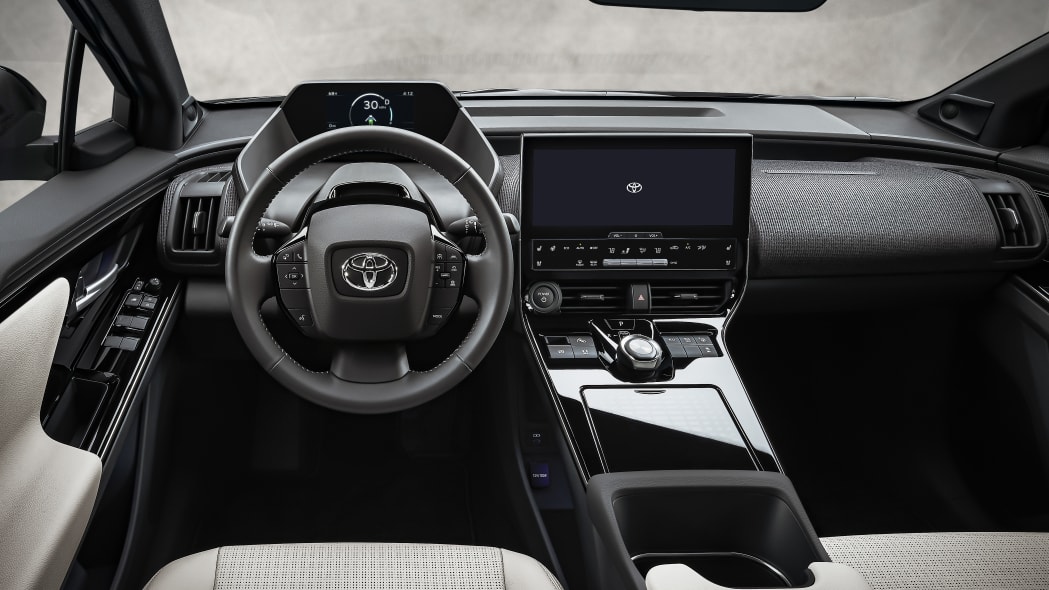
It also showed a dim shot of the interior, with the centerpiece being a giant mid-mounted display. Again, that looks mighty similar to what Toyota has shown us with its own EV crossover, though Autoblog pointed out that Subaru appears to have some extra features below the rotary knob. Another notable difference is Subaru's bolstered seats that might allow for more sporty 4x4 activities.
Other key details, like price and battery capacity, have yet to be released. However, the price could be somewhere in the high $30,000 to low $40,000 range. Like Toyota's offering, it's set to arrive in the US and other markets next summer.
Amazon was supposed to defend its decision in court to let Emily Cunningham and Maren Costa go last year. The former Amazon employees were outspoken critics of the company, and both were, the National Labor Relations Board (NLRB) previously decided, illegally fired. The e-commerce giant didn't have to defend itself, however, because it has settled with the affected parties shortly before the hearing could take place.
Cunningham and Costa, who worked on user experience design, openly criticized Amazon's climate policies and workplace practices. They previously slammed the company's climate policies in a video that gained national attention. And before they were let go in April 2020, both of them tweeted that they'd match donations up to $500 to support their warehouse worker colleagues. Cunningham said the "lack of safe and sanitary working conditions" puts the workers and the public at risk, while Costa tweeted that the workers "struggle to get consistent, sufficient protections and procedures" from their employer.
Amazon said when the news broke that they were let go for violating internal policies, namely for discussing the company without prior approval, and not for speaking out about working conditions specifically. The NLRB looked into accusations that Amazon retaliated against its employees for organizing or participating in protests, however, and determined that Cunningham and Costa were illegally fired.
According to The Washington Post, the settlement still needs to be approved by the NLRB regional director in Seattle, though Cunningham and Costa are already considering the settlement a victory. In a joint statement, they said the development is a "win for protecting workers rights" and that Amazon will be required to pay them lost wages. The whole statement reads:
"We are thrilled to announce that we have reached an agreement to settle the charge against Amazon at the National Labor Relations Board (NLRB) alleging that the company illegally fired us for speaking up about warehouse workers' conditions during COVID. This is a win for protecting workers rights, and shows that we were right to stand up for each other, for justice, and for our world. Amazon will be required to pay us our lost wages and post a notice to all of its tech and warehouse workers nationwide that Amazon can't fire workers for organizing and exercising their rights.
It’s also not lost on us that we are two women who were targeted for firing. Inequality, racism, and sexism are at the heart of both the climate crisis and the pandemic.
Tech workers standing up together have immense power to move the biggest corporations in the world. Everything we love is threatened by climate chaos. Workers at every company need to be standing up for each other and the world, together. Now is the time to be our best, bravest selves. We can only do this together. We hope you’ll join us."
Honda builds much more than cars and trucks — power equipment, solar cells, industrial robotics, alternative fuel engines and even aircraft are all part of the company's production capacity. On Thursday, Honda announced that it is working to further expand its manufacturing portfolio to include Avatar-style remote telepresence robots and electric VTOLs for inter- and intracity commutes before turning its ambitions to building a fuel-cell driven power generation system for the lunar surface.
For its eVTOL, Honda plans to leverage not only the lithium battery technology it's developed for its EV and PHEV vehicles but also a gas turbine hybrid power unit to give the future aircraft enough range to handle regional inter-city flights as well. Honda foresees air taxis as a ubiquitous part of tomorrow's transportation landscape, seamlessly integrating with both autonomous ground vehicles and traditional airliners (though they could soon be flown by robots as well). Obviously, the program is still very much in the early research phase and will likely remain so until at least the second half of this decade. The company anticipates having prototype units available for testing and certification by the 2030s and a full commercial rollout sometime around 2040.
Honda will have plenty of competition if and when it does get its eVTOLs off the ground. Cadillac showed off its single-seater aircar earlier this year, while Joby (in partnership with NASA) already has full-scale mockups flying. In June, Slovakian transportation startup, Klein Vision, flew from Nitra and to the Bratislava airport in its inaugural inter-city flight — and then drove home after the event. But building a fleet of flying taxis is no easy feat — just ask Bell helicopters — and we're sure to see more companies drop out of the sector before eVTOLs become commonplace.
Carlo Allegri / reuters
Honda reps also discussed the company's future robotics aspirations during a media briefing on Wednesday. The company envisions a future where people are unencumbered by space and time, where telepresence robots have visual and tactile acuity rivalling that of humans. Rather than hopping on a plane to inspect remote factory floors or attend product demonstrations in person, tomorrow's workers may simply don VR headsets and step into the body of an on-site humanoid robot.
The company announced that it wants its Avatar Robot — a newly refined iteration of the Asimo (above) — put into practical use in the 2030s and will conduct technology demonstration testing by the end of Q1, 2024 in order to meet that goal. But before that happens Honda reps noted that the company has work to do downsizing the robot's hand hardware and improving its grasping dexterity.
JAXA/Honda
Honda also has big plans for its space ventures including working on ways to adapt its existing fuel cell and high differential pressure water electrolysis technologies to work on the lunar surface as part of a circulative renewable energy system.
This system would use electricity gathered from renewable energy sources (like solar) to break the molecular bonds of liquid water, resulting hydrogen and oxygen. Those two elements would then be run through Honda's fuel cell to generate both electricity and supply the lunar habitats with oxygen for breathing and hydrogen for rocket fuel.
The company also hopes to utilize the more-nimble Avatar hands its developing as manipulators on a fleet of remote controlled lunar rovers which will perform tasks on the lunar surface rather than subject astronauts to the moon's many dangers. Honda has partnered with Japan Aerospace Exploration Agency (JAXA) and began joint research into both of these systems in June.
Virgin Galactic has been cleared to fly again by the US Federal Aviation Administration (FAA) following an anomaly on its previous flight, the WSJ has reported. The agency launched a probe into the space company's first crewed flight after it dropped below its approved trajectory.
The FAA determined that the SpaceShip Two Unity craft, with founder Richard Branson and five others aboard, had deviated from its assigned airspace for a minute and 41 seconds and failed to report the error as required. However, it accepted Virgin Galactic's proposal to expand the protected airspace for a wider array of possible trajectories and to communicate with air traffic control in real time during flights.
"The updates to our airspace and real-time mission notification protocols will strengthen our preparations as we move closer to the commercial launch of our spaceflight experience," said Virgin Galactic CEO Michael Colglazier in a statement.
According to a report in the New Yorker, pilots saw a "red light" warning near the end of the powered flight indicating that the spacecraft had veered outside its entry glide cone, putting it at risk of an emergency landing. Virgin Galactic said that the deviation was due to high altitude winds and that the craft didn't fly outside the lateral confines of its protected airspace. "At no time did the ship travel above any population centers or cause a hazard to the public," a spokesperson said.
With a flight clearance in hand again, Virgin Galactic may fly its next mission in mid-October, potentially with members of the Italian Air Force. After that, both the current SpaceShipTwo and its WhiteKnightTwo host aircraft would spend four months receiving upgrades, the company previously said.
A Bloomberg report claims that Nintendo provided at least 11 developers with a toolkit to create games for the Switch that support 4K graphics. Shortly after it was published, though, the gaming giant has issued a statement firmly denying that it's supplying tools to drive the development of titles for a 4K console. "[T]his report is not true," the company tweeted. Further, it reiterated that it has no plans for a new Switch model other than the OLED variant that's coming out on October 8th.
We also want to restate that, as we announced in July, we have no plans for any new model other than Nintendo Switch – OLED Model, which will launch on October 8, 2021. (2/2)
Bloomberg said Nintendo had already handed out 4K toolkits and had already asked developers to create games with 4K resolution by the time it announced the OLED model. The publication also said that the 11 companies it talked to are made up of large publishers and small studios, including Zynga.
Nintendo's upcoming OLED Switch doesn't support 4K graphics, though its screen does offer better colors and contrast than its predecessors. In the past, Bloomberg reported that the company was working on a Switch with OLED screen and an NVIDIA chip that would enable it to generate 4K graphics when connected to a TV. A source told the publication, however, that Nintendo struggled with component shortages due to the COVID-19 pandemic and had to drop its 4K plans.
Releasing a 4K Switch seems like the logical next step for Nintendo to take, seeing as its competitors already have consoles that support the resolution. Based on the company's statement, though, that won't be happening anytime soon.
Facebook has published two slide decks detailing its research into how Instagram affects teens’ mental health. The slides were heavily cited by The Wall Street Journal earlier this month in a story that reported the company’s own researchers had found that “Instagram is harmful for a sizable percentage” of teens, particularly teenage girls.
Instagram has attempted to rebut those claims, saying its research was mischaracterized. But the ensuing backlash has already forced the company to “pause” its work on an Instagram Kids app. It also raised pressure on Facebook to release the underlying research, which the company ultimately agreed to do. Facebook’s head of safety is scheduled to testify at a Senate Commerce Committee hearing on child safety on Instagram Thursday.
Many of the slides include lengthy annotations with additional “context” on the more controversial aspects of the research. For example, a slide titled “The Perfect image, feeling attractive, and having enough money are most likely to have started on Instagram,” states that the information in the slide “should not be used as estimates of average experience among teen users.”
Other annotations, like one on a slide, titled “One in five teens say that Instagram makes them feel worse about themselves, with UK girls the most negative,” attempt to downplay the findings. “This research was not intended to (and does not) evaluate causal claims between Instagram and health or well-being.” (That line is repeated on several other slides.)
You've the option to re-download Apple's in-house apps for a while, but you haven't been allowed to write App Store reviews for them like you can for third-party titles. Apple is now treating its apps more as equals, though. 9to5Macnotes Apple has quietly enabled App Store ratings and reviews for its own software. If you want to laud improvements to Maps or trash Mail, you can.
The volume of reviews is relatively low compared to equivalent third-party apps that have been around for years, like Gmail or Google Maps. However, it won't surprise you to hear the ratings are relatively low. Apple's Podcasts client is sitting at two stars as of this writing, while Apple News is sitting at 2.3 stars. Maps has only partly mended its early reputation with a three-star rating. Like with third-party software, some customers are using the ratings and reviews to gripe about technical issues instead of design.
The change treats Apple's apps more fairly, and might even be useful to help the company spot and respond to criticism. It might likewise see this as another way to improve public perception of the App Store. On top of an Epic lawsuit that could soon force Apple to alter App Store policies, the iPhone maker has preemptively stopped favoring its own apps in rankings and reduced its cut of small developers' apps revenues. Ratings and reviews won't dramatically change Apple's image, but they likely won't hurt.