NASA's Mars InSight lander provided researchers with the data needed to give us our first detailed look at the red planet's crust, mantle and core. That map doesn't include any information on the structures nearer its surface, however, and we need that to be able to get a more complete picture of how the planet was formed. Now, a team of scientists was able to create the first detailed image of what lies right underneath the planet's surface, showing three billion years of its history, by listening to Martian winds.
More precisely, they analyzed the ambient noise (in the absence of marsquakes) collected by the seismometer that was installed by the InSight lander. On Earth, that kind of ambient seismic noise is generated by the ocean, human activity and winds, but only the last one is present on Mars. The Swiss Seismological Service (SED) and ETH Zurich have been regularly analyzing data collected by the seismometer as part of the Marsquake Service. Over the past years, SED was able to develop ways to analyze ambient noise data to define geological structures here on Earth, and those are the techniques they used on the data from InSight.
Based on the data the tool gathered, the top three meters of InSight's landing site is made of sand, while the next 20 meters are loose material, particularly volcanic rock fissured by meteorite impacts. Underneath that sand and rock lie lava flows divided by sediments that formed when the planet experienced cold and dry conditions. Researchers believe the uppermost lava flows were deposited around 1.7 billion years ago, while the deepest ones were deposited as far back as 3.6 billion years ago at a time when there was a lot more volcanic activity on the planet.
The researchers recently published their study in Nature, and one of the things they emphasized is that it proves techniques to investigate our planet can also work on Mars. Other methods used to know more about Earth could also give us more information about the red planet, which may one day become humanity's second home.
When Spotify announced its stripped down Car View mode in 2019, it seemed like a smart way to prevent drivers from being distracted on the road. Whenever you connected to your car over Bluetooth, it would remove extraneous elements like menu buttons and album art. Instead, it gave you large buttons to pause and play music; jump to the previous or next track; or like a specific song. Nifty! But hope you didn't get too attached, as Spotify has confirmed it's "retiring" the feature, according to a recent support thread (via Android Police).
A Spotify moderator, who was replying to a user who noticed the feature had disappeared from his Android app, noted that Spotify is "actively exploring a variety of new ways to deliver the best in-car listening experience." They added that removing car view is necessary to "make way for new innovations." That's reasonable enough, though it doesn't excuse dumping a genuinely useful safety feature without a clear replacement.
The moderator suggested using Google Assistant (or Siri on iOS) to control Spotify hands-free, something that would also work while navigating with Google or Apple Maps. And, to be fair, that's how many people (including myself) end up controlling tunes on the road.
It could be that Spotify is de-prioritizing Car View simply because there are so many other ways to handle music playback in cars. If you've got a modern car with CarPlay or Android Auto support, you'll only be interacting with your in-dash display and will never see Car View in action. Many vehicles made in the last decade also have some sort of media control on their steering wheels.
Billy Steele/Engadget
Of course, there's a more nefarious objective, as some Spotify users mentioned in the forum thread. It could be that the company is trying to push people towards Car Thing, its $80 display accessory. We found it to be a useful upgrade for older cars, but it also seemed superfluous when you could just mount your phone and control Spotify directly. Without Car View mode, though, that strange gadget all of a sudden seems more helpful. In cases like this, though, the simplest explanation usually comes down to companies realizing certain features aren't being used much.
We've reached out to Spotify for a full explanation about Car View's retirement, and will update when we hear back.
Wearables are getting to be as ubiquitous as smartphones, but that also means companies like Apple and Samsung are making better and more expensive devices. Regardless of if you prefer a smartwatch, fitness tracker or another kind of wearable, it's best to wait until a big sale — like Black Friday — to get one for the best price possible. This year, a bunch of wearables have been discounted and we picked out the best ones here as you don't have to go searching for them.
Apple Watch SE
The Apple Watch SE has been knocked down to $219, which is $60 cheaper than usual. This is the best Watch for wearable newbies as well as those with tight budgets. We gave it a score of 88 for its responsive performance, comfortable design and solid feature set for the price.
The latest Apple Watch Series 7 is $20 cheaper right now, bringing it down to $380. It's the most comprehensive wearable Apple makes and it earned a score of 90 from us for its larger screen, faster charging and handy features in watchOS 8.
The previous-gen Apple Watch is $50 off, bringing it down to $350. While it doesn't have the larger screen that the Series 7 does, this smartwatch is still a good choice thanks to its good performance, improved battery life and faster charging.
You can pick up the Fitbit Charge 5 for $130 right now, or $50 off its normal price. This is Fitbit's most comprehensive fitness band and it earned a score of 82 from us for its full-color touchscreen, built-in GPS, onboard EDA sensors for stress tracking and multi-day battery life.
Fitbit's Inspire 2 tracker has dropped to $60 for Black Friday, or $40 off its normal price. This gives you all-day heart rate monitoring, up to 10 days of battery life, sleep stage tracking and more — plus it comes with one year of Fitbit Premium, too.
Fitbit's small and sleek Luxe tracker is on sale for $100 right now. We gave it a score of 82 for its comfortable design, good battery life and capable health tracking features.
Fitbit's high-end Sense smartwatch is $100 off, bringing it down to $200. It earned a score of 82 from us for its wide array of health tracking features plus its big, bright display.
Samsung's Galaxy Watch 4 has dropped to $200, or 20 percent off its normal price. It remains the best smartwatch for Android users and we gave it a score of 85 for its crisp display, comprehensive health tracking features and its improved third-party app support.
Garmin's Vivoactive 4 has dropped to $190, or nearly $160 off its regular rate. One of Garmin's midrange smartwatches, this device tracks daily activity, sleep and workouts and it supports blood oxygen monitoring, onboard music storage, built-in GPS and an eight-day battery life.
Withings' Steel HR smartwatch is $60 off right now, bringing it down to $120. It's one of the better options out there if you prefer the analog style but still want smart features like step, sleep and heart rate tracking. It also has connected GPS, a water-resistant design and a battery that will last up to 25 days on a single charge.
All products recommended by Engadget are selected by our editorial team, independent of our parent company. Some of our stories include affiliate links. If you buy something through one of these links, we may earn an affiliate commission.
Parenthood, while constantly entertaining, is also one of the most eye-ball meltingly frustrating experiences I’ve personally ever had. At the end of the day, I do not have patience for any additional extra hassles, be it an unresponsive device, lagging apps or diaper wipes that come out 15 at a time. There are some parenting gadgets that are actually worth your money because they can make life with new babies much more convenient, and some of our favorites are on sale for Black Friday. We’ve tried out nearly every product below so we can vouch for their advantages, functionality and what really counts as a good deal for the holiday shopping season. That way you can save all your patience for the toy cars, houses and high chairs you're going to have to build after Christmas.
Nanit Pro baby monitor
Nanit
Nanit earned a space in our best baby monitor guide because of the crisp, clear details provided by the 1080p birds-eye camera, day or night. The app provides detailed metrics about your child’s sleep habits, as well as video clips though some of that requires a subscription. And Nanit’s wearables — like the Breathing Wear or Smart sheets —measure additional data about your child like respiration rate and height, respectively. The Nanit Pro complete bundle, with the camera, wall mount, travel mount, Smart Sheet, Breathing Band and year of Nanit Insights, is 26 percent off, bringing it down to $280. The rest of Nanit’s products have been discounted as well, including smaller bundles and the wearable accessories.
Eufy makes reliable, uncomplicated baby monitors that use a wireless FHSS transmission to show a live feed of your kid’s room. Its lack of WiFi makes its feed more secure, though it does require you to carry around an external device. Eufy’s Spaceview Pro pans and tilts to show an entire room and the 5-inch display will last up to twelve continuous hours. The single camera package is $30 off with a coupon, knocking it down to $140, and a bundle that includes the camera, monitor and a crib mount is also discounted thanks to a $40 coupon, bringing it down to $155.
While we haven’t finished a formal review of the Cubo AI baby monitor, our initial testing went well: The cute bird-shaped camera can be mounted to a wall or crib and provides a detailed, clear 1080p view. The system uses AI to determine if your baby’s nose or mouth are covered and will send an alert; it can also be useful for older children where it can be set to alert you if they cross into prohibited areas. The feed runs to a companion app that works with Google Home or Alexa, provides two-way audio or enables the night light or lullaby features. Right now, the Cubo AI camera with the wall mount is $30 off with a coupon, making it $170.
Time and time again, I’ve recommended the Hatch Baby Rest because it’s a product I use every single day. The minimalist nightlight-slash-noise machine can display a variety of colors, and sounds, and is controllable from your smartphone or by using the physical buttons. Favorite combos can be saved and programmed, or you can select from presets. The Rest is helpful in sleep training kids, or keeping babies asleep, and can grow with kids by being used to signal awake times. The basic Rest is 40 percent off, so you can snag one for only $60.
Another product that quickly won me over during testing is Withings Thermo smart thermometer. I know, a $100 temporal thermometer seems like an unnecessary extravagance. But it’s small and discrete enough to carry on trips, easy and painless to use on squirmy kiddos and the app makes it easy to track the readings from multiple family members. It’s also currently down to $64, only a few dollars shy of its lowest price ever, which makes it even easier to recommend.
We put the mamaRoo 4 baby swing in our best baby gear guide thanks in part to its easy setup and the freedom it gives parents to entertain their kids without having them in their arms at all times. The swing mimics the things parents often do to soothe their kids with its five movement options, five speed settings and four built-in sounds. The best part? It's fully controllable via your smartphone, so you can easily change up the motion, speed or sound when your child gets bored and fussy. The mamaRoo 4 normally costs $250, but it's on sale for $200 for Black Friday.
We haven’t reviewed the Miku yet, but it looks to offer many of the same advantages as the cameras we have spent hands-on time with: A birds-eye 1080p HD video stream of you child's crib that also measures respirations per minute, tracks sleep data, two-way audio, access from anywhere via the app and lullabies. The company is offering the camera with the wall mount for $300, which is $100 off.
All products recommended by Engadget are selected by our editorial team, independent of our parent company. Some of our stories include affiliate links. If you buy something through one of these links, we may earn an affiliate commission.
LG has appointed a new CEO to lead its electronics business. Starting December 1st, current Chief Strategy Officer William Cho will take over for Bong-seok Kwon as the CEO of LG Electronics. Meanwhile, according to The Korea Herald, Kwon will head up LG’s main holding company. Cho has been with LG Electronics since 1987. Prior to his most recent role, he served as the president of LG Canada, and later had the same role at LG Australia and LG USA.
Cho is about to take the reins of LG Electronics at an inflection point for the company. It recently shut down its mobile division in July after the unit failed to make a profit in 23 consecutive quarters. At this point, LG Electronics is probably best known for its TVs and monitors, but there too it faces tough competition from Samsung and a variety of Chinese competitors.
However, Cho will have help from a handful of executives the company has shuffled into new positions. Most notably, there’s Ik-hwan Jang who’s about to take up the top position at the company’s Business Solutions unit. Jang was most recently responsible for overseeing LG’s IT business portfolio where he helped LG become a powerhouse in the monitor space.
Many people will be searching for discounts on big-ticket items this Black Friday — high-end headphones, game consoles, fancy smartwatches and the like. But there are plenty of tech deals out there today that won't burn a hole in your wallet — and not only can they make good gifts, but some are also solid purchases for yourself. If you're in need of a new charging cable, an extra SD card for your Nintendo Switch or an affordable streaming stick for that new TV you just bought, these are the deals to consider this Black Friday.
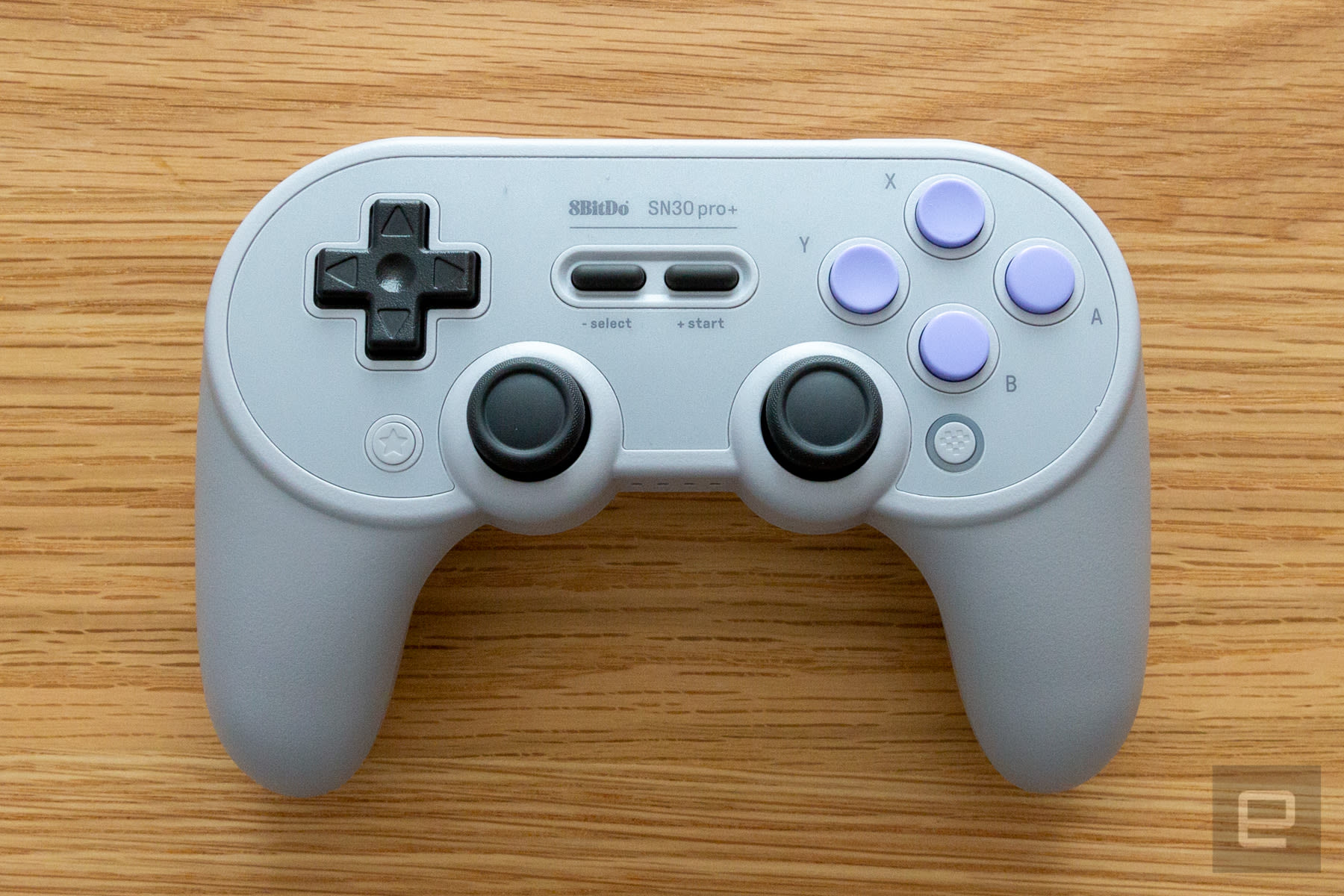
Today only, you can pick up the 8Bitdo Sn30 Pro+ for only $40, or 20 percent off its normal price and a new record-low. 8Bitdo has a reputation for making comfortable, affordable game controllers, and we thought the Sn30 Pro+ was its best yet for the Nintendo Switch when it first came out. The wireless accessory has a design based on the iconic SNES controller with a plethora of buttons and handles that rival the comfort provided by Nintendo's own Switch Pro controller. On top of that, it comes with a removable battery pack and it supports AA batteries as well.
Amazon's one-day sale on Tile devices knocks up to 30 percent off the Bluetooth trackers. All items except for one bundle are under $50, including the 2022 Tile Mate two-pack, which is down to $35, and the 2020 Tile Performance pack, which is on sale for $42.
Samsung’s EVO Select microSDXC card in 128GB is down to $16, or 20 percent off its normal price. This is the latest model and while you can find microSD cards for less, EVO is a reliable brand and you're getting a full-sized adapter with this one.
The Chromecast with Google TV has dropped to $40, which is $10 cheaper than usual. We gave the device a score of 86 for its 4K HDR streaming capabilities, Dolby Vision and Atmos support plus its much needed and very handy new remote.
The tiny Echo Dot has dropped to $20, and you can grab the Echo Dot with Clock for only $35. We gave it a score of 88 for its good audio quality for the price, compact design and tap-to-snooze feature.
The Nest Mini is down to $25. It's the affordable speaker to get if you want to put the Google Assistant in your home without dropping too much money, or taking up too much space.
JLab's already affordable Go Air Pop earbuds are down to only $13 right now. These colorful true wireless buds sport an eight-hour battery life, a small and comfortable design and touch controls.
Anker's impressive Soundcore Spirit Dot 2 earbuds have been discounted to $40. We consider them to be the best budget buds out there right now thanks in part to their punchy base, IPX7-rated design and affordable price.
Wacom's compact Intuos drawing tablet is down to a new all-time low of $50, which is $30 off its normal price. Artists and doodlers are typically drawn to Wacom's tablets, but those who just want a bit more control over their computer may also like them. It comes with a 4k pressure-sensitive pen that's battery free, and the tablet itself has a few customizable shortcut keys. And since it plugs into your machine via a USB-A port, it will work with almost any computer, including Chromebooks.
The Echo Show 5 has dropped to $45, or $40 off its normal price. This is the best Echo smart display if you want one as a smart alarm clock. We like its ambient light sensor, smart home controls and tap-to-snooze feature.
Amazon's standard Kindle has been discounted to $50, which is its best price yet. We gave this e-reader a score of 91 for its improved contrast display, extra front lights and sleeker design.
The Fire 7 tablet is on sale for $35. If you're looking for a cheap tablet to be a couch device, or to give your kid without worry, this is a good option. While it doesn't have the Google Play Store, you can still use it to check email, watch videos, play music and more.
The Fire HD 8 tablet is on sale for $45, or half off its normal price. We gave it a score of 79 for its decent performance, good battery life, wireless charging capabilities and USB-C port.
The new Fire TV Stick 4K Max has dropped to $35. This has all of the features of the standard Fire TV Stick 4K plus support for WiFi 6 and picture-in-picture live view.
Amazon's Fire TV Stick 4K is on sale for $25 right now. It's one of the easiest ways to get 4K streaming TV into your TV, plus it supports Dolby Audio and Alexa voice commands.
The Fire TV Stick Lite has dropped to $18. It provides 1080p streaming, access to services like Netflix and Prime Video and can stream music from services like Spotify and Pandora.
The new Roku Streaming Stick 4K is on sale for $30, or $20 off its normal price. It builds upon the technology in the Streaming Stick+, supporting 4K HDR10+ content, Dolby Vision, long-range WiFi, voice search and TV controls with the included remote.
The Blink Indoor one-camera kit is on sale for $50 and the cam itself is totally wireless, so you can place them almost anywhere. It supports 1080p recording, motion alerts, two-way audio and temperature monitoring. The Blink Mini wired camera is also on sale for only $20.
All products recommended by Engadget are selected by our editorial team, independent of our parent company. Some of our stories include affiliate links. If you buy something through one of these links, we may earn an affiliate commission.
Bitwig is still something of an upstart in the world of digital audio workstations (DAW), but the rate at which it keeps improving and expanding its powers is truly impressive. With the official release of Bitwig Studio 4.1 the company is leaning hard into the sort of unpredictable and generative musical ideas it already excels at.
The big news in 4.1 is a collection of eight new Note FX bringing the total to 23. These allow you to manipulate MIDI on a per-note basis, for example by using an arpeggiator. But the eight new additions get a little more experimental and some take inspiration from the world of physics to deliver semi-random results. Dribble, for example, triggers notes based simulating a bouncing ball, repeating them "until gravity wins." Ricochet is similar except notes careen around a "room", retriggering with each collision.
Some of the new effects actually lean in the other direction and away from randomization. Quantize, for instance, is all about keeping your notes locked to the beat, though there is some leeway here via the "forgiveness" parameter.
The new collection of Note FX is rounded out by Humanize, Randomize, Strum, Bend and Note Repeats. The power of these new effects really comes unlocked when you start combining them. Bitwig's modular nature is part of what makes it so unique, including The Grid, its built-in sound design environment that lets you create custom instruments and effects.
Bitwig is also intruding a soundpack to take advantage of the added FX called Notes in Bloom. Inside are a collection of presets featuring the new Note FX, including some chained together that "make your played and held notes repeat, dance, bounce and create interesting rhythms in real time, so you can use them while playing live."
If you've been considering give Bitwig a try, now is a great time to do it. Both Studio and 16-Track are on sale until January 11th. The stripped back 16-track edition is marked down to $79, from $99. While the full-fledge Studio version is $100 off, bringing the price to just $299. While $299 isn't exactly impulse purchase territory, it's pretty inexpensive in the world of DAWs. Even with a pretty steep 25-percent discount for Black Friday Ableton's Live 11 suite is $562.
When you’re a gamer, you’ve always got an eye out for good deals on your favorite titles. For hardware and accessories it’s a bit trickier though — they don’t go on sale as often, and it’s hard to tell what will serve your needs best. However, we’ve found a few intriguing picks worth checking out this Black Friday, either because you’re in the market to upgrade your battle station, or you just want to try something new but not spend a lot of money while doing so.
8Bitdo Sn30 Pro+
8Bitdo has a reputation for making comfortable, affordable game controllers, and we thought the Sn30 Pro+ was its best yet for the Nintendo Switch when it first came out. The wireless accessory has a design based on the iconic SNES controller with a plethora of buttons and handles that rival the comfort provided by Nintendo's own Switch Pro controller. On top of that, it comes with a removable battery pack and it supports AA batteries as well. Today only, you can pick up the Sn30 Pro+ for only $40, or 20 percent off its normal price and a new record-low.
The Razer Blade is one of our favorite gaming laptops thanks to its slick design, array of customization options and strong performance. Today only, you can grab the 2020 Razer Blade 15 Advanced for $1,400, or $1,200 off its normal price. This model has a Core i7 processor, RTX 2070 Super Max-Q graphics, 16GB of RAM, 512GB of storage and a 1080p 300Hz display.
60 percent keyboards are all the rage now, and the Huntsman Mini is one of the best. That’s all thanks to features like its super quick opto-mechanical keys, braided USB-C cord and brilliant RGB lighting. It’s great for people who don’t have a lot of space at their workstation, as well as anyone else who’d like to slim down their gaming space. Right now you can add this to your desk for only $80, so it won’t take up a lot of your space or money.
I wasn’t entirely sold on haptics at first, but the HS60 won me over. The vibration actually ended up being a big boon during the stress of the last year, and the large, comfortable cups meant I never needed to take it off. The only real drawback was that this is a wired set of cans — but for $90 it’s still a steal for a high-quality gaming headset.
If you or someone who know wants to break into the game-streaming world, Elgato's Streamdeck is one of those gadgets that can make it much easier to do so. It's a small desktop controller with 15 LCD keys that you can customize to manage programs like OBS, Twitch and others. It makes multitasking while on stream much easier and it'll make your entire setup feel more professional, too. The Streamdeck is on sale right now for $100, or $50 off its normal price.
Having a good microphone is essential if you're going to live stream, and Blue's Yeti is one of the best values out there. It's a USB mic, so you can simply plug it into your setup and start using it. It also has a special setting that's ideal for streaming. The mic's on sale for $90, or only a couple dollars shy of its all-time low, and the Blue Yeti Nano is also on sale for $80.
The controller that comes with your Xbox is pretty good, but sometimes you might need a little more features from your gamepad. The Wolverine Ultimate may be wired, but it also has interchangeable thumbtacks and d-pads, so you can actually tweak the controller’s layout according to the games you play and your own personal preferences. If you’re serious about your gaming it’s a good investment, made even easier by a price drop to $100.
Touchscreens are fine for casual games, but when you’re tackling something a little more hardcore like Fortnite the Kishi is just the thing you need. It adds d-pads and shoulder buttons to your gaming experience, and folds up nicely when not in use. Since it connects to your device directly via Lightning port or USB-C and not via Bluetooth you don’t have to worry about keeping it charged, though you do need to make sure you buy the right one for your device. Right now it’s an affordable $45, a 44 percent discount, while a bunch of other Razer peripherals are on sale, too.
The high price of many headsets plus the need for a computer that can run the programs has kept VR out of a lot of people’s reach. The all-in-one Oculus Quest 2 only needs a phone to set up an account with, and can give you plenty of excellent VR experiences for only $299. This week it becomes a whole lot more tempting with the addition of a $50 gift card from Amazon, Best Buy and Target, which can be used toward any product you want, though we’d recommend the Oculus Link cable so you can connect your headset to a computer.
Google’s Stadia service has seen a lot of upsand downs since its launch, but it still has a lot of promise. Right now you can grab yourself a Stadia Premiere Edition for only $22 over at the Google Store. The first month of the service is free so it’s not a lot of cash to drop to try it out, and even if you decide it’s not your cup of tea you’re still the proud owner of a Chromecast Ultra (normally $20 on its own), as well as a comfortable gamepad that can be used for PC games as well.
If you like to play online multiplayer on your PS4 or PS5, a PlayStation Plus is non-negotiable, but even if you’d rather go solo a subscription can be a big bonus. You get cloud backup for your saves, discounts on games from the PlayStation store, built-in game assistance for select PS5 games. But the best part of all has to be the roster of free games doled out monthly — November has Knockout City, Kingdoms of Amalur: Re-Reckoning and First Class Trouble, while previous months have seen AAA titles like Final Fantasy VII Remake and Mortal Kombat X. Usually a yearly subscription is $60, but right now you can sign up (or extend an existing plan) for only $40.
Toys that blend the real and virtual worlds are a dime a dozen lately, but this take on the legendary Mario Kart series is one that even adults can enjoy. You can build your own courses at home, and race against virtual opponents on the Switch. The normally high price point of $100 for a single cart has kept this out of a lot of gamers’ hands, but right now it’s a much friendlier $60 — so all you need to worry about having room for building your dream track.
If you want to feel a bit better about the amount of time you spend gaming, consider adding the Ring Fit Adventure to your repertoire. The game has you exercising in order to progress through the story while the Switch's Joy-Cons, attached to the provided leg straps and ring, track your movements. You might be surprised by how quickly you break a sweat while fighting fantasy creatures and exploring the game's world. The ring Fit Adventure sold out numerous times over the past year or so — likely thanks to many trying to make working out at home more fun — and it's an even better buy at this $54 sale price.
All products recommended by Engadget are selected by our editorial team, independent of our parent company. Some of our stories include affiliate links. If you buy something through one of these links, we may earn an affiliate commission.
For the past few decades it’s been de rigueur for science fiction stories to be set in virtual worlds, from the early neon-lined stylings of Tron to the hedonistic pop cultural temple of Ready Player One. The stories once treated these places like a fantasy world on par with Middle Earth or Hyrule, but as we’ve edged closer to them existing in reality they’ve gotten a lot more humdrum, maybe even ordinary. With this shift we’ve seen the real and virtual worlds increasingly collide, and it’s that interconnection between the two that forms the core of the new anime film Belle, arriving in US theaters in January.
Belle is the latest movie from Mamoru Hosoda, the director who brought us time-travel adventures like The Girl Who Leapt Through Time and Mirai. But he’s also known for Summer Wars, a movie that posited a world where everything is connected in the virtual sphere, not just for play but also work, finance and healthcare. Back in 2009, this seemed like a bit of a stretch, but as companies like Google, Apple and Amazon have expanded the concept has become eerily prescient. Now Hosoda is once again tackling the divide between the real and virtual worlds with Belle, a film that splits its time between rural Japan and the computerized world of “U.”
Belle is the story of Suzu Naito, a “country bumpkin” living alone with her dad and still dealing with the trauma of losing her mom several years before. When a friend sends her an invite to U she finds it to be an escape from her trauma, a place where she is beautiful and can sing. Her first performance quickly goes viral, with the clip spreading rapidly and her phone blowing up with notifications in a sappy Dear Evan Hansen sort of way. She becomes a sensation, but her newfound fame goes off the rails when one of her concerts is interrupted by a player known only as “The Dragon.” Suzu/Belle becomes intrigued by the Dragon and begins an investigation into his identity, even as self-appointed vigilantes are working to track and expel him from U.
Studio Chizu
The world and technology of U are interesting, with access gained via an app and a set of special earbuds. The earbuds can apparently overlay sight as well as sound, and they build a person’s avatar using their biometric data. It’s certainly a leap ahead of the bulky VR headsets seen in Ready Player One, or just the “theater of the imagination” that a lot of movies and TV employ, where the virtual as an actual “space” with rooms and buildings and so forth only exists in the minds of the user. Here, it’s more like entering the Metaverse of Persona 5, complete with avatars that reflect a person’s true self.
In U there’s no “if you die in the game you die in real life,” but the biggest threat is still treated as such: to be “unveiled” is to lose your anonymity and have your true form revealed to the world of U, upon which a user will literally fade away from the virtual arena. It’s weird to see this used as a plot hook when real-life social media is overly concerned with real names and verified accounts, but this is a fantasy story, after all.
Studio Chizu
As such, it takes influence from other fantasy works, most notably Disney’s classic animated feature Beauty and the Beast. Both main characters are named Belle, and the design and temperament of the Dragon is very similar to that of the Beast; the mix of animals blended into one hunched, brooding creature, the mysterious castle with a squad of cutesy servant-sidekicks. There’s even a damaged portrait over the fireplace mantle! After years of anime fans complaining about American films “stealing” from anime (Kimba the White Lion, Nadia: The Secret of Blue Water and Perfect Blue), it’s funny to see an anime borrow so blatantly from the West. I can’t wait for the inevitable shot-by-shot comparison videos on YouTube; Belle even recreates the iconic ballroom dancing scene (notable at the time for its early use of CG).
There is nothing particularly groundbreaking about the animation in Belle, though it is certainly a gorgeous film. The world of U is shown as a city of sweeping towers populated by flying avatars. Animation allows the filmmakers to give each character a unique avatar, of whatever size or shape fits that person best. Suzu becomes a beautiful woman, but others are depicted as babies, fairies and cute animals. The Dragon stands out for being such a dark character, with bruises spread across his back like a fungus.
Where Belle really differentiates itself is how it melds our current internet reality with its future fantasy visions. In early depictions of virtual worlds they were always treated as a separate place that never interacted much with the real world, a “secret life” that users had so very different from their actual existence. As technology moves forward, we’ve largely found that to not be true; our virtual existence is dominated by social media and live-streaming and parasocial relationships, and all of these are generally accepted as part of our “real” lives these days.
So it is that social media is heavily entwined with spectacle in the world of U, with messages flying as fast and furious as their avatars fly through the computer-generated cities. It isn’t just a thing that “the kids” are into; the residents of U are seen to be an incredibly diverse mix of ages and races, as seen from their messages and videos. But there is still a sense that this space matters more to a particular generation: Context clues reveal that Suzu’s village is a victim of the demographic crisis in Japan, where the populace is aging up with not enough children being born to replace them. Suzu is very much alone a lot of the time in her village, with various chat rooms and the world of U serving as her one constant connection to other people.
Studio Chizu
In the end, it will be the other people in her real life that will push her to do what she needs to do to save the Dragon.The fantasy elements take a back seat to the fact that there are real people behind each avatar, and just as the service creates a look for them based on their personality, so are their problems in U are just reflections of their real life situations. And in that case, it won’t be Belle who can save the day, but an ordinary girl named Suzu Naito.
Novation has dropped the price of one of its most recent grooveboxes by 25 percent for Black Friday. Until December 6th, sampler enthusiasts and beatmakers can snag the Novation Circuit Rhythm for $300, a discount of $100.
Circuit Rhythm builds on the simple screen-free workflow that helped make the original Circuit such a hit. This groovebox is focused on sampling, and it seems Novation was inspired by the Roland SP series.
We gave the Circuit Rhythm a score of 87 in our review. Novation says the machine runs for up to four hours on a single charge, but in testing it typically operated for three to three and a half hours before requiring a recharge. We liked the sampling and slicing features and the simple, intuitive workflow. However, the more advanced features take some getting used to and, if you're not careful, it's easy to push an effect like delay, reverb or sidechain from barely noticeable to over the top.
Novation doesn't often run sales on its products. So, this is a good deal on an solid entry-level sampler.
All products recommended by Engadget are selected by our editorial team, independent of our parent company. Some of our stories include affiliate links. If you buy something through one of these links, we may earn an affiliate commission.