Microsoft just gave its productivity tools an important makeover. The company has released a promised visual update for Office's Windows apps in either Microsoft 365 or perpetual licenses, giving you simpler and sleeker-looking interfaces across all apps. It's meant to complement Windows 11's style, as you might imagine, but it also promises some functional improvements regardless of the Windows version you use.
The interface should provide a more "natural and consistent" experience regardless of apps. The Quick Access Toolbar is now hidden by default (you can still bring it back). Office also matches your Windows theme by default, so launching Word or Excel at night shouldn't sear your eyes. You can still specific a different theme if you prefer.
The update is guaranteed if you're using Windows 11. If you're using Windows 10, you'll know that it's available when you see a megaphone icon in the top-right corner of a given app. While this won't fundamentally change your experience, it may be appreciated if Office has felt stale or out of place.
Uber has announced more safety features for the platform. The company already allows drivers and passengers in 14 countries to record the audio of their rides, and now the feature is coming to the US. It will pilot audio recordings in three US cities starting later this month.
Before they get in a car, riders will see in the Uber app whether their driver has opted into audio recordings — you can cancel the ride if you don't want to be recorded. You can capture audio by tapping the shield button on the app's map screen and choosing the Record Audio option. Everyone can record individual trips, and drivers have the choice to leave the feature on the entire time they're available for rides.
Although the recordings are stored on riders' and drivers' devices, they won't be able to listen to them. The recordings are encrypted and Uber says it can't access them unless a driver or rider submits a safety report with an attached audio file. A safety agent can decrypt and listen to the recording when they review the report, and then take appropriate action if necessary.
Uber debuted the feature in Latin America two years ago. It says almost 70 percent of drivers and riders surveyed in Rio de Janeiro felt safer when using it.
In addition, Uber plans to remind riders to buckle up with audible seat belt alerts at the start of a trip. The driver's phone will provide the audio reminder and the rider will see a notification on their own device. Uber says it will roll out the feature across the US in early 2022.
On top of that, Uber has upgraded its RideCheck feature, which arrived in 2019 and uses GPS and sensors in the driver's phone to detect possible crashes and abnormally long stops. The feature can now identify when a trip unexpectedly goes on a different route or ends before the destination the rider entered into the app.
If RideCheck flags a possible problem, Uber will ask the rider and driver if everything is in order via a notification. If not, they can tap the emergency button or report the problem to Uber.
Rocket Lab is finally shedding more light on its next-gen Neutron vehicle. The company has provided multiple details making clear the rocket is built for reusability from the ground up. It'll center on Archimedes, a 1-meganewton liquid oxygen/methane engine built to be used many times over. And with a lighter carbon composite body, the companydoesn't need many — seven Archimedes engines power the first stage, while the second stage just needs one.
Neutron could also put an end to tossing away (or trying to recover) the fairings that protect the payload. The rocket will have a "Hungry Hippo" fairing that's part of the first stage design — they simply open when releasing the second stage, and close again when it's time to land. That should save money, as you might guess, but it also promises faster turnaround times and lighter second stages.
The tapered shape of the rocket itself is built for reusability with a wider, more stable base. Neutron won't need a launch tower or girder to take off, Rocket Lab said. The company previously said the machine could carry up to eight metric tons to low Earth orbit versus the Electron's modest 0.3 tons (660lbs).
Any practical uses are still distant. Rocket Lab said it was still in the midst of a "competitive process" to pick a production facility, launch site and engine test facility on the US East coast. The firm previously said it hoped for a first flight in 2024. Even so, the new details are important — they hint at a future where Rocket Lab carries more (and more varied) payloads at lower costs, making space that much more accessible.
For those that want easy wireless charging on the go, Apple's MagSafe battery pack is a good option if you have one of the latest iPhones. But of course, like most other Apple accessories, the palm-sized battery is expensive, coming in at $99. But Amazon has the pack for the lowest price we've seen it right now — only $75, or 24 percent off its normal price. Now's a good opportunity to grab it if you've been eyeing it for a while for your own iPhone, or you need a stocking stuffer for an iPhone user in your life.
Like all MagSafe accessories, this battery pack is designed to snap onto the back of your iPhone and it'll automatically start charging the handset once attached. It fits neatly onto the backside of even the iPhone 13 mini, so you can still easily use your phone with one hand while powering up. If you plug in the battery pack while charging your iPhone, you'll get up to 15W of power and you could get even faster charging when you pair your Lightning cable with an adapter higher than 20W. Plus, you'll be able to keep track of your phone's and the battery pack's recharge on your iPhone's lock screen.
It's pretty tempting (and often convenient) to go for Apple's own accessories, but you can often find similar, more affordable options elsewhere. While the number of MagSafe-compatible gadgets is growing, there are still only a few battery packs made by reputable brands. Anker makes two 5,000mAh magnetic power packs, a standard one and a newer MagGo model that has a built-in, foldable kickstand, so you can prop up your iPhone while charging. Belkin also makes a 10,000mAh battery that works as a magnetic charger and a portable power bank. We haven't tested any of these alternatives yet, but both Anker and Belkin have a good track record when it comes to mobile accessories — plus, all three battery packs come in between $50 and $60 each, making them even better options for those with tight budgets.
Facebook has taken steps to ensure that users most at risk of being hacked don't lose their accounts to bad actors. The social network has updated its Protect program that was designed to provide extra security features to human rights activists, politicians, journalists and other at-risk users. In a press call with reporters, Facebook announced that it'll start requiring users part of the program to switch on two-factor authentication.
The website will start implementing the new rule over the coming months all over the world — for members in the US, the requirement will take effect sometime in mid-to-late February. Facebook explained that it worked on making the enrollment and use of two-factor on its website "as frictionless as possible for these groups of people by providing better user experience and support." It admitted that it may take time for all users to be able to comply with the new rule, since not everyone actively uses its platform. But Facebook and its parent company seem to be pleased with what they'd seen in early testing.
Meta's head of security policy Nathaniel Gleicher said:
"So far, it's actually going very, very well we're seeing well above 90% of people successfully enabling ahead of that mandatory period."
Facebook first tested Protect back in 2018 and offered it to American politicians ahead of the 2020 US Elections. It expanded the program's scope and opened it up to more users after that— in my case, I was locked out of my account until I activated it. The website is now on track to make the program available in more than 50 countries by the end of year, including the US and India, where most of its users are based.
Gleicher said over 1.5 million users had enrolled in the program so far, and 950,000 had already switched on 2FA. He also said that 2FA is an underutilized feature on the platform, with only 4 percent of the website's monthly users enabling it. Even so, there are no plans to require people outside of the Protect program to switch it on.
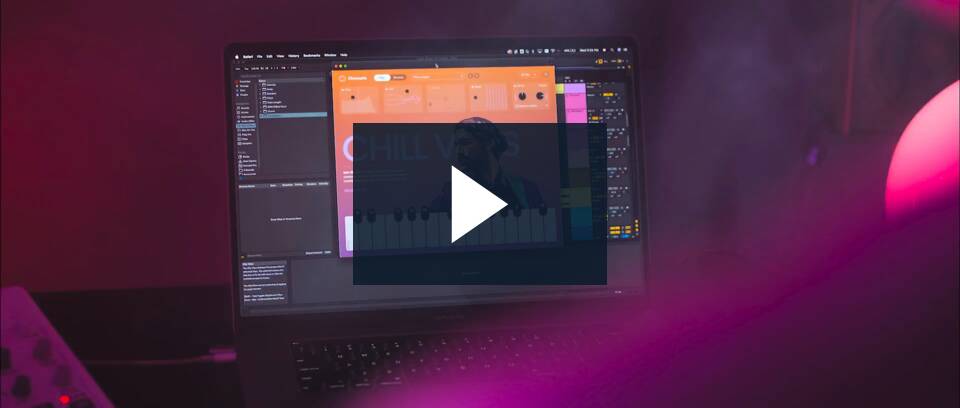
Sample and mastering site LANDR has unveiled a new subscription-based DAW app called Chromatic that makes it easy to piece together artist-created loops into all-new creations, the company announced. The company has partnered with artists, session players and others who created "inspiring playable instrument loops, vocal hooks, one-shots, and soundscapes," along with a story behind the sounds. You can then use those samples in any way you like to create your own tracks.
Chromatic is as much about the interface as the capability, according to LANDR. It gives users access to content across genres of music through color-coded mood boards, so you can "quickly audition or earmark individual sound sets" and incorporate them into your workflow. At the same time, they're matched to the tempo and key of any project.
"As an instrument, Chromatic lets you explore, play, and manipulate original sounds created by artists and producers, making them your own," says LANDR CEO Pascal Pilon in a statement. "We've developed Chromatic to bring the human element back into your virtual studio, a unique way to collaborate and engage with the creators of your favorite tracks and musical styles."
Artists who contribute the loops will receive royalties for when they're used. However, for certain specific artists and labels, LANDR will support splits on works created with their sound sets. "With this unique arrangement, Chromatic will serve as a foundation for emerging producers to collaborate with featured artists, resulting in a split release and promotion of a new work made with their Chromatic content." This presumably means that Chromatic users would share royalties on commercial releases with select, high-profile loop creators.
Chromatic is LANDR's first instrument, and a move towards a trend of subscriptions toward virtual instruments. A recent example is Output, which recently unveiled a similar subscription-based product called Arcade. Auto-Tune also offers a subscription, and Splice recently launched two vocal VST plugins that are behind subscription walls, as well.
Chromatic is now available as a free download with access to the full library of royalty-free sound sets at $10 per month. It's also offering an "All Access Pass" at $10 per month for six months and $15 per month thereafter, with royalty-free access to the sample library, AI-assisted mastering, music distribution on sites like Spotify, Sessions collaboration and more.
Tesla has started selling the Cyberquad, but it's not the ATV it previewed when it unveiled its electric truck in 2019. No, the Cybersquad you can now buy from the automaker's store is a much smaller version of the vehicle meant kids — and yes, it actually works.
The four-wheel ATV is powered by a lithium-ion battery and will run on electricity like its bigger version. It has 15 miles of range with a configurable top speed of 10mph, a full steel frame, a cushioned seat, adjustable suspension and LED light bars. In other words, it looks like a shrunken down version of a legit ATV.
A small Cyberquad will set you back $1,900 and is expected to start shipping within the next two to four weeks. But before you seriously start considering getting it as a gift for your kid this Christmas, know that Tesla says that orders aren't guaranteed to arrive before the holidays. Also, it's only currently available from Tesla's US shop and can only be shipped to continental United States.
We first saw a glimpse of the Cyberquad (the actual one for for adults) at the Cybertruck event, where it rode onto the back of the truck to show how its adaptive suspension enables easier loading. Musk then confirmed that it will be available for purchase initially as an option for Cybertruck buyers.
If there’s one thing we should all admire about Elon Musk, it’s his knack for helping folks part with their hard-earned cash. Tesla yesterday launched Cyberwhistle, a $50 whistle designed with the same angular lines as its forthcoming Cybertruck. The company is happy to explain that the Cyberwhistle is a “premium collectible” hewn from medical-grade stainless steel. Sadly, not long after Musk tweeted a link to the sale page, the whistle sold out, but there’s hope another round will be available at some point in the future. Or, if you’re really, desperately in need of one of these, you can find pre-orders being scalped for around $300.
Given how slowly e-reader technology moves, it’s not a massive surprise it’s been four years since Barnes & Noble last touched the GlowLight. The fourth-generation model gets a thinner and lighter body, a USB-C port and 32GB storage, but that’s about it. Most of the spec list, from the month-long battery life to the 6-inch 300DPI e-paper display, remain the same. Plus, the price of $150 puts it a little way beyond the Kindle Paperwhite in terms of cost, but if you want to swerve Amazon and Kobo, this is likely your best bet. B&N CEO James Daunt has also said the company plans to revive the range, so keep a look out for more new Nooks in the coming months.
As Engadget’s Editor-at-Large James Trew writes, e-bikes are normally little more than a bike with a motor slapped on the back. Chinese brand Urtopia, however, has decided to make a futuristic rideable with features you’d expect to see on a car. That includes an integrated display, fingerprint reader, GPS, 4G, an integrated alarm and mmWave sensors for nearby vehicle detection.
Sadly, James wasn’t able to try some of those features on the prototype he rode, and control of the lights is voice only, which is problematic when you’re on a busy highway. That said, his overall review was positive, with the light weight, fun riding style and added features putting the gloss on a very good bike. Worth saying, however, is that the Indiegogo pre-order price of $2,000 is likely to skyrocket when the hardware is retail ready, so if you’re eager, dive in soon.
It’s December, and that can only mean one thing: Spotify Unwrapped is upon us, allowing us to humblebrag (or not) about our music taste. Fire up the app and you’ll be able to find out your most popular artist, what genres you particularly love and how long you spent listening to tunes this year. You’ll also get an Audio Aura, a color chart explaining what your most listened-to music moods are — I got Melancholy and Energy, which sounds about right for me. At the same time, Spotify has announced the most popular artists on the platform, with Bad Bunny taking the top spot for the second year running.
Microsoft investors have passed a resolution requiring the company to publicly report how it handles sexual harassment cases. The tech giant had planned to make some of these details public anyway, but shareholders pushed for more specific disclosures. As a consequence, the Windows maker will also have to offer details about investigations into any executive misconduct. Investors pushed for the rule change after reports emerged concerning co-founder and former CEO Bill Gates’ conduct during his tenure.
Our Buyer’s Guide has turned its attention to 2-in-1 machines, which operate both as a laptop or tablet when required. Reviews Editor Cherlynn Low cast an expert eye over the market, finding the best equipment for every type of user. We won’t spoil the results, but suffice to say, there’s a big pile of great devices in this list that is sure to delight many. And there’s just about enough time left in the year for you to drop hints to your nearest and dearest about what you want.
Recently, Amazon introduced a feature that allowed Alexa to hear certain types of sounds, called Custom Sound Detection. Now, it's adding two new specific Alexa sound detectors for "water running" and "appliance beeping" that can be used to set up routines or reminders. It also rolled a number of other new features for things like prescription refills, ultrasound motion detection and more.
It was already possible to have Alexa identify those two specific sounds, but the new update means you won't have to bother training it. With the new features, you can use the Alexa app to send a notification when the washer beeps to indicate your laundry is done. It can also remind you to turn off the sink of someone accidentally leaves the water running.
Along the same lines, the update includes the introduction of ultrasound motion detection for routines on select Echo devices. At its September event, Amazon said that a feature would arrive to fourth-gen Echo and Echo Dot devices, designed to use an "inaudible ultrasound wave" to detect if there are people in a room. With the new routines, you can use Alexa to turn on lights when motion is detected near the device, for instance, or lower the thermostat when no motion is detected.
Another new feature allows Amazon Pharmacy customers to ask Alexa to refill prescriptions and get proactive updates when they're delivered. "You can also ask Alexa to call Amazon Pharmacy to connect with an Amazon Pharmacy customer care representative who can answer questions on topics like prescription status, account, billing, and also drug information and side effects," Amazon said.
Other new features include "preference teaching" that lets you teach Alexa which food or sports you like, dining suggestion ("Alexa, what should I eat?"), a TikTok video launcher, conversation mode ("Alexa, join the conversation") and hands-free audio calls using Verizon Number share. Amazon also announced that customers can now pre-order the Echo Show 15 and have it ship on December 9th. The new features are now rolling out to Alexa devices, though some may be region-limited.
Last year, Apple focused on quarantine life for its App Store Awards. For 2021, it's continuing that concept with a focus on "connection" as its trend of the year — basically, things that brought us together even though we're still dealing with a global pandemic. That trend award was bestowed upon five apps, including familiar names like Bumble and Among Us!. But the niche winners are even more interesting: there's EatOkra, an app that helps you find black-owned restaurants; Canva, which helps anyone create pro-grade designs; and Peanut, a social network focused on connecting women to find support throughout major life events.
You'd probably be surprised by some of the winners for Apple's mainstay categories too: the Apple TV app of the year was the boxing streaming service Dazn, something I've admittedly never heard of. The Apple TV game of the year, Space Marshals 3, also came out of seemingly nowhere. But the strong review scores for both of those apps make it clear that users genuinely enjoy them.
While the App Store Awards are very much a marketing exercise, it's also a useful way to highlight some of the best apps users may have missed. (And I'm sure developers appreciate the recognition, and the aluminum App Store icon they can display on their shelves.) LumaFusion, the best iPad app of the year, makes complex multi-track video editing easy to do with your fingers. And Carrot Weather, the best Apple Watch app, looks like a truly unique watch face.
Apple
Here are the rest of Apple's App Store Awards for 2021:
iPhone app of the year: Toca Life World
Mac App of the year: Craft
iPhone game of the year: League of Legends: Wild Rift