Mercedes-Benz has issued a server-side update to fix an oversight that had allowed owners of its EQS EV and recent S-Class sedans to watch video content on the 56-inch MBUX Hyperscreen displays found in those cars while they were in motion. In a National Highway Traffic Safety Administration filing spotted by Consumer Reports editor Keith Barry, the automaker says it found an “incorrect configuration” on its backend server in November that may have been installed on some vehicles. It estimates nearly 227 cars were affected by the oversight. And while Mercedes is not aware of any crashes, it’s moving forward with a recall.
News of the decision comes in the same week that a report from The New York Times said Tesla recently updated its vehicles to allow passengers to play select games even while their car was moving. “Solitaire is a game for everyone, but playing while the car is in motion is only for passengers,” the company’s infotainment system says after someone launches the title. It’s possible for the driver to bypass that warning and then play the game. It’s a feature NHTSA says it’s in contact with Tesla about.
“The Vehicle Safety Act prohibits manufacturers from selling vehicles with design defects posing unreasonable risks to safety,” a spokesperson for the agency told Engadget. In 2019, NHTSA said 3,142 people in the US died in crashes involving distracted drivers.
Whether or not the average person considers Jeff Bezos and Richard Branson to be explorers of the cosmos after their respective joyrides into the upper atmosphere, they and their crew members have met the Federal Aviation Administration's criteria "astronauts." They're even giving them a little medals! And they'll be the last of their kind ever produced.
The administration announced an abrupt end to its Commercial Space Astronaut Wings program today. The 2021 recipients include Bezos and Branson, as well as Star Trek actor William Shatner; since it was created in 2004, the honor has been given to 24 individuals, 15 of whom received their wings this year. Starting January 1, 2022, those who would normally qualify for wings will instead only be recognized on the FAA's website.
"The Wings program was created [...] to recognize pilots and flight crew who furthered the FAA’s mission to promote the development of vehicles designed to carry humans into space," the FAA wrote. "With three commercial space companies now licensed by the FAA to fly spaceflight participants, and companies conducting operations, [program creator Patti Grace Smith's] vision is largely fulfilled."
An ego trip 50 miles up is, arguably, substantively different from spending time on the ISS or landing on the Moon. So while it might gall some to see two guys who already have everything claiming a soon-to-be-extinct bit of space travel memorabilia, keep in mind that it's one of many similar baubles. Astronauts still can be awarded different, arguably nicer-looking wings from each branch of the military, in three different degrees. NASA also produces non-military pins for astronauts, and a separate pins for civilians who take part in missions. If anything, the refusal to gift knickknacks for scientifically pointless exercises in polluting the environment suggests humankind's esteem for real space travel remains untarnished.
In September, Bungie, attempting to distance itself from former publisher Activision, announced a series of reforms designed to foster increased diversity and inclusion. CEO Pete Parsons said his hope was the studio’s efforts would set an example for the wider gaming industry. At the time, it appeared the announcement was a proactive move by Bungie, but now it seems the studio was responding to some of its own inner turmoil.
In response to a story from IGN reporting on years of systematic sexism and workplace harassment at the studio, Parsons has published an apology letter. “I am not here to refute or to challenge the experiences we're seeing shared today by people who have graced our studio with their time and talent,” he says. “Our actions or, in some cases, inactions, caused these people pain. I apologize personally and on behalf of everyone at Bungie who I know feels a deep sense of empathy and sadness reading through these accounts.”
He says over the last several years Bungie has made “significant” changes to foster a better workplace. At the top of that list, he notes the studio has removed “bad actors” irrespective of their “tenure, seniority or interpersonal relationships.”
Thank you so, so much to everyone who spoke to me and trusted me with your stories for this piece. To readers, please remember that with articles like this, there is often so, so much more beneath the surface that couldn't be included for any number of reasons.
That’s not something it appears was true of Bungie in the past. In one section of the report, IGN recounts the story of a Destiny narrative lead who threw a chair at a window because “he felt others were ruining his creative vision of the game.” That individual reportedly stayed at the company for several years after that incident until he left and was later hired to do contract work for Destiny 2. The report also notes many employees wrote letters to Parsons begging for him to intervene in a variety of workplace issues. He reportedly never responded to those pleas.
As things stand today, Parsons says he believes employees whose behavior warranted removal were either fired or they no longer work at Bungie. If new information comes to light, Parsons pledged Bungie would investigate those reports “with integrity.”
After reiterating the studio’s commitment to the reforms it announced in September, Parson’s letter turns to Bungie’s recent hiring efforts. Over the past five years, he says the number of employees who identify as women or as someone from an underrepresented community has increased to 20.5 percent and 18.6 percent, respectively. In 2021, 31 and 23 percent of the studio’s hires were employees who identified as part of those two groups. What he doesn’t mention is where those numbers were previously. Without historical data, it’s impossible to know how much better Bungie has become at hiring more diverse candidates.
While the sexual harassment scandal at Activision Blizzard has dominated headlines in recent months, today’s IGN report underscores that there are toxic workplaces across the gaming industry. Harassment and management protecting abusers: these are issues that keep coming up year after year. They're not exclusive to one company because many of them have been built in the same way, and it will take a concerted effort to undo those cultures.
Since Twitter Spaces debuted earlier this year, hundreds of people have reportedly joined live audio discussions led by "Taliban supporters, white nationalists, and anti-vaccine activists sowing coronavirus misinformation." According to The Washington Post, Twitter didn't have the moderation tools necessary to combat bullying, calls for violence and hate speech in Spaces before rolling out the Clubhouse competitor — despite executives knowing that would likely lead to misuse.
Spaces doesn't have human moderators or tech that can monitor audio in real-time. It's much more difficult to automatically review audio than text. So far, Twitter has relied on the community to report Spaces they think violates the company's rules. However, if a host uses the feature as a soapbox to share transphobic, racist or otherwise bigoted views (as has reportedly happened), and their audience agrees with them, it seems unlikely that a listener will report the discussion to Twitter's safety team.
According to the report, Twitter's technology helped some of these discussions to go viral. Because these Spaces were amassing large audiences, the systems understood them to be popular, and promoted them to more users. Twitter spokesperson Viviana Wiewall told the Post the supposed bug has been dealt with.
“Ensuring people’s safety and encouraging healthy conversations, while helping hosts and listeners to control their experience, have been key priorities since the beginning of [Spaces’] development,” Wiewall told the publication. Wiewall noted that the company is "exploring avenues" in terms of moderating Spaces in real-time, "but it’s not something that we have available at this time.”
The spokesperson noted that Twitter did have some protections in place. It can scan the titles of Spaces to look for keywords that raise red flags, but modified spellings can ensure problematic words bypass the filters.
Twitter employees are said to have raised concerns about unmoderated live audio rooms, but some of those who suggested the company should slow down and work on technology to improve safety were reportedly dismissed from or left out of meetings. Leaders forged ahead with the Spaces feature anyway, at least in part to appease investors by speeding up product development and generating more revenue.
Since August, hosts who meet certain criteria have been able to charge for access to Spaces, with Twitter taking a cut. The company has been chasing other revenue streams beyond advertising, including newsletters and the Twitter Blue premium subscription. There have been issues with some of those products too. The Tip Jar feature, through which users can send payments to each other as tips, exposed some tippers' home addresses via certain types of PayPal transactions.
A bill announced yesterday would open social media company data to scrutiny by outside researchers. Sponsored by Senators Klobuchar (D-MN), Coons (D-DE)and Portman (R-OH), it proposes to use the National Science Foundation as the intermediary between sensitive platform information and requests from interested parties.
Senate aides, speaking under condition of anonymity to the Wall Street Journal, claim the bill is a direct response to recent disclosures about negative externalities associated with Instagram. Documents shared with the Journal in September indicated Meta (then known as Facebook) had conducted internal studies which found use of the Instagram app was damaging to mental health and body image for some users, especially teen girls.
The bill also follows a Senate subcommittee on child safety hearing this Wednesday where lawmakers grilled Instagram CEO Adam Mosseri over these same issues. Many came armed with their own experiences creating dummy accounts meant to mimic teenagers, and the disturbing content the platform pushed these accounts towards, including self-harm and "anorexia coaches."
While the proposed bill would apply broadly to large social media companies, Meta has a particularly bad track record regarding disclosure for academic purposes. It managed to taint a raft of ongoing studies by providing incomplete data sets in September. A month earlier it actively deplatformed New York University researchers who were studying misinformation and political ads on Facebook. (Their findings indicated that misinformation flourishes there.)
It's too early to know exactly what shape this bill will take should it move forward. But as Senator Richard Blumenthal (D-CT) told Mosseri earlier this week, “the days of self-policing are over.”
Sony has acquired Seattle-based developer Valkyrie Entertainment. Financial terms of the deal haven’t been disclosed. Founded in 2002, it’s best known for providing co-development services to other game studios. In the past, Valkyrie has worked with Sony, Microsoft and Riot to help on titles like God of War, Halo Infinite and Valorant. Before today’s announcement, it was working on God of War: RagnarokwithSony’s Santa Monica Studio.
Today we announce @valkyrieent will be joining the PlayStation Studios family. The studio will be making invaluable contributions to key PlayStation Studios franchises pic.twitter.com/sNTugminD5
The acquisition was announced by Herman Hulst, the head of PlayStation Studios. “Valkyrie’s diverse capabilities will be welcomed by every team at PlayStation Studios as we continue to focus on delivering extraordinary gaming experiences,” he said in a statement.
For Sony, the deal caps off a year full of studio purchases. In the last 12 months, the company has added Housemarque, Nixxes Software, Firesprite, Bluepoint Games and now Valkyrie Entertainment to its first-party lineup for a total of 17 studios under its banner. Sony used to be a lot more methodical when it came to its talent acquisitions. Between 2010 and 2020, it only added two studios: Sucker Punch Productions and Insomniac Games. If there’s a reason for the change in pace, it likely has at least something to do with Microsoft’s $7.5 billion deal to buy Bethesda parent company ZeniMax Media in 2020.
Analogue will, at long last, start shipping its retro Pocket console on December 13th. If you weren't able to lock in a pre-order the first time around, you'll get a second chance, as the company will reopen sales the following day at 11AM ET.
Pocket will be available to purchase on December 14th at 8am PST. It is our goal for everyone who wants a Pocket to be able secure an order.
To accomplish this in the context of a global pandemic, we are implementing a fulfillment protocol. pic.twitter.com/jHukRh0R2I
Orders will be placed into three fulfillment batches — January-March 2022, October-December 2022 and 2023 — on a first-come first-serve basis. However, "due to industry wide component price increases," the price of the console is going up by $20 to $219. If you're on the fence, Analogue notes that reviews will be published on Monday. In any case, you can cancel your order at any time before it ships.
The Analogue Pocket has been a long time coming. The handheld — which can play Game Boy, Game Gear, Neo Geo Pocket Color and Atari Lynx games from their original cartridges — was originally supposed to arrive in 2020. However, complications brought forth in part by the COVID-19 pandemic, as well as global supply chain issues, forced Analogue to delay the system multiple times.
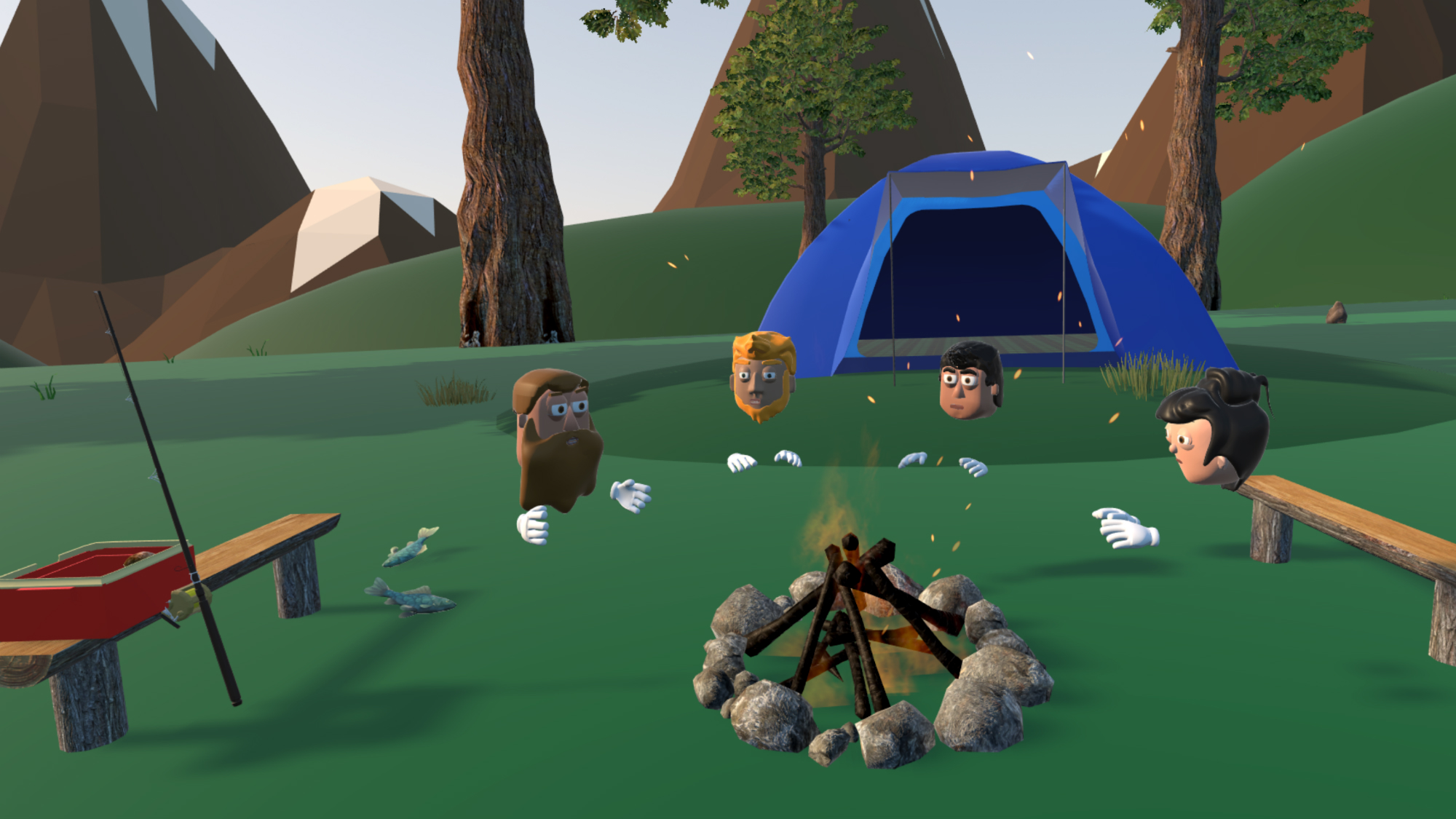
The tech buzzword of the season is “metaverse.” Facebook kicked the craze into high gear at its Connect conference in late October, featuring an hour-long image-rehabilitation video where Mark Zuckerberg revealed the company’s new name, Meta, and showed off a vague digital-first future called the metaverse.
Dedric Reid has been selling his own version of the metaverse on and off for the past five years. He calls it MetaWorld and describes it as a persistent, decentralized space filled with life and change. It’s a “10,000 square mile vast-scale simulation, owned by community and run by community,” according to Reid. He’s said it’s his life’s work.
MetaWorld
Like many other organizations at the moment, Reid has been using the buzz around the metaverse to ramp up his own promotional efforts. MetaWorld has a slick website, a fresh YouTube channel, a new Discord server and Reid hosts daily chats on Clubhouse. He recently launched a marketplace where he's selling digital parcels of land and property as NFTs.
In the MetaWorld Discord server, a “press” channel lists articles from Engadget, Alphr, TechRadar, UploadVR, VentureBeat, Tom’s Hardware, Variety and CNBC, and links to a video from New Scientist magazine.
Early on November 3rd, a user named Wolfssskin entered the MetaWorld press room and started typing.
“Interesting that you think you can do the same scam again,” Wolf said.
“What’s interesting is that you think that you can stalk and harass me,” Reid wrote back. The confrontation continued with Reid accusing Wolf of being a troll, and Wolf claiming MetaWorld was a scam. The exchange has since been deleted, and Wolfssskin banned from the server.
However, Wolf is active on another Discord server — this one also called MetaWorld and also created by Reid, though he hasn’t posted in it since 2019. The old server is full of angry users who say they gave Reid their money between 2016 and 2018 to join MetaWorld, and believe they were scammed.
Reid’s final message in the old MetaWorld Discord server was posted on September 6th, 2019: “Check updates on the updates channel in coming weeks … I'll also be around with mods for discussion all week.” No update ever came, and in the two years since, the old server has become a guide to the seven stages of grief.
“It's disgusting to think that they have just left paying customers with not even a response,” a user named LordGirthVader wrote in June 2020.
“Yeah but that’s the thing,” another user named Floogey responded, “We weren’t actually customers, we were victims.”
Engadget first interacted with Reid in 2016, when a UK startup named Improbable arranged a meeting inside a MetaWorld prototype to demonstrate Spatial OS, the startup’s scalable server tech. Reid was one of several developers to make use of the company’s public SDK, and Improbable thought MetaWorld made an effective demo to promote its “open community platform.”
Shortly after the launch of that prototype, Improbable stopped promoting or mentioning MetaWorld at all. By 2017, questions were being raised about Reid’s ability to deliver on his ambitious promises, which included a custom avatar system, a living world as large as the state of Maryland, a virtual economy, rich environmental simulations and cross-platform capabilities for a variety of VR headsets.
Reid started an Indiegogo campaign in April 2017, a move that prompted his former business partner and MetaWorld prototype developer, Carelton DiLeo, to publicly distance himself from the project. DiLeo noted that he was “not currently working on MetaWorld” and didn’t know how Reid planned “to deliver on the promise of the fund.”
The Indiegogo campaign was not a success, eventually raising $3,674 of a $50,000 flexible goal, meaning Reid got to keep all of the money pledged. This was followed by a new revenue-driving initiative: land speculation. In September 2017, Road to VRnoted that Reid was selling virtual land for real money, and detailed the many questions surrounding the project. Land was available to buy in three tiers, ranging from $15 for a quarter acre to $100 for two acres, though it was unclear what exactly players would do with this property, how the economy would function or how people who didn’t buy land would join the game.
MetaWorld was listed on Steam as an Early Access title in mid-2017, advertising consistent updates and transparent, community-driven development. There was no actual game to play, no virtual world to explore, but Reid was selling land in MetaWorld regardless. On September 28th, 2017, a blog post in the MetaWorld Steam community claimed land titles were being sent out to investors, supported by a cryptocurrency Reid had created called MetaCoin.
In its September 2017 article, Road to VR concluded, “MetaWorld is headed into Early Access, which partly excuses it from being an incomplete product, but the inconsistency in messaging around the game’s core mechanics and features ought to leave you worried about the stability of the still unreleased MMO.”
By early 2018, Reid claimed he had been investing in crypto for several years to form the economy of MetaWorld, using the cash from early land sales to build the MetaCoin fund. He said he wasn’t personally making any money in the process, and all of the money coming into MetaWorld was being converted into cryptocurrency and kept in a single place called the Metabank, where it was reserved specifically for this new virtual economy.
The 2016 MetaWorld prototype Engadget experienced.
MetaWorld
Reid told Engadget in 2018, “We're a community-funded entity. So we've been working on that, in fact taking on cash and kind of forming it into cryptocurrency, and building an economy.” He said he was using “robo-trading, a couple different investment tools to grow the money.”
Roughly a year after saying that, Reid left his final message in the original MetaWorld Discord and disappeared from the server.
A few weeks after Reid’s quiet exit, a user named Immortal posted in the lobby, “Been a while since I’ve heard anything on this game and even longer since my money was happily taken for it. Anyone know anything about this release or is this just one of those things that never happen?”
“I don’t expect anything to happen,” a user called Myrothas replied. “Asked for a refund a year ago and many times. All I heard was: send me a mail. I did do that multiple times and never received an answer. Quite the red flag for me.”
Myrothas, real name Johannes Fischer, shared with Engadget a 2018 email exchange where he requested a refund through the MetaWorld help channel. “Backed this project about a year ago and expected it to come out already,” he wrote in the email. “I’d like to ask for a refund.” He says he never received his money.
Engadget interviewed Reid twice in 2018. In these interviews, Reid explained how paying customers would build MetaWorld themselves, and how cryptocurrency would make the whole thing work as a decentralized, libertarian dreamscape. With players responsible for funding and developing MetaWorld themselves, it was difficult to pin down what exactly Reid was selling.
One year after the launch of his crowdfunding campaign, Reid said he had “a design worked out in Unity” for MetaWorld, and he planned to transfer this into the existing Spatial OS ecosystem — even though Improbable, Spatial OS’ parent company, wasn’t actively supporting the project any longer. He claimed he’d built a procedural terrain generator for VR and also a robust avatar system with “head tracking, eyes, eye blinking, eye gazing, lip sync, upper torso support,” though these features weren't ever demonstrated.
Most of Reid’s goals never materialized. The MetaWorld release date was pushed back again and again, until eventually the Steam page simply read, “Soon.” Reid showed off high-fidelity environments on YouTube and Discord, and then later revealed MetaWorld would be a Google Blocks project, making those assets impossible. MetaWorld never went live.
“We had a lot of broken promises right off the bat, that was a pretty major flag,” one early adopter told Engadget under the condition of anonymity. We’ll call them Morgan. “And the community was very quick to do some snooping.”
Engadget spoke with 11 original MetaWorld investors, including people who were deeply involved in the community and often interacted with Reid directly. Many of these members asked not to be named, considering Reid had their personal information and they didn’t trust him to not misuse it.
Users commiserating on the original Discord server in 2020. (Enlarge)
MetaWorld/Discord
After a few months of missed launch dates and hollow promises, MetaWorld members discovered Reid was using images from 3D model site TurboSquid to sell land and in-game items, and they said he changed critical details about the engine and development process seemingly on a whim. As people would ask for refunds in the original Discord server, Reid would call them trolls and delete their messages.
At the time, as calls for refunds were flooding the MetaWorld community, Reid told Engadget he was “in the process of coming up with a better refund policy” and he wanted to honor these requests, but it was difficult to do so without seriously affecting development. Not that Reid planned on doing much development himself — as he described it, he was a designer, the guy with the vision. According to his plan, the community would do the actual coding and game-making, after buying their way into MetaWorld.
“It was around then that we learned that users would also be responsible for creating assets,” Morgan said. “Assets included anything from buildings to animals… but we'd also be responsible for creating jobs, and performing said jobs to earn currency on the blockchain.”
Besides that, Reid told Engadget he planned to piggyback off the work happening at multibillion-dollar companies like Facebook, IBM and Google. He pointed out that these organizations had already built VR worlds, avatar systems and AI frameworks, and he said he’d simply use these to create MetaWorld. He seemed unconcerned with the concepts of intellectual property and trade secrets.
“From my perspective, all code is done and written,” Reid said. A few minutes on, he continued, “The code that drives the artificial intelligence — Watson, or just name your AI code — it exists, right? So I can play with concepts, whereas code's already written, right? You know what I mean? I can take from any code set I want. And I think by understanding code — I also write code. But rather than get heads down on writing code, I sort of enjoy dreaming up concepts and just understanding how things are put together.”
In the end, Reid was basically selling an early-concept Roblox, in VR and for adults. But first, he was asking players to build the game itself and pay him for the privilege. After all, he said, actually making MetaWorld was the easy part.
“This stuff is like, it isn't rocket science,” he said. “It's really pretty straightforward to throw a couple objects around and create a couple simulations, a couple VR simulations and put them together. That's not the hard part, like, making some VR games.”
That rudimentary 2016 demo, built before developer DiLeo left the team, is the only public proof that Reid’s MetaWorld has ever existed as an inhabitable virtual place. DiLeo went on to build his own simulated environment using Spatial OS, and he sold it in October 2018 to Somnium Space, which is an established, decentralized VR platform powered by blockchain. As part of that deal, Somnium Space offered a refund and land-exchange program for angry MetaWorld customers, in an effort to rebuild trust in VR development as a whole.
In October 2021, two years after Reid’s final message in the old Discord, a new MetaWorld server appeared. It had a fresh logo, links to his Clubhouse group, and the same pitch as before. A “passports” channel linked to a page where people could pay $10, $20 or $30 for “exclusive community access,” the opportunity to build MetaWorld, and early bidding on future NFT drops.
At the time of publishing, MetaWorld NFTs have raised 5,126 MATIC (around $11,000) since their launch on November 25th.
Listings for MetaWorld NFTs.
MetaWorld/Niftykit
Reid is now selling virtual land and properties as NFTs on the Polygon network, and people are buying. Land tends to run from $50 to $600, payable in Polygon’s MATIC currency, while a “Piano House” costs $650 and seems to be available via cash payment only. The MetaWorld website claims just 10 of these houses will be minted and simulated.
“So much excitement, creative thoughts and passion for the future,” Discord user Clare Bratina wrote in the new MetaWorld server on November 25th. “Definitely backing the creators and looking forward to learning how to create in the metaverse and on metaworld.”
Every now and then in the new server, a random member will spam the channels with warnings claiming that MetaWorld is a scam, and Reid will deny it and delete the messages. Just like old times.
There is one new, unexpected feature of the revamped MetaWorld campaign: Reid, who happens to be Black, is targeting people of color.
“So happy this exists!” a user called NiKole wrote in MetaWorld’s “town-square” channel on September 5th.
In October, a member named PixelPil0t posted, “Happy to join your Metaworld! Excited to see what you build Dedric, your background is incredible.”
Over the past few months, Reid has been doing much of his MetaWorld marketing on Clubhouse, where he has 1,800 followers and regularly joins talks with the Black Metaverse community, which is run by NiKole. Here’s how Reid closed out a Clubhouse chat for Black Women in Blockchain on November 5th, after spending a few minutes selling MetaWorld as a Hawaii-sized VR landscape where players would be able to fly airplanes and play around in a persistent, living environment:
“Much of the inspiration for the world is gearing it towards POC first. You know I've been in, sort of, the games and media industry for quite some time. And, you know, as a community we're often left behind. It's, you know, the computational world isn't exactly ‘us’ first, sort of, you know, we've been an afterthought. So now we are. So check out the identity system. Look forward to seeing Black faces in the MetaWorld. Peace. My name is Dedric.”
New users have been trickling into the new MetaWorld Discord server and Reid has been organizing its channels, most of which are empty. It’s mostly newcomers, but there are also a handful of folks from the old MetaWorld server floating around, tracking the similarities between the previous project and the new promises.
The "creators" channel showed off MetaWorld's photogrammetery. (Enlarge)
MetaWorld/Discord
The new server used to have a “creators” channel where Reid shared images of Redwood trees and forest foliage going through the photogrammetry process, and one old-server user noticed artifacts on the pictures, where it looked like text had been Photoshopped away. This user found the original images on a website unassociated with MetaWorld or Reid, and Engadget eventually traced all the images in channel back to an 80 Level interview with environmental artist Willi Hammes of MAWI United.
Engadget spoke with Reid in November, when the creators channel was still live, and asked him what photogrammetry software he was using to build MetaWorld.
“I'm not actually sure,” he said. “I'm not working on the photogrammetry stuff. So I'd have to ask somebody from my team what they're using to capture it.”
Original backer BenG found the original versions of many MetaWorld-related assets.
Discord
Reid said he had a few freelancers working on the project, but he presented himself as the sole full-time creator of MetaWorld. Minutes after our interview, the creators channel disappeared from the Discord server, taking all the photogrammetry claims with it.
Other MetaWorld assets vanished around this time, too. Reid deleted and unlisted at least two YouTube videos after facing questions about their origins. One of them, called “Generative + Procedural Design Redwood Creek,” was a minute-long speedrun through the Unreal Engine 4 development process, showing the creation of a lush forest scene. It was published on October 31st. The MetaWorld logo was prominently displayed over the entire video, it started and ended with the URL for the MetaWorld website, and its description read, “Using a combination of procedural / generative Design and hand freehand design to construct MetaWorld Redwood Creek region.”
After establishing we were talking about the same video, I asked Reid point-blank, “So that video, that was you in MetaWorld making something?”
He was silent for seven seconds. “The video’s MetaWorld, yes,” he finally said.
However, the footage in question was originally posted to YouTube by a user named Nitrogen in March 2019, without any of the MetaWorld bits. The MetaWorld version was edited down and cropped in places, but it was the same video. Reid did not make it, nor was it an example of anything he had built in MetaWorld.
I brought this information to Reid’s attention.
“Are you talking about promo videos?” he asked. I responded that I meant the videos on the MetaWorld website and YouTube channel, which we’d been discussing for a few minutes.
“Oh cool promo videos, yeah yeah yeah,” he said. “Right on, yeah, you’re talking about the promo videos.”
I clarified, “This one’s called, ‘Generative plus Procedural design Redwood Creek.’”
“Yeah, we're showing the power of Unreal Engine,” Reid said.
“So that’s not you?” I asked. “That’s not MetaWorld?”
“We’re showing the power of Unreal in our videos on YouTube,” Reid responded.
I then questioned Reid about a second video published on the MetaWorld YouTube channel on October 31st, this one called “Designing MetaWorld.” It was just five seconds long and showed a windswept valley, long grass blowing in the digital breeze. In reality, this upload was a snippet from a longer video by Joe Garth, posted in June and with more than 1 million views.
Reid repeated the argument that these videos were examples of the tools that would be used to build MetaWorld.
“As an industry we’ve been using these tools, this is a pretty common toolset that much of the industry has had access to — is there something different when we do it?” Reid said. “So I hear that a lot, ‘I hope this isn’t an asset flip.’ Well, no, we’re showing you what’s possible and we’re using the same pipelines and assets that everybody else is using. I find that interesting, that when we use assets, it’s a problem. But Joe Schmo white dude uses assets, nobody says anything. I feel like there’s a double standard. It’s frankly kind of annoying at this point.”
An image on an NFT that sold for $374 appears to have been sourced from an artist's ArtStation page. (Enlarge)
Before our interview had even wrapped up, the first MetaWorld video had been unlisted and the second video deleted entirely. On November 16th, the MetaWorld website was updated with new assets and a fresh video called “Esselen Redwoods,” which was branded with Reid’s white-and-blue MetaWorld logo. It appears this walkthrough was originally uploaded by Simon Barle, an environment artist at DICE, back in 2015, as “Redwood Forest UE4.” The accompanying assets seem to be taken from Barle’s original work as well.
Reid is using these lifted images to sell land as NFTs on the official MetaWorld website and in cryptocurrency marketplaces. He’s advertising two different environments, Esselen Creek and Esselen Islands, and apparently using misappropriated assets for both. The Esselen Creek images seem to be Barle’s, while a new video titled “MW Esselen Creek Promo 1 1” appears to be a chopped-up version of this 2017 upload by MAWI United. The MetaWorld version is emblazoned with Reid’s MetaWorld logo alongside the words, “World’s First Simulated Environment NFT.”
A MetaWorld promo comprised of footage from environment asset company MAWI United.
The Esselen Islands images look like cropped and mirrored versions of Island Landscape - B, a content pack uploaded to the Unreal marketplace by user Gokhan Karadayi in January 2019. The Islands NFTs aren’t live for purchasing yet, but the presale page collects name, email and crypto-ownership details from interested users.
Meanwhile, the “Piano House” that Reid listed for $650 is actually the historic Farnsworth House, and it’s being advertised with an image taken from Russian site CGBandit, uploaded by user chel0ve4ek before February 2021. The original image comes from a ready-to-render scene pack containing Photoshop files based on the Farnsworth House, including foliage, furniture and high-quality textures that Reid definitely did not make himself.Another page for the Piano House NFT, which has since been removed, showed 3D renders of an entirely different property, LINE Architects’ Piano House.
Reid has a clear modus operandi when it comes to advertising MetaWorld: find other people’s images and videos of impressive Unreal Engine environments, edit out the original watermarks, and present them as his own. Meanwhile, Reid has never provided any evidence that MetaWorld has ever looked like any of these assets.
This entire land-acquisition model dates back to the 2003 game Second Life and has recently been popularized in NFT form by Decentraland and similar platforms, with Decentraland’s virtual economy valued in billions of dollars. When it comes to the Esselen NFTs, the issue is that as far as we can tell, the MetaWorld Reid’s been promising has never existed at all.
The Esselen Islands landscape is seemingly taken from the Unreal Engine marketplace.
Engadget
In that Clubhouse monologue on November 5th, Reid claimed MetaWorld was already live, and had been for a few years.
“The other unique aspect of this world is the sheer size of it,” he said. “It exists in the cloud. We pushed it to cloud a couple years ago, and it's been kind of living and breathing on its own. There's sort of an AI operating system, if you will, kind of a world-operating system that manages the world and generates the land.”
This differs from the messaging Reid provided in interviews with Engadget. Reid had difficulty answering standard questions about the revamped MetaWorld, including how the project was being funded, what he’d actually built, where it was hosted, how he planned to sustain this massive world, and how many players he had.
After saying he was “not sure” how many players were active in MetaWorld, I asked, “Like dozens of people, hundreds of people?”
“So, I don’t know,” Reid said, before talking for a few minutes about the scope of the project, repeatedly calling it a “moonshot” for his main company, HelloVR. HelloVR seems to exist mainly as a LinkedIn page, with Reid and “Meta Bot” as the only two employees. Reid is listed as CEO. Reid in our interviews has said he works alone with contractors but also recently claimed to have a “partner.”
When confronted with the misleading nature of his assets or the discrepancies in his pitch, Reid responded with a singular argument: This was just another example of racism in the technology industry.
“It’s YouTube — am I missing something?” Reid said. “Is YouTube not a place to share videos? So again, there’s an issue when we share videos, but the nature of YouTube is to share videos, everyone else gets a pass?”
Reid isn’t wrong that the technology sector is dominated by heterosexual, cisgender, white men, and the industry has only recently begun recognizing and reckoning with this imbalance. That’s one of the reasons I was initially excited to interview Reid all those years ago; he was a Black developer in VR and his project sounded amazing. Only once I started asking questions, a lot of Reid’s ideas didn’t add up. And now he’s back with the same approach, but he’s specifically targeting people of color, which he knows is an underserved community.
“It doesn't sit right with me that he's selling this as being a ‘Black-owned’ project,” Morgan said. “I have this terrible feeling that he's using that to try and protect himself from backlash, because anyone who would go to attack him there could be labeled as racist.”
On Clubhouse and Discord, Reid regularly presents himself as a hyper-intelligent tech entrepreneur with ideas guaranteed to change the world. In interviews with Engadget, however, he acts confused by basic concepts like YouTube uploads, copyright and IP theft.
“If they come across as disingenuous, oops!” Reid said about his YouTube history. “Like, all right, but that wasn’t the intent, we can sort of learn from that. The last thing we want to do is like, piss a bunch of people off.”
The original MetaWorld server is filled with people who could be accurately described as “pissed off.” Many of them bought land the first time around and ended up requesting refunds, citing Reid’s inconsistent messaging and lack of results over a period of years.
One investor who asked to remain anonymous, called Kris here, said they joined MetaWorld in 2018 because they loved VR and wanted to support small, innovative developers. Kris spent at least $60 on virtual land and defended Reid in the original Discord server until the day he disappeared.
“The vision of sharing an open world with people who want to build something big catches me every time,” Kris said. “It would be so great if a game comes that includes what MetaWorld promised. ...We planned a whole city, we were very deep into this and really hoped that we could someday visit ... but after a while a lot of people asked for refunds, day after day, with no response from Dedric. After he wrote that last message there wasn’t a Dedric anymore, and all hope was gone.”
Another investor who asked for anonymity, whom we’ll call Ryan, joined MetaWorld as an escape from their real-world anxieties. Ryan is disabled, and saved for a VR headset before discovering MetaWorld in 2018.
“I was looking desperately to find something to just change the boredom of life,” Ryan told Engadget. “My life sucks. I've got a heart failure complicated with a bunch of other stuff right now, and I just can't get out and do things in the real world.”
Ryan shared receipts of all of their purchases with Engadget, alongside chat logs with Reid and an account called “Metabot,” which was controlled by Reid at least part of the time. Both reassured Ryan over the course of several months that all was well with MetaWorld.
“At first, even though I was concerned, I was still hoping that the project would happen,” Ryan said. “I tried to be patient.”
In total, Ryan spent almost $300 on passports, land, property and virtual currency. They never directly asked for a refund from Reid. By the time Ryan thought to do so, they saw multiple people had tried and failed to get their money back, and it didn’t seem worth the stress.
“I felt like I had been scammed, and was embarrassed,” Ryan said. “Due to the nature of a scam, I didn’t feel that there was a point. I was not getting answers in DMs … so I just gave up.” Ryan later heard from another community member about Somnium’s refund offer, and recouped his money from that company.
“Dedric and his group, I don't know who's responsible, mostly it bothered me a lot because they took advantage of me,” Ryan said. They continued, “They apparently don’t care for anybody except themselves … I lost a little faith at that time.”
These days, Ryan said they only use their VR headset for Beat Saber exercise, but they’ve found some friends and community in the MMO Dual Universe.
In a five-hour Discord call with the MetaWorld community in September 2018 (yes, five hours), Reid dodged probing questions from investors and made more bold claims. For one, he said MetaWorld was on track to launch in beta at the end of the summer, which was just three days away. A few callers chuckled and made snide comments at this goal, clearly in disbelief.
“Yeah, we're pushing for it to start next week,” Reid responded. “What's so funny about that?”
MetaWorld did not go live at the end of that summer. Of all the investors we spoke with, none of them received a refund from Reid.
As it stands in 2021, Reid still doesn’t seem to understand why anyone from the original round would want their money back, and he remains confused by the definition of “a refund.” This is years after Somnium Space facilitated refunds to some angry MetaWorld backers.
“This narrative of like, there's been anything disingenuous, is like nonsense, right?” Reid told Engadget this year. “It doesn't make any sense. Like, that doesn't necessarily fit into, as a leader of the project, my narrative, right? So like, yeah, so there's a lot of confusion around like, what a refund is. But like, the whole concept of refund was created by the folks over at Somnium.”
For early investors like Fischer, Kris, Ryan and Morgan, Reid’s stream-of-consciousness, nonsense-tinged responses are all-too familiar.
“I’m still mad about the whole thing, that one guy can do a scam on the web without consequences, it looks like he doesn’t even care,” Kris said. “Just think about some kids pumping their money in there for nothing, just an old man doing scams. That’s pretty sad.”
Reid is currently pitching the vague idea of MetaWorld on Clubhouse, Discord, Twitter and YouTube, and he said people are buying in (though exactly how many, he’s not sure). His NFT marketplace full of misappropriated assets is live, and so far, he’s raised more than $11,000. It's impossible to know how much Reid made from the initial backers, but at its height the first MetaWorld Discord had around 2,000 users, according to an ex-moderator we spoke with.
A Trello board linked on the new MetaWorld site serves as a roadmap for development and NFT drops, and current goals include a “land client” due February 14th, 2022, and “social simulation testing” due March 2022, complete with “Spatial OS Unreal Engine 5 support pending.”
Improbable, the company that runs SpatialOS, has no idea what Reid means by this claim. In a statement to Engadget, Marine Boulot, Improbable’s VP of PR and Communications, said, “Improbable has never had a commercial relationship with HelloVR/MetaWorld … neither HelloVR nor MetaWorld have any right or licence to use SpatialOS beyond any legacy prototyping kits they might have had access to years ago.”
Put simply, Reid does not have access to SpatialOS to build the game as he’s selling it.
It doesn’t end there: The quotes attributed to Engadget on the MetaWorld website and Reid's Clubhouse profile are fiction. One of them is credited to a writer that's never worked for Engadget.
Misattributed quotes on the MetaWorld website and Reid's Clubhouse profile.
Engadget
The original MetaWorld Discord server is still active — more active than the new, official one, even — and it’s filled with folks looking for closure and a way to warn potential investors about the lies they say they’ve encountered in Reid’s universe. Reid never shut down that server, saying he was hacked and lost access to the email account associated with it years ago, and adding that Discord had ignored his request for assistance.
A former member provided proof that Reid had access to his MetaWorld email account in April 2020, seven months after he last posted in the Discord server. At this point, that’s barely a surprise.
“He promised us this special, unique world where anything was possible,” Morgan said. “That we could build out our dreams in this place with no limits… and then just took our money and lashed out when we asked for updates or help. We were promised villages and towns with our own governance, that we could have full control over our collectives. I was really looking forward to making that persistent safe space where anyone was welcome.”
That seems to be exactly what the people in the new MetaWorld server want, too.
“Im not going anywhere,” a user called KBOT wrote on November 7th. “I support @dedricreid and @themetaworld completely!”
Meanwhile, in the old MetaWorld server on November 8th, user Kuma posted, “Please please please. Everyone with real evidence, expose him. He’s gaining loads of traction.”
For now, it’s a tale of two servers, with a vast digital paradise hanging in the balance — or not, depending on which channel you’re in.
Additional reporting by Aaron Souppouris, Executive Editor, and Nick Summers, who was a Senior Reporter at Engadget until early 2021.
Piepacker has added five Atari titles to its catalog of retro games. Starting this week, you can play the PlayStation versions of Pong, Asteroid, Breakout, Centipede and Missile Command online with your friends. As with every other game available through the platform’s catalog, all you need to play is Chrome. You can use any controller you have available to you. A keyboard works too. If you decide to play with your friends, there’s built-in video chat with support for augmented reality masks. You can also chat over text, if anyone is camera shy.
🕹️ ANNOUNCEMENT 👾 Arcade players out there, this is your moment! Really excited to welcome @atari as our new partner 🎉 🎉 🎉 5 legendary classics and their PS1 editions are dropping for free on Piepacker right now! pic.twitter.com/CANpRHp6hx
Every game you see on Piepacker is fully licensed. Its library currently includes more than 60 titles. There aren’t too many familiar names, but you’ll still find gems like Windjammers and Earthworm Jim. One thing to note is the platform is still in open beta, so expect some amount of jank.
You won't have to wait too much longer to catch Marvel Studios' Eternals on Disney+. The movie will be available to stream on January 12th. That's just over two months after the most recent Marvel Cinematic Universe film, which received lukewarm reviews, arrived in theaters.
In September, Disney announced that its remaining slate of theatrical releases would get at least a 45-day run in theaters before they were available to stream — save for Encanto, which will hit Disney+ on December 24th, just 30 days after it landed in cinemas. Eternals was one of those movies, but Disney evidently decided to keep the movie exclusively in theaters beyond that minimum timeframe of 45 days.
Starting with Mulan last September, Disney experimented with allowing Disney+ subscribers to stream theatrical releases at home on the same day they debuted in cinemas for an extra fee. However, Scarlet Johansson sued the company, claiming that the streaming strategy cost her up to $50 million in lost earnings from Black Widow. Disney settled the suit.