If you're concerned that Amazon might misuse palm print data from its One service, you're not alone. TechCrunchreports that Senators Amy Klobuchar, Bill Cassidy and Jon Ossoff have sent a letter to new Amazon chief Andy Jassy asking him to explain how the company might expand use of One's palm print system beyond stores like Amazon Go and Whole Foods. They're also worried the biometric payment data might be used for more than payments, such as for ads and tracking.
The politicians are concerned that Amazon One reportedly uploads palm print data to the cloud, creating "unique" security issues. The move also casts doubt on Amazon's "respect" for user privacy, the senators said.
In addition to asking about expansion plans, the senators wanted Jassy to outline the number of third-party One clients, the privacy protections for those clients and their customers and the size of the One user base. The trio gave Amazon until August 26th to provide an answer. We've asked Amazon for comment.
This won't necessarily lead to government restrictions on One and other biometric payment tech. Amazon might not get much sympathy, however. The company has offered $10 in credit to potential One users, raising questions about its eagerness to collect palm print data. This also isn't the first time Amazon has clashed with government — cities have dropped Amazon's Rekognition face detection system, and Congress has proposed face detection regulations with Rekognition in mind. It wouldn't be surprising if the One investigation eventually led to legislative action, even if the effort isn't targeted specifically at Amazon.
Best Buy is back with a new three-day sale that reduces the prices of many gadgets, including laptops and tablets from Microsoft and Samsung. Through August 15, you can grab the Surface Pro 7 with its Type Cover for as low as $599 and a Core i5 model of the Surface Laptop Go for $750. Samsung's flagship tablets, the Tab S7 and S7+, are both on sale, while the already affordable Tab S6 Lite is even cheaper at $270. Here are the best tech deals we found in Best Buy's latest weekend sale.
Google WiFi (3 pack)
Google
Google's mesh WiFi kit with one router and two access points is $50 off, bringing it down to $150 (Amazon's matching the deal as well). This system came out at the end of last year and it supports speeds up to 1.2Gpbs. Each node covers up to 1,500 square feet, so you're getting a ton of coverage with this three-pack. While it's not as fast as the Nest WiFi system, it's a good upgrade for those who may still be relying on a router from their ISP.
The Galaxy Chromebook 2 is down to $449 for the Intel Celeron model with 4GB of RAM and 64GB of storage. The Core i3 model will set you back $599, but that's still a decent deal. We gave this laptop a score of 82 for its impressive screen, loud speakers and solid performance.
The base Surface Pro 7 with its Type Cover is down to $599 for this sale, or $360 off its normal price. This model has a Core i3 processor, 4GB of RAM and 128GB of storage — we'd be wary about using a device with 4GB of RAM as your primary device (unless it's a Chromebook), but this would make a good convertible for those that want a lighter device to tote around with them.
The latest LG OLED lineup just became available a few months ago and now you can grab the 55-inch A1 model for $1,300. The A1 series is the most affordable of the bunch, making these sets good options for anyone looking to upgrade to OLED while on a tight budget.
The 55-inch, mid-tier LG C1 OLED TV is down to $1,500, or $300 off its normal price. It uses LG's a9 Gen4 AI Processor 4K and supports HDMI 2.1, G-SYNC and FreeSync for gaming and voice commands using Alexa or the Google Assistant.
Microsoft's Surface Laptop Go with a 10th-gen Core i5 processor, 8GB of RAM and 256GB of storage is $150 off right now, bringing it down to $750. This is a good price for the upgraded model with more RAM, as most people will need at least 8GB on their daily driver. We gave the Laptop Go a score of 81 for its solid, minimalist design, excellent keyboard and trackpad and speedy performance.
Best Buy and Amazon have knocked $120 off Samsung's Galaxy Tab S7, bringing the total price to $530. The S7+ is also on sale for $730. This slab earned a score of 80 from us for its lovely 120Hz display, attractive build and long battery life.
Samsung's affordable Android tablet is even cheaper in this sale — the Galaxy Tab S6 Lite is down to $270, or $80 off its normal price. If you're looking for a capable Android tablet that won't break the bank, this is one that gives you a number of premium features at a great price. We gave it a score of 84 for its sturdy, attractive design, long battery life and excellent note-taking features with the S Pen.
The Fujifilm X-T3 mirrorless camera is $300 off during this sale, bringing it down to $1,200. Although Fujifilm debuted the X-T4 last year, the X-T3 remains a good option if you're on a tight budget. We gave it a score of 90 for its faster autofocus, excellent image quality and its compact, weatherproof design.
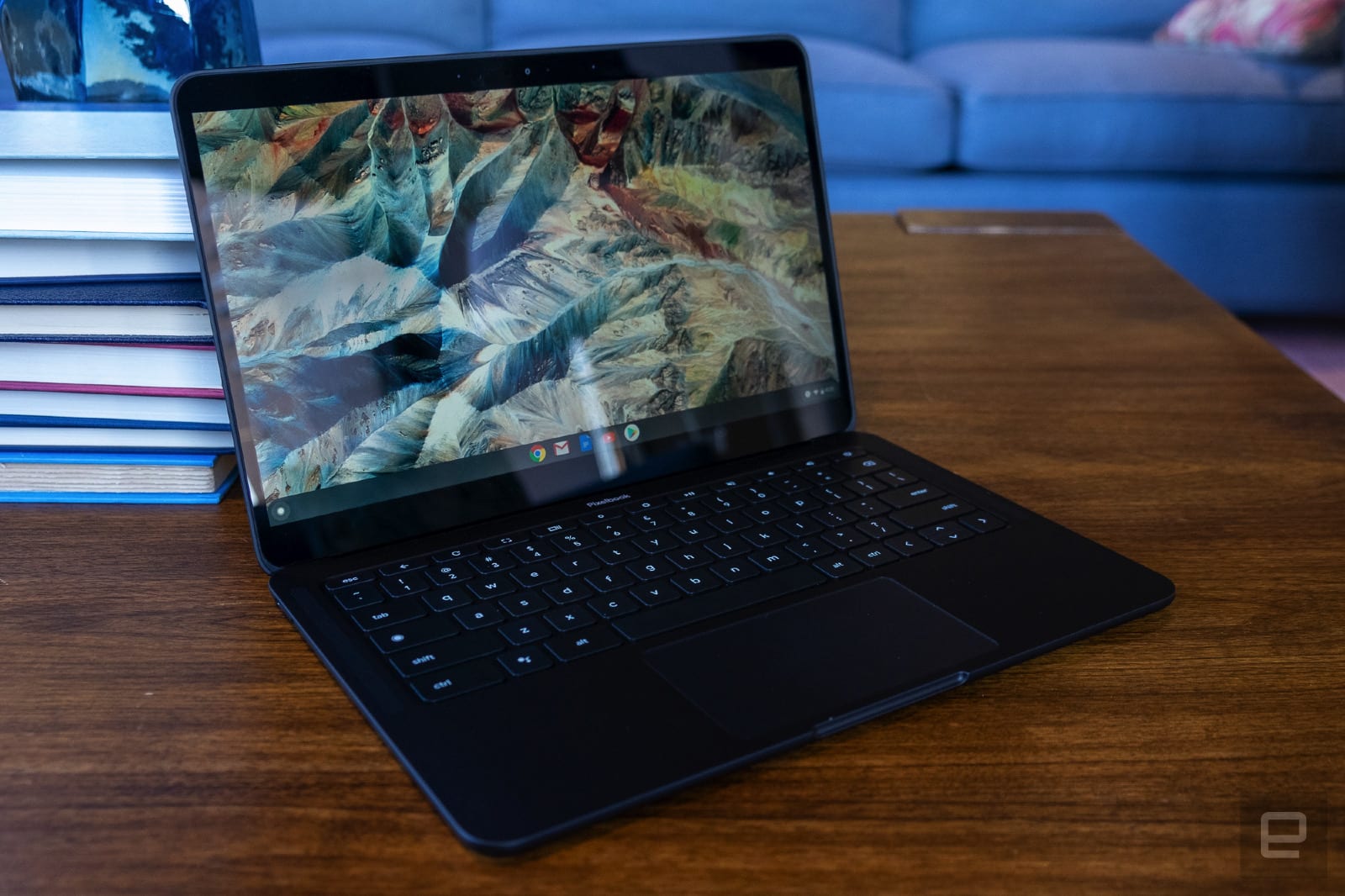
We thought the Pixelbook Go was a bit too expensive for a Chromebook (even a high-powered one at that), but this sale knocks it down to $750. That gets you a Core i5 processor, 8GB of RAM and 128GB of storage — more than enough power for most Chrome OS users. We gave the Go a score of 84 for its thin-and-light design, good performance and solid battery life.
This week, Cherlynn and guest co-host Mat Smith are joined by foldable aficionado and tech personality Michael Fisher (aka Mr Mobile) to talk all about foldables. Specifically, Samsung’s Galaxy Z Fold 3 and Z Flip 3, as well as the new Galaxy Watch 4 series and Buds 2. Then, our hosts try to make sense of the confusion around Apple’s CSAM-detecting features, and go over some other gadgets launched this week.
Listen below, or subscribe on your podcast app of choice. If you've got suggestions or topics you'd like covered on the show, be sure to email us or drop a note in the comments! And be sure to check out our other podcasts, the Morning After and Engadget News!
Credits Hosts: Cherlynn Low and Mat Smith Guest: Michael Fisher aka MrMobile Producer: Ben Ellman Livestream producers: Julio Barrientos, Owen Davidoff, Luke Brooks Graphics artists: Luke Brooks, Kyle Maack Music: Dale North and Terrence O'Brien
In the latest twist to the Poly Network crypto hack, the perpetrator who returned most of the $611 million in stolen digital tokens is being offered a $500,000 reward. The prize is a bug bounty to be precise, an incentive offered by tech organizations to those who report security vulnerabilities. In a statement, Poly Network referred to the culprit as a "white hat" in reference to his status as an ethical hacker. The decentralized finance platform thanked the hacker for "helping to improve" its security, but did not mention how it would pay the reward or whether it had been accepted.
$342 million (As of 12 Aug 08:18:29 AM +UTC) of assets had been returned: Ethereum: $4.6M BSC: $252M Polygon: $85M
A person claiming to be the perpetrator confirmed that Poly Network had offered him a $500,000 bounty to return the stolen assets and promised that he would not be held accountable for the incident, according to messages shared on Twitter by Tom Robinson, the chief scientist and co-founder of Elliptic, a crypto tracking firm.
It's not over yet! The PolyNetwork hacker seems to have sent the last $235m to a "shared multisig" account. Keys from both Poly & hacker are required to access them. The hacker says they will "PROVIDE THE FINAL KEY WHEN _EVERYONE_ IS READY". Full story:https://t.co/ifku7VUoqu
Poly Network connects different blockchains, the ledgers upon which cryptocurrencies are based, so they can work together. The company revealed on Tuesday that it was the victim of a massive crypto heist that saw a hacker make away with about $611 million in Ethereum, Shiba Inu and other digital currencies.
On Wednesday, the hacker began returning the stolen funds after claiming they were ready to surrender. Poly Network said on Friday that the hacker had repaid $340 million worth of assets into a digital wallet. All that remains is the $33 million in tether frozen by the company behind the cryptocurrency.
It's still unclear what prompted the hacker to backtrack. Some experts believe that they may have found it hard to launder and cash out the large amount of stolen crypto. While others suggest that the hacker was afraid of being exposed and prosecuted after researchers discovered a trove of identifying info, including an email and IP address. More broadly, the bizarre series of events further illustrates the pitfalls involved with cryptocurrency, an unregulated domain where hacks and scams are rife.
Last week, Apple announced that it was taking new steps to prevent the distribution of CSAM on its platform. This included a system to detect such material by scanning the images in people’s iCloud libraries, which has proved controversial. Privacy campaigners have said that this is the first step on a slippery slope to allowing governments all over the world access to people’s phones. That could have implications for activists and journalists in more authoritarian countries, something Apple has prior form in bowing to.
That’s why Engadget’s Karissa Bell has taken a deep, deep dive into what exactly is going on with all of this. If you’ve only heard snatches of what’s going on, and don’t quite get what the real world impacts are, then we’ve got you covered. She’s explored how the technology works, what Apple has said, and if anyone really needs to be concerned.
Zoom knows that not even the internet can dampen the allure of watching the class clown instead of your teacher. That’s why the company is unveiling Focus Mode, which is designed for educators trying to wrest control of their lesson back from the students. With it, teachers can see all of the students on their own feed, but each student can only see the teacher and whatever presentation the teacher is giving. That could be a key tool to keep kids paying attention especially with the Delta variant threatening to derail the start of school. Continue Reading.
It says it needs to in order to protect its users.
Amazon is planning to license keystroke-monitoring software to keep an eye on its employees when they work from home. A leaked document purportedly from the company says that there is a concern that remote working could lead to a rise in data breaches. As such, it’s planning to use software from a company called BehavioSec which tracks keyboard and mouse use. In a statement, Amazon said that it treated the security of user data with the highest respect, and that it was always exploring new ways of safeguarding its customers. Continue Reading.
If you’ve been waiting for VR to mature to the point where you can really get some value out of the technology, now may be the time. A number of companies are now making comfortable, usable and in some cases surprisingly affordable headsets for standalone and PC gaming. In our latest buyer’s guide, we explore the best VR gear for most people, the most affordable way to get set up, and which headset comes out on top as the best that money can buy. Continue Reading.
Honor, for many years, was a subsidiary of Chinese mega-corp Huawei responsible for making budget phones. When the US sanctions against the company began to bite, however, Huawei sold Honor off so it could try to flourish as a standalone business. Now, Honor is reintroducing itself to the world with the Magic3, a new flagship with a “more-is-more-is-more” approach to photography. The Magic3 Pro+, for instance, has a 50-megapixel primary camera, flanked by a trio of 64-megapixel sensors for zoom, wide-angle and monochrome photography. Honor says that it can even shoot cinema-quality video, which is a feature we can’t wait to test. Continue Reading.
The best Star Trek series since Deep Space Nine is back, and it’s as good as it ever was in its first year. Lower Decks features the crew of the USS Cerritos, with an emphasis on those folks who aren’t doing all of the top-tier adventuring on the bridge. In our preview of the second season premiere, you’ll find out if it remains as funny as it was, if it stays true to the show’s core and if it’s worth tuning in, although given that it airs on Paramount+, we probably shouldn’t say “tuning in'' any more, should we? Continue Reading.
Apple has given a release date for the second of two Tom Hanks films it acquired during the pandemic. Finch, a futuristic tale about a reclusive inventor and his canine and robot road buddies, hits Apple TV+ on November 5th. Like Hanks' war movie Greyhound before it, the film became a casualty of the pandemic, mired by release date delays until Apple swooped in to acquire it from Universal. The robot (pictured above) is played by Caleb Landry Jones, fresh off a best actor win at Cannes.
Hanks plays the titular character, an ailing robotics engineer who emerges from his self-imposed underground exile to journey across a desolate American wasteland. Along for the ride are his dog, Goodyear, and an android who names himself Jeff. Together, they make a dysfunctional family, but can they learn to get along? I guess we'll have to wait till November to find out.
Finch is also loaded with offscreen talent. The good-natured sci-fi flick is directed by Emmy-winning Game of Thrones lead Miguel Sapochnik, with Alien scribe Ivor Powell and newcomer Craig Luck on screenwriting duties. While director Robert Zemeckisserves as an exec-producer and the film hails from Steven Spielberg's Amblin Entertainment, which may explain why the plot gives off major Cast Away and AI vibes.
The November release date also signals Apple's possible confidence in the film's awards chances. Either that or it's just looking to add a major movie to its fall line-up, which is already stocked with big hitters like sci-fi series Foundation, the second season of The Morning Showand current affairs show The Problem with Jon Stewart.
Disney has apparently found "ways to fairly compensate" talent, even if it continues its hybrid release strategy. Company CEO Bob Chapek said during an earnings call that Disney has "entered hundreds of talent arrangements with [its] talent and by and large, they've gone very very smoothly." Chapek's statement comes in the wake of the lawsuit Black Widow star Scarlett Johansson filed against the company over its streaming strategy.
Johansson's salary was tied to the movie's box office success, and her original contract didn't cover earnings from a hybrid release. According to her complaint, she could lose over $50 million due to the company's decision to simultaneously launch Black Widow in theaters and on Disney+, where it made $60 million during its opening weekend. Back then, Disney released a statement calling the lawsuit "especially sad and distressing in its callous disregard for the horrific and prolonged global effects of the Covid-19 pandemic."
Now, Chapek said Disney is "trying to do the best thing for all [its] constituents and make sure that everybody who's in the value chain... feels like they're having their contractual commitments honored both from a distribution and a compensation standpoint." He didn't talk about specifics, however, or Johansson's lawsuit in particular. In Johansson's complaint, she said her camp tried to renegotiate her deal with the company upon learning about the simultaneous release. However, Disney and Marvel were allegedly unresponsive.
Chapek also talked about implementing an experimental release strategy for Shang-Chi. Unlike Black Widow, it will be a theater-exclusive for 45 days before making its way to Disney+. Further, subscribers may be able to watch it for free instead of having to pay extra for it like they've had to do with Mulan.
It can be hard for a single host to manage large unruly video meetings, particularly given the complexity and features available in video conferencing apps these days. Now, Google has a solution for its Meet app with a new feature that allows you to have up to 25 co-hosts in a meeting, as 9to5Google has reported. That way, they can split chore like muting participants, launching polls, managing Q&As and more, while you focus on the business at hand.
Until now, the feature was only available to Google Workspace for Education customers. Now, it's on all of Google's Meet apps across desktop and mobile, including users with personal Google accounts.
On top of that, Google introduced new controls for meeting hosts, which can be extended to co-hosts. All hosts will be able to limit who can share their screen, limit who can send chat messages, mute all with one click, end the meeting for all and control who can join the meeting and how they can join with the "quick access" setting. The latter allows participants in the same domain to enter automatically.
“Quick access” allows automatic video call entry for users in the same domain. If disabled, hosts must join first, and those that are not invited will have to request permission to enter. Otherwise, the host must join first and give permission to anyone who isn't invited.
The last feature, the "People" panel, adds search to let hosts quickly find participants if moderation actions are needed. The new features will begin rolling out next week on the web and Meet for Android, and the iOS version will arrive at the end of the month.
Google is updating its Nest Hub displays with a new feature that displays the air quality index (AQI), Android Central has reported. The feature will appear on the weather widget, showing a numeric ranking from 0 to 500 and color coding from green (good) to maroon (hazardous). Google is taking the data from the US government's AQI site used by the EPA to monitor air quality across the US.
Along with the AQI index and colors in the weather widget, Nest display owners can also ask Google Assistant for air quality information by saying "what's the air quality near me" or something similar. You can also ask Assistant to give alerts when the air quality your location drops to unsafe levels, a feature that could be handy for folks with respiratory problems.
The feature is rolling out as wildfires rage across the western United States, particularly in Oregon and California. "Between wildfire season and recent increased efforts to reduce air pollution, it’s more important than ever to know about the air quality in your area," Google said in a Nest community update.
The update will be rolling out in select markets "over the coming weeks," hopefully in those regions affected by wildfires and smoke. In our review, we called the $100 Nest Hub (2nd generation) "a great smart display and mediocre sleep tracker."
While it seems we won’t have to wait much longer for Ford to announce an all-electric Bronco, it probably won’t have the same classic styling as the 1972 version of the SUV. But if you have at least $260,000 in the bank, a company called Gateway Bronco will happily build you a vintage Bronco that’s specced like a modern EV. This week, it announced two new models, the Fuelie Electric and Luxe-GT Electric, that feature 220 kW electric motors that the company claims can accelerate the former gas-guzzler from zero to 60 miles per hour in less than five seconds.
Gateway Bronco
Range on the less expensive Fuelie model comes in at a claimed 200 miles, while the Luxe-GT (pictured throughout), which starts at an eye-watering $380,000, can travel up to 300 miles on a single charge. Other noteworthy features include 18-inch wheels that Gateway Bronco has fitted with Wilwood disc brakes and 33-inch Toyo tires. You also get a seven-year warranty on the electric drivetrain. Oh, and the interior looks sublime.
Gateway Bronco
Even when you account for inflation and the cost of all the modern technology Gateway Bronco has included in the Fuelie and Luxe-GT, a minimum of $260,000 is a lot of money for a restomod of a car that cost $2,194 in 1966. But it’s about the going rate for electric conversions of this type. You could do the work yourself once automakers like Chevy release electric crate motors later in the year, but you’re still likely looking at an expensive project.