As you gear up to enjoy the Labor Day holiday, you can also save on some of our favorite gadgets across the web. Apple's AirPods Max headphones are $120 off while the Apple TV 4K remains on sale for only $120. Amazon's swiveling Echo Show 10 is down to the best price we've seen since Prime Day in July, and Solo Stove has knocked up to 45 percent off all of its machines — including the new Mesa tabletop fire pit — for the holiday weekend. Here are the best Labor Day tech sales we found for 2022.
Solo Stove
Solo Stove
Solo Stove has discounted all of its fire pits and bundles for the Labor Day holiday. The Ranger 2.0, Bonfire 2.0 and Yukon 2.0 are down to $200, $230 and $430, respectively, and you can save on most bundles, too, including the Bonfire Backyard Bundle 2.0 that gives you a spark shield, stand, shelter, carrying case and lid along with the aforementioned fire pit. The sale also includes the new Mesa tabletop fire pit, which has been discounted from $120 to $80.
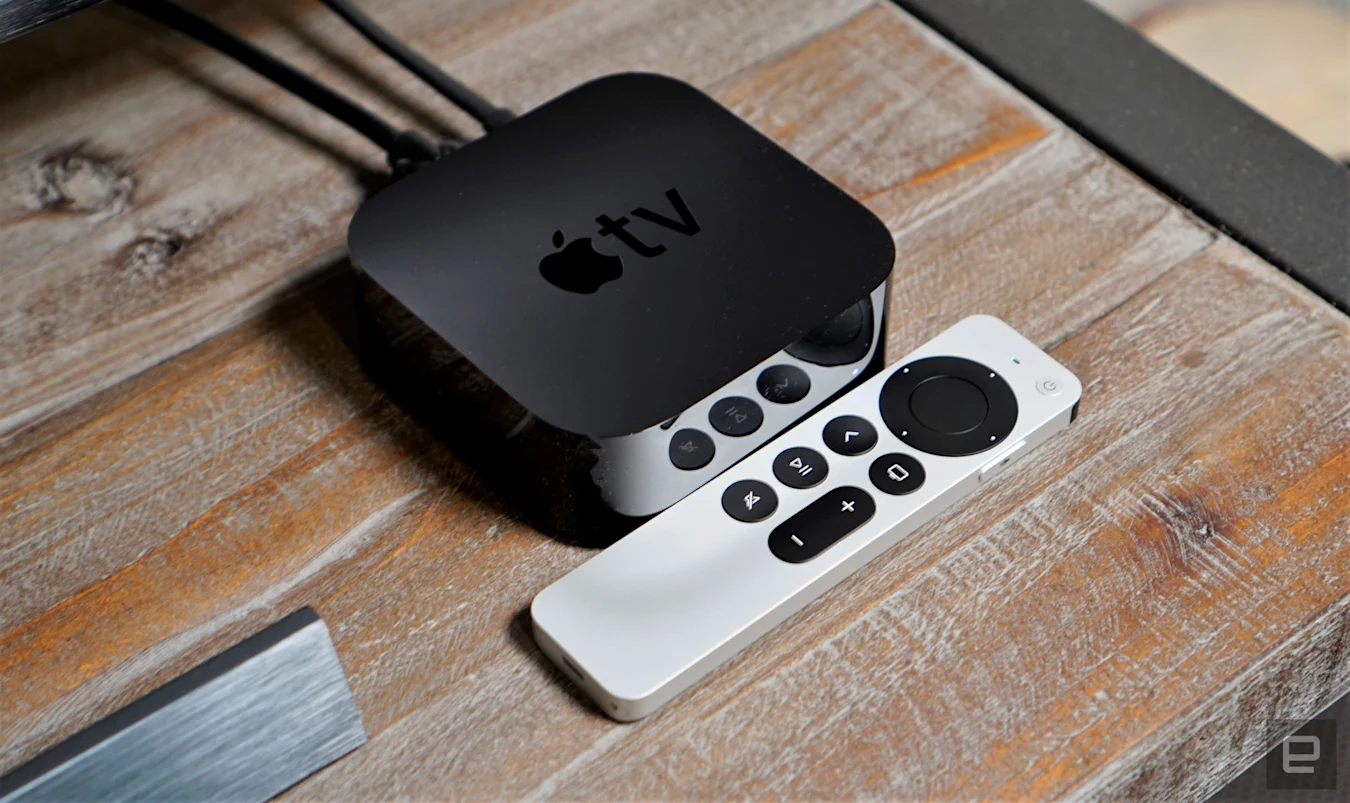
The Apple TV 4K is back in stock at Amazon and on sale for $120. While not quite as cheap as it was on Prime Day last month ($109), this remains one of the best prices we've seen no our favorite high-end set-top box. We gave the device a score of 90 for its fast performance, Dolby Vision and Atmos support, HomeKit integration and much-improved Siri remote.
Apple's AirPods Max are $120 off and down to $429, which is the cheapest price we've seen them on Amazon. We gave the headphones a score of 84 for their excellent sound quality, comfortable fit and strong ANC.
Amazon's Echo Show 10 smart display is $50 off and down to $200, which is the best price we've seen since Prime Day back in July. We gave the device a score of 83 for its excellent audio quality, ability to work as a security camera and automatic panning and zooming capabilities for video calls.
Samsung's Galaxy Buds Pro are down to $149 at Wellbots when you use the code ENGBUDS20 at checkout. While they are no longer Samsung's latest pro-level earbuds, we gave them a score of 85 when they came out for their good sound quality, comfy fit and wireless charging capabilities.
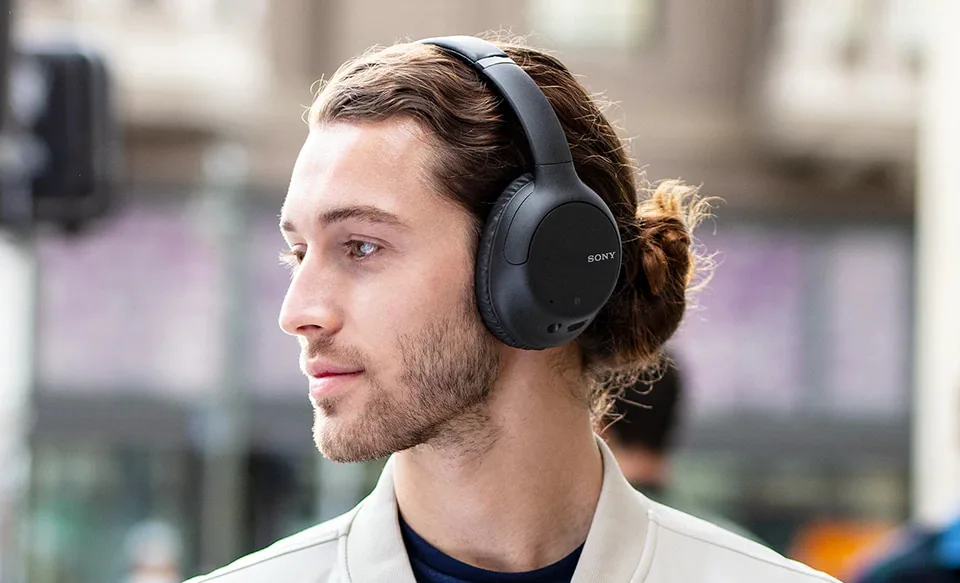
Sony's budget-friendly WH-CH710N headphones are on sale for an excellent price of $98. While we have seen them cheaper before, this 35-percent discount is a good one for these ANC cans. We like them for their comfortable design, solid noise cancellation and long battery life.
HBO Max has discounted its annual plan, so you can save 30 percent if you sign up and pay for one year upfront. If you can deal with ads, the service will cost $70 for 12 months, down from the usual $100. to get an ad-free experience, you'll pay $105, which is $45 off the usual rate.
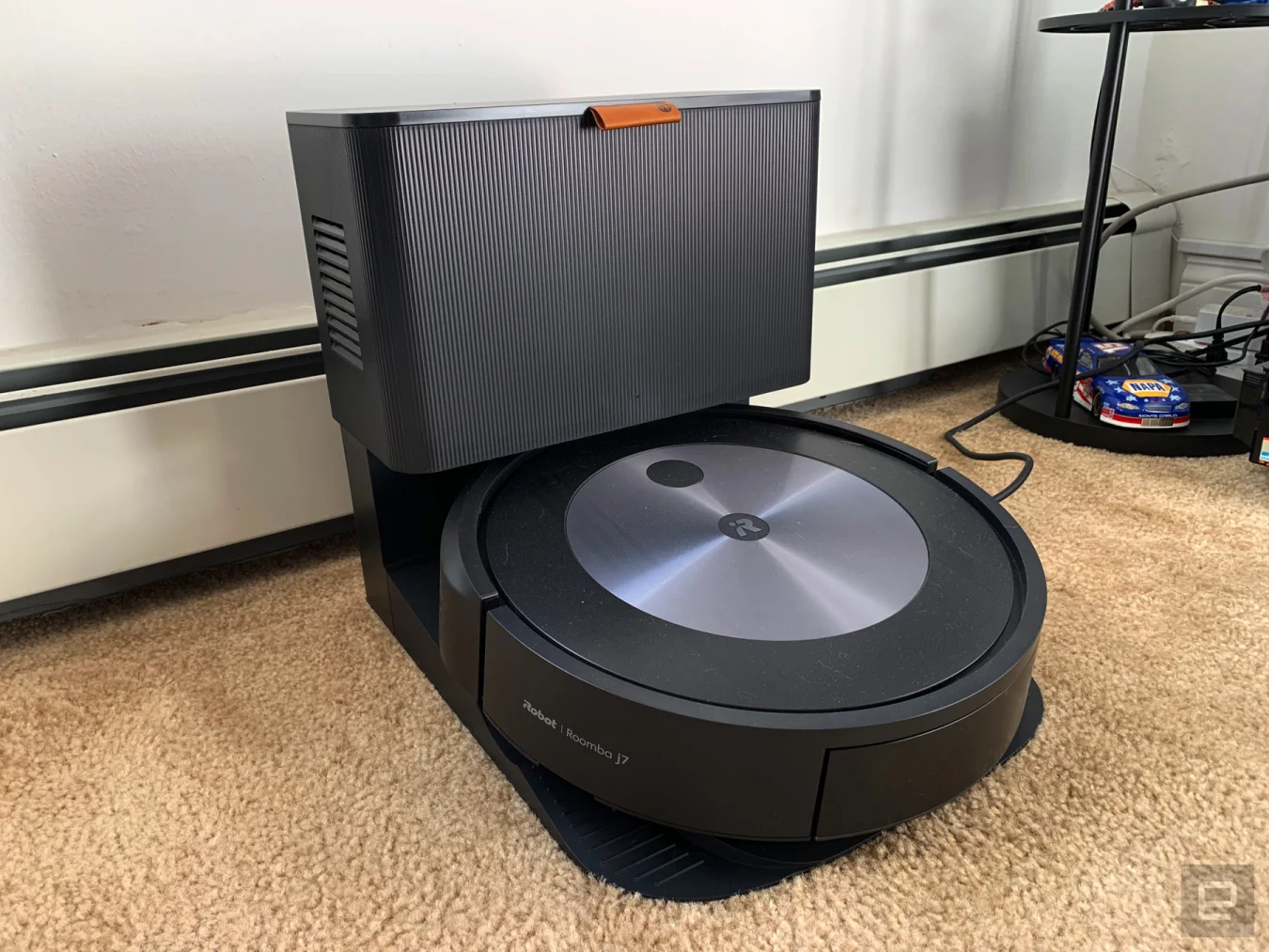
iRobot's Roomba j7+ is $200 off and down to $599 right now, while the s9+ has the same discount and is on sale for $799. These are some of our favorite robot vacuums, and they're made even better by these sale prices. The j7+ has advanced obstacle detection that helps it avoid pet poop and other hazards, while the s9+ has the strongest suction power of any Roomba.
As if multipledocumentaries, podcasts and books weren't enough to tell the tale of last year's GameStop stock squeeze, a feature film about the saga is in the works. Seth Rogen (aka Donkey Kong), Pete Davidson, Sebastian Stan and Paul Dano will star in Dumb Money, which starts filming this month, according to Variety.
Craig Gillespie (Pam & Tommy, Cruella) will direct the film, which is based on the nonfiction book The Antisocial Network by Ben Mezrich. It will focus on the Redditors at the heart of the story. If you recall, a group of users banded together on the r/WallStreetBets subreddit to artificially send GameStop stock soaring. Hedge funds and short sellers felt the brunt of the squeeze, with at least one hedge fund closing shop as a result. The situation even caught the attention of Congress amid calls for stricter regulation of the stock market.
Get ready for some major upgrades to the iPhone and Apple Watch lineup at Apple's "Far Out" event next week. While last year's iPhone 13 was a mostly marginal update (aside from fast ProMotion screens and Cinema Mode on the Pro models), the latest rumors suggest the iPhone 14 will be a considerable step forward. The iPhone 14 Pro may finally lose its notch! We could actually get higher resolution cameras! We're also eager to see what, exactly, Apple means with its cryptic invite and star-laden imagery. Even if you're not looking to upgrade, half the fun of these launch events is predicting what Apple has up its sleeves. So let's speculate!
iPhone 14 and iPhone 14 Pro
Once again, we're expecting to see four iPhone models, but the line-up will likely look different than the last few years. Not too long after the iPhone 13 hit stores, Bloomberg's Mark Gurman reported that the iPhone 14 would be a "complete redesign," which would mark the first major revision since the iPhone X landed in 2017. Additionally, Apple may be giving up on the iPhone Mini, a phone we've always wanted to love, but the short battery life has been a sticking point. Instead, Apple will reportedly unveil a 6.7-inch iPhone 14 Max or Plus, which will likely just have the same hardware as the standard iPhone 14.
iPhone 14 Pro notification render via 9to5Mac.
9to5Mac
While that's unfortunate news for fans of tiny devices, the trend among most consumers is towards larger screens. Apple can't let Samsung have all the fun, after all. Similarly, Apple could be taking a cue from the Galaxy phone maker (and practically every other Android phone company) by introducing pin-hole front cameras on the iPhone 14 Pro models. While early leaks pointed to two separate cut-outs — a circular one for the camera alongside a pill-shaped hole for the FaceID sensor — MacRumors claims (with support from Gurman) they'll show up as a single pill-shaped cut out unified by software. (See image above.) Additionally, 9to5Mac reports that Apple is using the space in the middle of the cut-out for its privacy notification dots, which appear when an app is using your camera or microphone. On existing iPhones, those dots are shoved above the cellular reception bars.
Apple appears to be saving most of its big updates for the Pro iPhones. For one, they could have always-on screens, according to 9to5Mac. That could work well with the revamped lock screens we've seen in iOS 16, which now have room for widgets and far more customization than before.
More controversially, though, is a report claiming that only the Pro models will receive Apple's new A16 Bionic chip. The standard iPhone 14 models may stick with last year's A15 (which is still plenty powerful). As a cost-saving measure, that makes sense, especially chips and other components still in short supply. But it marks the first time Apple has introduced a major performance gulf between its iPhone models. (It's particularly surprising since Apple was also able to squeeze the A15 chip into the tiny iPhone 13 Mini.) Most consumers won't know the difference, but having a more powerful chip would clearly be a big draw for Pro models.
David Imel for Engadget
Typically, Apple has used its camera technology as the big differentiator between the standard and Pro iPhones. That doesn’t appear to be changing. In addition to all of the upgrades above. According to analyst Ming-Chi Kuo, Apple is planning to bump the Pro's wide camera to 48-megapixels, a huge leap from the 12MP cameras the company has relied on for years. More recently, Kuo also claimed that the iPhone 14 Pro ultra-wide sensors will feature larger pixels with better low-light sensitivity. As for the base iPhone 14, it's expected to get the six-element ultra-side camera from the iPhone 13 Pro.
And what are we to make of the "Far Out" text on Apple's event invite? The ever-busy Kuo recently noted that Apple has completed testing on satellite connectivity for the iPhone 14, something that was also rumored to arrive ahead of the iPhone 13's launch. Even though the hardware may be in place, Apple is reportedly still working on partner deals to unlock that connectivity. And while the idea of satellite support seemed wild last year, it makes more sense now that we've seen T-Mobile and SpaceX team up to offer emergency satellite support via StarLink. (Good news for iPhone 13 owners: Kuo claims those phones also have satellite hardware built-in.) Don't expect to be FaceTiming via satellite, though, as the limited bandwidth will only leave room for short text messages and voice calls.
Apple Watch Series 8 and Apple Watch Pro
Much like the iPhone, all eyes will likely be on a "Pro" Apple Watch next week. Bloomberg's Gurman reported in July that the new model could sport a larger 2-inch screen, more durable titanium case and battery life for up to two days, thanks to a new "low power" mode. If all that ends up being true, the Apple Watch Pro would also be significantly larger than the current Series 7 model. Given all of its new hardware, Gurman claims it'll be the biggest redesign of the Apple Watch since the Series 4 landed in 2017. Don't get your hopes up for a round design, though, it sounds like Apple is just evolving its current rectangular style.
The Apple Watch Pro is also rumored to include the new temperature sensor that's rumored for the Watch Series 8. It could potentially alert you if you're running a fever, and suggest that you see a doctor or use a dedicated thermometer for a more accurate reading. It could also be a useful resource for period and fertility tracking apps. Design-wise, the Series 8 isn't expected to change much from last year's models. It may end up running the same dual-core S7 chip as the Series 7, though some higher-end models could have an improved display.
MacRumors
AirPods Pro 2
Given that we're nearing three years since the launch of the AirPods Pro, it's high time Apple followed up with a sequel. Gurman last year initially claimed the AirPods Pro 2 could have a stem-less design, much like Google's Pixel Buds, but a more recent report from MacRumorssuggests that the AirPods Pro 2 won't look much different than before. Instead, leaked renders point to a new case with speaker holes (which would help with alerts for the "Find My" app) and a slot for a strap. The latter would be an anomaly for Apple, but it could be useful for attaching an AirTag. (Better yet, just build that into the case Apple!)
As for sound quality, Kuo claimed earlier this year that the AirPods Pro 2 could include support for Apple's Lossless Audio (ALAC), which could be a draw for audiophiles. (Let's not get into the viability of actually hearing any differences on small earbuds, though.) Additionally, the new headphones may include an updated H1 chip, as well as driver improvements similar to the AirPods 3. But don't hold your breath for any health tracking features, as Gurman recently noted that they won't include heart-rate or body temperature sensors as earlier rumors suggested.
Nathan Ingraham/Engadget
iPad
Apple typically saves its biggest iPad news for its second fall event, but we wouldn't be surprised to see some news about its entry-level model next week. The 10th-generation iPad is expected to include a USB-C port, bringing it in line with the rest of the family, and it could get a speed bump with the A14 Bionic chip. Don't expect any major design changes, though, as the entry-level iPad doesn't get much love from Apple these days. So be prepared to see thick bezels and a home button, once again. But on the plus side, it may finally get 5G support as well as a revamped front-facing camera, according to 9to5Mac.
Good TVs are always in high demand, so finding deals can be a fruitless quest. If you're on the lookout for one, Amazon is running a one-day sale right now on LG, Samsung and Sony sets, including OLED and other desirable models at all-time low prices. For instance, LG's 55-inch A1 OLED is just $797 instead of $1,300 for the biggest savings we've seen yet. Sony's A80J 65-inch OLED model is $1,399 or 44 percent off (a new low), and Samsung's 55-inch Frame TV with Quantum HDR is priced at just $980, also an all-time low.
LG's 2021 line of A1 OLED TVs first appeared at CES 2021, offering support for Dolby Vision, Dolby Atmos, Filmmaker mode, Google Assistant, Amazon Alexa and AirPlay 2. You can expect a color accurate picture with deep blacks, though some things are missing like a 120Hz display and HDMI 2.1. Still, at $797, the 55-inch A1 will deliver everything else you might want in an OLED TV.
Sony
Sony's A80J OLED TV also popped up at CES 2021, offering Sony's "Cognitive Processor VR" to improve picture quality on individual elements of a picture. It also delivers 120Hz 4K thanks to an HDMI 2.1 input, along with features like Dolby Vision, Google TV, Google Assistant and Alexa support. Again, it's available at an all-time low price of $1,400, or 44 percent off the regular price.
Finally, if you want a low-profile TV that also doubles as a picture frame and smart device, Samsung's 55-inch Frame TV is priced at $980, another all-time low. It can rotate between portrait and landscape modes and display up to 1,400 works of art, while offering features like 4K upscaling, HDR, Alexa and Samsung's Tizen smart TV interface.
Japan has a high level of adoption when it comes to advanced technologies and is a world leader in various areas, such as robotics. However, it's also resistant to certain facets of modernization and tend to stick to old-fashioned solutions — fax machines, for instance, are still widely used. And apparently, so are floppy disks. The country's newly appointed Minister of Digital Affairs, Taro Kono, has tweeted that he's declaring "a war on floppy disks."
Apparently, there are still around 1,900 government procedures in Japan that require the use of disks, including floppy disks, CDs and MiniDiscs, to submit forms and applications. "Where does one even buy a floppy disk these days?" he asked during a news conference. Indeed, the younger generation might not know what any of those look like anymore. Kono said his agency will work on amending regulations that require their use, so people can submit forms and applications online instead.
Digital Minister declares a war on floppy discs. There are about 1900 government procedures that requires business community to use discs, i. e. floppy disc, CD, MD, etc to submit applications and other forms. Digital Agency is to change those regulations so you can use online.
The US government had been using floppy disks as recently as 2019, as well, and it was to receive nuclear launch orders from the President. It wasn't until that year that the government transitioned to a "highly-secure solid state digital storage solution."
Kono doesn't intend to stop with floppy disks either and has announced his plans to phase out the use of more outdated technologies. "I'm looking to get rid of the fax machine, and I still plan to do that," he said. The minister doesn't have to worry about ending pager services, at least: The last pager provider in the country closed up shop a mere three years ago in September 2019.
Meta will continue to use Qualcomm's chips in its Quest line of virtual reality headsets and the two companies are teaming up to build "customized" chipsets, Qualcomm announced at IFA 2022. "We’re working with Qualcomm Technologies on customized virtual reality chipsets — powered by Snapdragon XR platforms and technology — for our future roadmap of Quest products," said Meta CEO Mark Zuckerberg in the press release.
Meta's Quest 2 is powered by Qualcomm's Snapdragon XR2, so it's essentially continuing with the status quo. However, it looks like the two companies will be working closely on developing the next generation of chipsets, with Qualcomm saying that "both companies' engineering and product teams will deepen technical collaboration to deliver next-generation platforms and core technologies."
Early this year, Qualcomm announced that it was teaming up with Microsoft as well on custom chips for AR glasses, with Microsoft promising "lightweight" and energy-efficient wearables. Qualcomm said that it was "working with Microsoft... [to develop] custom AR chips," so it appears to be working with both rivals on roughly the same thing.
Meta is more invested in the metaverse, however, essentially staking its fate on the idea of meeting others in VR for business, socializing, gaming and more. By having a say in the design, it could effectively make its ideas easier to implement. "Unlike mobile phones, building virtual reality brings novel, multi-dimensional challenges in spatial computing, cost, and form factor," Zuckerberg said. "These chipsets will help us keep pushing virtual reality to its limits and deliver awesome experiences."
Meta recently jacked up the price of the Quest 2 headset from $300 to $400, even though it's now nearly two years old. That's no doubt due in part to the scarcity and higher prices of chips and components. It may be hoping to bring those down for the next generation, otherwise very few users will be able to access those, um, glorious virtual playgrounds.
Police and law enforcement agencies, even in small areas with fewer than 100,000 residents, have been using a low-cost phone tracking tool called Fog Reveal, according to AP and the EFF. AP has published a report detailing authorities' use of the tool since at least 2018 for various investigations, including to track murder suspects and potential participants in the January 6th Capitol riot. The tool, sold by Virginia company Fog Data Science LLC, doesn't need a warrant and can be accessed instantly. To get geofence data, authorities usually have to issue a warrant to companies like Google and Apple, and it could take weeks for them to get the information they need.
Fog Reveal, AP explains, uses advertising identification numbers, which are unique IDs assigned to each mobile device, to track people. It gets its information from aggregators that collect data from apps that serve targeted ads based on a user's location and interest, such as as Waze and Starbucks. Both the coffeehouse chain and the Google subsidiary denied explicitly giving their partners permission to share data with Fog Reveal.
The Electronic Frontier Foundation obtained access to documents about Fog through Freedom of Information Act requests, which it then shared with AP. EFF special adviser, Bennett Cyphers, describes the tool as "sort of a mass surveillance program on a budget." Its prices reportedly start at only $7,500 a year, and some agencies even share access with other nearby departments to bring costs down further. Looking at data from GovSpend, which monitors government spending, AP found that Fog managed to sell around 40 contracts to nearly two dozen agencies. Authorities have already used it to search hundreds of records from 250 million devices.
While Fog Reveal only tracks people using their advertising IDs that aren't connected with their names, authorities are able to use its data to establish "patterns-of-life" analyses. They can, for instance, establish that a specific ad ID belongs to a person who typically passes by a Starbucks from home on the way to work. Further, Fog gives authorities access to the movements of an ad ID going back to at least 180 days. Fog managing partner Matthew Broderick even recently admitted that the tool "has a three year reach back."
Authorities used the tool to varying degrees of success over the past years. Washington County prosecutor Kevin Metcalf said he has previously used Fog without a warrant for circumstances that required immediate action, such as to find missing children and to solve homicide cases. He said about privacy concerns surrounding Fog's use: "I think people are going to have to make a decision on whether we want all this free technology, we want all this free stuff, we want all the selfies. But we can't have that and at the same time say, 'I'm a private person, so you can't look at any of that."
The EFF, of course, doesn't share his sentiment. It called Fog "a powerfully invasive tool" and is encouraging people to disable ad ID tracking on their phones.
Twitter has rather tentatively announced it’ll bring an edit button to users, but not for a while. First, it’s being tested by the platform’s employees, then it will slowly roll out to paying customers who subscribe to Twitter Blue. After the better part of two decades, the addition of such a basic feature will likely baffle non-tweeters the world over. But Twitter’s regard has always been disproportionate to its reach, mostly because of the number of journalists who use (or used) it. That said, it doesn’t feel like the addition of an edit button will help supercharge signups on a platform that seems to have reached its natural ceiling a long time ago.
Lenovo’s ThinkPad X1 Fold broke new ground as the first laptop with a flexible OLED display, but that was the only really great thing about it. Thankfully, Lenovo is quick to learn from its mistakes, and the second-generation Fold is bigger, better and much more user friendly. Our Sam Rutherford got to spend some time with a pre-production version of the new device – and likes it a lot. He said the bigger display, better keyboard and beefier insides all add up to a machine that, while still eye-wateringly expensive, might actually justify some of that cost.
There’s no better way to give your kid the tools to succeed in our modern world than by teaching them the fundamentals of science, technology, engineering and math. (Well, there is, but you can’t order a billion-dollar trust fund and a luxury education for $9.99 on Amazon.) For our back-to-school guide, we collected a bunch of cool toys that will help your kids learn the basics of coding, design, engineering, electronics and everything in between. Plus, they’re just as fun for adults as kids.
USB 4 (Version 2.0) will reach speeds of up to 80 Gbps.
The bunch of swell folks behind USB are gearing up to start talking about the updated version of its USB 4.0 standard. And the big news is that speeds are jumping from 40 Gbps all the way up to 80 Gbps over a USB-C type connector. Faster speeds are great and all, but what’s really exciting is that the new plans will also double performance on existing 40 Gbps USB-C passive cables, where compatible.
The European Union is on a mission to crack down on e-waste and has already mandated a common charger to reduce the current mess of cables and plugs. Now, the bloc is looking at rules to enforce minimum standards for phone and tablet repairability. One of the key proposals is to ensure users can replace the display, battery, SIM tray and back cover for at least five years after purchase. It won’t turn into anything real just yet, but it does show the bloc’s commitment to driving better environmental practices in the tech industry.
Musk’s company can take advantage of Boeing’s stumbles.
NASA has awarded a further five astronaut missions to SpaceX as it secures launch capacity to keep the ISS crewed until 2030. That’s good for Elon Musk and his associates, and a further blow to Boeing, which is struggling to get its own crew capsule ready to fly. The deal takes the amount of cash NASA has handed to SpaceX up to nearly $5 billion, all the while Boeing scrambles to get its first crewed test flight of Starliner ready for 2023.
Leica has just unveiled its first ultra-short-throw (UST) projector called the Cine 1 that can beam an 80- or 100-inch image while parked as little as six inches from a wall. While it might seem a bit strange for a camera company to build a projector, UST models require precise optics to create a square image while beaming straight up — and that's right up Leica's alley.
The company said it's using its Summicron lens tech with aspherical elements "manufactured in accordance with Leica standards. It also uses a triple-RGB laser with a 25,000 hour service life (built in collaboration with HiSense, according to The Verge) and a Texas Instruments DLP chip.
Leica has two versions of the Cine 1 designed for 80-inch and 100-inch screens, with the former positioned about six inches from the wall and the latter about 12 inches. Leica recommends setting them at exactly those positions and using the suggested screen sizes, as the optics were designed for that. To that end, it's also selling 80- and 100-inch ambient light-rejecting (ALR) screens. They output 2,100 and 2,500 lumens for the 80- and 100-inch models, respectively.
On the audio side, it offers built-in Dolby Atmos-powered speakers for surround sound. It comes with a TV tuner for for linear TV and HiSense's VIDAA OS as a smart TV platform. You can also install external storage, Blu-ray players or consoles via the HDMI and USB inputs.
Other key specs are still missing, like color space coverage and HDR support. However, they're reportedly priced at $6,900 for the 80-inch and $7,900 for the 100-inch model, so you'd expect all the bells and whistles possible. Currently, the most advanced UST projectors out there are Samsung's LSP7T 4K with HDR10+ starting at $3,500, the $3,000 Formovie Theater with Dolby Vision and HiSense's L9G 3,000-lumen Laser TV projectors with Dolby Vision priced at $5,000 with a 100-inch ALR screen.
Following a leak last week, Microsoft has unveiled the Game Pass Friends & Family in Ireland, offering the same benefits of Game Pass Ultimate for you and four others at €22 ($22) per month. That's less than double the Game Pass Ultimate price for one person (€13), and works out to just €4.40 ($4.40) a month each. Better still, it's not limited to family and the only restriction is that all four members have to be in the same country.
So far, it's come to just two countries, but that might change soon. "Currently we are piloting this plan in Colombia and the Republic of Ireland. Future countries / regions might be added in the next months," Microsoft wrote in a FAQ.
Users in those countries with an existing Game Pass Ultimate plan will see their remaining days pro-rated, basically according to the price difference. That means for 30 days of Game Pass Ultimate you'll get 18 days of Game Pass Friends & family, while 30 days of Xbox Game Pass or Live Gold gets you 12 days. 30 days of EA Play nets 6 days of Game Pass Friends & Family.
In the US, Xbox Game Pass or PC Game Pass costs $10 per month, while Game Pass Ultimate is $15 with multiplayer capabilities. The Game Pass Friends & Family is likely to cost around $25 stateside, according to The Verge, or $5 per month per person. On top of multiplayer, Ultimate users can also access Xbox Cloud Gaming, Xbox Live and more.