Posts with «author_name|steve dent» label

Apple makes it easier to report bad apps and scams

Following reports that revealed that a significant percentage of top App Store apps were scams, Apple is allowing users to report such behavior, according to The Verge. As part of iOS 15, the latest App Store update lets you "report a scam or fraud" for both free, in-app purchase (IAP) and paid apps, provided you've installed the app in question. 

The feature, detailed by Kosta Eleftheriou and Richard Mazkewich on Twitter, goes even farther than the previous "Report a Problem" feature. You can now signal a scam or a fraud and not just “Report suspicious activity,” “Report a quality issue," “Request a refund” or “Find my content” as before. Previously, you would have also needed to make an in-app purchase before you could highlight a scam or fraud, but that's no longer the case. 

The "Report a problem" feature itself returned to individual app listings for the first time in years, as The Verge pointed out. Prior to that, it was located at the bottom of the Apps or Games tabs and would send you to a separate website. 

Apple essentially foreshadowed the changes when it released new App Store Review Guidelines in June. Several sections included changes that saw Apple taking a tougher stance on fraud, scams and developer misconduct, TechCrunch noted at the time. 

Bad apps found on the Store included VPNs that duped customers into buying unneeded software, bad dating apps, QR readers and apps fraudulently claiming to be from major brands, the Washington Post revealed earlier this year. The apps may have defrauded users out of an estimated $48 million, according to the Post's estimates. 

Amazon lets Prime members send gifts with only an email address or phone number

Amazon Prime members can now use the mobile Amazon Shopping app to send gifts to friends using just their phone number of email address — even if they don't have their street address. The new feature makes it easier to give, receive and even exchange presents for a gift card, the company announced. 

To do it, you just need browse for "millions of products" available to gift on Amazon's Shopping smartphone app, according to the company. Once you've selected a product, you can select "add a gift receipt for easy returns" and go to check out. You can also select a new option to "let the recipient provide their address." To complete the transaction, you just enter their email address or mobile phone number. 

Once sent, recipients receive a gift message by email or text. From there, they can choose to accept the gift and enter their preferred delivery address. If they're not keen on your choice, they can exchange the item for a gift card and use that to purchase something else with no need to notify the gift giver. 

The feature requires the gift recipient to also have an Amazon account, much as Venmo or PayPal's Mobile Cash app requires the sender and receiver to have an account. The key benefit of Amazon's app is that you can still personalize a gift, even if you don't feel comfortable hitting shops with a pandemic still raging. The new feature arrives to Amazon Shopping in the US today (October 4th) — if you get a chance to try it, let us know how it went in the comments below. 

Facebook whistleblower reveals identity, says company 'chooses profits over safety'

Internal documents published by the Wall Street Journal (WSJ) recently revealed that Facebook allowed VIPs to break its rules and that it was aware of how Instagram affected the mental health of teens. Now, the whistleblower who brought that information to light has revealed herself as Frances Haugen in an interview with 60 Minutes, the New York Times has reported.

"I’ve seen a bunch of social networks and it was substantially worse at Facebook than what I had seen before," Haugen told the NYT. "Facebook, over and over again, has shown it chooses profit over safety." 

Haugen joined Facebook in 2019, working on democracy and misinformation issues, while also handling counterespionage, according to a personal website and Twitter account she and her team set up. She worked as a Facebook product manager and left the company in May. 

She first brought "tens of thousands" of pages of internal Facebook documents to Whistleblower Aid founder John Tye, requesting legal protection and help in releasing the information. The trove included internal company research, slide decks, cover letters and more. She also filed a whistleblower complaint with the Securities and Exchange Commission (SEC), accusing Facebook of taking internal actions that didn't match its public statements. 

Whistleblower Frances Haugen is a data scientist from Iowa with a computer engineering degree and a Harvard MBA. She told us the only job she wanted at Facebook was to work against misinformation because she had lost a friend to online conspiracy theories. https://t.co/csgaRe6k5hpic.twitter.com/tSNav057As

— 60 Minutes (@60Minutes) October 3, 2021

In the SEC complaint, Haugen compared Facebook's internal research and documents to public statements and disclosures made by CEO Mark Zuckerberg and other executives. In one example, she said that Facebook contributed to election misinformation and the January 6th US Capitol insurrection. 

"Facebook has publicized its work to combat misinformation and violent extremism relating to the 2020 election and insurrection," she wrote in a cover letter on the subject. " In reality, Facebook knew its algorithms and platforms promoted this type of harmful content, and it failed to deploy internally recommended or lasting countermeasures."

On top of being in touch with the SEC's whistleblower office, which normally provides protections for corporate tipsters, she and her legal team contacted Senators Richard Blumenthal (D) and Marsha Blackburn (R). She also spoke to lawmakers in France and Britain, along with a member of the European parliament. 

Facebook, which has struggled to quell leaks of late, preemptively pushed back ahead of the 60 Minutes interview, calling the accusations "misleading." VP for policy and global affairs Nick Clegg told CNN that Facebook represented "the good, the bad and the ugly of humanity" and that it was trying to "mitigate the bad, reduce it and amplify the good." He added that it was "ludicrous" to blame January 6th on social media.

In a statement to the New York Times, Facebook spokesperson Lena Pietsch said it was continuing "to make significant improvements to tackle the spread of misinformation and harmful content. To suggest we encourage bad content and do nothing is just not true." On Tuesday, December 5th, Haugen is set to testify in Congress about issues surrounding Facebook's impact on young users. 

Firefox on Android will soon autofill logins for all your apps

Mozilla's Firefox is introducing some new features that will make it easier and more secure to log in to apps on Android, matching some of the features available via Google Chrome. The update will give you the ability to save and autofill passwords for Android apps using Firefox, or unlock them using your face or fingerprints.

Firefox already has its Lockbox for storing credentials, but accessing sites or apps has never been as easy as it is with Google's Chrome. With the update, when you create an app on your Android device, you'll be able to add a new password and save it directly into the Firefox browser. It will then be saved both on mobile and desktop.

From there, you can autofill any password you've saved in the browser "to log into any online account like your Twitter or Instagram app... no need to open a web page," the Firefox team wrote. If you have multiple devices, you can use your Firefox account to sync passwords on all of them. Firefox is also introducing biometric security, letting you access accounts using your face and fingerprints.

Mozilla introduced all of this to time up with Cybersecurity Awareness month, which is October in case you didn't know. The new features will arrive with the Firefox 93 update, which will start rolling out on October 5th, 2021. 

Nigeria lifts Twitter ban but demands it’s used for ‘business and positive engagements’

Nigeria is set to lift a ban on Twitter under the condition that it's used in the country for "business and positive engagements," according to Bloomberg. The social media network was originally banned in June after it removed a tweet from President Muhammadu Buhari under a violation of its abuse policy.

The Nigerian government said it was close to an agreement with Twitter on resuming operations. "As a country, we are committed to ensuring that digital companies use their platform to enhance the lives of our citizens, respect Nigeria’s sovereignty, cultural values and promote online safety,” said Buhari in a speech sent to Bloomberg. 

Twitter was banned in the country following a tweet by Buhari that threatened to punish secessionists that allegedly attacked government buildings. At the time, the social media company said in a tweet that it was "deeply concerned" by Nigeria's actions and that it considered the open internet an "essential human right." 

Facebook, Twitter, Apple and other tech giants often walk a fine line between promoting espousing internet freedom and bending to local laws. Apple, for example, was recently accused of giving the Chinese government control over local data, while railing against similar actions in the United States and elsewhere. 

GM's US factories will switch to renewable energy five years ahead of schedule

Earlier this year, GM announced plans to go green by 2035 with the vehicles it produces and by 2030 with how it produces them. Now, the company has announced that it will be well ahead schedule on the "how" part, using 100 percent renewable energy across its US operations by 2025 — five years ahead of schedule.  

To achieve the goal, GM said it would increase energy efficiency and source renewables for its facilities. It also plans to create technology to store renewable energy over the medium and long term and "create microgrids that help deploy renewable energy." 

“We know climate action is a priority and every company must push itself to decarbonize further and faster,” said GM Chief Sustainability Officer Kristen Siemen. “That’s what we are doing by aiming to achieve 100 percent renewable energy five years earlier in the US."

It also detailed plans to work with a company called PJM Interconnection to track energy usage based on carbon output of the grid at any given time. "When the power being supplied consists mostly of fossil fuels, GM can make informed decisions about tapping into stored renewable energy or reduce the amount of power being consumed," the company said. 

As for the vehicles it produces, GM plans to have 30 EVs globally by 2025, and still plans to "eliminate tailpipe emissions for new light-duty vehicles (i.e., cars, SUVs and pickups) by 2035." The wording suggests that could include hydrogen-powered cars, though GM appears to be focusing mostly on EVs. 

GM's plans to reduce pollution have drifted with the political winds, however. It was one of several automakers that backed the Trump administration's plan to bar California and other states from setting their own pollution and zero-emission requirements. That would have allowed manufacturers to raise fuel efficiency by just 1.5 percent per year, well below the previous administration's five percent requirement. GM withdrew from the litigation shortly after Joe Biden was elected President. 

Instagram users can now join group chats in Messenger

After introducing cross-messaging between Messenger and Instagram last year, Facebook has made it more useful with the addition of cross-app group chats. With the new feature, you'll be able to start a group chats and loop in both Messenger and Instagram contacts. In addition, you'll be able to run Messenger-style polls in both Instagram DMs and cross-app group chats if your group needs to decide whether to get pizza, tacos or both, for instance (both, obviously).

Meanwhile, Instagram gets an exclusive new feature called "Watch Together." To use it, you just start a video chat within Instagram, scroll to the post you want to share then click on the share button and "Watch Together." Instagram has added some new content from Steve Aoki, Travis Barker and Cardi B. 

Other new additions include group typing indicators available in cross-app group chats for both Messenger and in Instagram DMs. Facebook also brought in new chat themes for Messenger and Instagram DMs, including "Cottagecore" and a theme centered around Columbian singer J Balvin. There's also a new Astrology art suite, with an Astrology group chat theme, AR effect and sticker pack. The new features roll out for Messenger and Instagram today. 

ABB claims its Terra 360 is the 'world's fastest electric car charger'

Swiss company ABB, which supplies EV chargers to Ionity and Electrify America, has unveiled what it calls the "world's fastest electric car charger," Reuters has reported. As its name suggests, the Terra 360 has a 360 kW capacity, meaning it could fully charge a (theoretical) EV in 15 minutes. More realistically, it can charge four vehicles simultaneously, saving space at charging stations. 

The Terra 360 isn't the most powerful charger by much, as companies like Electrify America, Ionity and EVGo have been using 350 kW chargers manufactured by ABB and others since at least 2018. However, it's the "only charger designed explicitly to charge up to four vehicles at once," the company said. "This gives owners the flexibility to charge up to four vehicles overnight or to give a quick refill to their EVs in the day." They also have a relatively small footprint, allowing installation in small depots or parking lots. 

There aren't a lot of EVs that can handle that kind of charge. The fastest-charging EV available is Hyundai's Ioniq 5, which supports DC fast-charging at up to 350 kW, in theory. The only two approaching that are Porsche's Taycan, with 270 kW of charging capacity and the new Lucid Air, which allows for up to 300 kW fast-charging. Tesla's Model 3 and Model Y EVs can charge at up to 250 kW. 

Such high charging levels aren't necessarily great for an EV's battery. Porsche, for instance, has a battery preservation setting on its Plug & Charge Taycan feature that lowers voltage to 200 kW from the maximum 270 kW allowed — so it's essentially acknowledging that faster charging degrades the battery. On top of that, extreme charging levels don't necessarily save you much time, as Car and Driver found. Tesla recently promised to upgrade its own Supercharger V3 network from 250kW to 300kW. 

ABB's new chargers will be able to add 100 km (62 miles) of range in less than three minutes. They'll arrive in Europe by the end of the year and start rolling out in the US and elsewhere in 2022.

Subaru shows the first teaser video of its Solterra EV

Subaru has showed the first video of its first EV, the 4x4 Solterra crossover, essentially confirming that it's a slightly reworked version of Toyota's upcoming bZ4X EV, according to Autoblog. Both electric cars are the fruit of Toyota and Subaru's collaboration on the e-TNGA platform designed for multiple EVs, first announced in 2019. 

Design cues visible in the teaser video, particularly the odd dual roof spoiler, are similar to those on Toyota's upcoming bZ4X (the "bZ" stands for "beyond zero"). The side profile in a longer shot also looks nigh-on identical, making us wonder why Subaru doesn't just reveal it in full and be done with it. 

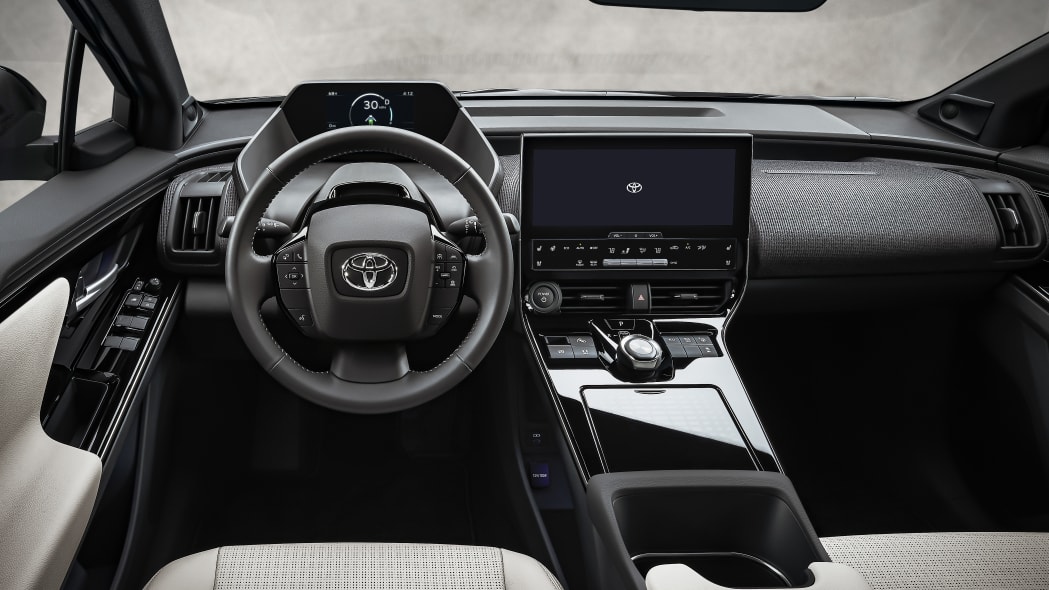
It also showed a dim shot of the interior, with the centerpiece being a giant mid-mounted display. Again, that looks mighty similar to what Toyota has shown us with its own EV crossover, though Autoblog pointed out that Subaru appears to have some extra features below the rotary knob. Another notable difference is Subaru's bolstered seats that might allow for more sporty 4x4 activities. 

Other key details, like price and battery capacity, have yet to be released. However, the price could be somewhere in the high $30,000 to low $40,000 range. Like Toyota's offering, it's set to arrive in the US and other markets next summer. 

Virgin Galactic cleared to fly again following FAA investigation

Virgin Galactic has been cleared to fly again by the US Federal Aviation Administration (FAA) following an anomaly on its previous flight, the WSJ has reported. The agency launched a probe into the space company's first crewed flight after it dropped below its approved trajectory. 

The FAA determined that the SpaceShip Two Unity craft, with founder Richard Branson and five others aboard, had deviated from its assigned airspace for a minute and 41 seconds and failed to report the error as required. However, it accepted Virgin Galactic's proposal to expand the protected airspace for a wider array of possible trajectories and to communicate with air traffic control in real time during flights.

"The updates to our airspace and real-time mission notification protocols will strengthen our preparations as we move closer to the commercial launch of our spaceflight experience," said Virgin Galactic CEO Michael Colglazier in a statement. 

Virgin Galactic is cleared to fly FAA-licenced spaceflights following the conclusion of an FAA inquiry. Read more here; https://t.co/G4UaH5KLU9pic.twitter.com/qs5vOoxoGb

— Virgin Galactic (@virgingalactic) September 29, 2021

According to a report in the New Yorker, pilots saw a "red light" warning near the end of the powered flight indicating that the spacecraft had veered outside its entry glide cone, putting it at risk of an emergency landing. Virgin Galactic said that the deviation was due to high altitude winds and that the craft didn't fly outside the lateral confines of its protected airspace. "At no time did the ship travel above any population centers or cause a hazard to the public," a spokesperson said.

With a flight clearance in hand again, Virgin Galactic may fly its next mission in mid-October, potentially with members of the Italian Air Force. After that, both the current SpaceShipTwo and its WhiteKnightTwo host aircraft would spend four months receiving upgrades, the company previously said.