Posts with «technology & electronics» label

This week's best deals: $30 off Apple's 10.2-inch iPad and more

A number of new tech deals came up across the web this week, plus there are a few July 4th sales that are still going on. Apple's 10.2-inch iPad is down to $300, and Amazon and Best Buy discounted a bunch of Nintendo Switch games to $45 — including Animal Crossing. If you missed it over the holiday weekend, you can get Solo Stove's Bonfire for $120 less than usual and ThermoWorks' Thermapen Mk4 is down to $69. Here are the best tech deals from this week that you can still get today.

Nintendo Switch games

Both Amazon and Best Buy have a number of Switch games on sale right now, including Animal Crossing: New Horizons for $45. That's the lowest we've seen it, so now's a good time to grab the title if you somehow haven't jumped on the bandwagon yet. Also discounted are Super Smash Bros. Ultimate and a bunch of Mario games like Super Mario 3D All-Stars.

Buy Animal Crossing: New Horizons at Amazon - $45Buy Animal Crossing: New Horizons at Best Buy - $45

Buy Super Mario 3D World at Amazon - $45Buy Super Mario 3D World at Best Buy - $45

Buy Super Smash Bros. Ultimate at Amazon - $45Buy Super Smash Bros. Ultimate at Best Buy - $45

Buy Super Mario 3D All-Stars at Best Buy - $45

10.2-inch iPad
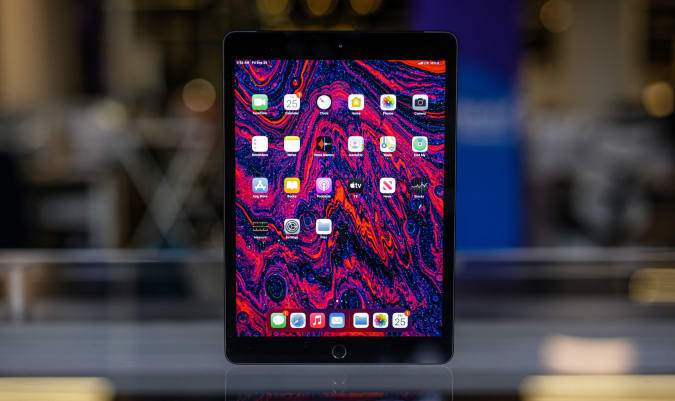
You can still get Apple's 10.2-inch iPad for $299, or $30 off its normal price. It's arguably the best iPad for new tablet owners and we liked its improved performance, familiar design and support for the first-generation Apple Pencil.

Buy 10.2-inch iPad at Amazon - $299

Mac Mini M1

Engadget

Apple's Mac Mini M1 is down to $600 thanks to an automatically applied coupon that knocks $59 off the sale price. In addition to the M1 chipset, you're also getting 8GB of RAM and 256GB of storage in this model. This machine is a good upgrade for those with aging desktops as well as those that want a bit more flexibility than the new, colorful iMacs allow.

Buy Mac Mini M1 at Amazon - $600

MacBook Air M1
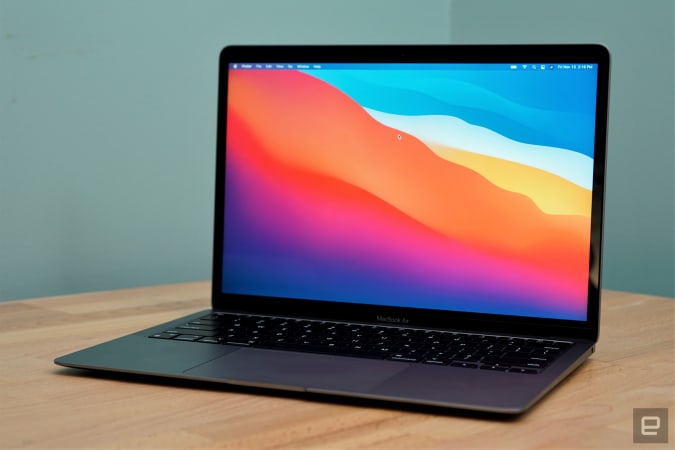
The latest MacBook Air M1 is down to $899 right now, or $100 off its regular price. It's one of the best laptops for most people, and the M1 chipset only makes it a better buy. The Air M1 earned a score of 94 from us for its incredibly fast performance, excellent keyboard and trackpad, good battery life and lack of fan noise.

Buy MacBook Air M1 at Amazon - $899

24-inch iMac M1
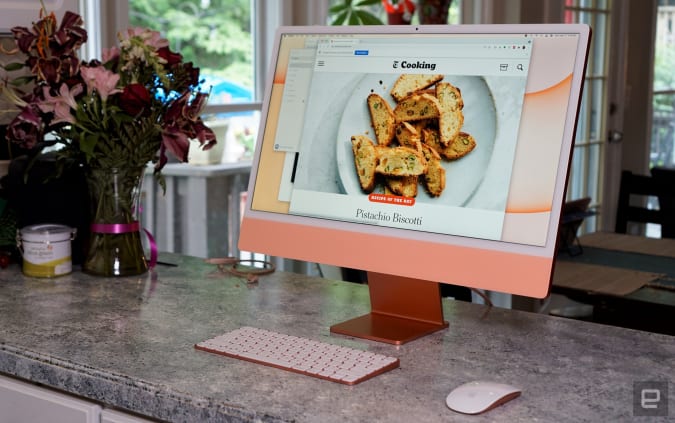
Apple's colorful iMacs with 8-core GPUs are $50 off right now at Amazon, bringing them down to $1,450. We gave this desktop a score of 89 for its remarkable performance thanks to the M1 chip, lovely 24-inch Retina Display and its thin-and-light design.

Buy 24-inch iMac at Amazon - $1,450

Apple Watch Series 6 Product Red Edition

The GPS + Cellular models of the Apple Watch Series 6 Product Red Edition are $100 off at Amazon. The 40mm is down to $399, or close to a record low, while the 44mm version has hit an all-time low of $429. We gave the Series 6 a score of 89 for its speedier performance, quicker charging and slightly improved battery life.

Buy Series 6 (40mm, GPS + Cellular) at Amazon - $399Buy Series 6 (44mm, GPS + Cellular) at Amazon - $429

OnePlus 9 Pro

The OnePlus 9 Pro smartphone is $100 off right now, bringing it down to $970. The regular OnePlus 9 is also on sale, but it's only $80 off. We gave the 9 Pro a score of 88 for its fantastic display, stellar performance and much-improved main camera.

Buy OnePlus 9 Pro at Amazon - $970Buy OnePlus 9 at Amazon - $650

Samsung T7 Touch SSD (500GB)

Samsung

Samsung's T7 Touch portable SSD in 500GB is down to $90, which is close to its all-time-low price. This palm-sized drive has read speeds up to 1,050 MB/s and write speeds up to 1,000 MB/s, and in addition to password protection, it also has a built-in fingerprint reader for extra security.

Buy Samsung T7 Touch (500GB) at Amazon - $90

Solo Stove Bonfire

Solo Stove's Bonfire remains $120 off even after the July 4th holiday has passed. These are smokeless, portable fire pits that we've recommended in the past as an easy way to upgrade your backyard setup.

Buy Bonfire at Solo Stove - $230

ThermoWorks Thermapen Mk4

The Thermapen Mk4 is still on sale for $69 as ThermoWorks makes room for the new Thermapen One thermometer. The Mk4 is the best instant-read thermometer we've used so far —the backlit display makes it easy to read in almost any situation and the display rotates depending on how you're holding the pen. Plus, you never have to remember to turn it off because the pen automatically turns on when you pick it up and will shut off after some time of no use.

Buy Thermapen Mk4 at ThermoWorks - $69

Omaze gaming PC giveaway

Omaze is giving away another $20,000 to build your ultimate gaming PC. This sweepstakes is free to enter, but funds donated with purchased entries will benefit Schools on Wheels, an organization that provides free tutoring and mentoring services to children experiencing homelessness across Southern California.

Enter to win at Omaze

Pricing and availability is subject to change. No donation or payment necessary to enter or win this sweepstakes.See official rules on Omaze.

New tech deals

Philips Hue White and Color Ambience smart lights

A three-pack of the Philips Hue White and Color Ambience smart light bulbs is on sale for $99, or $35 off its normal price. While not a record low, this is a great sale on smart bulbs that don't often see steep discounts. In addition to standard white light, you're getting 16 million colors in these bulbs and they can be controlled with your smartphone.

Buy Philips Hue lights (3-pack) at Amazon - $99

Dyson V10 Allergy

Dyson knocked $80 off its V10 Allergy cordless vacuum, bringing it down to $400. This model includes the V10 motor with 14 cyclones and a filtration system that claims to expel cleaner air as it traps 99 percent of particles as small as 0.3 microns. In addition to the vacuum, you're getting the drop-in dock plus five different cleaning head tools.

Buy V10 Allergy at Dyson - $400

Anker 63W GaN USB-C fast charger

A handy Anker fast charger is back down to its Prime Day price of $39. That's an all-time low and nearly $22 off its normal price. This slim brick has two USB-C ports and two USB-C ports, so it can juice up to four devices at once with a total of 63 watts of power.

Buy 63W GaN USB-C fast charger at Amazon - $39

Microsoft's back to school deals

The Microsoft store just kicked off its back-to-school sale, which includes discounts on Surface devices, gaming gear and more. Of note is a deal that knocks up to $100 off the price of a Surface Go 2 + Type Cover bundle, and you can get up to $500 off gaming laptops from various brands.

Shop Microsoft's back to school deals

NordVPN

One of our recommended VPNs is running a good sale on a two-year subscription. You can sign up for NordVPN for only $89 for the first two years, which comes out to $44.50 per year — and an additional summer promotion adds three free months on top of that. We like NordVPN for its speed, its no-logs policy, the thousands of servers it has to choose from and that one account supports up to six connected devices.

Sign up for NordVPN (two years) - $89

Follow @EngadgetDeals on Twitter for the latest tech deals and buying advice.

Fitbit Luxe review: A tiny tracker that’s both easy and hard on the eyes

If I asked you to envision a fitness tracker on a random person’s wrist, what would your imaginary wearable look like? For years, they’ve largely looked the same — plastic or metal rectangles attached to some generic silicone or nylon strap.

Fitbit likes to say its wearables resemble jewelry. But it’s difficult to make a fitness tracker that actually looks like jewelry and does everything from logging your steps, sleep and workouts to telling you to breathe and relax. The company tried its hand at a stylish fitness band in 2016 with the Alta, but that device was just a slightly narrower Charge with a finicky screen and has since been discontinued. With the Luxe, Fitbit is singing a familiar tune, once again promising a “fashion-forward fitness and wellness tracker... in an effortlessly chic bracelet design."

Design aside, the Luxe packs almost everything you’d want from a fitness band: a heart rate sensor, oxygen saturation (SpO2) monitoring, sleep tracking, water resistance and basic syncing with your phone. At $150, this could be a great option for those looking for a simple no-frills tracker that stands out from the crowd.

Design

Fitbit’s previous claims about how stylish and chic their trackers are have been questionable. They’re all just rectangular blocks with few minor variations. When announcing the Luxe, the company painstakingly detailed how it crafted the Luxe’s case, saying the device’s “breakthrough design has a soft, gentle shape inspired by the human body that sits lightly on your wrist with a jewelry-like look and feel.”

It used techniques like metal injection molding to make the stainless steel case, “providing the warmth expected of handcrafted jewelry, all while delivering a level of precision needed to enable its advanced sensor technology.” After throwing in a few dozen mentions of how elegant the Luxe is, the company ends up calling this “one of Fitbit’s most fashionable and comfortable devices yet.”

Co-founder James Park said “We’ve made major technological advancements with Luxe, creating a smaller, slimmer, beautifully designed tracker packed with advanced features – some that were previously only available with our smartwatches.” Meaning that Fitbit was able to squeeze advanced components into the teeny tiny body of the Luxe, which is about as wide as my index finger and just 1.43 inches long. It’s indeed very small and thin, with a profile of 0.4 inches. That’s about as thick as the Apple Watch SE, but about a third of the width. It’s also about three quarters as wide as a Fitbit Charge 4, and a hair thinner.

So yes, the Luxe is a dainty little thing, which is nice for people like me who have small wrists. The stainless steel case itself is slightly curved along the edges, making it less blockish than the Charge 4 and the Alta. But the strap you pick can make all the difference. When paired with the silicone option you get in the box, the Luxe still looks kinda basic. Swap it out for, say, the Gold Mesh version that Fitbit also sent me, and voila! Instant style elevation.

Cherlynn Low / Engadget

That’s nice, but you could make most other fitness trackers look attractive by swapping in a pretty band. Where the Luxe stands out is in its dainty size and narrow width, and that’s good news for those of us who want something smaller. The added bonus of the Luxe’s footprint is that it never got in the way when I was typing or performing a handstand.

The bad thing about the Luxe’s size is that its screen is correspondingly small. This is a 0.76-inch AMOLED panel running at a 124 x 206 resolution. It’s surrounded by a thick bezel, which is probably hiding all the Luxe’s sensors. But this makes things like your workout stats very hard to read. The screen itself is crisp, bright and colorful. But if you have trouble reading tiny text, you might need a bigger device. Fitbit told Engadget that an update is coming soon that will include larger text, though we still don’t know the specific timeline nor how this will look when it rolls out.

Navigation and in use

Like the Charge 4 and Sense smartwatch, the Luxe has no physical buttons. But unlike the other two, this tracker doesn’t even have an inductive solid state sensor that detects pressure to trigger an action. The only way you’ll be interacting with the Luxe is through its touchscreen. Thankfully, Fitbit uses a standard one here instead of its faux touchscreen that you had to forcefully jab for it to detect a tap. With the Luxe, you can swipe and tap on the screen just like on any smartwatch, albeit with a very rudimentary OS.

Cherlynn Low / Engadget

Swiping up from the main screen shows your daily progress and battery percentage, while dragging down lets you access Settings and enable Do Not Disturb, Sleep or Water Lock modes. Swiping sideways brings you through Notifications, Exercise, Relax (guided breathing), Alarms and Timers. You can scroll vertically on each of these sections to get to more functions. Double tap the top of the screen to go back (or swipe right). That’s it.

For more customization, like rearranging your favorite workouts in Exercise, you’ll need to go to the Fitbit app on your phone. By default, you’ll find Walk, Run, Bike, Swim, Treadmill and Workout (a catch-all for almost everything else) here. When you’re exercising, the Luxe will show your calories burned, time elapsed, heart rate and, where relevant, pace or miles covered. That’s far less information than you’ll see at a glance on a bigger screen, but that’s the sacrifice you make for a smaller tracker. You can swipe up to see more things, like a pause button, but that’s about it.

As you’re working out, too, Fitbit will show your cardio zone below your heart rate, with labels like “fat burn” and “peak.” This is useful information, but again, this is so tiny. I have decent eyesight and even I struggled slightly to read it (and it got harder when I was waving my arms about as I ran).

Cherlynn Low / Engadget

Cramped screen aside, the Luxe behaves like most other basic Fitbit trackers. Though notifications are tedious to read, it’s nice that you can send a quick pre-set reply or emoji from your wrist. The device will also buzz when you’ve been idle too long, or when you’ve achieved your targeted active minutes. When you lift your wrist, the screen wakes up to show you the time (in thankfully large font). If you wear the band to sleep, it’ll use your heart rate to detect what sleep zones you’re in, and after three nights it’ll tell you things like your resting heart rate. If you’ve been running, walking, swimming or biking (or more) for at least 15 minutes, the Luxe will automatically detect and record your activity. You can change that minimum time requirement to something else via the app, too. Unlike the Charge 4, though, the Luxe doesn’t have onboard GPS and will need to connect to your phone to map your outdoor runs.

Something that’s new since Google completed its acquisition of Fitbit is the introduction of Fast Pair, which works with Android devices. This made setting the Luxe up and syncing it to my Pixel 4a a breeze. I charged up the Luxe, and a window popped up on all my Pixel review units asking if I wanted to connect to the tracker. I tapped yes and before I knew it, I was going through the welcome pages since I already had the Fitbit app installed. This is much easier than the old method of first opening the app, hitting the Add New Device button and then waiting endlessly for my phone to find the wearable.

There are some other functions that the Luxe offers, but only if you pay the extra $10 a month for Fitbit Premium. The company is throwing in six months free with every purchase, and that gets you additional insight like your activity, heart rate and sleep trends. It’ll also unlock month-long and year-long reports on your wellness, detailed breakdowns on your sleep and stress, as well as guided workouts, mindfulness and nutrition programs. Without the subscription, most people should find the basic data the Luxe gathers is sufficient. But those who are keen on learning about their long term health trends might benefit from Premium.

Battery life

Cherlynn Low / Engadget

Fitbit promises the Luxe will last up to five days and I actually went a full week of testing the device before it conked out. That’s with tracking multiple workout sessions every other day, though I didn’t wear the band to sleep most nights. If you keep the Luxe on when you go to bed, and also connect it to your phone’s GPS a lot, your runtime will likely be shorter.

Wrap-up

The most impressive thing about the Fitbit Luxe isn’t its style; it’s its size. The fact that this little device can do so much is noteworthy, and those with smaller wrists will like the way it fits. But its size is also one of its drawbacks — its tiny screen makes things hard to read. Still, for $150, the Luxe is a well-made and capable fitness tracker that can track pretty much everything. If you’re looking for a simple activity band that’s smaller than most, this will serve you well. At least, as long as you have near-perfect vision.

WhatsApp is adding a 'best quality' setting for sending photos and videos

WhatsApp is working on a setting that will let users more easily bypass its iffy image compression and send photos and videos in the highest available fidelity. The "best quality" option will likely join "auto" and "data saver" choices in a future version of the app.

It appears users will eventually have the choice of whether to compress photos and videos to perhaps save on their data allowance, send them in the best available quality or let WhatsApp automatically select the optimal level of compression for files.

The settings are present in an update WhatsApp submitted to the Google Play Beta Program, as spotted by WABetaInfo. The options will probably arrive in the public Android build of the app, though it's not clear when — they're currently in development. It's likely the additional image quality options will come to iOS as well, since WhatsApp generally maintains the same features across both platforms.

This could come as welcome news for those who don't use the stock messaging apps on iOS or Android and often share photos and videos of their loved ones (Apple Messages retains the original image quality most of the time). Meanwhile, multi-device support is also on the way to WhatsApp.

The Morning After: Square is building a bitcoin hardware wallet

As studios and streaming services continue to strike deals, jump ship and generally settle with preferred partners, it’s getting harder to figure out which movies will be available where — and when. Amazon’s latest deal with Universal is case in point.

Amazon has struck a multi-year deal for exclusive Prime Video streaming rights for Universal's live-action theatrical releases, which will kick in next year. According to a report from Deadline, it will cover blockbusters such as Jurassic World: Dominion, Get Out director Jordan Peele's next horror film and Halloween Ends.

However, the deal is for a chunk of the pay-one window, which is the 18-month period after a movie's theatrical run. Just days ago, Universal struck an agreement with its NBCUniversal sibling, Peacock, for the first four and last four months of the window.

So, that should mean that within four months of their theatrical release date, Universal's live-action movies will start streaming on Peacock. Four months after that, they'll move over to Prime Video for a 10-month run, before going back to Peacock for at least another four months.

Universal’s plan seems to be shuffling the release schedule around different streaming platforms to ensure its movies get to more audiences across different services — while keeping said platforms satisfied with what they get. The trouble is you might struggle to find the film you want to watch — or miss the chance to see it — unless you’re paying a lot of attention to movie release dates.

— Mat Smith

Qualcomm and ASUS made a phone for Snapdragon Insiders

An expensive phone for spec die-hards.

Qualcomm

ASUS and Qualcomm have teamed up to make a smartphone that shows off some of the latter's mobile tech. Although the phone is ostensibly for the 1.6 million members of the Snapdragon Insiders program, it'll be more broadly available by August.

Oddly, it won’t pack the very highest-end Qualcomm mobile processor (Snapdragon 888+), but a Snapdragon 888 5G chipset, with what’s described as "the most comprehensive support for all key 5G sub-6 and mmWave bands" of any device, along with WiFi 6 and WiFi 6E. There’s also 16GB of RAM and 512GB of storage.

The screen, too, is specced out: It’s a 6.78-inch AMOLED screen with a 144Hz refresh rate and up to 1,200 nits of brightness. The rear 64-megapixel camera will also be capable of recording 8K video.

It’ll be one of the first phones to support Snapdragon Sound, which features low Bluetooth latency, listening profiles, active noise cancellation (ANC) and high-resolution audio support up to 24-bit 96kHz. Along with stereo speakers, the phone comes with Master & Dynamic true wireless ANC earbuds, which is a nice touch. The ASUS-designed Smartphone for Snapdragon Insiders will initially be available in a few countries, including the US, UK, Japan and South Korea. It will cost a heady $1,499 when it arrives later this summer. Continue reading.

Harley-Davidson's latest LiveWire electric motorcycle is a more affordable ride

The first electric motorcycle from the company's LiveWire brand is here.

Harley-Davidson

The most eye-catching feature of Harley-Davidson’s new LiveWire One is its price tag. The electric motorcycle will cost $21,999. That’s almost $8,000 less than the $29,799 the original LiveWire sold for when it came out in 2019. With federal subsidies, Harley-Davidson expects most US buyers will be able to get the LiveWire One for less than $20,000.

Harley-Davidson has also improved the motorcycle’s range. Driving on slower city streets, the LiveWire One can travel 146 miles on a single charge, the company claims. By comparison, its predecessor was limited to a maximum of about 110 city miles. Using a DC fast charger, the company says you can get the LiveWire One’s battery from dead to a full charge in about an hour.

The second electric motorcycle from Harley-Davidson will initially be limited to customers who live in California, New York and Texas since only 12 dealerships in those states are authorized to sell the LiveWire One at the moment. However, the bike will be available at more dealers come this fall. Continue reading.

Square will build a bitcoin hardware wallet

But it's still early days for the project.

Square is building a bitcoin hardware wallet and service, a month after company CEO Jack Dorsey announced it's considering the move. Jesse Dorogusker, Square's Hardware Lead, revealed on Twitter that the company came upon the decision "to make bitcoin custody more mainstream.” At this point, the company at least knows it wants to make the product available globally and prioritize mobile use. Continue reading.

The first ‘Star Trek’ movie is getting a 4K remaster

Headed to Paramount+.

Michael Ochs Archives via Getty Images

Paramount has greenlit a “full restoration” of Robert Wise’s 2001 Director’s Edition of Star Trek: The Motion Picture. The project will apparently take between six and eight months to finish, be formatted in 4K, with Dolby Vision HDR, and have a new Dolby Atmos soundtrack.

The film, which was the first time Kirk, Spock et al. hit the big screen, was a slower affair than you might expect from a sci-fi series, taking some inspiration from 2001: A Space Odyssey.

And no, this isn’t the one where Kirk shouts “Khan!” Continue reading.

The best high-tech gear for babies

If it can make parenting easier, it’s a good gadget in our book.

Withings

When it comes to dealing with a newborn baby, you need all the help you can get. While tech can’t help with everything — where’s our diaper-changing robot of the future? — you can upgrade your nursery with some reliable, simple to use and effective kit. We pick out our favorite baby monitors, smart breast pumps and more. Continue reading.

But wait, there’s more...

Dodge will debut an all-electric muscle car in 2024

Petcube is making a more affordable treat slinger for your pets

EU fines BMW and VW $1 billion for limiting emissions reduction tech

Marvel's 'What If...?' series debuts August 11th on Disney+

'Death Stranding Director's Cut' will hit PS5 September 24th

Canon's EOS R6 and EOS-1D X Mark III get C-Log 3 support

FDA clears Natural Cycles birth control app for use with wearables

Square will build a bitcoin hardware wallet

Square has decided to go ahead with building a bitcoin hardware wallet and service, a month after company CEO Jack Dorsey announced that it's considering the move. Jesse Dorogusker, Square's Hardware Lead, has revealed on Twitter that the company came upon the decision "to make bitcoin custody more mainstream." He didn't exactly have any concrete details or a timeline to share, but he did talk about the company's general plan for the project.

We have decided to build a hardware wallet and service to make bitcoin custody more mainstream. We’ll continue to ask and answer questions in the open. This community’s response to our thread about this project has been awesome - encouraging, generous, collaborative, & inspiring. https://t.co/CHf9hAmKnn

— Jesse Dorogusker (@JesseDorogusker) July 8, 2021

He said a lot of questions popped up from Jack's original thread on Twitter and that they'll need to reconcile those questions and other issues to be able to figure out product direction. At this point, the company at least knows that it wants to make the product available globally and to prioritize mobile use. Square will form a team led by Max Guise, Square's Hardware Security Lead, to handle the project and is currently hiring key roles for it. 

While details are scarce at the moment, Jack said Square will build the product out in the open "from software to hardware design, and in collaboration with the community" when he first talked about the possibility of building a wallet back in June. Based on his tweets back then, we can expect Cash app integration with the product in the future. 

Square is considering making a hardware wallet for #bitcoin. If we do it, we would build it entirely in the open, from software to hardware design, and in collaboration with the community. We want to kick off this thinking the right way: by sharing some of our guiding principles.

— jack (@jack) June 4, 2021

FDA clears Natural Cycles birth control app for use with wearables

Since 2018, an app called Natural Cycles has allowed women to track their temperature and menstrual cycle as a way to know whether they’re fertile. In that time, the process of using the app hasn’t changed significantly. Every morning when you wake up, it asks that you take your temperature with a basal thermometer and log that data. And while Natural Cycles says it’s okay for users to miss some days, the app is at its most effective as a contraception method when someone is methodical. With typical usage, the software is 93 percent effective at preventing unwanted pregnancies, according to studies published by the company.

Following an application last fall, Natural Cycles has obtained clearance from the FDA to allows users to track their temperature with a wearable device, the startup told Fast Company. With the help of 40 women who used an Oura ring, the company found its software was able to accurately predict when they were about to ovulate. In fact, the wearable helped Natural Cycle better predict non-fertile days. The company said the approval makes it the “world’s first wearable birth control,” in a statement it shared with Engadget.

At the moment, the feature is only available through an invite-only beta, and the company told Fast Company it currently doesn’t have a timeline for when it will widely roll out wearable supports to its users. It plans to first test a variety of different devices, as well as work on its own first-party offering. 

Verizon says its version of spatial audio doesn't need specific gear or content

Verizon (Engadget's parent company) has created a version of spatial audio it says doesn't require specific headphones, earbuds or speakers. The first device to use Verizon Adaptive Sound tech is the Motorola One 5G UW Ace smartphone, which is available starting today.

Verizon suggests Adaptive Sound converts just about any content to spatial audio, whereas Apple's Spatial Audio or Sony's 360 Reality Audio require special content. It works with Dolby Atmos, as does Apple's version of the tech.

Play any music, video or a game and Adaptive Sound will optimize the content for your device automatically, according to Verizon. You'll be able to adjust some settings, such as treble, bass, spatial and voice options. You'll have sound profiles to pick from too.

Verizon

Verizon plans to bring the tech to more upcoming devices. Some current devices will gain access to Adaptive Sound as well via software updates. 

It remains to be seen how well Adaptive Sound works compared with other takes on spatial audio and content that's designed to play 360-degree sound. In any case, it's interesting to see a carrier develop its own spin on spatial audio.

Meanwhile, the Motorola One 5G UW Ace seems similar to the One 5G Ace that emerged earlier this year. It features a 6.7" Full HD+ display, Snapdragon 750G 5G processor and 48MP camera. The phone costs $300 outright.

Qualcomm and ASUS made a phone for Snapdragon Insiders

ASUS and Qualcomm have teamed up to make a smartphone that shows off some of the latter's mobile tech. Although the phone is ostensibly for the 1.6 million members of the Snapdragon Insiders program (which is a bit like Microsoft's Windows Insider early-access scheme), it'll be more broadly available by August.

The snappily named Smartphone for Snapdragon Insiders harnesses Qualcomm's Snapdragon 888 5G chipset with a 2.84 GHz octa-core processor and the Adreno 660 GPU. It has what Qualcomm describes as "the most comprehensive support for all key 5G sub-6 and mmWave bands" of any device, along with WiFi 6 and WiFi 6E support with speeds of up to 3.6 Gbps. You'll get 16GB of LPDDR5 memory and 512GB of storage.

The 6.78-inch AMOLED display from Samsung has a 144 Hz refresh rate, which could help make it a solid gaming phone. The screen has up to 1,200 nits of brightness and it's HDR10 and HDR10+ certified. The phone has three rear cameras: a 64MP main lens, 12MP ultrawide camera and 8MP telephoto. The array can capture video in up to 8K. The device also has a 24MP front camera and AI auto-zoom.

Qualcomm says this is one of the first phones to support Snapdragon Sound, which has features including low Bluetooth latency, listening profiles, active noise cancellation (ANC) and high-resolution audio support up to 24-bit 96kHz. Along with stereo speakers, the phone comes with Master & Dynamic true wireless ANC earbuds and a charging case for them.

Qualcomm

There's also Qualcomm Quick Charge 5 support, which should charge the 4000mAh battery up to 70 percent of capacity in half an hour or fully in 52 minutes, according to the company. In addition, the phone has dual SIM slots and it runs on stock Android 11.

The device is effectively a showcase for Qualcomm's mobile tech. The company is facing some challenges on the mobile processor front, with many phone makers working on their own chips. Showing off its knowhow with its own smartphone seems like a solid idea for Qualcomm. That way, it can perhaps remind people what it can do.

The ASUS-designed Smartphone for Snapdragon Insiders will initially be available in a few countries, including the US, UK, Japan and South Korea. It'll arrive in India later. You'll be able to buy the $1,499 device at ASUSTeK’s eShop and other retailers.

AirPods Pro drop to $190 on Woot for Amazon Prime members

Amazon reduced the price of Apple's AirPods Pro to $190 during Prime Day last month, and now you can get the same sale price through Woot. The Amazon-owned retailer has an exclusive deal for Prime members that knocks $60 off the normal price of the AirPods Pro — and while that's not the cheapest we've seen them (they hit $169 during Black Friday last year), it's still a solid sale for those that missed the previous opportunity.

Buy AirPods Pro at Woot - $190

While the AirPods Pro are nearly two years old at this point, they remain the best sounding earbuds that Apple makes. The Pros have a built-in amplifier and they use Adaptive EQ, which automatically tunes low- and mid-frequencies to each wearer's ear. They also fit much better than standard AirPods thanks to their replaceable ear tips and they make decent workout earbuds thanks to their IPX4 water resistance. 

We also appreciate the active noise-cancellation on the AirPods Pro — it's strong enough to block out the noises around you in your home or at the offie, and you can quickly jump into Transparency Mode when you need to participate in a conversation. And like other Apple headphones, the AirPods Pro use the embedded H1 chip to work seamlessly with Apple products. Those who primarily use iPhones, iPads and Mac computers will enjoy how easy it is to switch between taking a call with your AirPods Pro from your iPhone to listening to music from your MacBook Air.

In fact, we think the AirPods Pro are the best wireless earbuds for Apple lovers — but there are a few out there that are better for sound and other features. If you're not a Prime member or simply aren't sold on the AirPods Pro, you could consider the $150 Jabra Elite 75t or the new, $280 Sony WF-1000XM4, both of which have good sound quality, excellent ANC and solid battery lives. But if you do go for Woot's deal, just remember that Woot may be owned by Amazon, but it has a totally different return policy that's more specific and less forgiving. We recommend checking it out before making your final decision.

Follow @EngadgetDeals on Twitter for the latest tech deals and buying advice.

The best high-tech gear for babies

Planning to bring home a new baby is like planning for a tiny cyclone to live in your house. You’re not sure when it will arrive or how much bedlam will come with it. All you can do is stock up on supplies and batten down the hatches. And when it comes to babies, there are so, so many supplies, from the obvious (diapers, a crib) to the unexpected (snot suckers, no-scratch mittens). Fortunately, babies need very little in the way of gadgets, but the devices you do need in your nursery have to be reliable, simple to use, and effective. Here’s a collection of items that proved themselves useful — and in some cases essential — when I brought home premature twins. Plus, a few favorite toys for good measure.

Owlet smart sock

Owlet

Bringing home a new infant is both surreal and nerve-wracking, especially when you have almost no experience with babies (*raises hand*). Because my twins were NICU graduates, there was no question that we wanted a monitor at home that could reproduce the stats we were used to seeing in the hospital. Owlet’s smart sock is the only infant wearable that measures heart rate, pulse ox and breathing rate. That information is displayed in an app that graphs your child’s data and tracks their sleep patterns as well. If your child’s readings rise or dip outside normal levels, you’ll be alerted through an alarm on your phone and the Owlet base station.

I’ve used both the second- and third-generation sock for the twins until they hit the weight limit. Strapping the sock onto a wriggly baby is not always easy, and a poor fit can cause heart-stopping false alerts. However, checking the Owlet’s readings frequently in those early days was reassuring to me, and over time I felt more comfortable as I got a sense for their typical stats. The sock measurements also helped me understand their sleep habits by reporting back on when they were sleeping and when they were very much not sleeping. The amount of information and support was especially helpful when I found myself worrying, as I could simply pull up their data on the app for reassurance. Additionally, Owlet makes a camera that can tie into the system to provide video and audio feeds and sound/motion alerts, so you can get a quick peek at your little one.

Buy smart sock at Owlet - $299

Nanit Pro baby monitor

Nanit

Once you finally get your newborn to sleep, you’re going to want to check on them roughly every two and a half minutes until you pass out on the couch watching Hulu. Regardless, there is no bigger transgression than waking a sleeping baby, so you’ll need a quality monitor to help keep tabs on your new addition without disturbing them. There are a lot of good monitors on the market, but the Nanit became a favorite thanks to its clear video and extensive features. The Nanit camera offers a bird’s-eye view of your child’s crib, and because it’s positioned over the crib you won’t need to worry about adjusting the angle. It needs to be either wall mounted or set up on its stand, but I found the latter setup wobbly and fragile, so I’d recommend the stand, for sure.

The 1080p video stream is clear, day and night, and it can be shared with multiple caretakers. Nanit is tied to an app so you’ll access the feed from your phone; there’s no need to charge or keep track of a separate display. It also offers noise and sound alerts, which made it easy to get a heads-up when one of the twins was stirring, though I had to minimize the sensitivity of these in the app because they occurred frequently. It collects snippets of your child’s night time activities for your reference, and tracks sleep data. Nanit also offers a Breathing Band wearable if you’d also like to track your baby’s breaths per minute.

Buy Nanit Pro at Amazon - $300

Munchkin 59s pacifier sterilizer

Munchkin

It wasn’t until I had babies that I realized how completely filthy everything in my home was. Although I have used the Wabi steam sanitizer for the last year or so in order to deep clean the majority of the kids’ cutlery, bottles and cups, it’s overkill to haul that thing out for pacifiers alone. Munchkin makes a cute 4.1 ounce UV-C cube that can sterilize a single pacifier in under a minute. It’s straightforward to use and easy to tote around, thanks to the silicone wrist strap.

You’ll have to first wipe down any pacifiers that are covered in hair, crumbs or other toddler detritus, but after that all you need to do is pop the binky into the cube and hit the button. The 59S lights up in a blue hue that fascinates my kids while it kills 99 percent of household germs — and that may include coronavirus, which the FDA says could be rendered inactive from the UV-C. The combination of pacifier wipes and the 59S came in handy during a recent trip where my kids were in a variety of different environments; I didn’t have to worry at all knowing that I could quickly cleanse their pacifiers without having to run to a sink every time they threw a binky on the ground, outside their sleeping area, into a pool or directly into someone’s cup of coffee.

Buy Munchkin 59s sterilizer at Amazon - $20

Willow wearable breast pump

Willow

Establishing a pumping and breastfeeding routine is an exhausting challenge, so any shortcuts that save you time or energy are basically essential. Wearing a breast pump instead of being tethered to my Spectra was a tremendous relief. I could pump while doing laundry, working, soothing a cranky baby or even practicing yoga. Willow makes wearable breast pumps that are spill-proof (I tested it in downward dog) and comfortable to use. However, they weigh 12.5 ounces each and I felt pretty self-conscious wearing them around because they made my silhouette look like an exaggerated comic book character.

Willow’s system contains all the parts in an egg-shaped pump that you slip into a bra. The wearer can control intensity either on the pump itself or via the smartphone app, which also tracks a session and how much you’ve pumped. I particularly like that Willow gives users two options for milk collection: a reusable container or a disposable bag, though only the bag option is spill-proof. It’s fairly quiet but I still skipped wearing it outside for longer than it took to grab the mail. Although the Bluetooth connection to the app was inconsistent, it didn’t hinder my ability to use the hardware — or my gratitude in being able to move freely while pumping.

Buy Willow breast pump at Amazon - $500

Hatch Rest+

Hatch

My love for the Hatch Rest is well established; I’ve written multiple times how I use it daily, and how it’s been useful as a night light, white noise machine and sleep trainer. I’ve recommended it to friends and I even packed it when my family was being evacuated from a forest fire. In case you missed those previous references, here’s the scoop: The Hatch Rest and Rest+ are minimally designed, fully-functional smart home devices that can be programmed to play a variety of sounds and colors. There are 10 available colors, or you can create a custom one, and 11 sounds including rain storms and lullabies. You can control it either from your phone or from the physical buttons and touch ring on the device itself.

The Rest+ is more expensive at $90 but brings a few additional features like battery power, two-way audio, a dimmable clock, voice control with Alexa, and access for multiple users. If you can do without those, the $60 Rest should suffice. Hatch also makes an adult model, the Restore, and recently released the Rest Mini, which offers a subscription to stories, lullabies and more kid-friendly content.

Buy Hatch Rest at Amazon - $60Buy Hatch Rest+ at Amazon - $90

4moms mamaroo4 infant seat

4moms

An infant swing can be helpful to entertain your babe while you do other tasks or to help them gently fall asleep while being gently rocked. The 4moms mamaroo4 is a smart swing that not only mimics the actions that parents use when soothing babies, but can also be fully controlled from your phone. It is also blessedly simple to set up; the instructions are well-explained and I was able to get the whole thing up and running in under 10 minutes while my twins were distracted with teething crackers and Flappy the Elephant. It offers five movement options (car ride, kangaroo, rock a bye, tree swing and wave), five speed options and four built-in sounds (rain, fan, ocean, heart). You can also connect an MP3 player to it to play your own lullabies and tunes.

The speakers on the mamaRoo4 aren’t exactly bangers, though, so if you connect an MP3 player or streaming device don’t expect it to sound amazing. It will do the job for kid’s lullabies or classical tracks, but it doesn’t get very loud and isn’t built to be a speaker system. The swing itself isn’t exactly silent as it moves either, though in no way is it annoying or distracting. It does muffle the built-in sounds a bit so it’s hard to distinguish between them. The swings movements seem subtle at times, but my daughter seemed to enjoy them. It is pricier than most standard swings and will work up to six months or 25 pounds, but it might be worth it to be able to start, pause, change movement all from your phone as your baby settles down.

Buy mamaroo4 at Amazon - $250

Withings Thermo smart thermometer

Withings

Do you really need a $100 smart thermometer for your new baby? Technically, no. But y’all, let me tell you it only took a single use of the Withings Thermo to win me over. Here’s why: Withing’s smart temporal thermometer uses an artery in the head to measure temperatures. Which means instead of trying to keep a standard thermometer correctly positioned in the armpit of a wriggly, crying infant for an interminable time to get a reading you hope is accurate, all you have to do is gently swipe the Thermo wand across their forehead. You don’t even have to make direct contact with the skin since Thermo can still measure when held a half-inch away. It’s easy enough that I found myself taking my kid’s temperature more regularly because it was no longer a fight.

Thermo then displays the result on the LED display (which, for what it’s worth, really intrigued my twins) and you can press a button to save the reading. Because it’s tied to an app, Thermo not only saves previous readings so you can track temps, but it also lets you add multiple family members and assign a temperature to the correct individual. As a mom of twins, that’s the feature I was most interested in and it was simple and easy to scroll through profiles using a swipe next to the display. The app also helps you get Thermo set up. I will admit it took two attempts before I could complete this process but it wasn’t complicated; it just initially seemed to get stuck on the setup screen. Also, it’s worth noting that the Thermo started to take temperatures immediately, so I had a few results come in just as I was holding it in my hand and pointing it at a wall but these ambient readings are easy to dismiss.

Buy Withings Thermo at Amazon - $99

Baby Brezza Safe + Smart bottle warmer

Baby Brezza

A good bottle warmer should be efficient, minimal and easy to clean. Baby Brezza’s version is a good option because it has a slim profile, which makes it convenient to stash on a countertop, along with intuitive buttons and controls. It can heat either formula or breast milk using two warming settings (a steady warm water bath or a quick steam warm), as well as defrost frozen milk. The bottle tray fits most types, too — I can confirm it worked fine with the three different types that I had in my house. I was able to figure out how to work it without consulting the instructions too much, and I was pleased at how the bottles came out at an ideal temperature.

However, the noteworthy feature of the Safe + Smart is the Bluetooth connection that allows the warmer to be controlled through an app on your phone. You can select things like warming speed and the bottle’s starting temperature before starting a warming session all from within the app. It will also alert you when the bottle is ready to go.

While it sounds like a niche device, it proved particularly useful in certain situations. I was able to prepare a bottle, start my kid’s baths and use the app to start warming a bottle so it would be ready right as they were. I could also start a bottle, then text my partner to bring it upstairs as I read bedtime stories. And the alarm meant I could avoid walking up and down stairs several times to check on the warmer as I usually do. It’s a neat feature, but because you’ll still need to add water to the warmer each time, it works best if you plan ahead to use it.

Buy Baby Brezza bottle warmer at Amazon - $70

Toys

Skip Hop Bandana Buddies

Infants experience the world around them through their senses, so they’ll be drawn to toys with a lot of colors, sounds and textures. Look for toys they can grab, twist, crinkle, chew, shake and spin. For example, this activity ball is ideal because it has several interactive elements: a mirror, a spinning ball, beads in a tube and a squeaky button, among others. My kids really enjoyed exploring each element here as their skills progressed. Sensory soft toys like this elephant reproduce a similar experience with rattles, gum massagers, pockets and rings, and are easy to hang in a car seat as well. For toys that teach physical skills, try wrist rattles and foot finder socks, which have bells and crinkles to help babies identify their hands and feet; or this crinkly cloth book with a mirror to encourage tummy time.

Buy activity ball at Amazon - $11Buy elephant sensory toy at Amazon - $15Buy wrist rattles/foot finder socks at Amazon - $9Buy cloth book at Amazon - $17