Add another major voice to the chorus of those claiming the next iPhone could have an always-on display. As 9to5Macnotes, Bloomberg's Mark Gurman used his weekly "Power On" newsletter to say the 2021 iPhone will potentially have an "Apple Watch-like" always-on display with better battery life in addition to a 120Hz refresh rate, a smaller screen notch, an A15 chip and video recording upgrades.
Gurman didn't outline the always-on screen functionality. However, a past leak from Max Weinbach suggested Apple would use an LTPO (low-temperature polycrystalline oxide) panel that, like on the Apple Watch and a few Android phones, could drop to extremely low refresh rates to offer persistent information without a large hit to battery life. You might see some notifications, battery life and the clock without having to wake up your phone.
The writer also used his newsletter to narrow the time frame for a long-rumored MacBook Pro redesign. He now expects Apple to start mass production of the mini LED-equipped laptops in the third quarter of 2021 (aka this summer) with a launch between September and November. That's still somewhat vague, but it does suggest you won't have to wait until next year (or watch for a surprise early announcement).
The new MacBook Pros are rumored to have a 'flat' design like the new iMac (minus the colors) while using a more powerful take on Apple's M1 chip that could support up to 64GB of RAM and more ports. Mini LEDs could deliver a screen that offers high contrast ratios and brightness while keeping battery life in check.
The many-gigabit internet speed records of a decade ago now seem downright inadequate. Motherboardreports that scientists at Japan's National institute of Information and Communications Technology (NICT) have smashed the internet transfer record by shuffling data at 319Tbps. For context, that's almost twice as fast as the 179Tbps a team of British and Japanese researchers managed in August 2020.
NICT managed the feat by upgrading virtually every stage of the pipeline. The fiber optic line had four cores instead of one, and researchers fired a 552-channel comb laser at multiple wavelengths with the assistance of rare earth amplifiers. While the test was strictly confined to the lab, the team used coiled fiber to transfer data at a simulated 1,864-mile distance without losing signal quality or speed.
As with many of these experiments, it could be a long time before this performance has a meaningful impact. While the four-core fiber would work with existing networks, the system could easily be very expensive. It's more likely to see initial use with internet backbones and other major networking projects where capacity matters more than cost.
That could still impact your internet usage, though. The NICT researchers envision their next-gen fiber making technologies "beyond 5G" (like 6G) more practical. You may see the benefits simply by moving to faster internet access that doesn't choke when there's a surge of users.
Microsoft designed Windows Hello to be compatible with webcams across multiple brands, but that feature designed for ease of adoption could also make the technology vulnerable to bad actors. As reported by Wired, researchers from the security firm CyberArk managed to fool the Hello facial recognition system using images of the computer owner's face.
Windows Hello requires the use of cameras with both RGB and infrared sensors, but upon investigating the authentication system, the researchers found that it only processes infrared frames. To verify their finding, the researchers created a custom USB device, which they loaded with infrared photos of the user and RGB images of Spongebob. Hello recognized the device as a USB camera, and it was successfully unlocked with just the IR photos of the user. Moreover, the researchers found that they didn't even need multiple IR images — a single IR frame with one black frame can unlock a Hello-protected PC.
Breaking into someone's computer using the technique would be terribly hard to pull off in reality, seeing as the attacker still needs an IR photo of the user. That said, it's still a weakness that could be exploited by those especially motivated to infiltrate someone's computer. Tech companies need to ensure their authentication technologies are secure if they want to rely more and more on biometrics and to move away from passwords as a means of authentication. The CyberArk team chose to put Windows Hello under scrutiny, because it's one of the most widely used passwordless authentication systems.
Microsoft has already released patches for what it's calling the "Hello Security Feature Bypass Vulnerability." The tech giant also suggests switching on "Windows Hello enhanced sign-in security," which will encrypt the user's face data and store it in a protected area.
California might soon make it practical for small internet providers to deliver speedy broadband, not just well-heeled incumbents. Ars Technicareports that the state Assembly and Senate have unanimously passed legislation that will create a statewide open fiber network that promises truly fast internet access from smaller ISPs, particularly in rural or otherwise underserved areas.
The strategy will devote $3.25 billion to the construction of a "middle-mile" network that won't directly connect customers, but should make it much easier for ISPs to launch or upgrade their service. Another $2 billion will help those providers establish last-mile connections to users.
Governor Newsom has yet to sign the legislation into law, but that's considered a formality when he made agreements on details with legislators.
The network met resistance from larger ISPs that lobbied to block the reach of the open fiber network. It might have a significant impact on internet access in the state, however. While state and federal governments have pushed for improved rural broadband coverage for years, the focus has usually been on merely offering service rather than upgrading quality. This could bring truly competitive speeds to underserved areas and ensure they can access the same services as people subscribed to major broadband companies.
Fakespot, an app that analyzes Amazon reviews to determine which ones are fake, is no longer available for iOS. Amazon has successfully convinced Apple to remove it from the App Store after the company raised concerns that the application provides misleading information and creates potential security vulnerabilities. The e-commerce giant has confirmed to Engadget that it reported Fakespot for investigation. One of its biggest concerns, Amazon told us, was that the redesigned app Fakespot launched in June "wraps" and injects code into its website.
"Wrapping" would make it possible, in theory, for the app to collect data and put customers' sensitive information, including credit card numbers, at risk. The e-commerce titan told us it got in touch with Fakespot directly to address its security concerns and that the app developer didn't take action.
Amazon said in a statement:
"Amazon works hard to build a shopping experience that delights customers, and a selling experience that empowers brands and sellers to build and grow their business. The app in question provides customers with misleading information about our sellers and their products, harms our sellers’ businesses, and creates potential security risks. We appreciate Apple’s review of this app against its Appstore guidelines."
Fakespot founder and CEO Saoud Khalifah has admitted to CNBC that his company collects some user data, but he said that it doesn't sell information to third parties. Further, he denies Amazon's claim that the app presents security risks. "We don't steal users' information, we've never done that. They've shown zero proof and Apple acted on this with zero proof," he told the publication. Apparently, Apple didn't give his company adequate warning before the app was taken down and didn't even give it a chance to rectify any issue the tech giant may have.
While Apple has yet to issue a statement that would clarify why exactly Fakespot was pulled down, Amazon pointed Engadget to two App Store guidelines, in particular. One of those guidelines states that an app that displays content from a third-party service must secure permission from that service. The other prohibits applications from displaying false information.
Back in early 2020, Amazon went after another add-on used to track prices and discount: Honey, a $4 billion PayPal acquisition. People using Honey saw a warning on Amazon's website that said the extension "tracks [their] private shopping behavior, collects data like [their] order history and items saved, and can read or change any of [their] data on any website [they] visit."
Amazon kicked off this week with a sale on its kids-focused tablets, speakers and other devices. Parents looking to replace old slabs or gift their kids new ones can still get Fire Kids Pro tablets for less, including the new Fire HD 10 Kids Pro for $130. Also, the base Mac Mini M1 remains discounted to $600 and the well-loved Google Pixel 4 smartphone is still half off at B&H Photo, coming in at $400. Here are the best tech deals from this week that you can still get today.
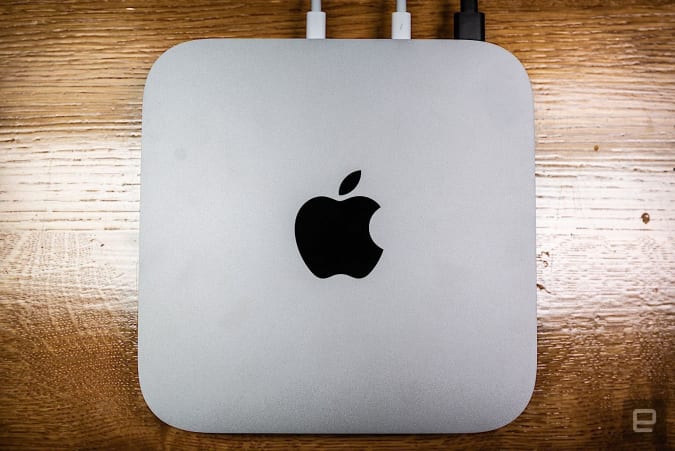
Apple's Mac Mini M1 is down to $600 thanks to an automatically applied coupon that knocks $59 off the sale price. In addition to the M1 chipset, you're also getting 8GB of RAM and 256GB of storage in this model. If you've wanted to upgrade your aging desktop to something more modern and powerful, this is a good option.
The pink model of Apple's AirPods Max are down to a new all-time low of $466. The other colors are also on sale, but for $479. We gave these headphones a score of 84 for their excellent sound quality, good ANC, reliable controls and solid battery life.
Apple's 10.2-inch iPad is still on sale for $299, or $30 off its normal price. It's arguably the best iPad for new tablet owners and we liked its improved performance, familiar design and support for the first-generation Apple Pencil.
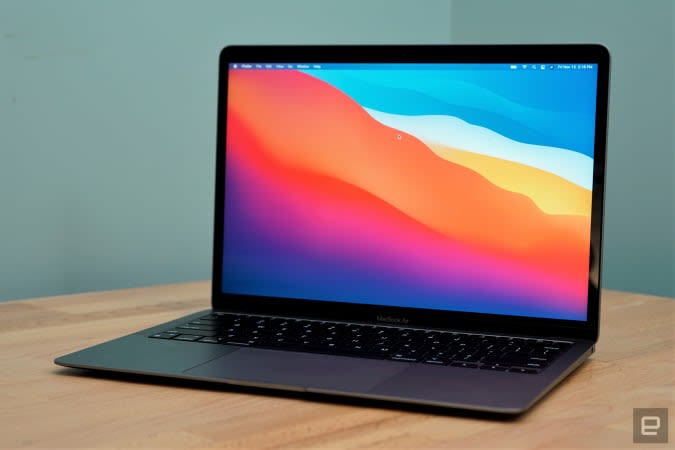
The latest MacBook Air M1 is down to $899 at Amazon, or $100 off its regular price. It's one of the best laptops for most people, and the M1 chipset only makes it a better buy. The Air M1 earned a score of 94 from us for its incredibly fast performance, excellent keyboard and trackpad, good battery life and lack of fan noise.
The new Acer Chromebook Flip 713 is on sale for $619 at Best Buy, which is $80 off its normal price. While still pricey for a Chromebook, this is a high-end model that has enough power to be some people's daily driver. We gave it a score fo 85 for its sold performance, good keyboard and trackpad and excellent display.
Those looking for a budget smartphone can grab the Google Pixel 4 for $400, or half off its original price. If you can live with a two-year-old handset, you'll still get a well-powered smartphone with a great camera experience and a smooth display.
Jabra's solid Elite 85h wireless headphones are down to $150 right now, or $100 off their normal price. We gave them a score of 84 for their custom EQ and ANC modes, attractive and comfortable design and insane 36-hour battery life.
The Thermapen Mk4 has been discounts to $69 as ThermoWorks makes room for the new Thermapen One thermometer. The Mk4 is the best instant-read thermometer we've used so far —the backlit display makes it easy to read in almost any situation and the display rotates depending on how you're holding the pen. Plus, you never have to remember to turn it off because the pen automatically turns on when you pick it up and will shut off after some time of no use.
If you're on a tight budget, an open-box sale on the ThermoPop thermometer just started and it knocks the price of most colors down to $25. It doesn't have as many "smart" features as the Thermapen Mk4, but it's still a solid food thermometer with a splash-proof design and the ability to provide readings in 3 to 4 seconds.
The Eero 6 three-pack with one router and two extenders has returned to its Prime Day price of $181 — but at Best Buy rather than Amazon. This system supports WiFi speeds up to 500 Mbps and can cover p to 5,000 square feet. Plus, it has a Zigbee smart home home built in, so you can use it as the starting point for the smart home system you want to create.
In Omaze's latest giveaway, you can win two seats on one of the first Virgin Galactic flights to space. In addition, you'll go on a tour of Spaceport America in New Mexico with Richard Branson. You don't have to pay to enter, but funds from all paid entries will support Space for Humanity, an organization that hopes to make space more accessible for all.
Omaze is giving away another $20,000 to build your ultimate gaming PC. This sweepstakes is free to enter, but funds donated with purchased entries will benefit Schools on Wheels, an organization that provides free tutoring and mentoring services to children experiencing homelessness across Southern California.
Pricing and availability is subject to change. No donation or payment necessary to enter or win this sweepstakes.See official rules on Omaze.
New tech deals
HomePod Mini
Through July 19, B&H Photo has Apple's HomePod Mini speaker for $90, or $10 off its normal price. It's not a huge discount, but it's a good one on a gadget that rarely goes on sale. Aside from a few exclusive Costco discounts, this is one of the best prices we've seen on the HomePod Mini. We gave it a score of 84 for its solid audio quality, attractive and compact design, stereo mode when two are paired together and Siri smarts.
Through the end of August, new Tidal users can get a three-month free trial of either Premium of HiFi subscription tiers. Premium is Tidal's basic music service that normally costs $10 per month, while the HiFi tier includes high fidelity and master sound quality audio and typically costs $20 per month.
Fitbit's Charge 4 tracker is back down to its record-low price of $100. If the smartwatch life isn't for you, this might be a good fit because it does a good job marrying fitness tracking with handy smart features. We gave it a score of 82 for its accurate built-in GPS, standard Fitbit Pay and multi-day battery life.
Jabra's Elite 85t wireless earbuds are down to $180 again, or $50 off their normal price. These are some of our favorite wireless earbuds thanks to their powerful ANC, comfortable size and long battery life. If you can live without the wireless charging case, the Jabra Elite 75t in gold beige are down to $113 right now, too.
A bundle including Google's Nest Hub and the Nest Audio smart speaker is only $139 on eBay, or $60 off what they would be if you purchased them separately. If you already rely on the Google Assistant for all your voice commands, this bundle is an affordable way to expand your smart home with a few solid, Assistant-friendly devices.
Amazon has a bundle including the latest Echo Dot plus a four pack of Tile Bluetooth trackers for $80, which is $40 off its normal price. The Echo Dot is a handy smart speaker to have in your home if you use Alexa to control smart home devices, set timers and alarms and more, and Tile's trackers make it easier to keep track of your keys, bags and other belongings.
One of our recommended VPNs is running a good sale on a two-year subscription. You can sign up for NordVPN for only $89 for the first two years, which comes out to $44.50 per year — and an additional summer promotion adds three free months on top of that. We like NordVPN for its speed, its no-logs policy, the thousands of servers it has to choose from and that one account supports up to six connected devices.
Xiaomi is now a true heavyweight in the smartphone arena. Canalys estimates that the Chinese tech giant became the world's second-largest phone brand in the second quarter of 2021, surging 83 percent year-over-yer to claim 17 percent of the market. The company not only overtook Apple (14 percent) to claim the second spot, but blew past its BBK-owned Chinese rivals Oppo and Vivo, both of which held 10 percent. Samsung held on to its lead at 19 percent, but there's clearly not much of a gap.
The key, as you might guess, was price. Xiaomi's average selling prices are well below those of Samsung (40 percent) and Apple (75 percent), and even flagships like the Mi 11 are relatively affordable. That may have helped Xiaomi's strong international expansion, including a 300 percent jump in Latin America, a 150 percent spike in Africa and a 50 percent gain in Western Europe. And unlike its fallen competitor, Huawei, Xiaomi doesn't have a US blacklisting to cloud its future.
It's not certain that Xiaomi will hold on to its position. The second quarter is historically weak for Apple as it reaches the tail end of a given iPhone's release cycle. Canalys also notes that Oppo and Vivo aren't staying still — they have their own dreams of world dominance. And if Xiaomi hopes to escape its low-cost reputation, it needs phones like the Mi 11 Ultra and Mi Mix Fold to resonate with the public.
Even a temporary second-place position would be notable, though. While Xiaomi has long had a major presence in its native China, the company has had a much tougher fight for international recognition. Now, it's large enough to battle with behemoths like Samsung and Apple — it's just a question of whether or not Xiaomi can become the frontrunner.
One way fintechs have set themselves apart from traditional banks is by embracing crypto trading. For some of the biggest names in the sector, the expansion has been a success. Take PayPal. Following in the footsteps of Square'sCash App, the company began allowing US members to buy, hold and sell Bitcoin, Litecoin, Ethereum and Bitcoin cash back in November. It followed that with the option to checkout with crypto in March and brought crypto trading to its subsidiary Venmo the following month. Now, as part of its ongoing push into digital currencies, PayPal is upping the amount of crypto users can buy to $100,000 per week and scrapping the $50,000 annual limit altogether.
The expansion marks a fivefold increase to the service's crypto purchasing limit in less than a year. PayPal says it's also adding to its in-app guides and educational materials on cryptocurrency to help dispel myths around virtual currencies. In January, PayPal made an investment in US-based tech startup Taxbit, which helps consumers and businesses calculate the taxes owed on cryptocurrency holdings.
The payments company has made it clear that its crypto push is about driving engagement. Speaking at JP Morgan's annual tech conference in May, PayPal CFO John Rainey said that people who have purchased crypto use the app twice as much as others. A large part of that is people checking the prices of their holdings. Rainey added that 50 percent of crypto holders use the app daily.
Though it’s still best known for its capture cards, Elgato is working toward taking over your entire streaming setup. The past half decade has seen the introduction of the Stream Deckline for easily initiating macros during a broadcast; different kinds of lighting; and, last year, the company’s first gaming microphones. The one thing missing in this list was a webcam — until today’s introduction of the Elgato FaceCam.
Kris Naudus / Engadget
On its surface, the $200 camera is not that unique. It’s a chunky rectangular box that can be easily clipped on top of a monitor, or connected to Elgato’s multi mount system. It shoots 1080p at 60fps, with a Sony-made STARVIS CMOS sensor. It may not be 4K, but most streamers don’t need that kind of resolution right now. The FaceCam makes up for it with a robust suite of settings in its dedicated Camera Hub program. Yes, you’ll have to download another piece of software for this camera to run alongside Game Capture, Stream Deck, Wave Link (for the mics) and Control Center (for the lighting), which is a little annoying. Other companies bundle all their different drivers and settings into one tool, but I suppose keeping them separate probably makes sending out updates easier.
Kris Naudus / Engadget
In the Camera Hub you’ll have easy access to things like contrast, exposure and white balance. (The latter two can be set to automatic so you have one less thing to fuss over.) The automatic white balance was a little warm for my taste, but it was easy enough to turn it off and knock the number down to a cooler 4000K. The software also comes with zoom options, but it’s nothing to write home about, as the camera is fixed focus. You’ll always be sharp as long as you always remain between 12 inches (30 cm) and 47 inches (120 cm) from the camera. That should take care of anyone working at a desk; anyone who moves further back would be better served with something a little more portable with advanced settings.
Kris Naudus / Engadget
The biggest draw of the Camera Hub is the real-time ISO reading, which makes it a lot easier to detect and react to changes in your lighting. Maybe your lights are too bright, or maybe the natural light from outside vanished with an oncoming thunderstorm (which is exactly what’s happening as I type this). The exposure and white balance can adjust automatically, or you can tweak the settings yourself on the fly. There’s a Stream Deck plugin available, which should make it possible to adjust the settings with the touch of a button. Of course, that’s dependent on you having smart lighting in the first place, like Elgato’s Key Light or Ring Light.
Kris Naudus / Engadget
There’s a definite sense that you’re meant to go all-in on Elgato’s streaming lineup, probably best evidenced by the lack of a microphone in the FaceCam. The company says it didn’t bother since most gamers tend to use headsets anyway, but let’s face it: Elgato would rather you pick up one of its Wave:1 or Wave:3 mics. They do indeed sound great, but they’re not my preferred microphones thanks to some issues I had with getting the Wave:3 to work while I was wearing a headset — yes, even one made by Elgato’s parent company Corsair.
Kris Naudus / Engadget
For the most part, the FaceCam has a lot fewer kinks. My biggest problem was plugging it in, as it must be plugged into your system directly and not via a hub. And that’s tough with many modern laptops, which may only have two USB-C ports. The FaceCam comes with a USB-C to USB-A cord, and the company recommends you use the included wire instead of providing your own. I was forced to search around for a converter dongle. While I commend companies for finally embracing USB-C in their gaming accessories, we need some solutions on the software side to ensure that they can actually be used with hubs. My Logitech C920 works with a hub and it comes with a built-in mic, so it’s likely to remain my default webcam for most purposes.
Kris Naudus / Engadget
Still, the FaceCam is off to a promising start. The video quality is crisp and free of noise, and when it’s not there’s a built-in filter you can enable. I haven’t needed it to, though, as the camera has handled my Google Hangouts and Zoom calls with ease. The price is a bit steep, but still on par with Logitech’s Brio 4K and Razer’s Kiyo Pro, both of which cost $200. What your money gets you here is the assurance that it will work seamlessly with your Elgato Stream Deck — a piece of equipment that, right now at least, has no real competition.
Instagram is running a new test to tell users about another app they might want to check out: Facebook. The photo sharing app is experimenting with a notice at the top of users’ feeds that encourages them to check out features that are “only available” on Facebook.
“We’re testing a way to let people who have connected their Instagram accounts to Facebook know about features only available there, such as how to find a job, date online, buy and sell goods, or catch up on the latest news,” a spokesperson said in a statement.
That the company is using one of its billion-user apps to promote another billion-user app might not seem to make a lot of sense, but it’s only the latest (and perhaps most aggressive) way the social network has used Instagram to drive people back to its main app. The company has been steadily bringing the two apps closer together and has been encouraging users to link their accounts. (A book published last year reported that Mark Zuckerberg was “jealous” of Instagram’s success and worried the app could eventually “cannibalize” Facebook. Tensions between him and the app’s founders ultimately led to their departure in 2018.)
Facebook points out that only “a very small group” of Instagram users who have previously opted to link their accounts will see the messages, which can be dismissed. But even if it never expands, it would suggest that the company is far from done with its attempts to get Instagram users to spend more time on Facebook.