Posts with «technology & electronics» label

HBO Max will reportedly overhaul its smart TV apps in the next few months

The HBO Max smart TV apps have been less than reliable, to put it mildly, but WarnerMedia appears ready to turn things around. An anonymous WarnerMedia executive talking to Vulture claims the HBO Max team will replace all its smart TV apps with brand new versions inside of the "next four or five months." Roku and PlayStation owners would receive the overhauled apps first, followed by Apple TV users near the end of 2021. Mobile and web viewers would have to wait until early 2022.

The existing apps have suffered from a number of serious flaws, ranging from broken playback controls to forgotten settings and sluggishness. Roku users have faced more problems than most, with lockups and crashes sometimes making the HBO Max app unusable.

The problems reportedly stem from WarnerMedia's scramble to launch HBO Max in May. Where many rivals built their streaming apps from scratch, the current HBO Max app is a repurposed version of the software meant for HBO Go and HBO Now. It was built to handle high demand, but it wasn't meant to cope with an increasingly global audience streaming much more than Game of Thrones.

An HBO Max app revamp will supposedly provide both modern underpinnings and, importantly, room to grow. The unnamed executive said the new app won't look much different at first, but should allow for a more "sophisticated" interface update as well as new and upgraded features.

If accurate, this could be important to HBO Max's long-term future. The TV streaming space is increasingly crowded with rivals like Paramount+ and Peacock joining incumbents like Netflix and Amazon Prime Video. You might easily lose interest in HBO Max if buggy apps sour the experience, no matter how alluring the content might be — and that will be particularly important once WarnerMedia stops releasing brand new movies on the service.

ICYMI: We listened to Samsung’s $150 Galaxy Buds 2

After a brief hiatus, ICYMI is back to give you a helpful summary of all the gadgets and gizmos we’ve put to the test recently. This week, Billy Steele lent his ears to Samsung’s new entry level Galaxy Buds 2 to check out their new design and features. A little while ago, Terrence O’Brien created beautiful music on the Novation Circuit Rhythm sampler and struggled with the controls on the SkulptSynth SE. Devindra Hardawar also experienced immersive VR courtesy of two professional headsets from HTC. Lastly, Daniel Cooper checked out Framework’s repairable laptop to see just how easy it is to customize and fix.

Samsung’s Galaxy Buds 2 offer premium features at an affordable price

Billy Steele/Engadget

Affordable wireless earbuds often come with compromises, but Billy Steele feels that Samsung has found a winning combination with the Galaxy Buds 2. Redesigned to include wireless charging and ambient sound at an entry-level price of $150, the Galaxy Buds 2 are 15 percent smaller and 20 percent lighter than the Galaxy Buds+, which makes them comfortable to wear. Billy says that the sound quality, though improved, doesn’t have quite the same clarity and depth, but the dynamic range is comparable. Low-end tones lack punch and tracks that should sound big and bombastic are a bit flat and subdued.

That being said, he was still impressed by the inclusion of active noise-cancellation, which Samsung says can reduce 98 percent of background noise. Billy could still hear a bit of his box fans and white noise machine during testing, but the feature was definitely better than relying solely on passive isolation. He felt that Samsung delivered on the call quality improvements as well, via a combination of machine learning, three microphones per bud and a voice-pickup unit to maximize clarity. He managed to get around seven hours of battery life from “regular” use (which included some ANC), but was disappointed that the Buds 2 only have an IPX2 rating, which could produce issues during sweaty workout.

HTC's Vive Pro 2 produces an incredible virtual reality experience — but it comes at a steep price

Devindra Hardawar/Engadget

Devindra Hardawar liked HTC’s Vive Pro 2 VR headset so much he called it “an enthusiast’s dream.” However, he’s quick to point out that its $1,399 price tag makes it a tough sell. The Vive Pro 2 offers a 5K 120Hz display with 2,448 x 2,448 pixels per eye. Additionally, the LCDs have RGB sub-pixels that help to produce the sharpest desktop VR experience that he’s ever seen. It also has solid ergonomics — Devindra says the headset is comfortable to wear for extended sessions due to its weight distribution and its plush cushioning on the front and back.

But even if you’re prepared to shell out for the headset, Devindra admits it comes with some drawbacks. First, the controllers are the same archaic, oversized ones that came with the original 2016 Vive. He also felt that the on-ear headphones produced some heat during use, as did the displays. But the biggest issue is the graphics power necessary to experience the device in its full glory: Devindra says you can probably forget about getting anything truly usable out of the system’s minimum requirements, which means you’ll need a lot of desktop power to get the most out of the Vive Pro 2. Despite those hurdles, he’s quick to call the Vive Pro 2 the highest quality desktop VR available right now.

Framework’s modular laptop can be repaired by anyone

Daniel Cooper

Framework’s laptop isn’t eye-catching or showy. The design of the 13-inch notebook resembles an older MacBook, but with one noteworthy difference: it’s intended to be modded and repaired via the included Torx T5 screwdriver and the expansion cards. While testing how easy it was to replace a keyboard, Daniel Cooper said he felt fully confident that he could make multiple repairs to the machine — something that can’t be said for most consumer laptops.

In addition to being easy to upgrade and fix, the Framework features a solid spec list: a 13.5-inch, 3:2, 2,256 x 1,504 display with a backlight capable of 400 nits; a variety of inputs via the expansion cards as well as a 3.5mm headphone jack; a chiclet keyboard with 1.5mm of travel and an impressive 1080p, 60fps webcam with an 80-degree field of view. During testing, the $1,399 Performance model handled undemanding games well and scored an average 4927 in PC Mark 10. The only thing Daniel didn’t enjoy about the machine were the side-firing speakers, which produced weak, tinny sound.

The HTC Vive Focus 3 is a premium VR workhorse

Devindra Hardawar/Engadget

Much like the Vive Pro 2, HTC’s Vive Focus 3 isn’t intended for the casual consumer. The $1,300 price point alone puts it on another level, likely best for business users who should be pleased with the superior hardware, ergonomics and build quality. Devindra Hardawar says the system has just about everything you would want in a modern headset: a sturdy yet light build with a design that’s comfortable to wear for long periods of time, and even has support for large glasses.

With a 5K resolution, a 90Hz refresh rate and a 120-degree field of view, the Vive Pro 2 delivered one of the most immersive standalone VR experiences that Devindra has seen. He had a realistic sense of walking through meadows and beaches in a nature trek VR program, and said he was consistently impressed by how great everything looked. However, he was disappointed by the limited software library that required him to remove the headset to purchase apps and games. After his time with the Focus 3, Devindra heartily felt that it is an ideal set up for companies who can take advantage of the business-focused apps and the hardware quality without cringing at the price point.

The SkulptSynth SE is a formidable sound engine

Terrence O'Brien / Engadget

As a follow up to the original Skulpt, the SkulptSynth SE makes some upgrades to the build quality but comes in more affordable at $199. Terrence O’Brien spent some time with the instrument and determined that it’s still as powerful, compelling and confusing as the previous version. The SE features a total of 32 oscillators stacked in four voices which produces a thick tone that Terrence called inviting. He says the SE shines when the stacked oscillators are given a chance to really flesh out the sound. He also approved of the various modulation options, which give the device a surprising amount of depth.

Despite the improvements in the hardware (specifically firmer knobs), Terrence said that the SE still felt pretty wobbly and cheap overall. And he was still frustrated by the cramped layout and the navigation of the controls — he recommends keeping the included cheat sheet at hand to help with the latter. Additionally, the touch keyboard wasn’t always super responsive. However, using the app solved a lot of his complaints and he was excited about the MPE support, which is unheard of at the SE’s price point.

Intel’s NUC 11 Extreme offers gamers a full sized GPU

Devindra Hardawar/Engadget

Devindra Hardawar is quick to acknowledge that the new NUC 11 Extreme, aka “Beast Canyon,” is pretty sizable. However, he feels the trade-off is worth it because the design provides support for a full GPU — something that should attract gamers to the unit. It’s also a bit cheaper than the last model and more flexible due to the fast 11th-gen Intel CPU (which can be purchased separately as an upgrade for NUC 9 Extreme owners).

This NUC was clearly designed with gamers in mind with an LED skull on the black metal case, mesh air vents and three large fans on top. Devindra was pleased to report that the case cooling on the device was excellent: the GPU never went above 75 celsius and the CPU stayed under 80 celsius. Additionally, because of the thoughtful modular design, he had no trouble fitting in large GPUs like NVIDIA’s RTX 3070 Ti or the Radeon RX 6800. The system also performed well in benchmark testing: in PCMark 10 it outpaced every Windows PC we’ve seen this year. Still, the $1,150 to $1,350 price tag for the NUC 11 is high, especially because owners will need to pay up for additional hardware and software.

The Novation Circuit Rhythm is entirely sample-based

Terrence O'Brien / Engadget

Though physically similar to its cousin the Circuit Tracks, Novation’s Circuit Rhythm uses the popular screen-free workflow of the Circuit with the full-featured sampler and performance effects of the SP-303 to produce a device that is ideal for lo-fi hip hop and house music. Terrence O’Brien particularly enjoyed this simple workflow as well as the sampling and slicing features that are fun to use.

The Circuit Rhythm has 32 RGB, velocity-sensitive pads, 28 buttons for switching views and tracks, eight endless encoders and two knobs for volume and master filter. Terrence says those eight monophonic sampler tracks are the core of the Rhythm, and he was also impressed with its portability and 3.5-hour battery life. Though he would like to see some additional features like more fine-grained temp control, overall he deemed the Circuit Rhythm a strong contender for best entry-level sampler, particularly for anyone interested in hip hop or house music creation.

Reddit iOS app now includes a TikTok-style video feed

Reddit is about to make video a cornerstone of its mobile app. The company told TechCrunch that it's rolling out a TikTok-like video feed to iOS app users through a dedicated section. Tap the button and you'll see a swipeable video collection from both the subreddits you've subscribed to as well as related communities. As usual, you can upvote, downvote, comment on or gift awards.

A basic version of this experience was available before, but only if you tapped on a video — and the first videos you'd see would come from the same subreddit. The new tab is meant to "bring community through video," according to a Reddit spokesperson, and that means creating a "unified" experience that matches what you expect from app-based video players.

Reddit didn't say when all iOS users could expect the feed, or when you'd see an Android version. The vido section first reached a handful of iOS devices sometime in July.

This isn't a shocking move. Reddit started toying with livestreams in 2019, and bought TikTok rival Dubsmash in December 2020. While that company's code isn't being used for the feed (that will come with future products), the acquisition signalled Reddit's intent — it wants to keep its social network relevant in an era when video is all-important. You might not see video take center stage, but it's now considerably more than a nice-to-have feature.

iRobot's high-end Roomba i7+ and S9+ are up to $150 off at Wellbots

We all could use a little help keeping our homes clean and a robot vacuum can do just that. Some robots, like iRobot's Roomba i7+ and S9+, go one step further by automatically emptying their bins into their clean bases after each job — so you rarely have to take out its trash. These gadgets come with high price tags, but you can grab either of them for less right now at Wellbots. The online retailer has the Roomba i7+ for $699, or $100 off, and the S9+ for $949, or $150 off, when you use the codes 100ENGADGET and 150ENGADGET, respectively, at checkout. While not all-time-low prices, they're the best prices we've seen since April.

Buy Roomba i7+ at Wellbots - $699Buy Roomba S9+ at Wellbots - $949

The Roomba i7+ is one of the more expensive robot vacuums you can get from iRobot and we gave it a score of 87 when it first came out. Not only did it do a good job cleaning both carpeted and hard floors, but it was also quieter than other robot vacuums we've tested. The i7+ also has smart mapping technology so it can keep track of the rooms in your home to clean more efficiently. And like other robo-vacs, you can control the i7+ from your smartphone, plus set cleaning schedules, using the iRobot mobile app.

But the biggest thing that sets the i7+ apart from others is its clean base. After each job, the robot will automatically empty its bin into the clean base so you don't have to worry about it. The clean base itself can hold about 30 jobs worth of dirt, so it won't require constant attention either. The only downside are iRobot's proprietary bags that you'll have to buy for it.

Overall, the i7+ is a good pick if you want a robot vacuum that requires little attention on a daily basis. The Roomba S9+ has all of the same features plus a more corner-friendly design and "power-lift suction," which should help it do a better job deep-cleaning carpets and capturing pet hair.

Follow @EngadgetDeals on Twitter for the latest tech deals and buying advice.

These 'vaccine passports' are why we can have nice things

We’ve reached a disquieting point in the COVID-19 pandemic wherein a significant portion of the American public refuses to accept the free and wildly effective vaccines while simultaneously demanding a “return to normalcy” — and all the benefits that reopening the economy would entail. But with the Delta variant’s rapid spread threatening to send the country back into another round of social isolation, state and local governments (and numerous businesses) are seeking to strike a balance between the public’s health and the nation’s economic needs through the use of digital vaccine cards, aka “vaccine passports.” But, unlike the mRNA vaccine itself, these passports are not quite the magic bullets against COVID we had hoped.

Vaccine passports, either physical or digital records certifying that a person has been fully vaccinated against a disease, have been around since the 19th century. As early as the 1880s, students and educators in the US were required to show proof of immunization against smallpox before attending classes. In 1897 Russian scientist Waldemar Haffkine developed a vaccine against the bubonic plague. His breakthrough treatment was immediately put to use by the British colonizers of India. To help ensure that densely populated Hindu and Muslim pilgrimage sites in the country did not mutate into outbreak clusters of the disease, the local government began requiring proof of vaccination by every pilgrim before entering these sites.

With the rise of air travel in the second half of the 20th century, the United Nations adopted similar rules in 1951 and then again in 1969, dubbed the International Health Regulations. These regulations, along with widespread outbreaks of yellow fever, led to the advent of “yellow cards,” which international travellers have carried for decades to certify their immunization against a wide variety of infectious diseases.

Yellow fever is currently the only disease currently on the IHR for which countries can demand vaccination proof as a condition of entering the country, though the UN’s regulations on any disease are advisory and non-binding in nature so the responsibility for adhering to and implementing those rules falls to individual nations.

In response to the COVID pandemic, many nations already have embraced a new generation of vaccine passports. Israel has the Green Pass, Denmark has the Coronapas, the European Union (but not the UK) offers the EU Digital Covid Certificate, China rolled out its vaccine passport as a WeChat mini app in March, and Estonia uses VaccineGuard. Even private businesses are considering implementing their own systems. United, JetBlue and Lufthansa, for example, are rolling out CommonPass, a system designed to verify an international passenger’s COVID testing and vaccination status.

“This is likely to be a new normal need that we’re going to have to deal with to control and contain this pandemic,” Dr. Brad Perkins, chief medical officer at the Commons Project Foundation, the nonprofit that developed CommonPass, told The New York Times in December.

The Biden administration has made clear that it does not support the creation of a vaccine passport program at the Federal level. The President did, however, issue an executive order in January directing the State Department to work with the WHO and international aviation and travel agencies to develop standards for post-pandemic travel.

“The federal government is working on this issue of vaccine credentialing or vaccine verification or what some people call vaccine passports. So we’re going to be following carefully what the federal government comes out with,” Tomás Aragón, director of the California Department of Public Health, told the SF Chronicle in April. “If they don’t move fast enough, we will come out with technical standards of what we expect and also really focusing on making sure that that privacy is protected and that equity is protected.”

Instead, Americans are offers a hodgepodge of local and state regulations, at least those states that haven't banned certification systems — looking at you, Arkansas, Texas, Florida, and Indiana — despite clear legal precedent affirming the government’s authority to temporarily abridge certain individual rights during a public health crisis (see: Jacobson v. Massachusetts).

Take California, for example. The Golden State recently rolled out the Digital COVID-19 Vaccine Record, a system that securely pulls the data stored in the California immunization registry. It’s the same state-collected vaccination data that is seen on the paper cards issued when you got your shots — specifically your name, date of birth, vaccination dates, and vaccine manufacturer.

“It’s not a passport. It’s not a requirement. It’s just the ability now to have an electronic version of that paper version,” California Governor Gavin Newsom explained during a press conference announcing the system’s rollout in June.

The system can also store a scannable QR code on your mobile device so that businesses and venues that do require certification of full vaccination prior to entry can do so easily. The QR code is built on the non-profit SMART Health Card technology, which means that only SMART-compatible scanners can actually read the codes. And in San Francisco, that’s literally all of them. This is a built-in security feature ensuring that some random clown at the bar can’t surreptitiously scan your code using the generic QR reader on their phone and get access to your information.

However, the system’s rollout has not been without its hiccups. This reporter specifically has spent the past six weeks attempting to resolve an issue with incomplete vaccination data being reported to the registry. (Basically, it reads that my second dose is the only dose I received.) The CDPH declined to comment on how many Californians have registered for the service and how many of those registrants have run into similar problems, though the agency has set up a virtual agent to help guide users through the process of alerting the state to any mistakes or omissions.

New York, on the other hand, has not one but two competing vaccine verification systems, neither of which has proven particularly reliable, trustworthy or useful. At the state level, you’ve got the Excelsior Pass, which operates in a similar fashion to California’s DCVR system — pulling immunization data directly from the state’s registry — and leverages IBM’s proprietary blockchain technology to maintain data security and user privacy. At the local level, New York City has rolled out a passport app of its own, dubbed the NYC COVID Safe App, which for all intents and purposes is a half-assed image storage app that is ridiculously easy to spoof.

As I explained to @WNYC today, New York City's new #NYCCovidSafe app isn't exactly cutting edge technology. It accepted this portrait of Mickey as proof of vaccination.

We need to get New Yorkers vaccinated, not another City Hall PR stunt.

Listen Here: https://t.co/GRGIWtuK2jpic.twitter.com/O1wS73FbGV

— Albert Fox Cahn (@FoxCahn) August 2, 2021

As you can see from the above tweet, STOP founder and NYC-based privacy advocate Albert Fox Cahn was able to get the NYC app to accept a picture of the iconic rodent in lieu of his actual state-issued vaccination card.

"I uploaded a photo of Mickey Mouse when I registered for it and then it gave me a pop up box saying are you affirming this is accurate," Cahn told WNYC earlier this month. "You click yes. And then you're done."

This feat was easily replicated by other users, including San Francisco-based journalist Cyrus Farivar, who used the menu from a local BBQ joint as his photo.

Have replicated @FoxCahn’s test.

The new NYC Covid Safe app accepted this picture of a menu from @4505_Meats in San Francisco as proof of my valid vaccine. pic.twitter.com/4xVQCwBi2a

— Cyrus Farivar (@cfarivar) August 3, 2021

“The NYC COVID Safe App was designed with privacy at the top of mind, and allows someone to digitally store their CDC card and identification,” Laura Feyer, spokesperson for Mayor Bill de Blasio, told Gothamist in response to these reports. “Someone checking vaccination cards at the door to a restaurant or venue would see that those examples are not proper vaccine cards and act accordingly.”

“The functionality of this app really raises the question, why did the city create it to begin with, because like so many other vaccinated New Yorkers, I had a photo album with my vaccine card months ago,” Cahn told Engadget. “It's unclear how this was anything more than a publicity stunt to roll it out as a new city app.”

“And then on top of that, to then make these broad sweeping statements that how the app is unhackable and to also say that there's no privacy impact when the app is also collecting your IP address and record of every time it's open,” he continued. “It's not a huge amount of IP information but it's information that the city was never collecting before, it's information that they simply don't need.”

What’s more, the NYC COVID Safe app’s lackisadical security also makes it prone to exploitation by anti-vaxxers, like noted area conspiracy theorist, Joe Rogan. Since the app doesn’t independently verify any of the information it is displaying, instead relying on bar, venue and restaurant staffers to make the determination as to whether a photo is legitimate or not, malicious users could easily upload a photo of any vaccine card — whether it’s been photoshopped, acquired from a friend or bought on on the black market (for $400).

The state-run Excelsior Pass has run into privacy issues of its own. For one, its reliance on IBM’s blackbox blockchain system provides virtually no accountability or transparency in how the system actually operates.

The “thing is highly engineered, it has all these layers of registration, verification, and a customized QR code,” Cahn said. “That's raising far more important privacy issues because the state is quite clear that it doesn't use location services. But since each scanner is registered to a specific business address, every time you scan that QR code, the state and IBM are collecting a record of where you were and when, and we haven't done any clear information on how long that data is retained.”

What’s more, an experiment conducted in April by Cahn found that even with the blockchain assurances, the app was remarkably easy to hack. “After getting consent from an Excelsior Pass user, I tried to download their pass, logging into their account using nothing more than public information from social media. Eleven minutes after he gave me the greenlight, I had a copy of his blue Excelsior Pass in hand, valid for use until September,” Cahn wrote for the Daily Beast.

“This city app really just speaks to the dysfunction. Here in New York, the rivalry between the city and state, the fact that we have a mayor and the governor who can't stand each other, and it is not addressing a technical need,” he lamented. “These apps are such a debacle that we just need to go back to old-fashioned paper records.”

‘Castlevania: Grimoire of Souls’ will soon be revived on Apple Arcade

A new(ish) Castlevania game is on the way to Apple Arcade. Castlevania: Grimoire of Souls is coming soon to iOS, tvOS and Mac via the subscription service. Konami announced Castlevania: Grimoire of Souls in 2018. It soft launched the game on iOS in Canada in 2019 before removing it from the App Store last year.

As noted by Gematsu, this outing features character designs and music from Castlevania veterans Ayami Kojima and Michiru Yamane. Castlevania: Grimoire of Souls features a bunch of familiar playable characters, including Alucard, Simon Belmont, Charlotte, Shanoa and Maria. You'll fight your way through Dracula's army with a range of weapons (including the whip) and special moves. Along with the story mode, there are co-op and bounty hunt modes.

Meanwhile, Apple announced the Apple Arcade library now includes more than 200 games.

Today we hit over 2️⃣0️⃣0️⃣ games!

That's hundreds of games to play on the go, at home with the family, or during your break between meetings.

Thank you to all of our incredible developers and community that made this happen.

Which Apple Arcade game is your favorite so far?

— Apple Arcade (@AppleArcade) August 13, 2021

This week's best deals: $100 off the Apple Watch Series 6 and more

Samsung may have announced a bunch of new devices this week, but it was Apple and Amazon that led the week when it came to online deals. While Woot's flash sale on the Apple Watch Series 6 Product Red Edition came and went quickly, you can still get the smartwatch for $299 at Amazon. The Mac Mini M1 got a $100 discount while a number of Echo devices went on sale as well — including the new, second-generation Echo Show 5. And through Sunday, you can save on laptops, tablets, TVs and more in Best Buy's anniversary sale. Here are the best tech deals from this week that you can still get today.

Apple Watch Series 6

Apple

The Apple Watch Series 6 Product Red Edition is $100 off right now, bringing it down to $299. While not an all-time low, it's still a great deal on Apple's more powerful smartwatch. We gave the Series 6 a score of 89 for its speedy performance, improved battery life and faster charging. However, if you're willing to wait, you'll be able to get the next-generation Apple Watch pretty soon — we expect to see it debut sometime in September.

Buy Series 6 Product Red at Amazon - $299

Mac Mini M1

Engadget

Apple's Mac Mini M1 has returned to $600, or $100 off its normal price. The sale price is actually $650, but an automatically applied coupon will bring the final cost down even more. This is the device to get if you want a compact desktop with the power and efficiency of Apple's M1 chipset.

Buy Apple Mac Mini (256GB) at Amazon - $600

AirPods Pro

Billy Steele / Engadget

Apple's AirPods Pro remain $60 off at Amazon, bringing them down to $190. These are the best sounding earbuds you can get from Apple, and we gave them a score of 87 for their better, more secure fit, IPX4 water resistance and solid audio quality.

Buy AirPods Pro at Amazon - $190

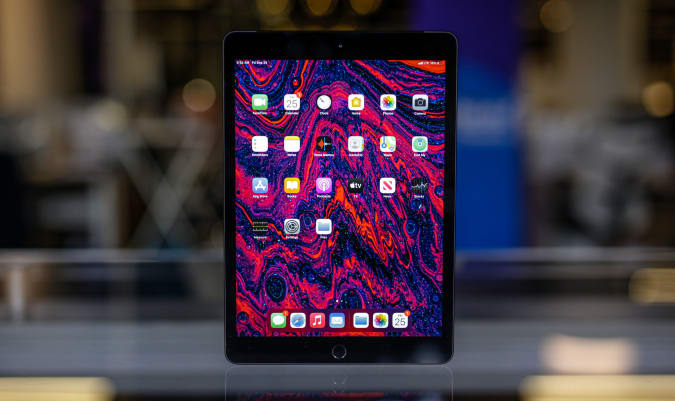
10.2-inch iPad

Apple's 10.2-inch iPad is still on sale for $299, or $30 off its normal price. It's arguably the best iPad for new tablet owners and we liked its improved performance, familiar design and support for the first-generation Apple Pencil.

Buy 10.2-inch iPad at Amazon - $299

Beats Studio Buds

Billy Steele/Engadget

Beats' new Studio Buds are $20 off right now, bringing them down to $130. It's the first discount we've seen on the buds since they came out a few months ago. We gave them a score of 84 for their smaller, more comfortable design, balanced sound and quick pairing on both Android and iOS.

Buy Beats Studio Buds at Amazon - $130

Amazon Echo devices

Engadget

A handful of Echo devices are on sale right now at Amazon, including the second-generation Echo Show 5 for $55. That's the best price we've seen since the device came out earlier this year. You can also grab the latest Echo Show 8 for $100 and the Echo Frames for $180.

Buy Echo Show 5 at Amazon - $55Buy Echo Show 5 Kids at Amazon - $65Buy Echo Show 8 at Amazon - $100Buy Echo Frames at Amazon - $180

Anova Precision Cooker Nano

Anova

Anova's entry-level sous-vide machine, the Nano, remains discounted to $99. It's a great option for those interested in giving sous-vide cooking a try, but don't want to spend a ton of money upfront to do so. The Nano uses 750 watts of power to cook food submerged in water, and it can run for up to 3,000 hours before it needs recharging.

Buy Anova Precision Cooker Nano at Amazon - $99Buy Anova Precision Cooker Nano at Best Buy - $99

Comic-Con 2022 sweepstakes

Through December 8, you can enter to win four-day passes to San Diego Comic-Con 2022. Along with the passes, you'll get access to a special preview night, reserved seating in Hall H, a personal concierge, a private tour of the Comic-Con Museum, dinner in Balboa Park and tickets to the "Night at the Comic-Con Museum" event. It's free to enter, but funds from this sweepstakes will go to the San Diego Comic Convention.

Enter to win at Omaze

Virgin Galactic sweepstakes

In this Omaze giveaway you can win two seats on one of the first Virgin Galactic flights to space. In addition, you'll go on a tour of Spaceport America in New Mexico with Richard Branson. You don't have to pay to enter, but funds from all paid entries will support Space for Humanity, an organization that hopes to make space more accessible for all.

Enter to win at Omaze

Gaming PC sweepstakes

Omaze is giving away another $20,000 to build your ultimate gaming PC. This sweepstakes is free to enter, but funds donated with purchased entries will benefit Schools on Wheels, an organization that provides free tutoring and mentoring services to children experiencing homelessness across Southern California.

Enter to win at Omaze

Pricing and availability is subject to change. No donation or payment necessary to enter or win this sweepstakes.See official rules on Omaze.

New tech deals

Elgato Key Light Air

Elgato's slim Key Light Air has been a favorite of ours for streamers and now you can get it for $110, or $20 off its usual price. It's a sleek LED panel with 1,400 lumens that can provide just the right amount of light for your streams without taking up too much space. It's also WiFi-enabled, so you can turn it on and off and switch up your light settings directly from your smartphone.

Buy Key Light Air at Amazon - $110

Instant Pot Duo Plus (8-quart)

This 9-in-1 Instant Pot is $40 off at Amazon thanks to a clippable coupon that knocks an additional $20 off the sale price. Along with pressure cooking, you're getting rice cooking, yogurt making, steaming, warming, sous vide and other functions in this device, plus a capacity large enough to make food for a big party.

Buy Instant Pot Duo Plus at Amazon - $100

Aukey Omnia Duo 65W Dual-Port PD Charger

This 65W GaN USB-C charger from Aukey is only $26 when you use the code OMNIADUO at checkout. It includes two USB-C ports, so you can quickly power up two mobile devices at once or even your laptop and your smartphone simultaneously. And because it uses GaN technology, it's smaller than other similar chargers and isn't as susceptible to overheating.

Buy Omnia Duo 65W charger at Aukey - $26

NordVPN

One of our recommended VPNs is running a decent summer sale on a two-year subscription. You can sign up for NordVPN for $99 for the first two years, which comes out to $49.50 per year, and get three additional months of access for free. We like NordVPN for its speed, its no-logs policy, the thousands of servers it has to choose from and that one account supports up to six connected devices.

Buy NordVPN (2 years) - $99

Follow @EngadgetDeals on Twitter for the latest tech deals and buying advice.

House bill takes aim at iOS and Android app store competition

A bipartisan bill that targets app store competition has been introduced in the House of Representatives. It's the House version of a Senate bill that was introduced this week by a group of Republican and Democrat senators, and it would likely have a drastic impact on Apple's App Store and the Google Play Store were it to come into effect.

"For far too long, companies like Google and Apple have had a stranglehold on app developers who are forced to take whatever terms these monopolists set in order to reach their customers," Ken Buck, the ranking Republican member of the House Judiciary Committee antitrust panel, wrote in a tweet. As Reuters notes, Buck introduced the bill alongside Democrat Hank Johnson. 

Should the Open App Markets Act become law, it could level the playing field for third-party app stores and in-app payment services. Using a third-party app marketplace on an iPhone is difficult without jailbreaking the device. Google says Android 12 makes it easier for users to install apps from other stores, but it still requires developers to handle payments through the Play Store's billing process.

Both Apple and Google take a 30 percent cut of in-app payments. That's a key reason why the likes of Spotify and Netflix don't allow users to sign up through mobile apps. They direct users to their mobile websites instead.

"Apple has used the iOS platform and its App Store policies to insulate itself from competition and disadvantage rivals for far too long," Horacio Gutierrez, Spotify’s head of global affairs and chief legal officer, told Engadget in a statement. "By introducing the Open App Markets Act in both chambers of Congress, we’re one important step closer to curbing Apple’s anticompetitive behavior, leveling the playing field, and restoring competition for all.” The company has accused Apple of operating as a monopoly on iOS.

The bill would also allow developers to inform consumers about lower prices elsewhere, according to its sponsors. Epic Games' legal battles with Apple and Google kicked off when it offered mobile Fortnite players a discount on virtual goods if they bypassed the iOS and Android payment systems. Apple and Google swiftly removed the game from their app stores and Epic responded quickly by filing lawsuits against both companies. A judge's decision is pending in the Apple case.

Best Buy discounts Surface laptops, Galaxy tablets in its latest weekend sale

Best Buy is back with a new three-day sale that reduces the prices of many gadgets, including laptops and tablets from Microsoft and Samsung. Through August 15, you can grab the Surface Pro 7 with its Type Cover for as low as $599 and a Core i5 model of the Surface Laptop Go for $750. Samsung's flagship tablets, the Tab S7 and S7+, are both on sale, while the already affordable Tab S6 Lite is even cheaper at $270. Here are the best tech deals we found in Best Buy's latest weekend sale.

Google WiFi (3 pack)

Google

Google's mesh WiFi kit with one router and two access points is $50 off, bringing it down to $150 (Amazon's matching the deal as well). This system came out at the end of last year and it supports speeds up to 1.2Gpbs. Each node covers up to 1,500 square feet, so you're getting a ton of coverage with this three-pack. While it's not as fast as the Nest WiFi system, it's a good upgrade for those who may still be relying on a router from their ISP.

Buy Google WiFi (3 pack) at Best Buy - $150Buy Google WiFi (3 pack) at Amazon - $150

Galaxy Chromebook 2

Engadget

The Galaxy Chromebook 2 is down to $449 for the Intel Celeron model with 4GB of RAM and 64GB of storage. The Core i3 model will set you back $599, but that's still a decent deal. We gave this laptop a score of 82 for its impressive screen, loud speakers and solid performance.

Buy Galaxy Chromebook 2 at Best Buy - $449

Surface Pro 7 bundle

Engadget

The base Surface Pro 7 with its Type Cover is down to $599 for this sale, or $360 off its normal price. This model has a Core i3 processor, 4GB of RAM and 128GB of storage — we'd be wary about using a device with 4GB of RAM as your primary device (unless it's a Chromebook), but this would make a good convertible for those that want a lighter device to tote around with them.

Buy Surface Pro 7 bundle at Best Buy - $599

55-inch LG A1 OLED 4K TV

The latest LG OLED lineup just became available a few months ago and now you can grab the 55-inch A1 model for $1,300. The A1 series is the most affordable of the bunch, making these sets good options for anyone looking to upgrade to OLED while on a tight budget.

Buy 55-inch LG A1 OLED at Best Buy - $1,300

55-inch LG C1 OLED 4K TV

The 55-inch, mid-tier LG C1 OLED TV is down to $1,500, or $300 off its normal price. It uses LG's a9 Gen4 AI Processor 4K and supports HDMI 2.1, G-SYNC and FreeSync for gaming and voice commands using Alexa or the Google Assistant.

Buy 55-inch LG C1 OLED at Best Buy - $1,500Buy 55-inch LG C1 OLED at Amazon - $1,500

Surface Laptop Go

Devindra Hardawar/Engadget

Microsoft's Surface Laptop Go with a 10th-gen Core i5 processor, 8GB of RAM and 256GB of storage is $150 off right now, bringing it down to $750. This is a good price for the upgraded model with more RAM, as most people will need at least 8GB on their daily driver. We gave the Laptop Go a score of 81 for its solid, minimalist design, excellent keyboard and trackpad and speedy performance.

Buy Surface Laptop Go at Best Buy - $750

Galaxy Tab S7

Cherlynn Low / Engadget

Best Buy and Amazon have knocked $120 off Samsung's Galaxy Tab S7, bringing the total price to $530. The S7+ is also on sale for $730. This slab earned a score of 80 from us for its lovely 120Hz display, attractive build and long battery life.

Buy Galaxy Tab S7 at Best Buy - $530Buy Galaxy Tab S7 at Amazon - $530

Buy Galaxy Tab S7+ at Best Buy - $730Buy Galaxy Tab S7+ at Amazon - $730

Galaxy Tab S6 Lite

Cherlynn Low / Engadget

Samsung's affordable Android tablet is even cheaper in this sale — the Galaxy Tab S6 Lite is down to $270, or $80 off its normal price. If you're looking for a capable Android tablet that won't break the bank, this is one that gives you a number of premium features at a great price. We gave it a score of 84 for its sturdy, attractive design, long battery life and excellent note-taking features with the S Pen.

Buy Galaxy Tab S6 Lite at Best Buy - $270Buy Galaxy Tab S6 Lite at Amazon - $270

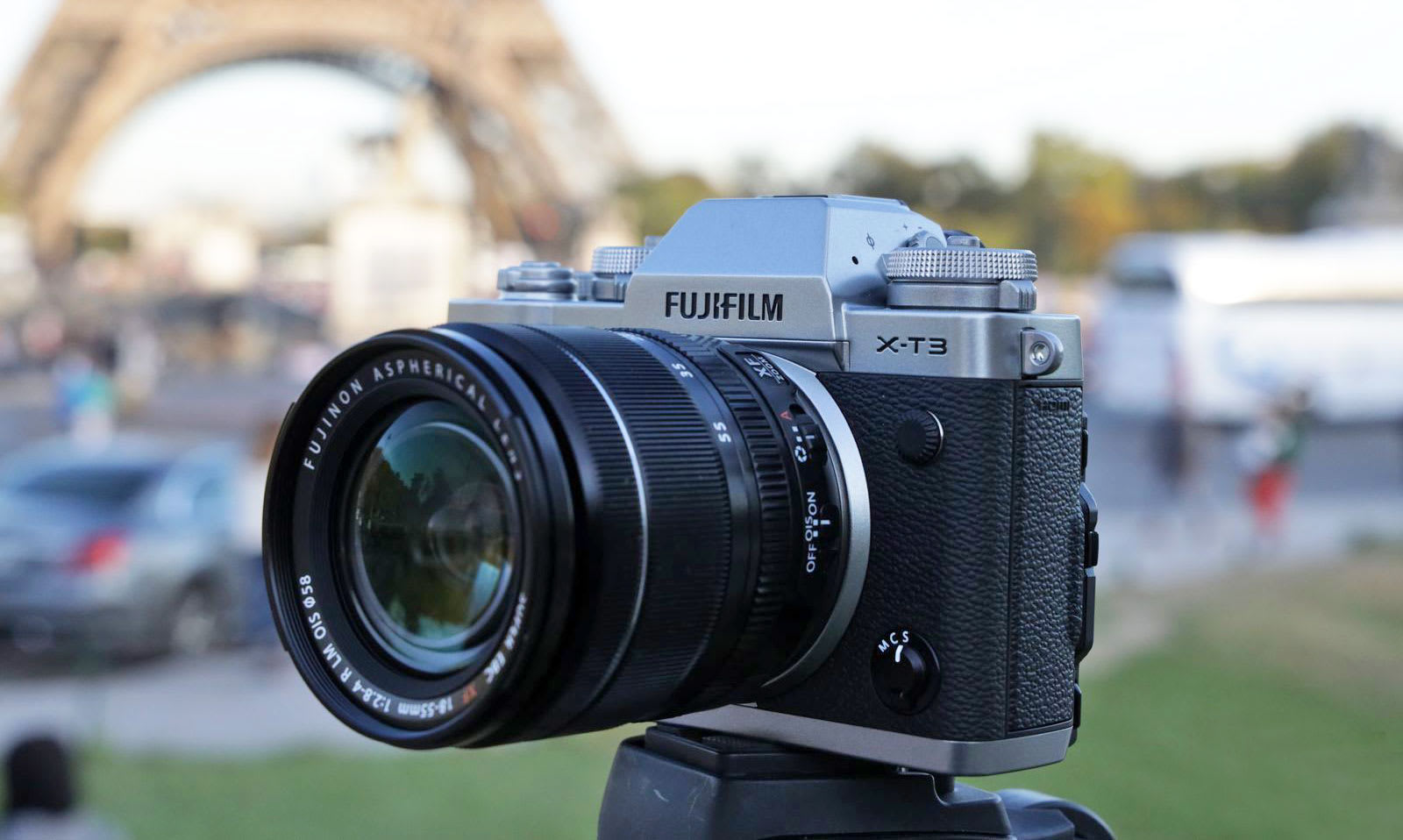
Fujifilm X-T3

The Fujifilm X-T3 mirrorless camera is $300 off during this sale, bringing it down to $1,200. Although Fujifilm debuted the X-T4 last year, the X-T3 remains a good option if you're on a tight budget. We gave it a score of 90 for its faster autofocus, excellent image quality and its compact, weatherproof design. 

Buy Fujifilm X-T3 at Best Buy - $1,200Buy Fujifilm X-T3 at Amazon - $1,200

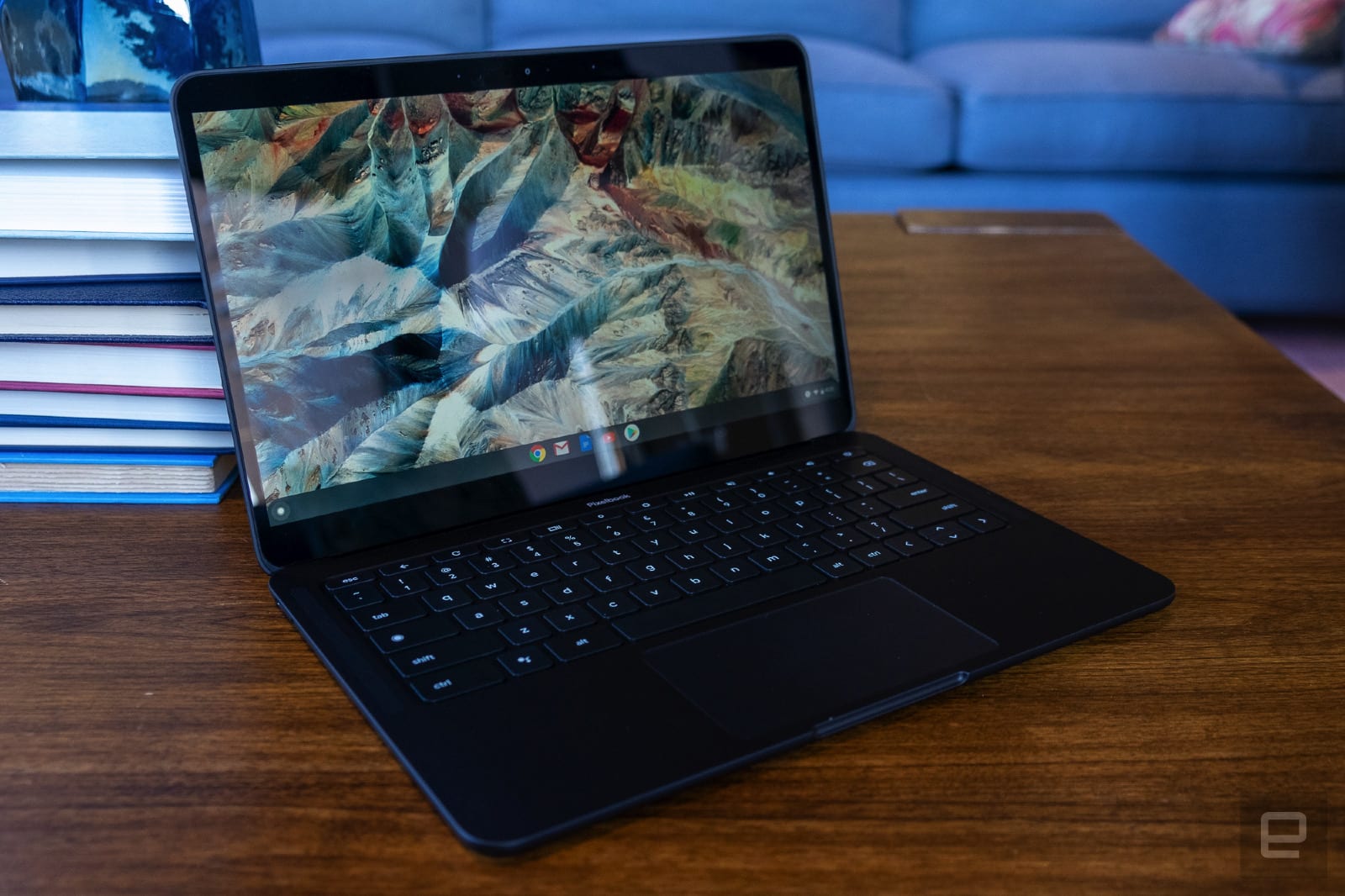
Google Pixelbook Go

We thought the Pixelbook Go was a bit too expensive for a Chromebook (even a high-powered one at that), but this sale knocks it down to $750. That gets you a Core i5 processor, 8GB of RAM and 128GB of storage — more than enough power for most Chrome OS users. We gave the Go a score of 84 for its thin-and-light design, good performance and solid battery life.

Buy Pixelbook Go at Best Buy - $750

Follow @EngadgetDeals on Twitter for the latest tech deals and buying advice.

Engadget Podcast: Diving into Samsung and foldables with Mr. Mobile

This week, Cherlynn and guest co-host Mat Smith are joined by foldable aficionado and tech personality Michael Fisher (aka Mr Mobile) to talk all about foldables. Specifically, Samsung’s Galaxy Z Fold 3 and Z Flip 3, as well as the new Galaxy Watch 4 series and Buds 2. Then, our hosts try to make sense of the confusion around Apple’s CSAM-detecting features, and go over some other gadgets launched this week.

Listen below, or subscribe on your podcast app of choice. If you've got suggestions or topics you'd like covered on the show, be sure to email us or drop a note in the comments! And be sure to check out our other podcasts, the Morning After and Engadget News!


Subscribe!


Topics


Video livestream

Credits
Hosts: Cherlynn Low and Mat Smith
Guest: Michael Fisher aka MrMobile
Producer: Ben Ellman
Livestream producers: Julio Barrientos, Owen Davidoff, Luke Brooks
Graphics artists: Luke Brooks, Kyle Maack
Music: Dale North and Terrence O'Brien