The Federal Communications Commission launched an investigation this week into a large number of media, telecom and infrastructure companies that operate in the United States with ties to Russia, CNN reported. The probe, allegedly being conducted jointly with the Department of Homeland Security and the Department of Justice, is aimed at firms considered a “national security risk,” and covers a wide array of business types including wireless providers, VoIP services and submarine cable operators.
The FCC’s review also arrives as many US cybersecurity experts warn of the increased danger of cyber attacks, especially on critical infrastructure. The US recently imposed a number of sanctions on Russia in response to its invasion of Ukraine, and it’s possible Russia may retaliate through cyber warfare. Recent cyber campaigns suspected to have ties to the Russian government include the hacks of the Olympics, SolarWinds, Ukraine's government websites and coronavirus vaccine research in the US, UK and Canada. US cyber officials have also warned businesses, banks and state and local governments to be vigilant for ransomware.
A similar investigation against Chinese companies Huawei and ZTE launched by the FCC in 2019 over concerns their equipment allowed for Chinese surveillance of US activities. It’s unknown exactly how many similar companies with Russia ties will be covered by the probe. Russia also funds media companies in the US and other countries. UK prime minister Boris Johnson recently ordered a probe into the UK license for RT (Russia Today) a Kremlin-backed global news outlet with offices in the United States and across Europe. US company T&R Productions, which backs RT America, has received over $100 million from the Russian government, an Open Secrets investigation revealed.
This week we saw a number of gadgets from Lenovo, Samsung and others go on sale. Lenovo's new Smart Clock Essential with Alexa support is down to only $50 right now, while a number of Samsung Odyssey gaming monitors have great discounts. You can officially buy Samsung's latest smartphones today, too, and you'll get a credit if you go through Amazon. Plus, Roku's Streaming Stick 4K+ is 30 percent off and down to $49. Here are the best tech deals from this week that you can still get today.
Lenovo Smart Clock Essential (Alexa)
Lenovo
Lenovo's new Smart Clock Essential with Alexa support is on sale for $50 right now, or 29 percent off its normal price. This version has a slightly different design than the original, featuring pogo docking pins on the bottom, and new fabric colors. Otherwise, it does all of the things the Google Assistant-version did, only with Alexa. It also doesn't have a built-in camera, which will make it more appealing to those concerned about privacy.
Certain colors of the Apple Watch Series 7 are down to $349, or $50 off their normal price. Apple's latest flagship smartwatch earned a score of 90 from us for its slightly larger display, faster charging and handy watchOS8 features.
Samsung's 49-inch Odyssey Neo G9 mini-LED curved gaming monitor is still $500 off and down to $2,000. Yes, it's still a pricey display, but serious gamers who want a more immersive experience will find it worthwhile. It has a 5,120 x 1,440 resolution with a 240Hz refresh rate, along with high contrast ratios, bright HDR performance and support for NVIDIA G-Sync and AMD FreeSync Premium Pro. If you don't want to drop so much on one monitor, a number of other Odyssey displays are on sale, too, including the 34-inch Odyssey G5 curved monitor for $430.
Amazon's offering a $100 credit to those that order any of the three smartphones in the new Samsung Galaxy S22 lineup. All you have to do is enter the promo code on the product page before you check out, and you'll get an email after your handset ships with the details of the credit being added to your Amazon account. Those considering the Galaxy S22 have an extra incentive on top of that — $100 off in the form of an on-page coupon that you can clip, which will bring the price of the base model down to $700.
Roku's new Streaming Stick 4K+ is down to $49, or 30 percent off its normal price. In addition to 4K streaming, it supports HDR10+, a faster processor and it comes bundled with the Roku Voice Remote Pro, which lets you use voice commands to search and issue verbal commands.
The six-quart Instant Pot Max is down to a record low of $75, or half off its normal price. This multicooker has a large touch screen for easy programming, 15psi of pressure so you can experiment with canning and a sous vide cooking option.
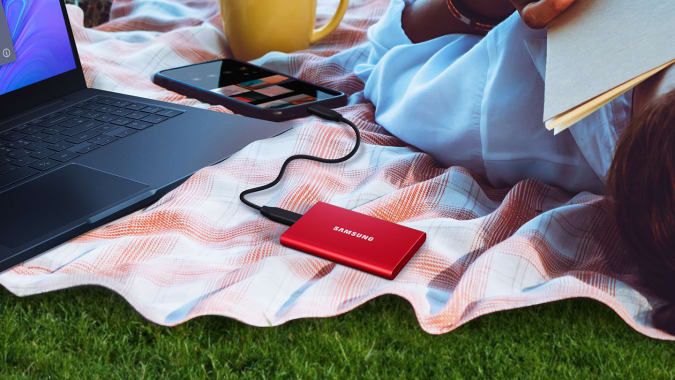
Samsung's T7 portable SSD in 1TB is down to a record low of $110, or 35 percent off its usual rate. It's one of our preferred drives if you need something compact, speedy and compatible with a bunch of devices. We also like its aluminum unibody and its Dynamic Thermal Guard that helps control heat levels.
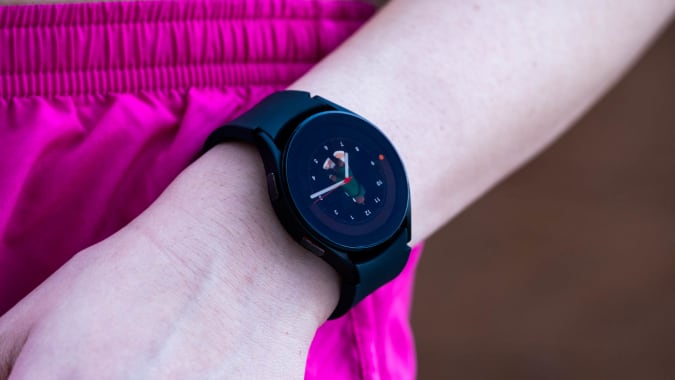
Samsung's cellular Galaxy Watch 4 models are on sale for record-low prices right now. The 40mm model is down to $220 while the 44mm version is down to $250. We consider the Galaxy Watch 4 to be the best Android smartwatch you can get and it earned a score of 85 for its bright screen, comprehensive health tracking and new Wear OS features, like downloading apps directly from the Play Store.
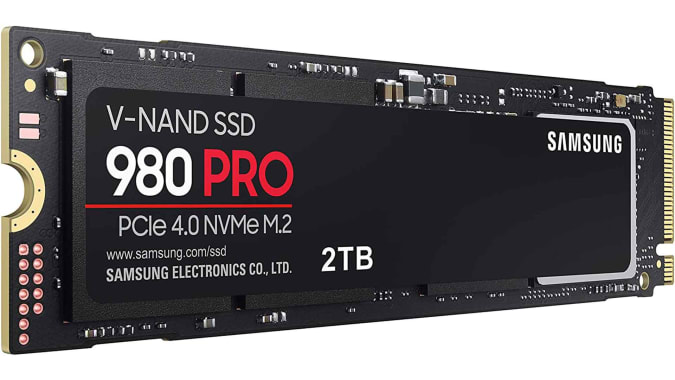
Samsung's 980 Pro internal drive in 2TB is 35 percent off and down to $280 — a great price for a powerful SSD that works with the PS5 (provided you have a heatsink). It has read speeds up to 7,000 MB/s, advanced thermal controls and works with Samsung's Magician Software, which lets you check its health and optimize settings as you'd like.
Prime members can get $20 off the Nintendo Switch at Woot right now. While the discount isn't on the OLED model, it's a good sale on a console that rarely sees sales like this. Just make sure to check out Woot's return policy before buying.
Eufy's baby monitor is on sale for $119, which is close to its all-time-low price. This model comes with one camera and a separate monitor display with a 5-inch 720p screen. The camera lens can pan and tilt to see most of your baby's nursery, and it can send alerts when your baby starts crying. The monitor supports two way audio and, since it's not a WiFi-connected device, the feed is secure and private.
Apple's magnetic battery pack for iPhones is down to $88, which is 11 percent off its normal price. We have seen it cheaper in the past, but this is the best price we've seen since December. The accessory attaches magnetically to the back of the latest iPhones and provides up to 15W of wireless charging.
The on-demand fitness service Alo Moves has an offer few new members that knocks 50 percent off the price of a one-year membership, bringing it down to $99. The platform has dozens of yoga, pilates, barre and strength training classes, along with guided meditations and series that help you master specific skills over the course of longer periods of time.
NordVPN's latest sale knocks the price of a two-year subscription down to just under $96, plus you'll get a free gift on top of it. The prize isn't anything physical, but rather additional subscription time on top of the two-year plan you paid for. Prizes are chosen at random, but after you make your purchase, you'll get either an extra month, and extra year or an extra two years added on to your subscription.
Apple's second-generation AirPods are down to £99 at Amazon. These don't have some of the bells and whistles that the new third-gen models do, but they remain a decent option for Apple users on a budget. We gave them a score of 84 when they first came out for their improved wireless performance and solid battery life.
Sony's WF-1000XM3 earbuds are on sale for £76, or 31 percent off their normal price. These buds earned a score of 89 for their excellent sound quality, great battery life and full-featured companion app.
Fitbit's most advanced smartwatch, the Sense, is down to £189 right now. That's not a record low, but it's still 37 percent off its usual rate. We gave it a score of 82 for its comprehensive health tracking features and big, bold display.
Lenovo is no stranger to gaming phones, and it appears determined to survive the all-out specs war that defines the category. Engadget Chinese reports Lenovo has shared early details of the Legion Phone Y90, its third-generation gaming handset, and storage appears to be the company's advantage. While 'base' models come with 256GB of ordinary UFS 3.1 flash storage (paired to 12GB or 16GB of RAM), the highest-end 18GB RAM model comes with a RAID 0 storage stripe that combines a 128GB SSD with 512GB of flash, much like Xiaomi's Black Shark 4 phones. You won't have to wait long for your games to load.
The 6.9-inch 1080p AMOLED screen with a 144Hz refresh rate will be familiar to second-gen Legion owners (albeit with a high 1,300-nit brightness), and the presence of a Snapdragon 8 Gen 1 chip won't surprise anyone. Lenovo has ditched the 44MP pop-up selfie camera in favor of an above-screen 16MP unit, though. You'll still find dual fans and vapor chamber cooling, and charging won't be an issue between the 5,600mAh two-battery power pack, two USB-C ports and an included 68W GaN fast charger.
There's no mention of a release date or pricing, although those might come at Lenovo's Mobile World Congress press event on February 28th. The Legion Phone Y90 initially appears destined for mainland China, but it won't be surprising if the device reaches other markets (possibly with a different name). Just don't expect it in the US — Lenovo hasn't officially released its gaming phones in the country, and there's no evidence to suggest the company will break with tradition this time around.
HTC's VR strategy will extend well beyond using car rides as theme parks. The company has outlined Viverse, its vision for a metaverse, and it's promising to protect children from virtual dangers in the process. Viverse itself isn't so much a holistic space so much as an "open ecosystem" joining multiple platforms together. You could socialize in VRChat, hold business meetings in Engage, collaborate in Vive Sync and unwind with "holographic" concerts in Beatday.
HTC's day-in-the-life conceptual video suggests Viverse would also be full of plenty of metaverse buzzwords. You would exercise with AR fitness data, buy wine at a virtual tasting with cryptocurrency and browse NFT art (including the "Meowna Lisa," naturally). As UploadVRexplains, though, HTC's teaser is an unusual mix of real products with purely imagined scenarios, and no practical way to link them all besides what looks like a gateway app. The company is also optimistic about the adoption of this technology — there's no NFT backlash or cryptocurrency legal headaches in this virtual world.
The parental controls might be of more value. HTC is introducing a Vive Guardian app to protect the privacy and safety of kids (and concerned adults) in VR spaces. A "Free Mode" lets you grant access to specific apps and content that children can explore on their own terms. Choose "Broadcast," however, and you can limit young ones to specific experiences (such as apps and TV shows) beamed from the companion app on your Android phone or tablet. You can see what your children are using, and they'll need permission to download content or make purchases.
Vive Guardian will be available on Google Play and Viveport, although it wasn't listed as of this writing. It will support Vive Focus, Vive Focus Plus and Vive Flow headsets.
The existence of safeguards isn't surprising when other metaverse operators have had to restrict content. Meta introduced personal boundaries in Horizon Worlds and Venues to discourage harassment, while Microsoft shut down AltspaceVR's social hub following problems with harassers. It's just a question of whether or not HTC's efforts are enough to protect users — it's not clear that you can fence off every potential threat in a given VR environment.
Catch up on all of the news from MWC 2022 right here!
If you missed the Galaxy S22 pre-order window and the perks that came with it, Amazon has another offer that sweetens the deal if you go there to buy one of the handsets. For all three models — the S22 Ultra, S22+ and S22 — you can get a $100 Amazon credit if you input the promotional code on the product page when you checkout. Look for the "extra savings" banner under the price to get the appropriate promo code for the model you're buying, and you'll get an email after your order has shipped with details of the credit being added to your Amazon account.
If you're picking up the Galaxy S22, Amazon also has a $100 coupon that you can clip on the product page before you add the phone to your cart. That means you can get the handset for $700 instead of $800, and get the $100 credit on top of that when adding the promo code at checkout.
We've had time to test all three of Samsung's latest smartphones and we've been mostly impressed. The Galaxy S22 Ultra earned a score of 89 from us; being the biggest and most expensive of the bunch, it has all of the advanced features you may be looking for in your next smartphone. Note lovers will like that Samsung brought over some signature elements of that lineup, including the built-in S Pen, and we liked its big, colorful Super AMOLED panel with its 120Hz refresh rate and Vision Booster. The phone's triple rear camera array took shots that could easily compete with those taken by the iPhone 13 Pro and the Pixel 6 Pro, and the phone's ability to handle pretty much any task we threw at it. Our biggest gripe was with its relatively short battery life: we got just more than 17 hours in our testing, which is a few hours less than last year's Galaxy S21 was able to last.
While the Galaxy S22+ and S22 aren't huge departures from last year's models, Samsung improved them in nearly every way. You're getting a more refined design, a brighter screen, improved performance and better low light image from the main camera. Both handsets earned a score of 87 from us — we liked the lovely display, solid performance and UWB support on the Galaxy S22+, and we liked the slick design, strong performance and relatively low starting price on the Galaxy S22.
Follow @EngadgetDeals on Twitter for the latest tech deals and buying advice.
If you missed previous deals to get the Roku Streaming Stick 4K+ on Amazon at a discount, don't worry: The device is currently listed for the lowest price we've seen for it on the website. You can get the streaming stick for $49, which is 30 percent off its original retail price of $70. Roku's 4K+ stick comes bundled with the company's Voice Remote Pro that gives you the ability to do hands-free voice search and to issue verbal commands, such as "Hey Roku, where's my remote?" Asking that triggers the remote to play a sound, so you can find it even if it's lost in the depths of your couch. The rechargeable remote control alone is usually a $30 upgrade.
The streaming stick that ships with the 4K+ bundle is the 2021 version of Roku's older 4K streaming device. Last year, Roku upgraded its 4K streaming stick with support for Dolby Vision HDR, giving it the capability to dynamically tweak the contrast and brightness levels for every individual frame in whatever it is you're watching. The stick also supports the HDR10+ format, which has the same ability as Dolby Vision HDR.
In addition to adding support for those formats, Roku also designed the 2021 version of the 4K streaming stick to boot up around 30 percent faster than its predecessor. The company also said that the newer stick's wireless receiver enables WiFi speeds that are twice as fast as before. Finally, the bundle gives you a couple of ways to watch movies or shows on your own without disturbing other people in your house. You can either plug in a pair of headphones into the remote's headphone jack or pair a wireless model with the Roku mobile app.
Follow @EngadgetDeals on Twitter for the latest tech deals and buying advice.
This morning is brought to you by a lot of phone news. To start, we’ve got our detailed review of Samsung’s Galaxy S22 (and S22 Plus) by the latest addition to Engadget’s editorial team, Sam Rutherford. We also have a first look at Oppo’s latest attempt at a flagship, the Find X5 Pro, written by yours truly, who’s been here a little too long. Hah.
Oppo’s new phone, a few days early, is kicking off our coverage of MWC – the world’s biggest mobile show hosted in Barcelona. Due to the pandemic’s ebbs and flows, we’re covering all the announcements remotely, but expect more news from Samsung, Huawei, Lenovo and many others over the next few days.
The Find X5 Pro has impressive specs, a partnership with camera experts Hasselblad and a pretty-looking phone. The challenge for Oppo is getting people to consider its device as a compelling, reliable alternative to the big players like Samsung, Apple and, well, all the other companies jostling for second place. And even if you like what you see, there’s no word of US availability for now.
Beyond the world of tech, we’re all sadly watching the developments in Ukraine this morning. If you’re looking for ways to help those affected, NPR’s put together a list of organizations asking for assistance.
Twitter Safety has also posted tips in Ukrainian on how to keep accounts secure.
Twitter has admitted that it mistakenly removed accounts sharing Russian military activity during its invasion of Ukraine. The deleted accounts, which have since been reinstated, included an aggregator of user-generated posts from Ukraine and accounts owned by people doing open-source intelligence (OSINT) to debunk fake news and claims.
Oppo’s latest phone looks and sounds like an expensive, powerful flagship. With a 6.7-inch WQHD+ screen that can hit 1,300 nits of brightness, adaptive refresh rates and a new AI chip, made in-house to amp up low light camera performance – even at 4K. There are also two 50-megapixel primary camera sensors, a new (but familiar-sounding) Hasselblad collaboration and a gorgeously curvy design to help it stand out from the competition. US-based readers, however, might never see one.
After Samsung ticked the new design box with last year's S21, now the company has refined it further with the Galaxy S22 and S22+. While they might look a lot like last year's phones, there have been some notable upgrades, especially on the S22's display, performance and camera. The Galaxy S22, starting at $800, offers a boatload of premium features in an attractive chassis with excellent build quality.
A lawsuit alleges the company is trying to squash rivals.
OnlyFans is facing a pair of lawsuits over claims it conspired with Facebook to disable adult entertainer accounts by placing their content on a terrorism database. One suit was launched earlier this week by a rival platform called FanCentro, and the other is a class action lawsuit made on behalf of three adult entertainers. Both Facebook and OnlyFans were named as defendants in the latter complaint.
The phone starts at $900 and features active pen support.
Back in 2020, the Moto G Stylus quickly became one of the company’s most popular phones, featuring stylus input on a phone outside of Samsung’s Note series. But now, Motorola is stepping up its ambitions with the new Edge+, which is essentially a more affordable take on a Galaxy Note. Unlike with Samsung’s devices, Motorola’s Smart Stylus is an optional extra that comes bundled with a folio cover, which addresses the phone’s lack of built-in stylus storage. Prices start at $1,000 (or $900 at launch), but again, you’ll pay extra for that stylus.
OlliOlli World, the delightfully offbeat skateboarding platformer, launched a few weeks ago on basically every gaming console you could ask for. It’s a clean break for the series, taking familiar gameplay but putting it in a totally redesigned world that allows for more exploration, competition and tricks. The original OlliOlli was released on the PS Vita handheld, meaning its appearance on the also-can-be-a-handheld Switch seems like the most appropriate home for the reboot.
The Xbox Game Pass rival that Sony is cooking up for the PlayStation will have three tiers that cost $10, $13 and $16 a month, according to VentureBeat's GamesBeat. Bloomberg first reported about the all-in-one game subscription service codenamed Spartacus back in December. Based on the documents the publication saw, Spartacus would merge the perks offered by PlayStation Now and PlayStation Plus and would likely be available for the PS4 and the PS5. This new report gives us more details about the service and what each tier will get you.
Sony is reportedly calling the Spartacus tiers Essential, Extra and Premium, with the first one being PlayStation Plus in its current form. It will still cost $10, and it will give you access to games every month that you can add to your library. Meanwhile, the Extra tier will cost $13 and will include access to those monthly games, as well as to a game catalogue with hundreds of older games that you can download. That catalogue could possibly be the same as PS Now's.
Finally, the Premium tier will set you back $16 a month and will include all the aforementioned perks, along with access to PS Now's streaming capabilities and a library of classic games. In addition, it will give you access to a feature called "game trials" that will let you download and start playing new PS games before their release. If it's similar to EA's game trials, then you can only play a title before its official launch for a set number of hours.
At this point, it's still unclear if Sony will add new first-party exclusives to the service when it becomes available. Sony Interactive Entertainment president and CEO Jim Ryan previously said that it wasn't sustainable to put new releases that cost hundreds of millions to develop in a subscription service. However, Microsoft has purchased Bethesda since then and has also recently started the process of acquiring Activision Blizzard. The tech giant is adding both developers' titles to the Xbox Game Pass, so Sony will have to think of ways to make Spartacus a more enticing option.
Spartacus is reportedly entering the testing phase in the coming weeks. GamesBeat says Microsoft could also officially reveal the details of the subscription service in March.
Social audio app Clubhouse is adding a text chat function to its voice rooms, it announced Thursday. Similar to what you see in Discord or a Zoom call, users who don’t want to speak can write out their opinions in the room’s chat channel. While it may seem counterintuitive for an audio-only app to also feature text, it’s a change that some users have been gunning for. Especially in extra-large rooms or rooms dominated by a few celebrity speakers, an in-chat function may be the only way some people can join the discourse.
But a chat function can also be a moderation nightmare, as anyone who has spent a few minutes on Twitch can attest to. Clubhouse has laid out a few ways for creators to keep their rooms from flying off the handle. Creators can appoint mods to delete messages and kick out disruptive users from the room. You can also report messages that violate Clubhouse’s user guidelines to the platform. For those who would rather keep their rooms audio-only, the in-chat room function is optional. Creators can opt-out of in-room chat when they create their room. And if you choose to record your room’s audio, the written chat log will also be saved.
As social platforms like Facebook, Twitter, LinkedIn and Reddit add Clubhouse-like features, Clubhouse is starting to resemble the rest of social media. Once only available as a mobile app, Clubhouse last month rolled out a way for people to listen to conversations on their desktops. Users can also send direct messages to each other with Backchannel. As live voice chat rooms become less of a novelty, Clubhouse will likely have to get creative in order to keep up with competitors.
Apple reportedly told employees its stores and authorized third-party repair shops will soon be able to resolve Face ID hardware issues without having to replace an iPhone entirely. Technicians may have access to a TrueDepth camera part that includes the Face ID and front-facing camera modules. They'll be able to swap it into an iPhone, according to an internal memo obtained by MacRumors.
The company reportedly said the part may lower the number of whole-device replacements, which will help reduce the company's carbon footprint. Although Apple didn't mention pricing for such repairs in the memo, it would make sense for a new part to be less expensive than a replacement device. What's more, consumers wouldn't have to be concerned about losing or having to restore their data.
The report notes that the part will be compatible with iPhone XS and newer devices. As such, iPhone X owners might miss out.
If Apple does offer authorized technicians the part, it seems like a good move for all involved. It should bolster Apple's repairability efforts a few months after the company said it would sell iPhone and Mac parts to consumers and offer repair guides to help them resolve hardware issues by themselves.
Shortly after the iPhone 13 was released, it emerged that Face ID stopped working in some cases if the screen was replaced by a third-party repair shop. Apple seemed to have resolved that issue with the rollout of iOS 15.2 in December.