Twitter’s Android app has lagged behind its iOS counterpart for years, but at least in one way, the two clients could soon be on equal footing. In a tweet spotted by Android Police, Jane Manchun Wong, who’s known for reverse engineering apps to find new features before they’re released, said the company is working on allowing Android users to freely select text within tweets. That’s something Twitter’s iOS client has allowed you to do for a while.
Huh. Good! I always assumed the lack was some kind of Dark Pattern to encourage the built in link sharing
The discovery initially lead to some confusion among Android users as a handful of devices already allow you to do that. For instance, Google’s Pixel phones come with a feature called Overview Selection that lets you select text from any screen for copying and pasting, but as former XDA Developers editor and Android expert Mishaal Rahman points out, that tool isn’t available everywhere. “Apart from Google Pixels, I don’t know if any other devices have it,” he said in response to a question from one developer who thought Twitter already supported text selection on Android.
We’re reached out to Twitter to find out when the company plans to roll out the feature to Android users. It’s strange that it took Twitter so long to add something so simple, but now that it’s on its way, Android users are sure to appreciate it.
While Apple’s AirPods Pro are a few years old now, they’re still among the best wireless earbuds you can pair with an iPhone. And if you’ve been waiting to purchase a set, now is a good time to do so. Amazon has discounted the AirPods Pro to $174, down from their suggested retail price of $249. While $174 isn’t an all-time low price for the AirPods Pro, it is their lowest price of the year, and they likely won’t cost less until Black Friday.
We gave the AirPods Pro a score of 87 when they came out in 2019. The inclusion of interchangeable silicone tips, a feature you won’t find on Apple’s two other in-ear earbuds, makes them more comfortable to wear during extended listening sessions. They also feature active noise-cancellation and a design that is IPX4 certified, making them a good fit for gym use. As with Apple’s other audio products, a big part of the appeal of the AirPods Pro is seamless integration with iOS. Initial pairing is a breeze, and you can easily switch between multiple devices.
For those looking for a more budget option, Amazon has also discounted the second-generation AirPods to $99. That’s a 38 percent drop from their usual $159 price. And while we think the new third-generation AirPods are a better purchase for most people, the older model still comes with the company’s H1 wireless chipset, meaning you get access to features like hands-free Siri and seamless pairing with Apple devices.
Follow @EngadgetDeals on Twitter for the latest tech deals and buying advice.
The Competition Commission of India (CCI) on Friday released early findings of an investigation into Google’s app store and its payment system, Google Pay. As Bloombergreported, it found that Google’s Play Store billing system for app developers is “unfair and discriminatory”.
Back in 2020, Google decided to delay enforcing its 30% commission for app developers in India following an outcry from the country's startup community. The tech giant agreed to defer the policy until this month. But in the interim, Indian developers lobbied the nation’s government to stop Google from enacting what they felt was an unfairly high fee. Developers also believed that since Android phones are preloaded with the Play Store, it gave Google an unfair advantage over rival payment systems.
Of particular concern in India is whether Google Pay will undercut rival United Payments Interface (or UPI) apps, which allow users to directly debit payments from their bank accounts using just a virtual address. UPI payment apps like Google Pay, PhonePe and Paytm are currently the most popular way for Indians to make payments online. Critics have alleged that Google’s control of the Play Store and the Android operating system gives it an unfair amount of control over India's digital payment ecosystem.
India’s antitrust regulator echoed similar concerns over Google Pay. “Google’s conduct is also resulting in a denial of market access to competing UPI apps since the market for UPI enabled digital payment apps is multi-sided, and the network effects will lead to a situation where Google Pay’s competitors will be completely excluded from the market in the long run," wrote CCI in documents viewed by Bloomberg.
India’s antitrust agency has yet to finish its investigation into Google. Upon its conclusion, the tech giant may be forced to pay fines or change its policies.
The search giant has come under fire in India, both for its developer's fees and the potential threat Google Pay poses to domestic payment platforms. Last year Google announced that all Play Store developers would have to integrate with Google’s payment system by October 2022.
Soft robots may soon be more flexible than ever... and a tad creepy. As The Guardianreports, researchers have developed a magnetic slime "robot" that can shift into different shapes to grab objects. It can encircle a group of pellets, for instance, and even stretch out in multiple directions to grab items on opposite sides. It's self-healing, too. The result might induce some nightmares for the squeamish and is more than a little reminiscent of Spider-Man's symbiotic Venom, but it's surprisingly effective.
The slime is made from the blend of polyvinyl alcohol (a polymer), borax and neodymium magnet particles. The result is a non-Newtonian fluid that behaves like a liquid or solid depending on force, and can be controlled using external magnets. There are no robotics inside the slime at present, but you can steer it like a robot— and the "ultimate goal" is to use it like one, according to researcher and co-creator Li Zhang.
There are numerous problems left to solve. On top of fitting robotics into such a soft design, the scientists also want to prevent the toxic neodymium particles from seeping out. A layer of silica in this current slime helps, but safety inside a living being might depend on limiting contact. If the technology becomes sufficiently safe and effective, though, it could help doctors recover swallowed objects and otherwise squeeze robots into places where they were previously impractical.
While many of this week's deals only lasted for a limited time, some of them are still available. Apple's new iPad Air is $29 off and down to $570, while the iPad mini is $40 cheaper than usual and down to $459. Amazon's much-improved Echo Buds are 58 percent off and down to only $50, and you can still grab 8BitDo's Pro 2 controller for just over $40. Here are the best tech deals this week that you can still get today.
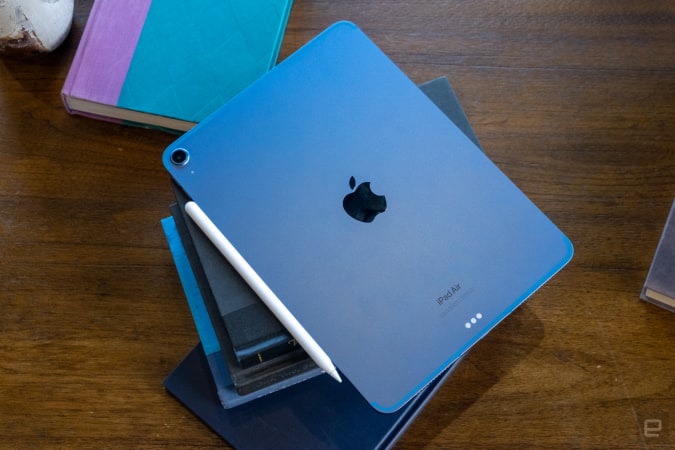
iPad Air (2022)
The latest iPad Air is $30 off right now, bringing the 64GB model down to $570 and the 256GB version down to $720. The new M1-powered iPad earned a score of 90 from us for its super-fast performance, long battery life and improved front camera.
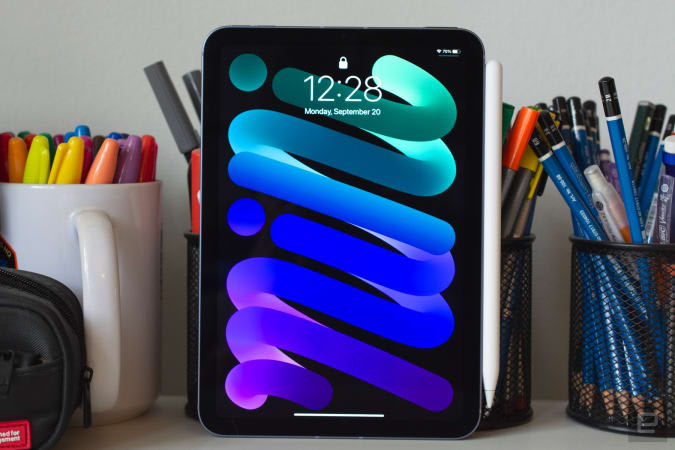
Apple's latest iPad mini is on sale for $459, which is $40 off its normal price. We gave the small tablet a score of 89 for its lovely display, refined design and excellent battery life.
Amazon's latest Echo Buds are a whopping 58 percent off, bringing them down to only $50. These were already solid, affordable earbuds at their regular $120 price, but they're an even better option at this price. We gave them a score of 80 for their improved sound quality, good ANC and smaller size.
8BitDo's excellent Pro 2 controller is 15 percent off and down to $42.50. In addition to being compatible with Nintendo Switch, Windows, macOS, Android and Raspberry Pi, the Pro 2 has a familiar layout plus two back buttons, and all of its inputs are customizable using the companion apps for Windows, Mac, Android and iOS. The Pro 2 is included in a wider gaming accessories sale on Amazon, which includes other peripherals like the Razer Wolverine V2 Chroma controller for $127.50.
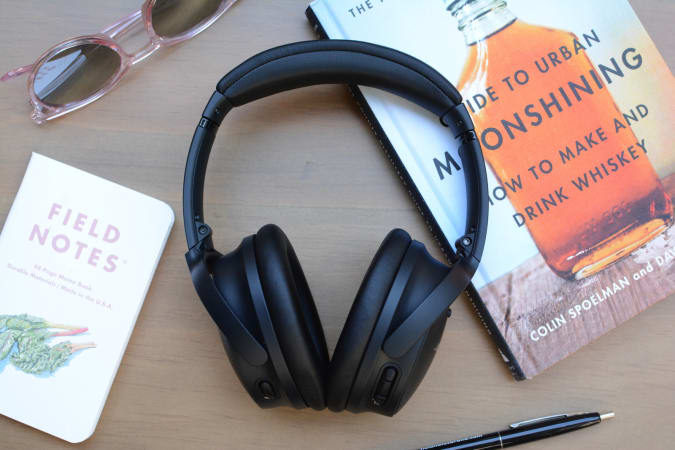
The Bose QC45 headphones are on sale for $279, which is their all-time-low price that we saw last Black Friday. We gave the cans a score of 86 for their excellent sound quality, strong ANC and comfortable fit.
Amazon has knocked $100 off Samsung's Galaxy S22 smartphone, bringing the handset down to $700 for the 128GB model and $750 for the 256GB version. We gave the flagship phone a score of 87 for its slick design, strong performance and excellent camera array.
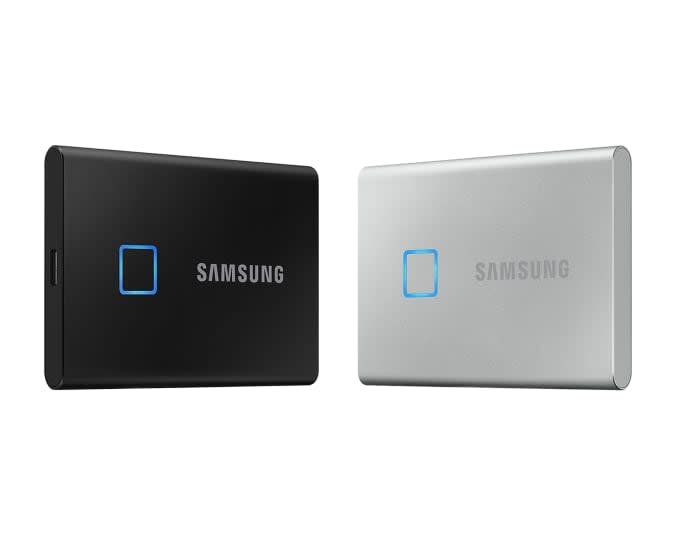
The T7 Touch portable SSD in 1TB is on sale for $140 right now. This palm-sized drive works with most devices thanks to the duo of cables it comes with, and it supports 1,050 MB/s read speeds, 1,000 MB/s write speeds, AES 256-bit encryption and Dynamic Thermal Guard.
Xbox Stereo Headset 20th Anniversary Special Edition
You can pick up this special edition Xbox headset for $50, which is 29 percent off its normal price and a record low. This is a wired headset that has green accents and support for Windows Sonic spatial sound.
PowerA's Enhanced Wired Controller for Xbox is 32 percent off and down to only $26. It's a good option if you want another controller for your console but don't want to pay the premium attached to the first-party options. This one has a familiar, ergonomic design, dual rumble motors and mappable buttons.
Samsung's 65-inch The Frame smart TV is $300 less than usual on Amazon right now, so you can grab it for $1,500. In addition to Quantum Dot technology and built-in Alexa, The Frame series has Art Mode, which shows artwork on the screen when you're not watching TV.
I loved the Vita. I have vivid memories of playing Persona 4 Golden for hours in the dark on my dad’s couch in Chicago flying around the world of Gravity Rush from an airplane seat and playing Murasaki Baby before bed. The Vita felt good and it made me happy. And then, Sony killed it.
For the past seven years, I’ve been wondering why the Vita had to die. So today, we’re finally going to grieve and analyze together: What happened to the Vita, and what if it were still around today?
It’s been difficult to not think about the Vita recently. The mobile market is on fire right now, with Valve’s Steam Deck shipping out, the Playdate on its way from Panic, and of course Nintendo’s Switch and Switch Lite at the top of the charts. Not to mention, Microsoft is courting the handheld space with Cloud Gaming and Game Pass, and mobile gaming represents the largest and fastest growing segment in the industry. From consoles to PC, it seems every company is investing in handheld play. Every company except Sony.
To be clear, Sony doesn’t have to compete in the handheld market just because everyone else is doing it, but the tragedy here is they were doing it with the Vita – and as LL Cool J would say, they were doing it well. Even with an embarrassing amount of options in the handheld space, I still want a new Vita. I want one in black and another in a peach colorway; I want the entire back panel to be a touchpad with DualSense-style haptics and I want a little hole in one of the corners so I can attach charms, just like I did on the original. And, charm-hole aside, I don’t think I’m alone here.
Atlus
So, why don’t we all have shiny new Vitas in our hands right now? Basically, I think Sony got scared and scattered, and not necessarily in that order.
The Vita was a commercial failure, but its numbers weren’t completely tragic and there were even bright spots in its sales history. The Vita was an evolution of Sony’s successful PlayStation Portable line, with enhanced input mechanics, an OLED touchscreen and upgraded guts, and it first hit the market at the end of 2011. This was just before the launch of the Wii U, PS4 and Xbox One, and right after Nintendo dropped the 3DS.
As another handheld device, the 3DS is a good comparison point for Vita sales, and it doesn’t end up looking good for Sony. In 2012, Nintendo sold more than 13 million 3DSes, and that same year, Sony sold about 4 million Vitas. Sony stopped reporting Vita sales figures on their own after its first year on the market, and despite a few hardware iterations, the studio stopped building new devices in 2015. Sony essentially wrapped up support for the Vita by 2019, and best estimates place total global hardware sales around 16 million units. The 3DS, meanwhile, is at more than 75 million.
That’s the surface-level analysis, but I think comparing the Vita to the Wii U actually offers more insight into Sony’s mindset at the time, while offering a clear picture of what could have been.
By the beginning of 2013, the Vita and the Wii U were on shockingly similar trajectories. They were both iterations of previous hardware, trying new things and fumbling along the way. Nintendo’s Wii U came out in late 2012 and wasn’t nearly as well-received as its predecessor, the Wii, offering players a bulky gamepad with an uncomfortable UI and crappy battery life. In its five-year lifespan, Nintendo sold about 14 million Wii U consoles – 2 million fewer than the Vita's estimated total, even.
Here’s where Nintendo and Sony pivoted away from each other. In classic Nintendo fashion, the designers of the Wii U kept their heads down and continued building their vision of a hybrid console. The Wii U wasn’t perfect, but that didn’t mean the entire concept was trash, and Nintendo’s blind focus eventually resulted in the Switch, a console with an emphasis on mobile play. Today, it’s one of the best-selling systems in history.
But where Nintendo chose to stay the course, Sony decided to turn around and go back home. It simply killed the Vita – and I think this was the result of internal turmoil at Sony proper. There was a disconnect in the way Sony marketed the Vita to different regions, and even in the way it explained basic ideas behind the hardware itself – like with its confusing and expensive memory card plan.
Since Sony stopped divulging Vita information early on, I’m using stats compiled by a self-professed data nerd at Kresnik258Gaming for this bit: The Vita sold best in Japan, where it enjoyed a sweeping marketing campaign complete with unique hardware bundles, models and games. The North American audience didn’t get the same attention, with limited advertising, few hardware bundles and only a couple of half-hearted attempts at regional software. By the time the second-generation Vita and Vita TV came out in 2013, Sony seemed barely interested in explaining the benefits of these systems to US and Canadian players, and Redditwasfilled with complaints about the company’s lack of support.
Ovosonico
This regional disparity happens to align with some major managerial shifts at Sony, and a larger change in its approach to players and developers. With the launch of the PS4 in 2013, Sony was on top of the world – interactive entertainment president Jack Tretton obliterated the Xbox One during an iconic E3 show, and once both consoles hit the market, the PS4 emerged as a clear winner in terms of sales numbers. Then, Tretton left Sony in 2014 and Shawn Layden took his place. By this point, the Vita was clearly an afterthought in North America. With Layden at the helm, Sony’s E3 shows took on a more business-oriented tone, and by 2016, it felt like an entirely different company on-stage. And this wasn’t just external: Sony had been saturating its systems with innovative and award-winning indie titles throughout the 2010s, but in 2016, two of the company’s pivotal indie evangelists, Adam Boyes and Nick Suttner, left, and indie developers said they felt abandoned by Sony’s system.
Honestly, it seems like Sony had too much going on internally to properly focus on the Vita, and in the chaos, it lost its sense of experimentation. Since this time, Sony has doubled down on the things it knows, like upgrading its console hardware and releasing first-party games, and it’s simply following the crowd when it comes to things like PlayStation Plus and streaming. I guess PSVR is cool, but it certainly doesn’t have the same impact as the Vita once did.
Or, as the Vita could still have. Imagine if Sony had a sequel to the Vita around today to market alongside the PS5 as a connection point for its streaming ambitions and an attractive hub for developers of all sizes. While Microsoft is busy buying up every mid-tier studio in town, a Vita would offer Sony a chance to collaborate in unique ways with smaller developers, giving the company even more exclusives, the currency of the modern market. We know that players today appreciate a sleek handheld component to their consoles, and Sony could use something to compete with Microsoft’s vast cloud capabilities and funding in R&D. It could use something that Microsoft doesn’t have. PSVR can’t fulfill this role – but Vita totally could.
At least, that’s how I feel. Let me know if I truly am alone here, or if you also want a handheld system from Sony – only rule is, you have to say whether you want the charm hole.
Both Samsung and other retailers have offered a few ways to save when picking up one of the latest Galaxy smartphones, including offering a discount on higher storage models during the pre-order window. But Amazon's back now with a new discount — $100 off the Samsung Galaxy S22, bringing the 128GB model down to $700. The same discount applies to the 256GB versions, which are on sale for $750.
While the Galaxy S22 isn't a huge departure from last year's flagship phones, Samsung made some useful changes and welcomed upgrades this year. The handset's design remains attractive and now has Corning's Gorilla Glass Victus+ for added protection against drops and scratches. The S22 sports a lovely 6.1-inch 2,340 x 1,080 resolution touchscreen with a 120Hz variable refresh rate and an ultrasonic in-screen fingerprint reader, too. The panel is impressive, reaching up to 1,300 nits of brightness, and the new Vision Booster feature automatically ups things like color saturation and contrast depending on your environment. Plus, the fingerprint reader is really fast, so you'll never have to wait long for the device to unlock.
The S22's triple rear camera array takes sharp photos and much-improved images in low-light conditions. Even though we think Samsung's new Adaptive Pixel feature, which uses multi-frame image capture to combine high-quality pics with lower-res pixel-binned shots to create a final composite image, is a bit overhyped, the S22 still has some of the best cameras you can get on a smartphone at this price.
General performance is stellar as well thanks to the new Qualcomm Snapdragon 8 Gen 1 chip inside the handset. You're also getting 5G support and a decent battery life. In our testing, the Galaxy S22 lasted just under 15 hours (if battery life is your biggest concern, you're better off going for the S22+, which lasted about 2.5 hours longer). Overall, if you're looking to upgrade to a new Android phone, the Galaxy S22 is one of the best out there right now — and it's even better at this sale price.
Follow @EngadgetDeals on Twitter for the latest tech deals and buying advice.
If you've hesitated in getting a PC stylus because it's one more thing to lose, Dell has a possible solution. The company's latest Premiere Rechargeable Active Pen has Tile tracking built in, so you can use the Tile app to make it emit sound and LED light. If it's not close enough to hear or see, the app will show the pen's last known location and track it down via the Tile network.
The $110 Premiere Rechargeable Active Pen works with compatible Dell 2-in-1 laptops and offers a 40-day battery life with 80 percent charging in just 20 minutes. The programmable top and side buttons give easy access to commands and it attaches to laptops via a magnet tether.
Tile also announced that it has added its tracking tech to several new Intel-powered laptops. The latest to include it are Lenovo's ThinkPad X1 Extreme Gen 5 and latest ThinkPad T Series, making for a total of seven Lenovo laptops with the tech. MSI's new Intel 12th-gen Summit and Prestige series laptops are also equipped with Tile tracking, along with Fujitsu's FMV Loox PCs in Japan. To activate tracking, you just need to install the Tile Windows App and activate your PC as a Tile. The Android or iOS app will then "ring" your laptop to help you find it nearby.
The original Angry Birdsgame is back. Sure, there are other, newer entries in the Angry Birds franchise out there — and even a couple of movies — but this one's for those who have a special place in their hearts for the game that started it all. In a letter to fans published last year, Rovio explained that it had to take its older titles out of circulation, because they used outdated game engines and design. "Today’s mobile technology and games landscape has evolved to a place where supporting them was untenable," the company wrote. The developer also couldn't leave them up without updating them, because they'll soon be incompatible with the latest mobile operating systems.
Apparently, there was a "big outcry" for Rovio to bring back the older games, especially the original, so it decided to work on bringing the classic experiences back. The company said at the time that it has to figure out "what is possible and for which games," so it's unclear if other older titles will also get remakes. Rovio rebuilt the original Angry Birds from the ground up using Unity, which allowed the company to recreate the feel of the classic for newer devices. That's a much more involved process than simply touching up older graphics or updating game mechanics.
The new version of the game called Rovio Classics: Angry Birds, is now available from the Apple App Store and from Google Play. It will set you back 99 cents to download, but it doesn't have in-app purchases and even makes the Mighty Eagle (an old in-app purchase) available at no extra cost.
The latest WiFi-only iPad mini in space gray has been on sale for $459 at Amazon since the beginning of March, but if you'd rather get one of the tablet's other color options, here's your chance to grab it at a discount. For the first time ever, the iPad mini in Starlight is now also available for $459, which is an all-time low for the device on the e-commerce website. The purple version is now also back on sale for the same price, or $40 lower than retail.
We gave the 2021 iPad mini a score of 89 in our review, praising it for its fresh "all-screen" design without the home button its predecessors have. It has a Liquid Retina 326ppi panel with a 2,266 x 1,488 resolution. The tablet's edges are flat, and it features a TouchID-capable power button and a USB-C port instead of a Lightning port. We felt like we were using a smaller version of the iPad Air when we tested it out.
We also praised the device for its improved cameras, including its new 12-megapixel ultra wide front camera with Center Stage support. That's the Apple feature that automatically pans a device's camera and zooms it as needed to keep the user on screen during video calls. The tablet's 12-megapixel rear wide camera is better than its predecessor's, as well.
Thanks to the A15 Bionic chip powering the tablet, it was also able to handle everything we tried during our test, running games, videos and other types of apps quickly and smoothly. We also appreciated that the tablet lasted for 12 hours during our testing before it needed to be plugged in. And, yes, it works with the second-gen Apple Pencil so you can use it for your art or your note-taking needs.
Follow @EngadgetDeals on Twitter for the latest tech deals and buying advice.