Posts with «technology & electronics» label

Motorola’s endless rehashes will only make it less relevant

While Motorola might not have the same clout in the smartphone space as Apple and Samsung, the company holds an outsized influence on the US market. By the numbers, Motorola is the third most popular smartphone maker overall, the second largest maker of prepaid phones and the biggest seller of unlocked handsets.

The problem is that, as part of the company’s attempt to gobble up more of the market following the demise of LG Mobile, Motorola has been churning out too many phones too quickly while offering little in the way of long-term support. And even though the Moto G family of phones has earned a reputation for providing great value in recent years, that legacy is starting to deteriorate as things like camera quality and support for basic features like NFC have stagnated. In short, Motorola needs to slow down and shape up.

Just look at the dizzying number of Moto G handsets that have been released in the last two years. At CES 2021, Motorola launched four new phones including the second-gen Moto G Stylus, the revived Moto G Play, the Moto G Power and the Moto One 5G Ace – the latter of which is merely a rebranded version of the Moto G 5G from 2020. Then in the summer, Motorola released another Moto G Stylus (this time with 5G) followed by the Moto G Pure last fall.

At the pace Motorola has been releasing new G-series phones, it's become incredibly difficult to keep track of them all and the minor differences between them.
Chris Velazco/Engadget

More recently in February, Moto decided to update the G family with yet another version of Moto G Stylus, and just this week Motorola returned to announce two more additions in the Moto G Stylus 5G and the Moto G 5G. And this isn’t counting stuff like the Moto G Power 2022, which was actually released in November 2021. At this point, if you’re confused by the vomit of new Moto G phones, just rest assured you’re not the only one. It’s like some twisted smartphone version of Cap'n Crunch’s Oops! All Berries, except that instead of tasty fruit-flavored treats, it's an endless string of non-descript plastic handsets.

Meanwhile, some of Motorola’s most interesting phones like the 2020 Razr have been languishing waiting for an update, only getting a half-hearted refresh that added a slightly faster chip and support for 5G. Quite often, it feels like Moto has been releasing budget phones without 5G, just so the company can push out a “new” model six months later. Even then, it’s typically just sub-6GHz 5G, which only serves to increase customer confusion regarding current cellular standards. And while Moto has been idling, Samsung has dominated the foldable phone market with devices like the Galaxy Z Flip 3, which is not only cheaper than the Razr, it has a better screen and cameras too.

When Motorola made its first flagship phone in years with the 2020 Edge+, our lasting impression was that it was merely OK.
Chris Velazco/Engadget

Another big issue with Motorola’s recent phones is paltry software support. Last year, Samsung announced that it would provide four years of security updates for a wide range of Galaxy devices, including older phones and tablets such as the S10 and Tab S6. Then, just a couple of months ago, Samsung bolstered its software support again by giving four generations of Android upgrades to all of its 2021 and 2022 flagship phones. And over in Pixel land, Google also stepped up its efforts by promising five years of security updates for the Pixel 6 (though you’ll still only get three years of OS upgrades). And all of this still pales in comparison to iPhones, with Apple providing at least five years of OS and security updates for its handsets.

Then we come to Motorola, which even on its most recent flagship – the 2022 Edge+ – is only offering two major OS updates and three years of bi-monthly security patches. And if you move down to its more affordable handsets, things get even worse. The newly announced Moto G Stylus 5G and Moto G 5G, for instance, will only get a single OS upgrade. This isn’t a one-off situation either, because during a briefing about those phones, a Motorola representative confirmed that the general policy for the entire G family typically only covers one major Android OS update.

Mewanwhile, this year's Edge+ fell far short of living up to its $1,000 price.
Sam Rutherford/Engadget

Even worse is that, during the same briefing, a Motorola exec seemed to be making an excuse for the poor update policy by recounting a conversation they had with a car service driver. The driver owned a Moto G device and lamented that their device seemed like it was constantly prompting them to install some sort of update. Now I can certainly empathize, sometimes it feels like everything you own constantly needs to be patched. But that’s not a good reason to drop support for a gadget after a year or two. If an owner doesn’t want to install an update for whatever reason, that’s their choice, but they should at least have the option.

Perhaps my biggest concern about Motorola’s direction is a general lack of innovation and support for basic features. Take for example the Moto G Stylus, which doesn’t have NFC. I mean come on, it’s 2022. Basically every place supports some sort of contactless payment nowadays, which requires NFC. But if you buy a budget Moto phone, too bad. And it’s not just the Moto G Stylus, because the Moto G 5G announced this week doesn’t have NFC either. The company also routinely fails to equip its handsets with substantial water resistance, often doing just enough to protect against splashes but falling far short of the IP67 or IP68 ratings you get on competing devices. 

Additionally, when I reviewed the Moto Edge+ back in March, I was kind of appalled with its cameras. This is a $1,000 phone that produces low-light photos that look like they come from a $500 phone at best. I even noted in my review that it seems like Motorola is going backwards, delivering a device with a lower-resolution main camera than its predecessor, while lacking a dedicated telephoto lens. 

Sam Rutherford/Engadget

Motorola tells me that it puts macro cams in its phones instead because of demand from customers who like taking close-ups. And that may be true. But I also know that it costs more to put telephoto cameras on phones, and I have a sneaking suspicion that may be the bigger driving force. While Apple, Google and Samsung are making large strides when it comes to low-light performance and computational photography, what I’ve seen from Moto’s latest pseudo-flagship is second-tier at best.

The sad thing is that it doesn’t have to be like this. There are a number of things I still appreciate about Moto devices. They have near stock builds of Android and Moto Action gestures like double chopping to turn on a phone’s flashlight are often quite handy. But those small perks are easily overshadowed by the concerning trend of too many rehashes while returning too little value.

However, it’s not too late to reverse all this. Sure, it will take some strong leadership and willpower for the company to forgo short-term sales in order to focus on long-term growth and development. Improving mobile photography isn’t easy. Just ask OnePlus’ Pete Lau, who has been very vocal about his desire to bring the photography on the company’s phones up to speed. But unless Motorola wants to become the next HTC, it needs to reduce the churn and concentrate on releasing a smaller number of higher-quality devices with the software support its customers deserve.

iRobot's Roomba 694 drops to $180, plus the rest of the week's best tech deals

Mother's Day is quickly approaching and if you're looking to get mom a piece of new tech, you can do so right now while saving some money in the process. Apple's latest AirPods remain on sale for $150 and you can pick up the Apple Watch Series 7 for as low as $330, depending on the color you choose. A few robot vacuums have been discounted, including the already affordable Roomba 694, plus Ninja's 10-in-1 multicooker is still $70 off and down to $130. Here are the best tech deals from this week that you can still get today.

Roomba 694

Valentina Palladino / Engadget

iRobot's affordable Roomba 694 is still on sale for $180 right now, which is a record low. This is one of our favorite budget-friendly robot vacuums thanks to its easy to use mobile app, good cleaning power and sleek design.

Buy Roomba 694 at Amazon - $180

AirPods (3rd gen)

Apple's newest earbuds are close to their record-low price right now. You can grab the third-gen AirPods for $150, or $30 off their normal rate. We gave them a score of 88 for their improved design, much better audio quality and longer battery life.

Buy AirPods (3rd gen) at Amazon - $150

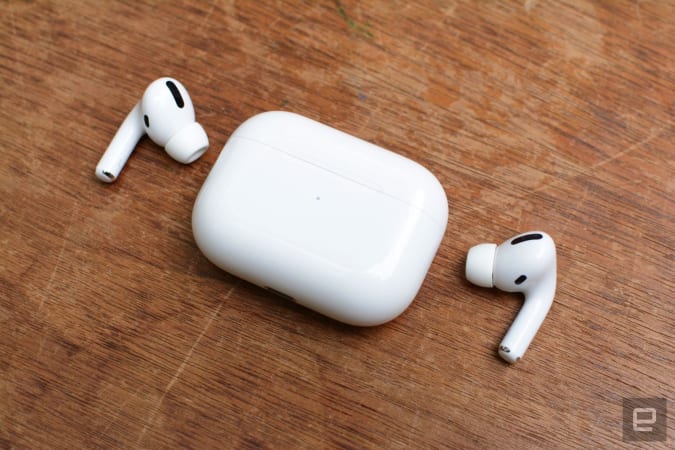
AirPods Pro

Apple's AirPods Pro are back on sale for $174, which is 30 percent off their normal price. We gave them a score of 87 for their improved fit, good audio quality and solid ANC.

Buy AirPods Pro at Amazon - $174

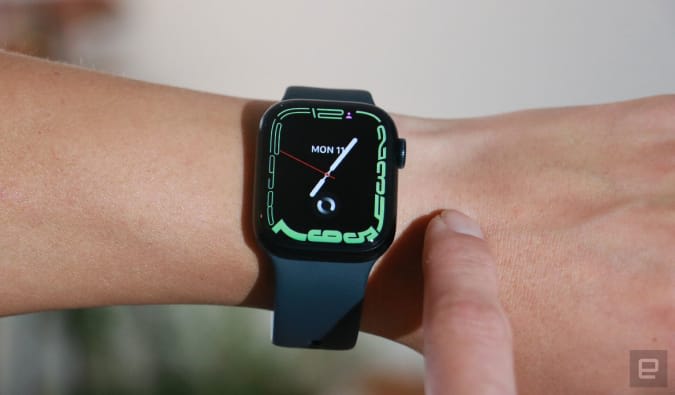
Apple Watch Series 7

Many color options of the 41mm Apple Watch Series 7 are down to $330, or $70 off their normal price. We gave the wearable a score of 90 for its bigger screen, faster charging and handy watchOS 8 features.

Buy Apple Watch Series 7 at Amazon - $330

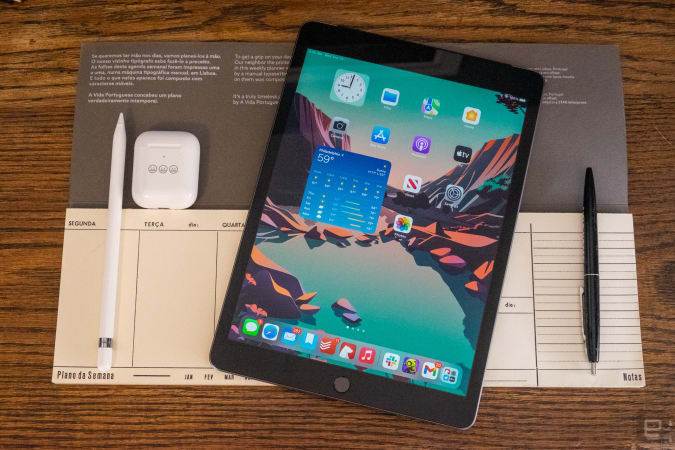
10.2-inch iPad

Both Amazon and Walmart have the entry-level iPad for $309 right now, or $20 off its normal price. We gave the slab a score of 86 for its improved performance, excellent battery life and Center Stage-capable front cameras.

Buy 10.2-inch iPad at Amazon - $309Buy 10.2-inch iPad at Walmart - $309

AirPods Max

Engadget

A couple of colors of the AirPods Max are $100 off and down to $450. We gave the premium headphones a score of 84 for their excellent sound quality, solid ANC and reliable onboard controls.

Buy AirPods Max at Amazon - $450

Roomba j7+

Valentina Palladino / Engadget

The Roomba j7+ robo-vac and the Roomba s9+ are both $200 off right now and down to $599 and $799, respectively. These are both advanced machines from iRobot, with the j7+ sporting a pet poop detection feature, while the s9+ has the strongest suction power of all of the company's robot vacuums. Both also come with clean bases, so you won't have to empty their dustbins manually after each cleaning job.

Buy Roomba j7+ at Amazon - $599Buy Roomba s9+ at Amazon - $799

Eero 6 routers

eero LLC

A bunch of Eero 6 router packs are on sale right now, including a three-pack of the Eero 6 Pro, which is $120 off and down to $479. You save spend a bit less money and opt for the two-pack, which is $80 off and down to $319. These are the latest WiFi 6 systems from the Amazon-owned brand, and many of the come with built-in Zigbee smart home hubs.

Shop Eero 6 sale at Amazon

Fitbit Charge 5

Valentina Palladino / Engadget

The Fitbit Charge 5 tracker is down to $130, which is only $10 more than its record-low price. We gave the device a score of 82 for its accurate onboard GPS, slim design, standard Fitbit Pay and long battery life.

Buy Fitbit Charge 5 at Amazon - $130

Ninja Foodi 10-in-1 multicooker

Ninja

Ninja's 10-in-1 multicooker is $70 off and down to $130, which is close to its all-time-low price. This is a solid alternative to an Instant Pot as it has a bunch of cooking modes including pressure cook, slow cook, steam, yogurt and even air fry.

Buy Ninja 10-in-1 multicooker at Amazon - $130

Google Nest Video Doorbell Battery

Google

A handful of Google smart home devices are on sale right now, including the Nest Video Doorbell Battery, which is $30 off and down to $150. This gadget will let you keep an eye on what's going on outside your door from your phone, and there are no wires to fuss with when you install it. You can also pick up the Nest Cam Indoor and Outdoor for less, coming in at $80 and $150, respectively.

Buy Nest Cam Indoor at Adorama - $80Buy Nest Cam Outdoor at Adorama - $150Buy Nest Cam Outdoor at B&H - $150Buy Nest Video Doorbell Battery at Adorama - $150Buy Nest Video Doorbell Battery at B&H - $150

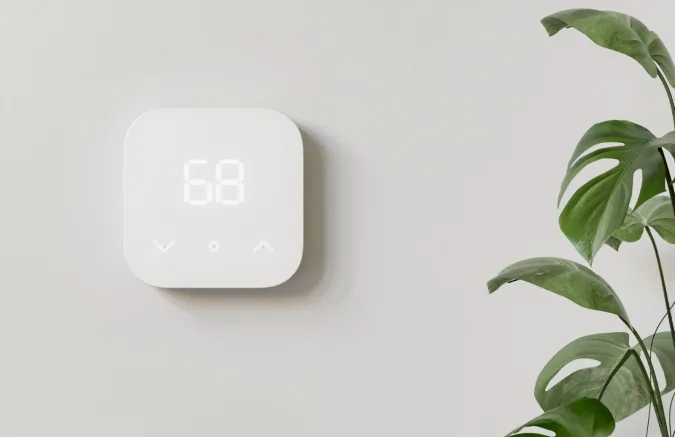
Amazon smart thermostat

Amazon's smart thermostat is back on sale for $48, which is 20 percent off its regular price. The Energy Star-certified device uses Honeywell's Home Thermostat tech to help you save on energy costs — and, like other Amazon devices, it works with Alexa so you can use voice commands to control the temperature in your home.

Buy smart thermostat at Amazon - $48

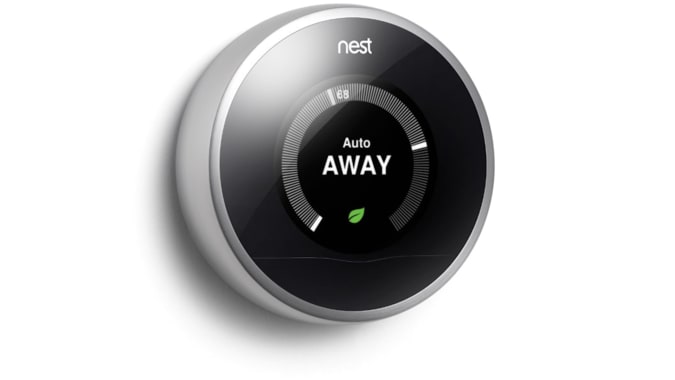
Google Nest thermostats

Both Google's standard Nest Thermostat and the more advanced Learning model remain discounted right now. You can pick up the regular version for $100, while the Learning Thermostat is still on sale for $200. They share most of the same features, but you'll get a slicker design, a higher-res display and the ability to connect with Nest Temperature Sensors with the Learning model.

Buy Nest Thermostat at Amazon - $100Buy Nest Learning Thermostat at Amazon - $200

New tech deals

NordVPN

NordVPN's latest deal lets you save 51 percent off the price of a two-year subscription, so you'll pay only $96 for that time period. After the first two years, the price goes up to $99 per year. NordVPN is one of our favorites thanks to its speed, its no-logs policy, the thousands of servers it has to choose from and that one account supports up to six connected devices

Subscribe to NordVPN (2 years) - $96

JBL Xtreme 3

This midrange Bluetooth speaker is $80 off and down to $300, which is the cheapest we've seen it. It earned a spot in our portable Bluetooth speaker guide for its dynamic yet balanced sound quality, IP67-rated design and relatively compact size.

Buy JBL Xtreme 3 at Amazon - $300

83-inch Sony A90J Bravia XR OLED smart TV

This massive OLED TV from Sony is $500 less than usual, bringing it down to $5,500. It's the 2021 model and it supports XR Motion Clarity, the Google TV interface, voice commands with Alexa, HDMI 2.1 and more.

Buy 83-inch Sony A90J OLED at Amazon - $5,500

Follow @EngadgetDeals on Twitter for the latest tech deals and buying advice.

Google is banning third-party call recording apps from the Play Store

Google is introducing a new Play Store policy that will effectively block third-party call recording apps from the Play Store by May 11th, according to a Reddit post seen by 9to5Google. Such apps currently use the Accessibility API (designed for people with disabilities) to gain access to the audio functions on Android devices. 

"Apps with a core functionality intended to directly support people with disabilities are eligible to use the IsAccessibilityTool," the policy states. "Apps not eligible for IsAccessibilityTool may not use the flag and must meet prominent disclosure and consent requirements. The Accessibility API is not designed and cannot be requested for remote call audio recording. " 

Google has gradually been trying to eliminate call recording on Android, mainly due to privacy concerns. It was largely blocked on Android 6, and the use of the microphone for call recording was eliminated in Android 10. The last resort for call recording apps was to use the Accessibility API. 

Google addressed the issue in a webinar video, saying that "remote in this context refers to call audio recording where the person on the other end is unaware of the recording is taking place." It added that dialer apps like Google Phone and Mi Dialer with native call recording functionality will be unaffected by the change.

 "If the app is the default dialer on the phone and also pre-loaded, accessibility capability is not required to get access to the incoming audio stream," said Google content global operations lead Moun Choi. "Hence would not be in violation. Since this is a clarification to an existing policy, the new language will apply to all apps starting on May 11th." It's not clear if the new policy means existing call recorder apps will be pulled from the Play Store.

Twitter will recommend third-party apps for preventing harassment

Twitter is turning to outside developers for help in preventing harassment on its platform. Under a new experiment, the company will recommend third-party moderation apps as an additional measure users can take on top of the app’s built-in tools,

With the update, which was first reported by TechCrunch, Twitter will surface recommendations for a series of third-party apps when a user blocks or mutes another person. For now, the apps include Block Party, a tool that allows people to automatically block accounts likely to be the source of harassment; Bodyguard, which can automatically moderate replies; and Moderate, which helps users manage their mentions.

These tools have already been available, but Twitter users previously had to seek out these services to get them set up. Now, the company will recommend them in its app and website alongside its own blocking and muting tools.

Twitter

As TechCrunch notes, the change is also the latest sign that Twitter is, once again, making inroads among third-party developers with whom it has sometimes had a tumultuous relationship. The moderation apps are just a handful of a broader set of third-party services Twitter is promoting as part of its revamped developer platform. Eventually, Twitter could recommend other specialized apps in various parts of its service, the company told TechCrunch, though it didn’t offer details.

Sony is looking into ad-supported games now, too

Microsoft might not be the only console maker hoping to place more ads in games. Insidersources (sub. required) say Sony is testing an initiative that would sell and place ads in free-to-play PlayStation games through a private marketplace. This would include billboards and other environmental ads, but also character skins and similar collectible items.

Some details are reportedly in flux. Sony isn't certain if it will take a slice of any ad revenue, the tipsters claimed, and it might instead ask studios to pay for data. The PS5 creator is apparently "strict" about screening the ad tech companies it works with, however, and won't allow the collection of personal information like email addresses.

If accurate, the leak has Sony launching the PlayStation ad program by the end of 2022. We've asked the company for comment.

The rumor comes just a week after Microsoft was said to be planning a very similar strategy. The objective would be simple: the easier it is for developers to place in-game ads, the more likely they are to release free-to-play games. While that could irritate gamers who'd rather not see obvious product plugs, it could also help companies release free-to-play games that don't rely quite as much on paid skins, season passes and other gated content.

Sennheiser says its new Sport earbuds can reduce noise from your own body

Sennheiser has revealed a set of true wireless earbuds geared toward fitness enthusiasts. It says the Sport True Wireless buds include an Aware EQ passthrough setting that can reduce distracting noises from your own body, such as your heartbeat or footsteps, while helping you stay aware of your surroundings. That could be a handy option for runners.

There's an intriguing system called Adaptable Acoustic that allows you to choose between open and closed ear adapters and tweak equalizer settings to find your ideal sound for workouts. The Focus EQ setting, combined with the closed ear adapter, is designed to block out external audio. 

You'll be able to adjust how much external sound you hear and create custom EQ presets in the Sennheiser Smart Control app. There are three sizes of ear adapters and four fins to help you find the ideal fit.

Sennheiser says the earbuds have a 7mm dynamic driver that offers "full bass and superior clarity without distortion." They have touch controls and voice assistant support. The buds are compatible with Bluetooth 5.2 and audio codecs such as SBC, AAC and aptX, which will help users connect them to a wide range of devices.

The earbuds have an IP54 rating, meaning they're resistant to dust, splashes and sweat. Sennheiser says the battery will run for up to nine hours. The charging case will add up to 18 hours of listening time.

Pre-orders for Sennheiser's Sport True Wireless earbuds open today. The buds cost $130 and will ship on May 3rd.

Sennheiser

Razer’s new soundbar makes your desk a home theater

Razer has increasingly gone from a specialized gaming accessory maker to more of a lifestyle brand. In addition to keyboards, mice, headsets and controllers, you can buy chairs, backpacks and even a wearable air purifier. But with this recent expansion into various aspects of the “gamer lifestyle,” there’s always been one obvious omission: home theater. Namely, speakers — an absence that’s especially annoying given that Razer released a soundbar way back in 2014. Now, the company’s back in that space with its new souped-up $250 Leviathan V2.

The original Leviathan was a small 5.1 Dolby Digital soundbar with 5.1 channels: two full-range drivers, two tweeters and a subwoofer. The somewhat diminutive V2 ups the ante with THX spatial audio and 7.1 channels. That’s two full-range drivers, two passive radiators, two tweeters and a downward subwoofer. The Bluetooth has been appropriately upgraded from v4.0 to 5.2, and it’s even easier to switch between multiple devices. In fact, in my hands-on time with the speaker it was basically seamless, only requiring the touch of a button.

Razer

The most noticeable change to the Leviathan is the addition of Chroma RGB lighting, so the soundbar’s look can be made to match the rest of a user’s Razer setup using the same software as its keyboards, headsets and mice. The nice thing about it is that the device itself isn’t adorned with a glowing logo or edges; the colors are restricted to underneath the speaker so it’s more like mood lighting.

The big thing about the Leviathan V2 is the spatial audio, which makes it possible for gamers to track movement by listening for it, something that headsets do well and soundbars usually can’t. But many players don’t like wearing headsets, and for a number of reasons — maybe they find headsets uncomfortable no matter how much padding the manufacturer adds, or maybe they prefer keeping their ears free so they can listen for real-world sounds like the doorbell or a baby crying.

Kris Naudus / Engadget

Razer also acknowledges that people are generally spending a lot more time in front of their computers, even watching their favorite TV shows and movies on a monitor but not having the sound system to back it up. And that’s where I noticed the most difference with the Leviathan V2. I got to watch some game footage and a few movie trailers with it, which was nice and loud with booming bass. It certainly made the idea of making my computer a home entertainment hub a lot more appealing, and I can’t wait to get my hands on it at home so I can give it a more comprehensive run-through with my preferred PC titles and find out if it really is a better way to game.

Apple's AirPods Max are $99 off at Amazon

Apple's AirPods Max over-ear headphones are once again on sale. The price has dropped by $99 at Amazon, where they're currently $450. One important thing to note is that you'll only get the full discount with two of the color options. The silver and space gray versions have a $29 voucher that's applied at checkout. The other colorways are $479 for the time being.

Buy Apple Airpods Max at Amazon - $450

While this isn't the lowest price we've seen for AirPods Max to date, it's a good deal on a solid set of premium headphones. The price was one of our biggest sticking points when we reviewed the cans in December 2020 and gave them a score of 84. They deliver excellent audio quality and have good Active Noise Cancellation. We found the battery life to be solid, while features like deep iOS integration are useful.

As with other AirPods, these headphones don't support Apple Music Lossless due to Bluetooth codec compression. They do, however, support Dolby Atmos spatial audio.

A bunch of Google Nest devices are on sale for as low as $80

If you're looking for new devices to add to your smart home setup, you can get a few Nest gadgets for less right now. Both Adorama and B&H Photo have discounted a handful of Google smart home gadgets, including the Nest Cam Indoor, which is $20 off and down to $80. The Nest Cam Outdoor and the Video Doorbell Battery are both $30 off and down to $150, too.

Buy Nest Cam Indoor at Adorama - $80Buy Nest Cam Outdoor at Adorama - $150Buy Nest Cam Outdoor at B&H - $150Buy Nest Video Doorbell Battery at Adorama - $150Buy Nest Video Doorbell Battery at B&H - $150

The Nest Cams on sale are quite similar, but the Nest Cam Outdoor has a weatherproof design so you can place it anywhere outside your home, plus expanded Night Vision and an internal battery. The latter means you don't have to place the camera near an outlet, instead, you can snap it into place on its base and leave it be. Google estimates you'll get up to seven months of battery life, depending on how much activity the camera records regularly, before you'll need to recharge it.

Both the Indoor and Outdoor cams record at 1080p and they'll send alerts to your phone when motion is detected in their line of site. Both also have built in speakers and microphones, so you can hear what's going on and speak to people on the other end of the camera.

As for the Video Doorbell, it lets you keep an eye on what's going on outside any door. Since the model on sale runs on a rechargeable battery, installation is pretty easy and you can use it with any door — not just your front door. As with the security cameras, the Nest Video Doorbell will send you alerts when you have a visitor and you can chat with them through your phone and the device's built-in speaker and microphone. Google's "intelligent alerts" can also differentiate between a visitor, a package being delivered, an animal sighting and more, so you'll always know what's happening and if it requires your immediate attention.

Follow @EngadgetDeals on Twitter for the latest tech deals and buying advice.

The latest Moto G phones include one with a stylus

Motorola has launched two new 5G phones as part of its Moto G line in North America, and one of them comes with a built-in stylus. The Moto G Stylus 5G has a 6.8-inch Max Vision FHD+ display that stretches edge to edge, as well as a 120Hz refresh rate that's a first for the line. It also comes with a 50-megapixel camera system that's comprised of a Macro Vision lens and a 118-degree ultra-wide angle lens. For selfies, the device has a 16-megapixel front camera that has improved light sensitivity over its predecessors. The device is powered by a Qualcomm Snapdragon 695 processor and is equipped with a 5000 mAh battery.

Its stylus, similar to the Samsung Galaxy Note's and S22 Ultra's, is closely integrated with the phone. Apps that support it show up the moment you pop out the stylus, and you can start writing on the screen without unlocking the device. The phone has up to 8GB in memory and 256GB of storage with the option to expand it with a microSD card that's up to 1TB in size.

The other new entry to the product line is the Moto G 5G, which has a 6.5-inch HD+ display that has a 20:9 aspect ratio and a 90Hz refresh rate. It has a 50-megapixel main camera and a 13-megapixel front cam, and it's powered by a MediaTek Dimensity 700 processor. The phone comes in variants with up to 6GB in RAM and up to 256GB in storage, though you can expand it with a microSD card that's up to 1TB in size. Both phones also have 3.5mm jacks, so you can still use wired earphones with them.

Motorola has yet to announce the phones' prices and availability, but we'll keep you posted when we hear more. It's worth noting that Moto G phones are historically mid-range in pricing, though the Stylus 5G will most likely be a bit more expensive based on its specs.