Apple is quickly acting on its promise to deliver some useful upgrades before WWDC. The company has released iOS 15.5 and its iPadOS 15.5 counterpart with improvements to both Apple Cash and (as mentioned earlier) Podcasts. Cash users can now send and receive money from their card, while Podcasts users can have the app automatically limit episode storage based on criteria like the number of shows or time since release.
A corresponding macOS 12.4 update adds the relevant Podcasts features. You can also grab a previously teased firmware fix for the Studio Display's mediocre webcam quality. Apple has also released watchOS 8.6, tvOS 15.5 and HomePod 15.5 updates, although those focus on bug fixes and performance rather than any significant features.
The iOS, iPadOS and macOS updates aren't huge, but that's not surprising. Apple has historically wound down significant upgrades to its current operating systems around this time of year. The focus now is likely on iOS 16 and other big revisions likely to arrive in the fall.
Apple is giving Podcasts a useful boost, both for listeners and podcasters. As TechCrunchexplains, the impending iOS 15.5, iPadOS 15.5 and macOS 12.4 upgrades will finally give you a host of advanced tools to limit podcast storage across your devices. You can tell the Podcasts app to only download a certain number of recent episodes, those within a set timeframe (such as a week or month) or only new episodes. You can also disable downloads entirely — helpful if you're using a small-capacity iPhone and need every gigabyte you can get.
Apple
The new OS upgrades will also give you the option of yearly subscriptions for paid podcasts. You'll alsoget to browse shows by season and filter episodes by their status.
You may see more podcasts, too. Apple has unveiled plans for a "Delegated Delivery" feature that lets creators send both free and paid shows to Podcasts through third-party providers like Acast, Libsyn and Omny Studio. The move should make it much easier for producers to distribute their shows across platforms — they could make a series available through Podcasts, Spotify and other big platforms while managing content in one place.
Delegated Delivery will be available sometime this fall, and will be free whether or not creators are part of the Apple Podcasters Program. They'll only need to join that program to publish paid material. The initiative is effectively Apple's response to Spotify's Anchor, and should increase the odds that your favorite show is available through your listening app of choice.
In February Apple unveiled Tap to Pay, a new feature that will enable merchants to accept payments with only an iPhone — something that could cut into the business of companies like Square. Now, it turns out that Apple is already testing the feature at its own Apple Park visitor center in Cupertino.
The Apple Park Visitor Center is one of the only apple retail stores in the US to support contactless pay straight from an iPhone. Awesome to see in person! pic.twitter.com/GiFDiL56OO
A video tweeted by user @NTFTWT, spotted by MacRumors, shows the system in action, with a customer making an Apple Pay payment directly to the iPhone of an Apple staffer. They simply needed to touch their iPhone to the other iPhone, with no payment terminal in sight.
As we detailed earlier, the technology requires an iPhone XS or later device. It works with Apple Pay, of course, but will also support contact-free credit and debit cards, third-party payment platforms and other digital wallets. Stripe has already detailed plans to offer Tap to Pay on iPhone to business customers in the spring, with other platforms and apps scheduled to come later in 2022. Dutch processor Adyen will work with Lightspeed Commerce, Newstore and other commerce platforms to help them use Tap to Pay.
Apple promised a future iOS beta giving developers a look at Tap to Pay, but it has yet to release a date. Now that it seems to be operational at Apple's own office, though, it might be a sign that it'll launch soon in the US and around the world.
Apple may be planning a broader move away from its proprietary Lightning port than was initially suggested in reports earlier in the week. According to analyst Ming-Chi Kuo, the company is working on accessories, including AirPods as well as mouse and keyboard peripherals, that charge via USB-C.
1. Portless iPhone may cause more problems due to current limitations of wireless technologies & the immature MagSafe ecosystem. 2. Other Lightning port products (e.g., AirPods, Magic Keyboard/Trackpad/Mouse, MagSafe Battery) would also switch to USB-C in the foreseeable future. https://t.co/KD14TgBmtr
Kuo shared the forecast in response to a tweet he posted on May 11th. In that earlier message, he said Apple would redesign the iPhone to feature the more universal port standard by the second half of 2023. Bloomberg later corroborated Kuo’s prediction.
Exactly when Apple could move its accessories to USB-C is unclear. Kuo only said the transition would happen “in the foreseeable future.” According to the report Bloomberg published on Friday, Apple won’t release a USB-C iPhone until next year at the earliest. It would make the most sense for the company to complete the move all at once, but there's no guarantee it will do things that way.
As with a potential USB-C iPhone, Apple’s motivation for moving its accessories away from Lightning may have more to do with avoiding regulatory scrutiny than creating a better user experience. In an effort to cut down on electronic waste, the European Union has spent years pushing for a universal charging port and last month moved one step closer to mandating USB-C on all small and medium-sized electronics.
Do not be swayed by the dulcet dial-tones of tomorrow's AIs and their siren songs of the singularity. No matter how closely artificial intelligences and androids may come to look and act like humans, they'll never actually be humans, argue Paul Leonardi, Duca Family Professor of Technology Management at University of California Santa Barbara, and Tsedal Neeley, Naylor Fitzhugh Professor of Business Administration at the Harvard Business School, in their new book The Digital Mindset: What It Really Takes to Thrive in the Age of Data, Algorithms, and AI— and therefore should not be treated like humans. The pair contends in the excerpt below that in doing so, such hinders interaction with advanced technology and hampers its further development.
Treat AI Like a Machine, Even If It Seems to Act Like a Human
We are accustomed to interacting with a computer in a visual way: buttons, dropdown lists, sliders, and other features allow us to give the computer commands. However, advances in AI are moving our interaction with digital tools to more natural-feeling and human-like interactions. What’s called a conversational user interface (UI) gives people the ability to act with digital tools through writing or talking that’s much more the way we interact with other people, like Burt Swanson’s “conversation” with Amy the assistant. When you say, “Hey Siri,” “Hello Alexa,” and “OK Google,” that’s a conversational UI. The growth of tools controlled by conversational UIs is staggering. Every time you call an 800 number and are asked to spell your name, answer “Yes,” or say the last four numbers of your social security number you are interacting with an AI that uses conversational UI. Conversational bots have become ubiquitous in part because they make good business sense, and in part because they allow us to access services more efficiently and more conveniently.
For example, if you’ve booked a train trip through Amtrak, you’ve probably interacted with an AI chatbot. Its name is Julie, and it answers more than 5 million questions annually from more than 30 million passengers. You can book rail travel with Julie just by saying where you’re going and when. Julie can pre-fill forms on Amtrak’s scheduling tool and provide guidance through the rest of the booking process. Amtrak has seen an 800 percent return on their investment in Julie. Amtrak saves more than $1 million in customer service expenses each year by using Julie to field low-level, predictable questions. Bookings have increased by 25 percent, and bookings done through Julie generate 30 percent more revenue than bookings made through the website, because Julie is good at upselling customers!
One reason for Julie’s success is that Amtrak makes it clear to users that Julie is an AI agent, and they tell you why they’ve decided to use AI rather than connect you directly with a human. That means that people orient to it as a machine, not mistakenly as a human. They don’t expect too much from it, and they tend to ask questions in ways that elicit helpful answers. Amtrak’s decision may sound counterintuitive, since many companies try to pass off their chatbots as real people and it would seem that interacting with a machine as though it were a human should be precisely how to get the best results. A digital mindset requires a shift in how we think about our relationship to machines. Even as they become more humanish, we need to think about them as machines— requiring explicit instructions and focused on narrow tasks.
x.ai, the company that made meeting scheduler Amy, enables you to schedule a meeting at work, or invite a friend to your kids’ basketball game by simply emailing Amy (or her counterpart, Andrew) with your request as though they were a live personal assistant. Yet Dennis Mortensen, the company’s CEO, observes that more than 90 percent of the inquiries that the company’s help desk receives are related to the fact that people are trying to use natural language with the bots and struggling to get good results.
Perhaps that was why scheduling a simple meeting with a new acquaintance became so annoying to Professor Swanson, who kept trying to use colloquialisms and conventions from informal conversation. In addition to the way he talked, he made many perfectly valid assumptions about his interaction with Amy. He assumed Amy could understand his scheduling constraints and that “she” would be able to discern what his preferences were from the context of the conversation. Swanson was informal and casual—the bot doesn’t get that. It doesn’t understand that when asking for another person’s time, especially if they are doing you a favor, it’s not effective to frequently or suddenly change the meeting logistics. It turns out it’s harder than we think to interact casually with an intelligent robot.
Researchers have validated the idea that treating machines like machines works better than trying to be human with them. Stanford professor Clifford Nass and Harvard Business School professor Youngme Moon conducted a series of studies in which people interacted with anthropomorphic computer interfaces. (Anthropomorphism, or assigning human attributes to inanimate objects, is a major issue in AI research.) They found that individuals tend to overuse human social categories, applying gender stereotypes to computers and ethnically identifying with computer agents. Their findings also showed that people exhibit over-learned social behaviors such as politeness and reciprocity toward computers. Importantly, people tend to engage in these behaviors — treating robots and other intelligent agents as though they were people — even when they know they are interacting with computers, rather than humans. It seems that our collective impulse to relate with people often creeps into our interaction with machines.
This problem of mistaking computers for humans is compounded when interacting with artificial agents via conversational UIs. Take for example a study we conducted with two companies who used AI assistants that provided answers to routine business queries. One used an anthropomorphized AI that was human-like. The other wasn’t.
Workers at the company who used the anthropomorphic agent routinely got mad at the agent when the agent did not return useful answers. They routinely said things like, “He sucks!” or “I would expect him to do better” when referring to the results given by the machine. Most importantly, their strategies to improve relations with the machine mirrored strategies they would use with other people in the office. They would ask their question more politely, they would rephrase into different words, or they would try to strategically time their questions for when they thought the agent would be, in one person’s terms, “not so busy.” None of these strategies was particularly successful.
In contrast, workers at the other company reported much greater satisfaction with their experience. They typed in search terms as though it were a computer and spelled things out in great detail to make sure that an AI, who could not “read between the lines” and pick up on nuance, would heed their preferences. The second group routinely remarked at how surprised they were when their queries were returned with useful or even surprising information and they chalked up any problems that arose to typical bugs with a computer.
For the foreseeable future, the data are clear: treating technologies — no matter how human-like or intelligent they appear — like technologies is key to success when interacting with machines. A big part of the problem is they set the expectations for users that they will respond in human-like ways, and they make us assume that they can infer our intentions, when they can do neither. Interacting successfully with a conversational UI requires a digital mindset that understands we are still some ways away from effective human-like interaction with the technology. Recognizing that an AI agent cannot accurately infer your intentions means that it’s important to spell out each step of the process and be clear about what you want to accomplish.
Google’s I/O 2022 keynote was disappointing if you were expecting a major Android upgrade that tackled deep-seated issues, at least based on the details shared so far. The company didn’t spend much time discussing Android 13, and most of the announced updates were known, minor or both. They were largely defined by media and privacy controls. The release as-is won’t be a revelation unless you’re a tablet owner. While we might not have seen all of Android 13's features just yet, and there are already some genuinely useful improvements (such as a brand new Wallet app), the status quo will largely remain intact.
And that’s unfortunate. While Android is a very capable platform with some exceptional hardware to match, there’s no one device that nails every experience consistently well. Buy a powerful phone and you’ll probably be saddled with quirky software; get your dream Android variant and you may have to put up with mediocre cameras or chips. It’s time Google and manufacturers worked together to produce devices you could more easily recommend to others.
Software: Too much or not enough?
Sam Rutherford/Engadget
To be fair, Google is only partly responsible for the current state of affairs. The very beauty of Android is the potential for vendors to add their own spin — a uniformly Google-made experience would defeat the point.
The company still plays an important role, though, and it’s increasingly clear there’s more it can do. Use a Pixel 6 or another phone with ‘pure’ Android 12 and you’ll realize the stock OS, while visually cohesive and free of fluff, is still relatively barebones. You won’t get an advanced camera app, extensive media integration, special browser features or other clever tricks you often get with customized Android experiences. The polish isn’t always there, either — just ask Pixel owners. Apple had its share of dodgy updates in years past, but it appears to have ironed out the glitches that Google occasionally leaves in.
You can install apps, launchers and other utilities to flesh things out, but that’s not realistic for some users. I wouldn’t hand a Pixel to a newcomer or anyone who wants strong out-of-the-box capabilities. Google could stand to improve its functionality and quality to more directly compete with its partners beyond the usual handful of (usually) temporary Pixel exclusives. While the company has lately shifted more toward regular feature drops than mammoth OS revisions, Android 13 as we know it is still somewhat disappointing on this front.
That’s not to let those partners off the hook. While phone makers don’t overdo customization as much as in years past, some non-stock Android experiences still include their share of arbitrary tweaks. Samsung is the classic example. While One UI is much cleaner and friendlier to third parties than past Samsung interfaces, it still tends to duplicate Google features or push services you probably won’t use. Do you really need two browsers, or to buy apps from the Galaxy Store? You’ll also see some over-the-top Android implementations from Chinese brands, although we’d note that Xiaomi has been reining in MIUI.
And the situation is seemingly getting worse in some cases. OnePlus originally attracted enthusiasts precisely because its customizations were limited and usually very helpful, but there has been evidence of the creeping influence of parent company Oppo’s top-heavy software design on devices like the OnePlus 10 Pro. The OnePlus Shelf pop-up menu got in the way during our review, for instance. Update policies have likewise sometimes taken steps backward, as Motorola still doesn’t guarantee more than one major OS upgrade for some phones. It would be great to see OnePlus and other vendors strike a more delicate balance that adds thoughtful touches without veering into excess or limiting software updates.
Hardware: Flies in the ointment
Igor Bonifacic/Engadget
Software hiccups wouldn’t be so problematic if the devices were more well-rounded. It’s all too common to find an Android phone that performs superbly in most respects, but has at least one weakness that tarnishes the experience or even proves a dealbreaker.
A quick survey of major Android phones illustrates this all too well. The regular Galaxy S22 series is one of the best all-rounders on the market today, but it has modest, non-expandable storage, a 1080p screen (fine, but not the 1440p some crave) and reduced features in its smallest version. Pixel 6? An outstanding value, but the notoriously fussy fingerprint reader and limited storage can kill interest quickly. The OnePlus 10 Pro is only a slight improvement over its predecessor, and still suffers from lackluster camera quality. You can overcome some of these limitations with spare-no-expense flagships like the S22 Ultra or Sony’s Xperia 1 IV, but then you’re likely spending well over $1,000 for the privilege.
It becomes even more of a challenge with more affordable models. Motorola is increasingly popular among budget users, but its confusing lineup and missing features (like NFC) create serious problems for shoppers. Samsung’s mid-tier phones can be sluggish or otherwise unexciting, and the Galaxy A53 even feels like a step backward. Handsets like the Poco F4 GT and upcoming Pixel 6a offer high-end processing power at a low price, but you can safely assume you’re making compromises in areas like camera tech. And don’t get us started on companies that deliver huge but low-resolution screens that can prove to be eyesores.
To be clear, every phone has its compromises. It wouldn’t be realistic to expect a perfect product from any brand, including those beyond Android. Apple is often conservative with iPhone design, and has been slow to embrace common Android features —120Hz and USB-C, anyone? More often than not, though, you’re choosing an Android device based on the major flaws you’re willing to tolerate, not because it’s clearly the best you can get for the money. Combine that with the software dilemmas mentioned earlier and a truly well-rounded Android phone can be very difficult to find.
Glimmers of hope
Google
This isn’t to say the Android phone industry is in a dire state. The very gripes at the heart of this piece underscore how far the platform has come. Android 12 (and soon 13) is decidedly more polished than previous iterations. Once-obnoxious brands like Samsung have shown some restraint, and it’s much easier to buy a budget phone that will make you genuinely happy, even if there are clear shortcomings.
You can also point to some devices that are showing the way forward. While Sony’s recent Xperia phones are increasingly expensive and geared toward niche audiences, they tend to deliver strong performance, good cameras, top-tier displays and moderately customized software. And if the Pixel 7 can address some of its predecessor’s hiccups, it might just be the Android phone to beat in the second half of the year.
Rather, the concern is that there’s a lot more room to grow. Companies ought to take a more holistic approach to phone design where there are few if any obvious sacrifices in the name of price, bragging rights, storage upsells or peddling services. Google could do more to lead by example, such as matching the more advanced software features of its vendor allies. It’s entirely possible to make a phone that excels simply through the lack of glaring weaknesses — it’s just a matter of finding the resolve to make that happen.
Yik Yak's revived messaging app was supposed to bring back the days of truly anonymous local chat, but it may have inadvertently made life easier for creeps. Computer science student David Teather informedMotherboard that Yik Yak had a flaw that let attackers obtain both the precise location for posts (within 10 to 15 feet) and users' unique IDs. Blend the two pieces of info and it's possible to track a user's movement patterns.
Teather used a proxy tool to determine that YikYak sent both the precise GPS position and user ID with every message, even if users would normally only see vague distances and city identifiers. An independent researcher verified the findings for Motherboard, although it's not clear if anyone has exploited the flaw so far.
Yik Yak hasn't responded to requests for comment so far. The developer released three updates between April 28th and May 10th, but it's not yet certain if they completely address exposed locations. However, it's safe to say that the issue left users at risk, especially if they shared any sensitive information with local chatters.
The Biden administration has formally started its $45 billion effort to bring affordable and reliable high-speed broadband internet access to everyone in the US by 2030. The Internet for All funding is part of the $65 billion earmarked for broadband in the $1 trillion Bipartisan Infrastructure Law. Starting today, states and other entities can apply for funding from three Internet for All programs.
“In the 21st century, you simply cannot participate in the economy if you don’t have access to reliable, affordable high-speed internet,” Commerce Secretary Gina Raimondo, who is overseeing the distribution of the funds, said. “Thanks to President Biden’s Bipartisan Infrastructure Law, Americans across the country will no longer be held back by a lack of high-speed internet access. We are going to ensure every American will have access to technologies that allow them to attend class, start a small business, visit with their doctor and participate in the modern economy.”
States could use the funding to install fiber-optic cables, put more Wi-Fi networks in place or even offer some people free broadband internet access. The launch of the program follows news earlier this week that the Biden administration has teamed up with 20 providers to offer subsidized internet service to low-income households.
Most of the Internet for All funding will be available from the Broadband Equity, Access and Deployment (BEAD) Program. States and other territories will need to file a letter of intent and a budget for planning funds. They'll then receive $5 million in planning funds to help them put together a five-year plan detailing how they'll provide comprehensive internet access to all residents.
Each state that takes part in the program will receive at least $100 million from the BEAD pot of $42.5 billion. After that, funding allocations will be decided in part based on updated broadband coverage maps that the Federal Communications Commission is expected to release this fall.
Under the $1 billion Enabling Middle Mile Broadband Infrastructure Program, funding will be allocated based on a "technology-neutral, competitive basis" to build, buy or improve infrastructure elements that carry "large amounts of data at high speeds over long distances." As for the $1.5 billion State Digital Equity Planning Grant Program, that's designed to bolster adoption and use of the internet with the help of digital literacy training.
Apple may be about to change the iPhone's charging port. According to a Bloomberg report, the company is testing new iPhones and adapters with USB-C, which is what MacBooks and iPads already use, not to mention a plethora of devices outside the Apple ecosystem. We've reached out to Apple for confirmation and have yet to receive a response.
Bloomberg's sources said that the adapter being tested may "let future iPhones work with accessories designed for the current Lightning connector." That could mean a Lightning-to-USB-C adapter for things like credit card scanners or flash drives that plug into existing iPhones. Bloomberg's report noted that if Apple "proceeds with the change, it wouldn't occur until 2023 at the earliest."
While Apple's decisions to change ports have been the subject of many jokes in popular culture, a move to USB-C may actually be welcome. The more widely available standard is only slightly bigger than Lightning, but can deliver power and data more quickly. The change could also make life much easier for those who already use USB-C to charge most of their devices and still have to carry a Lightning cable with them just for their iPhones.
Apple's motivations for the potential change may not be completely altruistic. The EU has been pushing for a universal phone charging standard for years, and recently proposed legislation that would make USB-C the mandated port for all handsets. Testing USB-C on iPhones would just be Apple recognizing the writing on the wall. If this does come to pass, though, it would not only be convenient for most people who are already largely using USB-C, but could also mean less e-waste in the future.
This week brought a slew of deals online on some of our favorite gadgets. Apple's latest 4K set-top box is down to a record low, while the Mac Mini returned to the cheapest price we've ever seen it. Samsung's Galaxy S22 smartphones all dropped to new lows, while SanDisk's 1TB Extreme Pro SSD is 42 percent off and under $200. Here are the best tech deals from this week that you can still get today.
Apple TV 4K
Devindra Hardawar/Engadget
The latest Apple TV 4K is the cheapest it's ever been at $150. The set-top box earned a score of 90 from us for its speedy performance, support for Dolby Vision and Atmos and its much improved Siri remote.
Apple's Mac Mini M1 is back down to its all-time-low price of $570, or $130 off its normal price. It'll provide similar performance to the MacBook Air M1, and thanks to its compact size, it'll easily fit into any desk setup.
Apple's 24-inch iMac is up to $200 off right now, so you can grab one of the desktops for as low as $1,150. It earned a score of 89 from us for its speedy performance, lovely display and thin-and-light design.
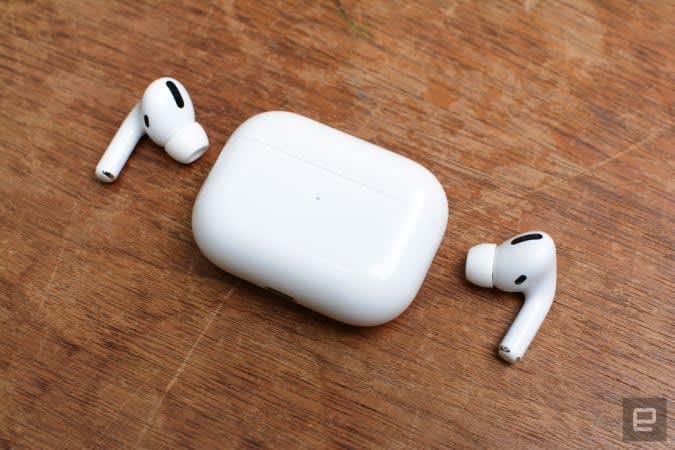
Apple's AirPods Pro are back on sale for $175, which is 30 percent off their normal price. We gave them a score of 87 for their improved fit, good audio quality and solid ANC.
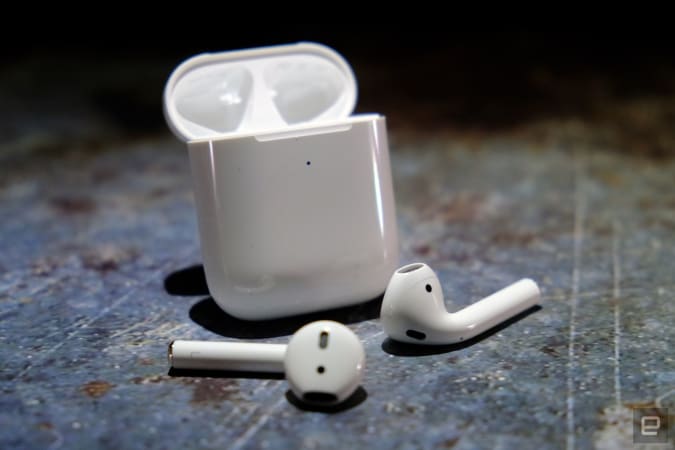
If you still prefer the original design to Apple's AirPods, you can grab the second-gen earbuds for $100 right now. That's 37 percent off their normal rate and only $10 more than their record-low price. We gave them a score of 84 for their improved wireless performance and solid battery life.
All three of Samsung's Galaxy S22 smartphones are at their lowest prices ever, with the Galaxy S22 Ultra down to $950, the S22+ on sale for $750 and the standard S22 for $675. We gave the premium S22 Ultra a score of 89 for its bright, colorful display, built-in S Pen and solid cameras.
Amazon includes a free $100 gift card when you buy a OnePlus 10 Pro at its normal rate of $899. If you go to OnePlus directly today, you can get a free OnePlus Watch when you pick up the smartphone. We gave the 10 Pro a score of 79 for its big, 120Hz display, speedy fingerprint and face unlock and super-fast charging.
SanDisk's 1TB Extreme Pro portable SSD is 42 percent off and down to $180. That's close to the best price we've seen, and it's a good option for those that need a tough drive that they can take with them on the go. In addition to drop protection and an IP55 rating, the Extreme Pro supports read and write speeds up to 2,000 MB/s, password protection and 256-bit AES hardware encryption.
Roku's Streambar Pro is down to an all-time low of $150, which is 17 percent off its regular rate. This larger soundbar has all of the features of the standard Streambar, plus even better sound quality, a lost remote feature with Roku's companion mobile app and support for private listening.
The online yoga, pilates and exercise platform Alo Moves has knocked 50 percent off its annual membership in an anniversary sale, so you can subscribe for only $99. The sale runs through May 14th, and with a subscription, you'll gain access to hundreds of on-demand exercise videos that span activities like yoga, HIIT, barre and pilates, plus guided meditation classes and more.
Razer's Kishi game controller for Android devices is half off and down to $45. It lets you more comfortably play games on your smartphone while on the go, and it has a USB-C port for charging.
Vantrue's N2 Pro dash cam is $51 off and down to $119 when you use the code SASN2P at checkout. This model has two cameras that capture the road ahead of you and the inside of your car while you're driving, making it a good pick for drivers are ride-share services. It also supports night vision, loop recording and optional GPS connectivity.
ThermoWorks' Thermapen One is on sale for $79 right now, which is the best price we've seen since it came out last year. The latest version of the popular instant read thermometer provides temperature readings in just one second, plus it has a brighter backlit display, motion-sensing sleep and wake mode and an IP67-rated design.