Posts with «technology & electronics» label

Apple's third-gen AirPods drop to $150, plus the rest of the week's best tech deals

We're one week out from Memorial Day weekend and we're already starting to see the sales roll in. Apple's latest AirPods are back down to $150 while a four-pack of AirTags remains discounted to $89. You can pick up a few Fire TV devices for less, including the Fire TV Cube for only $70, while Solo Stove's fire pits have already been discounted one week before the holiday. Here are the best tech deals from this week that you can still get today.

Apple AirPods (3rd gen)

Billy Steele/Engadget

The latest AirPods are $30 off and down to $150, which is only $10 more than their all-time-low price. We gave the buds a score of 88 for their improved audio quality, more comfortable design and longer battery life.

Buy AirPods at Amazon - $150

Apple AirTags

Valentina Palladino / Engadget

A pack of four AirTags is down to $89 right now, or $10 off its regular price. If you have a few things you want to keep track of, this is a good opportunity to pick up a few AirTags that can help you do so. AirTags show you the location of your things in Apple's Find My app, and if you have an iPhone that supports Precision Finding, it can lead you directly to your stuff.

Buy Apple AirTags 4-pack at Amazon - $89

1Password

1Password

1Password is offering 50 percent off paid plans for a limited time, which means you can sign up for a personal plan for $1.50 per month (when billed annually) or a Families plan for $2.50 per month. 1Password is one of our favorite password managers because it stores all of the dozens of login credentials you have safely and securely, while also making it easy for you to fill in the correct ones without remembering them as you browse the web.

Subscribe to 1Password starting at $1.50/month

Fire TV Cube

Nicole Lee / Engadget

Amazon's Fire TV Cube is down to a record low of $70 right now, or almost half off its regular rate. This is the most powerful streaming device that Amazon offers and it supports 4K HDR content, Dolby Vision and hands-free Alexa commands.

Buy Fire TV Cube at Amazon - $70

Fire TV Stick 4K

Amazon

The Fire TV Stick 4K is 30 percent off and down to $35, which, while not a record low, it's a good sale price on this handy streaming stick. Like the Fire TV Cube, it supports 4K streaming and Dolby Vision, but it takes up much less space and can hide behind your TV. And if you want to spend even less, you can pick up the Fire TV Stick Lite for only $20.

Buy Fire TV Stick 4K at Amazon - $35Buy Fire TV Stick Lite at Amazon - $20

Solo Stove

Solo Stove's Memorial Day sale knocks up to 46 percent off fire pits, so you can pick one up for as low as $200. You'll find the deepest discount on the big Yukon, which is $350 off and down to $400. We like these fire pits because they create much less smoke than their cheaper competitors and, out of the three models available, two of them are pretty portable, too.

Buy Yukon at Solo Stove - $400Buy Bonfire at Solo Stove - $220Buy Ranger at Solo Stove - $200

GoPro Hero10 Black bundle

GoPro

Amazon's latest deal on the GoPro Hero10 Black includes a dual battery charger plus two rechargeable batteries for $400. If you were go to directly to GoPro, you'd spend the same amount on the camera alone, so you're essentially getting the batteries for free if you go through Amazon.

Buy GoPro Hero10 Black bundle at Amazon - $400

Google Nest devices

Nicole Lee / Engadget

A bunch of Google Nest devices have been discounted ahead of Memorial Day weekend. Wellbots has the Google Nest Hub Max for $179 when you use the code EGDT50 at checkout, so you'll save $50 off its regular price. You can also get various discounts on Nest WiFi packs as well — the Nest WiFi router is down to $119 with the code EGDT50, the router with one access point is on sale for $189 with the code EDGT80 and the three-pack is down to $249 with the code EDGT100.

Buy Nest Hub Max at Wellbots - $179Buy Nest WiFi router at Wellbots - $119Buy Nest Wifi (2 pack) at Wellbots - $189Buy Nest WiFi (3 pack) at Wellbots - $249

Samsung Galaxy S22 Ultra

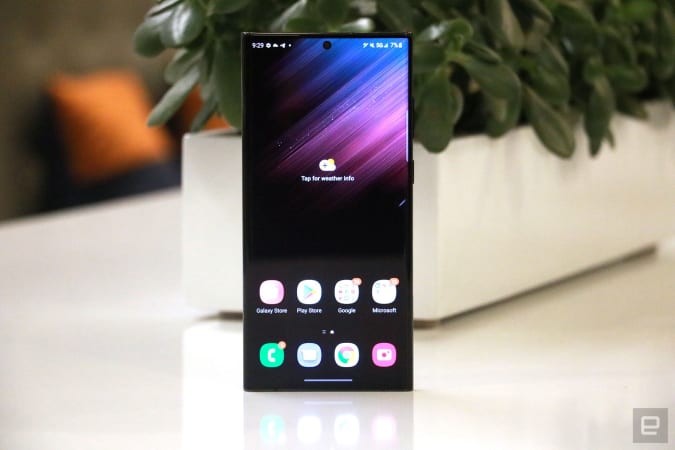
All three of Samsung's Galaxy S22 smartphones are at their lowest prices ever, with the Galaxy S22 Ultra down to $950, the S22+ on sale for $750 and the standard S22 for $675. We gave the premium S22 Ultra a score of 89 for its bright, colorful display, built-in S Pen and solid cameras.

Buy Galaxy S22 Ultra at Amazon - $950Buy Galaxy S22+ at Amazon - $750Buy Galaxy S22 at Amazon - $675

SanDisk Extreme Pro (1TB)

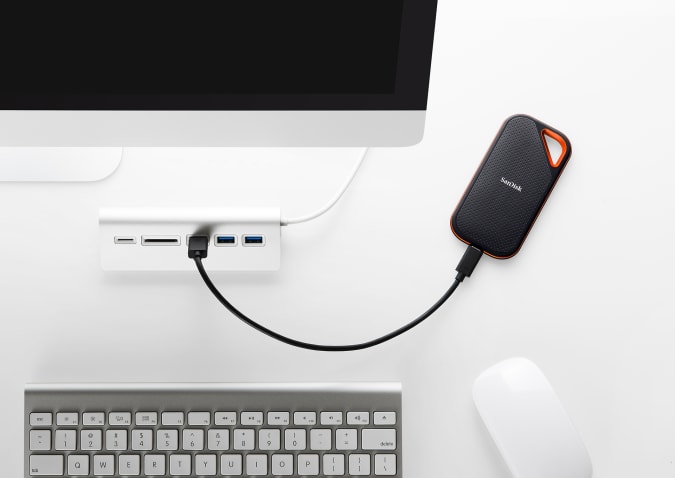
SanDisk's 1TB Extreme Pro portable SSD is 42 percent off and down to $180. That's close to the best price we've seen, and it's a good option for those that need a tough drive that they can take with them on the go. In addition to drop protection and an IP55 rating, the Extreme Pro supports read and write speeds up to 2,000 MB/s, password protection and 256-bit AES hardware encryption.

Buy SanDisk Extreme Pro (1TB) at Amazon - $180

Roku Streambar Pro

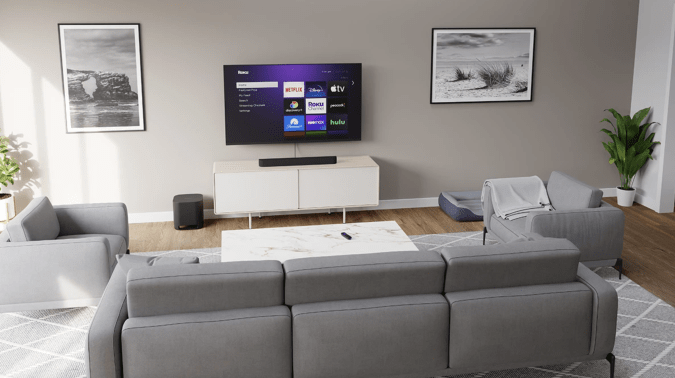
Roku's Streambar Pro is down to an all-time low of $150, which is 17 percent off its regular rate. This larger soundbar has all of the features of the standard Streambar, plus even better sound quality, a lost remote feature with Roku's companion mobile app and support for private listening.

Buy Streambar Pro at Amazon - $150

New tech deals

Razer Kishi for Android

Razer's Kishi game controller for Android devices is half off and down to $45. It lets you more comfortably play games on your smartphone while on the go, and it has a USB-C port for charging.

Buy Razer Kish at Amazon - $45

2022 Samsung Mini LED TVs

Amazon has discounted a number of Samsung's latest Mini LED smart TVs for the first time. The 65-inch Neo QLED 4K model is $200 off and down to $1,797, and you can also pick up 75-inch and 85-inch models at lower than usual prices, too.

Shop Samsung Mini LED TVs

Hydrow machine

Hydrow has knocked $669 off its Memorial Day package, so you can get its smart rowing machine, a mat and a 1:1 coaching session for $1,995. With the monthly membership, you'll get access to a bunch of on-demand rowing classes, plus the built-in screen swivels so you can do floor routines as well.

Shop Hydrow Memorial Day package

Follow @EngadgetDeals on Twitter for the latest tech deals and buying advice.

TikTok has been testing minigames ahead of a 'major' gaming push

After entering into a partnership with Zynga last year, TikTok has been testing a pair of mobile minigames on its platform in Vietnam, Reuters has reported. The move could soon allow users to play games directly on the app in what Reuter's sources called a "major push" into gaming. 

TikTok confirmed that it has been testing HTML5 games on its app via partnerships with Zynga and other third-party developers. it reportedly plans to release ad-supported games drawing from TikTok parent ByteDance's library to boost revenue and engagement. "We're always looking at ways to enrich our platform and regularly test new features and integrations that bring value to our community," a representative told Reuters via email. 

Last year, TikTok announced a partnership with Zynga on an app called Disco Loco 3D (above), an HTML5 app that could work inside the app. The company also created Garden of Good, a FarmVille-style minigame that allows players to earn points to make donations. 

While ByteDance is starting with minigames, it supposedly plans to go beyond that, presumably into more advanced types of games. The Chinese version of the game, Douyin, already offers games, and TikTok has also tested streaming via its Live Studio PC app. The company counts over a billion users worldwide and has projected $11 billion in ad revenue this year, more than the Twitter and Snap combined. 

Amazon discounts GoPro Hero10 Black bundle with extra batteries to $400

Amazon is running a deal on the GoPro Hero 10 Black right now, and you can get the device bundled with a dual battery charger and two rechargeable batteries for only $400. Considering the website is also currently selling the device alone for $400 — or $100 lower than its typical retail price — you're getting the batteries for free. The GoPro Hero 10 Black is a waterproof action camera that no longer needs a housing for most uses and can capture 23-megapixel photos, as well as videos with a 5.3K resolution at 60fps.

Buy GoPro HERO10 Black with Dual Battery Charger + Battery at Amazon - $400

We gave the device a score of 92 in our review, where we praised it for having a markedly better image quality than the Hero 9 for both photos and videos. The Hero 10 can reproduce colors closer to real life and can capture more details than its predecessor. In addition, the newer camera can capture videos in a higher resolution, which could translate to better looking footage after you crop it. 

The Hero 10 is also the better choice if you typically edit your videos to show all the action in slow motion. It has a new 120fps mode for 4K videos that gives you the capability to produce footage in 4x slow-mo or to put out really smooth-looking videos in normal speed. The Hero 10 also features a faster user interface, and as a huge plus for an action camera, its lens now comes with a hydrophobic coating to repel water and keep the device safe. 

To note, GoPro is also selling the Hero 10 with a bunch of accessories that include a spare battery, a magnetic swivel clip, a Shorty mini tripod, a 32GB microSD card and a camera case for $400 on its website. However, you'll need to be a GoPro subscriber to take advantage of that deal. If you think the $50 yearly membership fee is worth paying to get the discounted bundle, you can head over to GoPro's website through the link below.

Buy GoPro HERO10 Black + Accessories Bundle at GoPro - $400

Follow @EngadgetDeals on Twitter for the latest tech deals and buying advice.

Qualcomm's new reference AR glasses are wireless and more comfortable

Qualcomm's smart glasses technology has come along way in two years. The company has unveiled the Wireless AR Smart Viewer Reference Design, a next-gen pair of augmented reality glasses meant to help hardware partners build their own immersive eyewear. It now tethers wirelessly to a host PC, phone or puck, and it's 40 percent thinner despite packing a newer (if slightly old) Snapdragon XR2 platform. Add better-balanced weight distribution and the device should be considerably more comfortable than its predecessor, even if it still won't win any fashion awards.

Each eye gets a 1080p, 90Hz micro-OLED display that reportedly eliminates motion blur. You'll also have full six-degrees-of-freedom movement thanks to three cameras (two monochrome, one color) as well as hand tracking with gesture recognition. WiFi 6E and Bluetooth help shuffle data quickly while keeping lag under 3ms between the glasses and host device.

A handful of manufacturers already have access to Qualcomm's new AR design, and more should have their turn within the "coming months." You won't buy this exact hardware as an everyday customer. It could, however, lead to a wave of next-generation glasses that you wouldn't mind wearing for games or work — even they might not be as ambitious as some AR projects.

How the new PlayStation Plus stacks up against Xbox Game Pass

More than a month after revealing the revamped version of PlayStation Plus, Sony has shared the initial lineup of games heading to its new service, covering everything from original PlayStation classics and PlayStation Portable titles to modern hits. The new PlayStation Plus has three tiers, each at a discrete price point and offering varying levels of goodies, and it’s all set to go live on June 13th in the Americas.

Now that we know which games will be included in each tier — PlayStation Plus Essential, Extra and Premium — it’s easier to directly compare Sony’s service with that of its biggest competitor, Xbox Game Pass from Microsoft.

The new PlayStation Plus

Sony’s subscription service is segmented into three parts, with different games and features available depending on how much you pay. PS Plus Essential costs $10 a month or $60 a year, and it’s basically the Plus we know now, offering two games to download each month, access to online multiplayer features, cloud storage and discounts.

PS Plus Extra costs $15 a month or $100 a year, and provides everything in the Essential tier plus a library of up to 400 downloadable PS4 and PS5 games.

Bluepoint Games

The final option, PS Plus Premium, costs $18 a month or $120 a year, and adds up to 340 games from the original PlayStation, PS2, PSP, PS3 and PS4 eras. This is also where streaming comes into play: Sony is folding its existing cloud service, PlayStation Now, into the new Plus ecosystem, but only at its most expensive level. Premium adds the ability to play a selection of PS3 titles from the cloud, and stream or download lower-tier games from original PlayStation, PS2, PSP and PS4 eras (cloud play is only available in territories where PS Now is already live). Streaming will work on PS4, PS5 and PC, while native cloud gaming on mobile devices isn’t possible on Sony’s network.

Now, the games. Sony confirmed just over 100 titles heading to PS Plus Extra and Premium, including Demon’s Souls, Ghost of Tsushima Director’s Cut, Horizon Zero Dawn, The Last of Us Remastered, Gravity Rush Remastered, The Last Guardian, Tokyo Jungle, Ico, Tekken 2, Asura’s Wrath, Ape Escape and Assassin’s Creed Valhalla. That last game is included in the list as part of a deal to offer a few dozen Ubisoft+ Classics games to Extra and Premium subscribers.

Most of the games on Sony’s list are from the PS4 and PS5 generations, which is good news for Extra subscribers. However, Sony’s initial lineup of old-school games feels thin, even though they’re a crucial feature of the Premium tier. There’s an emphasis on PS3 games, with 29 available to stream, and relatively few titles from earlier eras. While there are some PS4 remasters of PS2 games on the list, including Rogue Galaxy and the Jak and Daxter series, so far Sony’s service has zero original PS2 games.

There’s still hope for nostalgia seekers out there — Sony said its list of classic games is an “early look at a selection of games that will be available,” so there should be more to come.

Japan Studio

However, don’t look to PS Plus for new, blockbuster Sony games. PlayStation CEO Jim Ryan told gamesindustry.biz in March that new, first-party titles won’t hit PS Plus on day one, meaning subscribers will have to pay separately for them. This is notable because Microsoft has made a big deal out of offering its in-house titles to Game Pass subscribers at launch.

Ryan said his stance on day-one drops could change, but for now, don’t expect titles like Spider-Man 2 or God of War Ragnarök on PS Plus at any tier.

Xbox Game Pass

On the surface, Game Pass has been a successful endeavor for Microsoft, with 25 million monthly subscribers and counting. Game Pass unlocks access to a large library of old and new games, including day-one releases of first-party titles like Halo: Infinite and Starfield (eventually); it functions across Xbox consoles and PCs, and it includes cloud features that make the included games playable on mobile devices.

The Game Pass library has around 300 games, even though Microsoft continues to market the service with a lowball figure of “over 100” titles. The lineup spans the original Xbox to current-gen, and the main tier adds Xbox Live Gold and access to EA Play. Game Pass has heavy hitters like Halo: The Master Chief Collection and Halo: Infinite, the original Doom and its modern follow-ups, Forza Horizon 5, Mass Effect Legendary Edition and Microsoft Flight Simulator, as well as indie games including A Memoir Blue, Kentucky Route Zero, Outer Wilds, Death’s Door and Spelunky 2.

Microsoft has sole access to some of these games because it owns a significant portion of the video game industry. Xbox Game Studios comprises 23 development teams, including id Software, Bethesda Softworks, Arkane, Ninja Theory, Playground Games, Double Fine and Mojang. All of this ensures Game Pass has a bank of exclusives to draw from — in practice, PS Plus won’t get games from these studios unless Microsoft allows it. The inverse is also true for Sony’s roster of exclusives, but Microsoft simply has more to work with in this regard.

343 Industries

Game Pass has PC-only and console-only tiers providing access to the library and not much more, and these cost $10 a month each. Neither option includes cloud gaming or Xbox Live Gold, which is necessary to play some titles online and costs $10 a month on its own. Microsoft doesn’t do much to market these standalone tiers, instead directing players to Game Pass Ultimate, the main focus of the Xbox subscription scheme.

Game Pass Ultimate costs $15 a month and offers Xbox Live Gold, cloud gaming features, and access to every game in the console and PC lineup. This is the all-inclusive option, operating on Xbox consoles, PCs and mobile devices via the cloud.

PS Plus vs Game Pass

There are a few glaring differences between the new PS Plus and Game Pass. Sony’s subscription plan has fewer games (for now), it doesn’t include mobile streaming and it won’t provide day-one access to new first-party titles, meaning serious PlayStation fans will have to pay for these big drops separately.

In terms of pricing, let’s focus on the top tiers: PS Plus Premium runs $18 a month or $120 a year, and Game Pass Ultimate is $15 a month. The cost is comparable, but at its most flexible pricing level, Sony’s plan is $3 a month more than Microsoft’s. That’s an extra payment of $36 a year. Annually, though, PS Plus Premium is $60 less than Game Pass Ultimate. 

Of course, cost isn’t the only consideration here. With rival subscription services, Sony and Microsoft are doubling down on exclusives as a main source of momentum, and maintaining a rich and unique library will be key to the success of these schemes. Xbox may own more than 20 studios, but Sony can still provide games that Microsoft can’t, and titles like Demon’s Souls, Gravity Rush Remastered, Tokyo Jungle, Ico and Assassin’s Creed Valhalla are a significant draw for longtime PlayStation fans.

That said, the decision to not include first-party games day-one in PS Plus could lose Sony subscribers, as well as some goodwill. The new PS Plus also seems to be missing some meat from its classics catalog, a move that could turn off potential Premium subscribers, but Sony is just getting started and there’s plenty of room to grow. That is, if Jim Ryan and his team see the value in adding content to the service.

AIAIAI Studio Wireless+: Finally, low-latency headphones for music producers

Wireless is increasingly the norm when it comes to headphones. Even some laptop makers are ditching the headphone jack. (Looking at you, Dell – you monsters.) And, while Bluetooth certainly offers a lot of convenience, there’s one group of users who can’t really take advantage: music producers. See, the latency introduced by the newest generation of Bluetooth devices can be up to 40ms even under ideal conditions. And for older hardware, that can stretch well beyond 100ms. It’s not just the hardware that can pose a problem, either. Android for a long time was known to have serious latency issues over Bluetooth, though the situation has improved dramatically, at least according to Google. This makes it extremely difficult to keep things in time if you’re recording and all but unusable for live monitoring.

Then, in December of last year, AIAIAI introduced what it claims are the “world’s first wireless headphones for music creators,” the $350 TMA-2 Studio Wireless+. The key selling point is a special wireless transmitter that promises a consistent 16ms of latency. It’s not zero latency, but it’s close enough that wearing wireless headphones around the studio actually sounds reasonable.

Terrence O'Brien / Engadget

Now, before we get to the wireless specifics, let’s talk about the TMA-2 Studio headphones more generally. Like the rest of AIAIAI’s lineup these are modular headphones that allow you to replace various parts as necessary, due to damage or changing needs. This also means you have to assemble them when they first show up. But, this is a pretty quick and easy process, even if it seems a tad intimidating at first. It took me less than 10 minutes from opening the box to having the headphones connected to my laptop. Basically, if you’ve ever put together a Lego set, then you can handle a pair of AIAIAIs.

The Studio headphones use the company’s “signature bio-diaphragm speaker,” and they sound great. They’re not the most neutral sounding headphones I’ve ever used, but they’re not terribly out of balance. I’ve found that the high frequency response is a little better, and the bass less emphatic on my Sony MDR-7506s. The AIAIAI are still perfectly suitable for mixing – just go in knowing that the tone errs towards the darker side. But the sound stage is very open and wide.

Terrence O'Brien / Engadget

The two biggest complaints I have about the sound are relatively minor. As others have noted, there is a bit of noise introduced when using them in the 2.4Ghz low-latency mode with the transmitter. It’s a gentle static that you can start to hear with the volume at around 50 percent, but become more apparent over 75 percent. You can mostly mitigate this by changing the volume at the source instead of on the headphones themselves, but it’s worth being aware of.

The second issue is that the Studio Wireless+ are oddly quiet when you use them over Bluetooth. With my Jaybirds or Sonys, I usually set the volume on my phone to 75 or 80 percent. But even at 100 percent I still found myself wishing for just a touch more loudness on the AIAIAIs. A casual conversation isn’t going to overpower your music, but they might not provide the level of masking you’d want on a plane.

The Studio and Studio Wireless+ also come with cushy Alcantara covered earcups. I’ve worn them for hours on end with no issues. These are among the most comfortable headphones I’ve ever used. I had some mild concerns about the headband at first, which is all rubber and doesn’t have any obvious cushioning. But those proved unfounded, as there’s a gentle give around the inside of the band that delivers more than enough padding for marathon recording sessions. 

There’s also more than enough battery life for marathon sessions, too. AIAIAI says the Wireless+ will last over 80 hours in Bluetooth mode. Frankly, I do not have the patience or the time to test this claim. I can tell you that I used them almost every day, in a mix of Bluetooth and low-latency modes for three weeks and still had juice left. I did, however, test the claim of 16-hour battery life specifically using 2.4GHz, and got 15 hours and 58 minutes. That’s shockingly close – and I was even able to eke out a bit more life by turning them back on in Bluetooth mode.

What was both stunning and confusing, though, was that despite getting the low battery beep when I powered them back on, both my MacBook and iPhone said there was 40 percent battery life left. I even took a 20-minute walk while listening to music, and the battery gauge didn’t budge. I was then able to sit at my laptop for almost a full hour, playing back the occasional video and listening to music before the headphones completely died and wouldn’t power back on. But, even right up until the end macOS insisted there was 40 percent left, so something is amiss. I've asked AIAIAI if they have any theories about why this might be and will update this review if and when I hear back.

Oh, and even once you’ve completely exhausted the battery, you can always connect the headphones to your audio source of choice using a regular old TRS cable.

Of course, the real reason to buy the AIAIAI Studio Wireless+ isn’t for the epic battery life, it’s for the special low-latency mode and let me tell you: It delivers. Now, this isn’t zero latency. You can detect it under very specific circumstances, but it’s not enough to make a difference. I recorded live using my laptop and a MIDI controller, and practiced my finger drumming on the SP-404 and had no issues.

The only time I noticed the miniscule 16ms of lag was when monitoring live while recording in the same room as my guitar amp. Being able to hear the amp over the feed from the headphones almost made it sound like my guitar was double tracked. But the effect wasn’t pronounced enough to give me any trouble.

Terrence O'Brien / Engadget

I don’t think I was prepared for how freeing this was, though. Although yes, taking headphones on and off, or dragging around the long, heavy, coiled cable of my MDR-7506s around is a pain, my “studio” is extremely small. It’s the front third of a finished attic, and it does triple duty as my office and our guest bedroom. So, there’s not a lot of space to maneuver and it’s kinda cluttered.

Still, being able to pick up my guitar, without first taking off my headphones or worrying about keeping the cable out of the way was great. And walking back and forth to swap out a pedal on my board, or a drum machine on my desk without thinking, made experimentation that much easier. So much of any creative endeavor is about getting into a flow state and staying there. Even the tiniest hurdle can disrupt that, and the AIAIAI Studio Wireless+ removes one of those hurdles.

This freedom to move about would probably be even better appreciated by people with larger, more well equipped studios. The range on the 2.4GHz transmitter is pretty solid, too. I was able to walk from my attic all the way to the ground floor before I started to lose connection.

Now, the question is whether that convenience is worth the $350. And I’d say, for me at least, the answer is yes. Even though I tend to build my studio on a budget (after all: I’m not a professional musician, life in New York is expensive and I have two kids), this seems like an indulgence worth making. If you’re the type who produces music entirely in the box (on a computer using software instruments only), the appeal might not be as strong. But being able to mill about, untethered, and record, while also avoiding waking up my family in the middle of the night, is a godsend.

Android 13 will have native support for braille displays

Android already has some accommodations for typing in braille, but Google is taking that one (important) step further with Android 13. As hinted at I/O, Android 13 will begin offering "out-of-the-box" support for braille displays through the platform's Talkback screen reader. You won't have to download the BrailleBack app to use physical input instead of the virtual keyboard.

You'll have access to "many" of Talkback's features, whether it's navigating the interface or shortcuts for common tasks like sending text messages. New shortcuts are aimed specifically at braille displays, such as jumping to the next line in a document or copying text.

Braille display support will first arrive in the next Android 13 beta, due "in a few weeks." The move will help people with blindness use their phones without using voice commands, and could make smartphones far more viable for people with deafblindness that can't rely on audio cues.

'Fortnite' is now available to all GeForce Now users

All GeForce Now users can play Fortnite via NVIDIA's cloud gaming service, including those with iOS and Android devices. The company started testing the game on the platform in January. It says more than 500,000 people tried it out across "hundreds of mobile device types." The full launch of Fortnite on GeForce Now means that there's no longer a waitlist and anyone can drop into a match. 

Feedback from beta testers helped NVIDIA optimize the touch controls and menu system. To thank them, it's giving everyone who signed up for the beta a three-day trial for GeForce Now's Priority plan. That offers longer game sessions than those who use the free version, along with improved visuals and access to premium servers. A three-day trial isn't exactly the most generous perk, but it's better than nothing.

For the time being, the only way to access Fortnite on iOS (at least without playing a console or PC remotely) is through cloud streaming. The game is also available for free through Xbox Cloud Gaming. You won't need an Xbox Game Pass Ultimate subscription if you go with that option.

Apple and Google pulled Fortnite from their mobile app storefronts in August 2020 amid a dispute with Epic Games. While Android users have still been able to sideload it, iOS players were effectively iced out until the cloud gaming options came into play.

Framework brings 12th Generation Intel Core chips to its modular laptop

Framework’s modular, do-it-yourself laptop has won the hearts and minds of plenty of laptop fans and right-to-repair-types alike. A year after launch, the company is back to offer the biggest test of its long term viability as a computer company: Chip upgrades. Today, the company is announcing new machines packing 12th generation Intel Core chips, as well as replacement mainboards with the new silicon for existing models.

While the company grows, users will need to lay down a refundable pre-order deposit of $100, with mainboard pricing running from $449 through to $1,049. If you’re looking to snag a Core i5-1240P, you’ll pay $449, while $699 bags you a Core i7-1260P, with high rollers looking for the i7-1280P laying down the full $1,049. Framework is using a batch system to fulfill orders, and so is advising would-be buyers to get their orders in early.

At the same time, the company is releasing a new Top Cover which is designed to add some extra rigidity to the system’s body. Whereas the original lid was aluminum-formed, the new units are CNC-milled from a solid block of aluminum. This, too, is available both in the new sold version of the laptop, and as an upgrade for the existing units already out in the wild, priced at $89.

As part of this annual upgrade, we’re also seeing the first new expansion card from the company in the form of a 2.5Gbit Ethernet adapter. Framework says that the new card uses a Realtek RTL8156 controller and will also support 10/100/1000Mbit Ethernet, and it will begin retailing later in the year. Rounding out the list of news is updated Linux support for both Fedora 36 and Ubuntu 22.04, as well as better power management while the machine is in standby mode.

HP’s premium laptop revamp: more OLED displays, 12th-gen Intel CPUs

While you may not have gotten around to spring cleaning, HP certainly has. Today the company is essentially refreshing its entire premium laptop portfolio with a bunch of new Envy and Spectre notebooks – both clamshells and 2-in-1s.

The two stars of the updated Envy line are the Envy x360 13.3-inch and the Envy 16-inch. Both systems can be configured with either an OLED display or a more traditional LCD panel. All of the new Envy laptops are also getting upgraded 5-MP webcams with head tracking and beamforming mics to help you look and sound your best during video calls. You even get native handwriting recognition and a hidden magnetic stylus mount on the side of the system. And, unlike a lot of other PC makers, HP’s pen actually comes in the box.

Sam Rutherford/Engadget

Starting at a reasonable $900, the Envy x360 13 looks like a great option for people on the move, thanks to its flexible 2-in-1 design and a battery that HP claims lasts up to 20.5 hours on a charge. You also get support for fast charging over USB-C, with HP promising you can refill half the battery in just 45 minutes. And for people who want to be a bit more discrete while working away from home, HP also introduced a quiet performance mode designed to keep fan noise to a minimum.

However, for people who want beefier specs, HP claims the Envy 16 is the most powerful Envy yet. Starting at $1,400, not only does it support refresh rates up to 120Hz, it also has a slightly taller 16:10 display for enhanced productivity. It can also be equipped with up to 32GB of RAM and either an NVIDIA RTX 3060 GPU or one of Intel’s new Arc A370M cards.

Sam Rutherford/Engadget

So while it might not be quite as powerful as a souped-up gaming laptop, its performance is still pretty impressive. HP says the Envy 16 was designed to support video output for up to three external 4K monitors on top of its default display. When I got a chance to test that setup in person, everything felt snappy and responsive. I was able to flick Photoshop from one monitor to another without a hitch, even while having video editing apps and a bunch of other files open in the background.

HP also upgraded the Envy 16’s sound system with a rather powerful quad-speaker setup. Meanwhile, other handy upgrades include an IR sensor for speedy face unlock and even a sensor that can detect when the laptop is stashed in a bag, to help prevent unnecessary battery drain.

Sam Rutherford/Engadget

That said, if the Envy x360 13 and Envy 16 don’t quite fit your needs, there’s also a refreshed Envy x360 15.6-inch 2-in-1 with support for both 12th-gen Intel CPUs or 5000 series Ryzen chips from AMD. And if you need a notebook with an even bigger screen, there’s the Envy x360 17.3-inch, which can be equipped with up to a 4K display. But notably, its GPU tops out at an NVIDIA RTX 2050, so it’s not nearly as powerful as the Envy 16. That said, starting at $1,100 it is a bit cheaper.

Finally, rounding out HP’s deluge of updates are the revamped Spectre x360 13.5 and the Spectre x360 16, which feature slightly curvier, rounded edges in addition to refreshed components. Now that might not sound like a big deal, but previous Spectres often felt too sharp and edgy for their own good. That’s because while those sleek lines looked great in photos, they had a tendency to dig into your palm or wrist while typing, which got uncomfortable real fast.

Sam Rutherford/Engadget

Both models are part of Intel’s Evo platform, so you can expect bright screens, near instant wake times and support for dual Thunderbolt 4 jacks, along with some luxury features like Gorilla Glass screens which aren’t available on all of the new Envy machines. And for people who really care about productivity, both new Spectres also get 3:2 aspect ratio displays with either LCD or OLED panels, to help make multitasking even easier.

And of course, the latest Spectres feature updated internals including 12th-gen Intel CPUs and support for an ARC A370M GPU on the 16-inch model. However, with starting prices of $1,250 and $1,650, HP’s most premium laptops do cost a bit more than comparable Envy notebooks.

All of HP’s new Envy and Spectre laptops are on sale today, direct from HP or from select third-party retailers such as Best Buy and Amazon.