If you have an aging machine that could use a storage upgrade, or you need a new portable drive before the new semester begins, you can pick up many Crucial gadgets for less at Amazon right now. A slew of Crucial's internal and portable SSDs are up to 29 percent off, and that includes one of our favorites. The Crucial MX500 internal drive in 1TB is 24 percent off and down to $76, which is the best price we've seen. Also discounted are the Crucial P5 Plus SSD in 2TB, which is down to $226, and the X6 portable drive in 1TB, which is 25 percent off and down to $83.
Crucial's MX500 has been a favorite among Engadget staffers for quite some time. It has a standard 2.5-inch form factor, so it'll fit into many machines, and decent sequential read/write speeds of 560/510 MB/s. It also has 256-bit hardware-based encryption and integrated power loss immunity, which should protect your saved work if power gets cut off. The five-year warranty that it comes with is a nice perk as well.
The P5 Plus drive earned a spot on our list of storage options for the PlayStation 5 thanks to its 6,600 MB/s sequential reads and heatsink compatibility. It doesn't come with a heatsink by default, but you do have the option to add one to your order when you're buying from Amazon. The 2TB drive alone is on sale for $226 right now, but you can get it with a heatsink for only about $10 more.
As for external SSDs, Crucial's X6 is a good all-around solution for most people. It supports read speeds of up to 800 MB/s, works with a variety of devices including PC, Android, iOS gadgets and has a lightweight, pocket-friendly design. If you're willing to spend a bit more, you can get a speed upgrade by opting for the Crucial X8 drive, which supports read speeds up to 1,050 MB/s.The 1TB version of that drive will set you back $90 in this sale.
Throughout its first three generations, Samsung’s flagship foldable phone has made massive leaps and improvements. Simply putting together the original Fold with its flexible OLED screen was a triumph of engineering, even though it had some obvious flaws. Then on the Z Fold 2, Samsung got rid of the selfie notch, increased the size of the Cover Screen and redesigned the hinge to better withstand everyday wear and tear. And with the Z Fold 3, we got native stylus support and water resistance on a foldable for the first time.
But with the Galaxy Z Fold 4, it feels like Samsung has slowed down to polish the blueprint it's been revising over the years. We’re talking sharper cameras with a longer zoom, better battery life, a renewed focus on multitasking and more. So while it might not look all that different, the Z Fold 4 feels like it’s five to 10 percent improved across practically every metric. Yeah, it’s still kind of bulky, and with a starting price of $1,800, it's way more expensive than a typical glass brick. But that’s the tax you pay for a cutting-edge device that’s actually ready for the mainstream.
Design and durability
Weighing 263 grams or 9.28 American yeehaw units and measuring 15.8mm at its hinge when closed, the Z Fold 4 is less than 10 grams lighter and 1mm thinner than the previous model. That’s a difference that’s almost impossible to discern – even when holding both phones at the same time. But that doesn’t mean everything is the same.
The bezels and frame around the 6.2-inch Cover Screen have been trimmed down, allowing for a display that’s about 3mm wider than before. That might not sound like much, but it makes a big impact. Typing quick replies or searches on my Z Fold 3 often felt cramped, resulting in regular typos. But even without really increasing the Fold’s physical dimensions Samsung has improved the typing experience and cut back on mishits.
Sam Rutherford/Engadget
On top of that, the hinge is a bit flatter and thinner and the whole phone has slightly sharper edges, almost as if Samsung honed its design with a whetstone. And it’s a similar story on the inside, where the plastic bezels surrounding the 7.6-inch flexible OLED display have been trimmed down too. The effect is subtle, but everything is a bit sleeker and toned up, even though the phone is actually a touch wider than before. You still get a side-mounted fingerprint reader, which is fast and responsive and the best choice for this device until someone figures out how to make an under-screen sensor for flexible displays.
The Z Fold 4 sports Gorilla Glass Victus+ in front and back, along with the company’s signature Armor Aluminum alloy holding everything together. Samsung also says it has changed the construction of its flexible display to be 45 percent more durable than before, while the addition of new metal plates and sponges behind the display help prevent it from becoming mushy over time – not that it was really an issue on previous devices.
Sam Rutherford/Engadget
Of course, the one exception to the surprisingly rugged build on recent Folds’ is Samsung’s built-in screen protector, which once again comes with a warning on first boot that it should not be removed by anyone besides a certified technician. Now, I’ve been very open about the bubbling issues I’ve experienced on both my Z Fold 2 and Z Fold 3, and this remains one of my biggest concerns. This year, Samsung says it switched to a stickier adhesive and a new factory application process intended to prevent the screen protector from peeling away or bubbling prematurely. Naturally, I haven’t had time to see how this change will hold up over time, but you better believe I’m going to revisit this down the line.
Display
Next, let’s talk about the star of the show: the Z Fold 4’s display, or in this case displays. Both the 6.2-inch Cover Screen and the 7.6-inch main screen support a 120Hz adaptive refresh rate and excellent brightness. Using a light meter, I measured the Cover Screen hitting just shy of 700 nits on an all-white screen, while the interior display did even better at around 750 nits. And with Samsung claiming a peak brightness of over 1,000 nits, everything from games to movies just look better.
Sam Rutherford/Engadget
Honestly, this flexible main display is still the thing I like most about the Fold. You get a small vibrant screen on the outside that’s easy to use one-handed, so you can quickly look up directions or text a friend while walking around. Then when you have a chance to sit down, you can open up the phone to reveal a big and even more colorful display for all your productivity or entertainment needs. And all this comes on a device that easily fits in your pocket.
Yeah, there’s still a crease, and it’d be nice if it wasn’t there. But after using a Fold for even a short time, you stop caring about it and you start enjoying the screen for all of its strengths. When you want to bury yourself in a book, setting something like the Kindle app to display white text on a pure black background transforms the Fold 4's OLED screen into the best e-reader around. Comics arguably look even better thanks to rich, punchy colors. And because there’s so much screen space to utilize, you get room for immersive viewing in tight quarters like on the subway, or potent productivity if that’s what you need.
Sam Rutherford/Engadget
Before I forget, while it’s still easy to see when you’re looking for it, the new subpixel matrix on top of the Fold 4’s under-display-camera does an even better job of camouflaging its 4MP sensor. Just don’t expect a big upgrade in image quality, because this thing isn’t good for much more than showing your face during video calls.
Performance and software
When it comes to performance, there isn’t really anything that can bog the Z Fold down. Recent games like Diablo: Immortal and Warhammer 40,000: Lost Crusade run super smooth. Same goes for when you have three different apps on screen at the same time. It packs a Qualcomm Snapdragon 8+ Gen 1 chip, up to 16GB of RAM and 512GB of storage (or 1TB if your order direct from Samsung). And in tests, the Z Fold 4 even flexes on its little brother, with multicore scores in Geekbench 5 of 4,036 versus 3,441 for the S22 Ultra.
Sam Rutherford/Engadget
But more importantly, Samsung and its partners (like Google and Microsoft) continue to enhance the phone’s multitasking software thanks to expanded support for Flex mode and a platform based on Android 12L. Now if you’re scrolling through a news site like say Engadget, it's even easier to open a link in a new window without losing your place. And when the phone is half closed, apps like YouTube and Netflix automatically adjust their UI to better suit your orientation.
That said, my favorite improvement is the Fold 4’s redesigned taskbar, which now lives at the bottom of the screen and serves as a powerful extension of the traditional Android Home row. When you launch an app, the bottom row of icons cleverly shrinks and expands, giving you access to your Home Row, along with recently opened apps and any app pairs you may have created – all without taking up too much space.
Sam Rutherford/Engadget
And while they’re kind of hidden, if you dive into Samsung’s Labs in the Advanced setting menu, you can activate a number of even more helpful multitasking features and gestures. Take for example the two-finger swipe up from the bottom or sides of the screen that lets you instantly launch into split screen mode, which makes multitasking a cinch. Alternatively, if you want a more desktop-like approach, you can toggle on the multi-window menu option, which adds a little tab at the top of apps that holds another set of spilt screen options.
However, I must admit I’m not really a fan of Samsung’s new Flex Mode Panel, which presents a little laptop-like touchpad and some quick settings on the bottom of an app when the phone is half-open. It’s kind of clunky, and because some media apps like YouTube already have their own customized Flex Mode layouts, I’ve yet to encounter a situation where having a little mouse cursor is actually all that useful.
Sam Rutherford/Engadget
But that’s just one small swing and a miss, and for Samsung which is kind of plowing through uncharted territory with its attempts to add powerful multitasking features to a foldable phablet, one whiff among a bunch of handy hits is hardly something to get upset about.
Cameras
While the Z Fold 4 still can’t really hang with phones like the S22 Ultra or the Pixel 6 Pro, that gap isn’t nearly as big as it used to be. Not only do you get a new 10MP telephoto cam with a 3x optical zoom – up from 2x on the Z Fold 3 – there’s also a new 50MP main cam that catches 23 percent more light than before. That has a noticeable impact on low-light pics. And before I forget, there’s still a solid 12MP ultra-wide camera for capturing all your group shots and expansive landscapes.
Sam Rutherford/Engadget
At night details are crisper, with the Z Fold capturing a shot of the NYC skyline featuring soft, blurry lights on the buildings in the distance compared to a similar pic from the Pixel 6 Pro. And in another shot of some mangos at a fruit stand, the Fold 4 arguably captured better textures, though Samsung’s photo processing strumbled by picking a white balance that’s a bit too warm.
But if image quality is super important to you, phones like the Pixel 6 Pro still have an obvious advantage. Even in daylight where most every high-end phone can shoot a great photo nowadays, the Pixel 6 Pro captured sharper focus and richer detail than anything the Z Fold 4 could manage.
Battery Life
Sam Rutherford/Engadget
Remember when I said the Z Fold 4’s faster performance is hard to fully appreciate? Well, that may be true when it comes to processing power, but when it comes to energy efficiency, the improvement you get from the Snapdragon 8+ Gen 1 chip is plain to see. On our local video rundown test, the Z Fold 4 posted a time of 17 hours and 13 minutes for its main screen, compared to 14:03 for last year’s Z Fold 3.
That’s more than solid for any smartphone, let alone a foldable with a huge main display. Alternatively, if for some reason you’re in a situation where you’re only using the Cover Screen all day, it did even better with a mark of 20:45. And when you need to refill, the Fold 4 still has 25-watt fast charging (which sadly is isn’t quite as speedy as the 45-watt charging you get on the S22 Ultra), 15-watt wireless charging and wireless power sharing for topping off other gadgets in need.
Wrap-up
When it comes to how you feel about the Z Fold 4, I think a lot of that depends on your opinion about foldables in general. There’s no denying that Samsung’s latest and greatest is still way bulkier than a standard smartphone, and at $1,800 it’s a lot more expensive too. And when you consider that its design is essentially the same as before, I doubt the upgrades included in this generation are really going to sway the naysayers. For current Z Fold 3 owners, it’s also kind of the same. The improvements are nice, but not really worth shelling out a bunch of money to upgrade after only a year.
But for people who have been tempted by a foldable that’s arguably the most powerful pocket-size multitasker you can buy right now, now there are even more reasons to consider diving in. The Z Fold 4’s cameras are better, its performance is faster and its battery life is even longer without Samsung actually increasing the size of the power cell inside. Also, thanks to new software, it feels like the Z Fold 4 is really starting to unlock the true potential for productivity on a handheld device. And we haven’t even talked about stylus support, which is just as handy as ever, and is only brought down by the lack of built-in storage for stashing an S Pen.
Sam Rutherford/Engadget
Do I wish Samsung had cribbed some of the fancy features seen on other high-end foldables from Vivo, Xiaomi and others? Yes, absolutely, and I won’t be surprised if we get some major design changes on next year’s offering. But as a total package, Samsung has tweaked and refined the Z Fold 4’s kit with just enough for it to retain its title as the flagship foldable phone to beat.
The gaming audio market has focused on headphones for years, leaving you to rely on familiar brands like Logitech and Klipsch if you prefer speakers. SteelSeries thinks it can shake things up, though. It's introducing its first desktop speaker line, Arena, and promising a few standout features aimed at gamers. The flagship Arena 9 (pictured at middle) is billed as the first gaming speaker setup to deliver 5.1-channel surround sound through USB. There's still a 3.5mm jack if you like, but you won't need a nest of wires to immerse yourself in games on a PC, Mac or PlayStation. You can expect synced RGB lighting, too.
All models also tout the first "pro-grade" parametric EQ aimed at gamers through the Sonar Audio Software Suite, SteelSeries claims. While we'd remain cautious about the company's boasts, this might prove useful if you're more interested in accurate-sounding explosions than nuanced music.
The other two Arena models aren't quite as elaborate, but could make more sense if price or desk space are concerns. The entry Arena 3 (shown at right) is a simple two-speaker offering with four-inch fiber cone drivers and Bluetooth audio support. Buy the 2.1-channel Arena 7 (left) and you'll get a subwoofer, optional USB audio and RGB lighting.
SteelSeries' speakers are available now with prices of $150 for the Arena 3, $330 for the Arena 7 and $600 for the Arena 9. You can also buy a $100 Arena Wireless Mic with a cardioid, noise-cancelling microphone to provide voice chat without donning a headset. None of these prices are trivial, but SteelSeries is clearly betting that you'll pay extra for speakers built more for Call of Duty than Claude Debussy.
Instagram is testing a new feature called Candid Challenges, which bears a striking resemblance to BeReal, a photo sharing app popular among Gen. Z. The currently unreleased feature was spotted by Alessandro Paluzzi, a developer known for reverse engineering apps and finding early versions of upcoming updates. An Instagram spokesperson confirmed the feature is an "internal prototype," but declined to provide additional details.
According to Paluzzi, Instagram users participating in Candid Challenges will see a notification at a different time each day to snap a photo of their surroundings. Upon getting the prompt, the Instagram camera will also open with both front and rear-facing shooters, and give users a two-minute window to snap a pic. Content shared via the challenges will appear in the Stories tray.
If that sounds familiar, it’s because the functionality sounds nearly identical to BeReal, a selfie app marketed as a more candid and authentic alternative to mainstream social media platforms. The app, which originally launched in 2019, also prompts users to take a photo using their phone’s front and rear-facing cameras at a random time each day. The daily prompts also expire after two minutes, after which users can view all the photos shared by their friends that day.
ℹ️ Add other's IG Candid to your story tray. And everyday at a different time, get a notification to capture and share a Photo in 2 Minutes. pic.twitter.com/caTCgUPtEV
It's not yet clear if or when Instagram intends to launch the feature. An Instagram spokesperson described the feature as an "internal prototype" that's "not testing externally." But the fact that the company is testing the functionality suggests it's at least considering replicating the app inside of its own service.
BeReal has a big following among Gen. Z, and has been rising in popularity over the last several months. BeReal is currently sitting in the top position in Apple's App Store, ahead of both Instagram (No. 8) and Facebook (No. 18). It's been among the ten most-popular free apps for much of this summer.
Mark Zuckerberg has said Meta’s future relies on appealing to young adults, who are increasingly spending their time on non-Meta platforms. And while TikTok is currently its top competitor, the company is known to closely monitor its rivals and has often copied features from other services. Instagram also recently added a new "Dual" setting to its in-app camera that mimics the shooting style popularized by BeReal.
Since the launch of Google TV almost two years ago, Google has been busy adding new features to the platform – including, most recently, iOS support. So if you feel the company has neglected the product from a performance and stability standpoint, the latest Google TV update is for you.
To start, Google says new CPU and cache management optimizations will reduce the time it takes for the “For you” tab to load on startup. Similarly, navigating within a tab and switching between multiple ones should feel more responsive after installing the latest update. A faster Live tab should also result in you seeing less of Google TV’s loading animation. Google says switching to kids profiles will take less time as well. But best of all, the software will now use less RAM, leading to a smoother viewing experience.
If you’ve been using Google TV for a while, you’ll also appreciate the storage enhancements included in this latest update. Google has added a “Free up storage” option to the Setting menu to make it easier to clear the program’s cache and uninstall apps you’re not using. The feature is already available on Chromecast with Google TV and coming to smart TVs soon. The company has also made under-the-hood tweaks that should reduce the number of errors users see when attempting to install new apps. Lastly, there’s a new automated process that will free up space on your device so that you can install more apps.
Google has begun rolling out the above enhancements to users. If you don’t see them immediately, it may take them a few days to reach your device.
Google has made some solid wireless earbuds over the past couple of years, but the latest Pixel Buds Pro are its best yet. We gave them a score of 87 when we reviewed them last month, and now you can pick the buds up while they're on discount for the first time. Amazon has the Pixel Buds Pro in charcoal and lemongrass for $175, which is $25 off their usual price and a record low. The more affordable Pixel Buds A-Series have also been discounted to $69, which is their lowest price yet.
Essentially, Google made small changes to the earbuds' design and also added a few key features to make them worthy of the "Pro" moniker. The buds themselves are bit more oval shaped than the previous models, helping them fit better into the contours of the ear. They're IPX4-rated, so they'll survive sweaty workouts, and they have onboard controls that let you play/pause, skip tracks, adjust the volume and switch between ANC and transparency mode.
ANC is arguably the biggest new feature on the Pixel Buds Pro, and Google did a pretty good job with it. The buds use a six-core audio chip for active noise cancellation, and a feature called Silent Seal helps block out even more noise and minimize sound leaks. All of those things combine to make solid ANC that blocks out noises like a TV show playing in the same room as you or sounds of people talking nearby. Sound quality is also quite good and Google added a feature called Volume EQ that automatically adjusts tuning when you change the volume, so the highs, miss and lows are more balanced and nuanced at any volume.
The buds' companion app lets you do things like customize touch controls, change sound modes, fine-tune Google Assistant features and check in on the last known location of the earbuds. You can also turn on automatic switching between Android devices in the app, which will come in handy when you use a few devices in tandem. Finally, when it comes to battery life, you'll get roughly 13 hours out of the Pixel Buds Pro when using ANC or up to 20 hours with that feature turned off. Google also added wireless charging capabilities to the buds' carrying case, which is a feature that previous iterations didn't have. So while the Pixel Buds Pro are Google's most expensive wireless earbuds to date, they're also its best sounding, most capable and most versatile buds yet.
Apple could integrate ads into Maps as early as next year, according to Bloomberg’s Mark Gurman. Writing in his latest Power On newsletter, Gurman says the company’s engineering team has already begun preparing the software to support search ads. Consumers will reportedly see Apple begin integrating that work starting sometime in 2023.
Gurman previously reported that the company had recently tested an internal version of Maps that included search ads. Apple already serves such advertisements through the App Store. Developers can pay the company to prioritize their software in search results, ensuring it shows up at the top of the page when users input specific terms. Gurman said search ads within Maps would work in much the same way. For example, a Mexican restaurant could pay Apple for their business to show up higher in local listings when people search for terms like “tacos” and “ceviche.”
At the time, Gurman suggested the test was part of a plan by Apple to significantly expand its advertising revenue. He attributed the push to Todd Teresi, the vice president in charge of the company’s ads business. The division generates about $4 billion in annual revenue, a number Teresi hopes to increase to at least $10 billion per year over time.
Meta is denying that it purposely muted the audio of downloaded Reels videos to keep users from exporting them to TikTok, The Vergereported. A company spokesperson blamed an “audio glitch” for the incident and said it’s in the process of being fixed. The outlet reported earlier this week that users who wanted to export their Reels onto another app (cough, cough TikTok) were forced to publish the video first — or risk losing its audio. Prior to this development, Instagram users could film and edit a video using Reels’ tools and opt to download and publish it elsewhere.
Although Meta is hoping to position Reels as the future of Instagram and Facebook, it has struggled to take the crown from the reigning short-form video app, TikTok. Creators and brands often cross-post Reels onto their TikTok accounts (or vice versa), meaning that Instagram and Facebook are no longer exclusive destinations for that content. TikTok gives users the ability to easily cross-post videos made on the platform to Facebook and Instagram Reels, but doing the reverse on the Meta-owned platforms requires manually downloading the video first. Reels and TikTok have different editing tools, so it’s easy to see why a user may want to edit in one specific platform and cross-post — not to mention that it simply saves time.
Meta is still working on fixing the audio glitch on Reels as of Friday afternoon, a spokesperson told Engadget in an email. The glitch appears to only impact iPhone users. “Due to a bug, the Reels download feature is not working as intended for iOS users and in some cases, audio is missing in downloads — we’re working to fix the issue as soon as possible," the company said in its statement.
It took more than a decade, but there's finally a sequel to Jetpack Joyride — if not for everyone. Halfbrick Studios has releasedJetpack Joyride 2 as an Apple Arcade exclusive for iPad, iPhone, Mac and Apple TV. Sorry, Android fans. The endless flier revolves around more "story-driven" gameplay with a new character to play (Betty Beefpies) as well as fresh mechanics and more detailed graphics. In that light, Halfbrick is effectively dragging the game into the modern era.
The original title came to Apple Arcade last year as Jetpack Joyride+, which maintains the core experience without the need (or ability) to make in-app purchases. The title first arrived in 2011 and helped define the endless runner category alongside classics like Canabalt and Temple Run. Halfbrick's signature game has racked up 500 million-plus downloads in the years since.
JJ2 probably won't justify the $50 per year ($5 per month) for Apple Arcade by itself, and it represents yet another dose of nostalgia on the all-you-can-play service. However, it might build a stronger case for a subscription. You can play simple blasts from the past alongside newer games that make the most of modern Apple devices.
Labor Day is rapidly approaching and we're already starting to see more tech deals pop up across the web. Amazon discounted a bunch of its own gadgets this week, including the new Kindle Paperwhite, its Signature Edition and the Kindle Oasis, as well as a bunch of Fire TV Sticks and Fire tablets. A couple of iRobot's more advanced robot vacuums are hundreds of dollars off, and you can still pick up the base iPad for only $299. Here are the best tech deals from this week that you can still get today.
Kindle Paperwhite
Almost all of Amazon's e-readers have been discounted — the Kindle Paperwhite is down to $110, while the Paperwhite Signature Edition is on sale for $150. The high-end Kindle Oasis has also been discounted to $200. We consider the Kindle Paperwhite Signature Edition to be the best e-reader available right now, and we gave it a score of 97 for its bigger, more responsive screen, USB-C charging and wireless charging capabilities and its plenty of onboard storage.
Apple's M2-powered MacBook Air in starlight is $100 off and down to $1,099, which is the best price we've seen since launch. We gave the laptop a score of 9 for its thinner design, gorgeous 13.6-inch Liquid Retina display and excellent performance. While we generally think the M2 Air is best for most people, you can also save on the M2-powered,13-inch MacBook Pro by going to B&H Photo. The online retailer has the laptop with a whopping 24GB of RAM for $1,749, which is $150 off its usual price.
Most models of Apple's iPad are on sale at Amazon right now, so you can pick one up for as low as $299. We gave it a score of 86 for its solid performance, excellent battery life and improved Center Stage cameras.
The Apple TV 4K is back in stock at Amazon and on sale for $120. While not quite as cheap as it was on Prime Day last month ($109), this remains one of the best prices we've seen no our favorite high-end set-top box. We gave the device a score of 90 for its fast performance, Dolby Vision and Atmos support, HomeKit integration and much-improved Siri remote.
The Product Red version of the Apple Watch Series 7 (45mm) is on sale for $320 right now. We gave the wearable a score of 90 for its larger screen, faster charging and handy watchOS capabilities. However, if you want the latest from Apple, it may be worth waiting until September when the company historically has announced its latest phones and smartwatches.
iRobot's Roomba j7+ is $200 off and down to $599 right now, while the s9+ has the same discount and is on sale for $799. These are some of our favorite robot vacuums, and they're made even better by these sale prices. The j7+ has advanced obstacle detection that helps it avoid pet poop and other hazards, while the s9+ has the strongest suction power of any Roomba.
Sony's budget-friendly WH-CH710N headphones are on sale for an excellent price of $98. While we have seen them cheaper before, this 35-percent discount is a good one for these ANC cans. We like them for their comfortable design, solid noise cancellation and long battery life.
Most models of Google's Pixel 6 Pro are on sale right now — both the 128GB and 256GB versions are $250 off and down to $649 and $749, respectively. The standard Pixel 6 is also on sale for $499. The Pro is one of our favorites at the moment, and we like it for its striking design, excellent performance and battery life, plus it has some of the best cameras you'll find on any smartphone.
Amazon knocked $15 off its Fire TV Stick 4K Max, bringing it down to $40. A couple of other Fire TV dongles are on sale, too: you can pick up the standard Fire TV Stick for $25 and the Fire TV Stick Lite for only $20. The TV Stick 4K Max is the most capable of the bunch, with support for Dolby Vision, WiFi 6 and more.
Amazon's latest version of the Fire 7 tablet is 25 percent off and down to $45 for the first time since it came out a couple of months ago. It's a decent slab if you want something affordable to use as a couch device, or to give to your kids. If you're looking for something specifically geared towards children, Amazon has a bunch of Fire Kids tablets and Kindle Kids e-readers on sale right now, too.
The Echo Show 15 smart display is $60 off and down to $190, which is only $10 more than its record-low price. We gave it a score of 78 for its beautiful design, large screen and useful widgets. If you only have space for something smaller, you can still pick up the Echo Show 5 for only $40.
Amazon Prime members can save up to 40 percent on Anker charging accessories, including the 521 magnetic battery pack for MagSafe-compatible iPhones, which is $20 off and down to $30. It's a 5,000 mAh portable battery that attaches to the back of the latest iPhones to power them up. Also on sale is Anker's 511 2-in-1 power bank, which is down to $35. That accessory works with more devices since it's an AC charger and portable battery in one.
Samsung's new T7 Shield SSD in 1TB is down to a new record low of $98, which is $62 less than usual. This is the most durable version of Samsung's palm-sized portable drive, featuring a rubberized exterior and enough protection to survive up to 9.8-foot drops. It has sequential read speeds of up to 1,050 MB/s and write speeds of up to 1,000 MB/s, plus Dynamic Thermal Guard and 256-bit Advanced Encryption Standard.
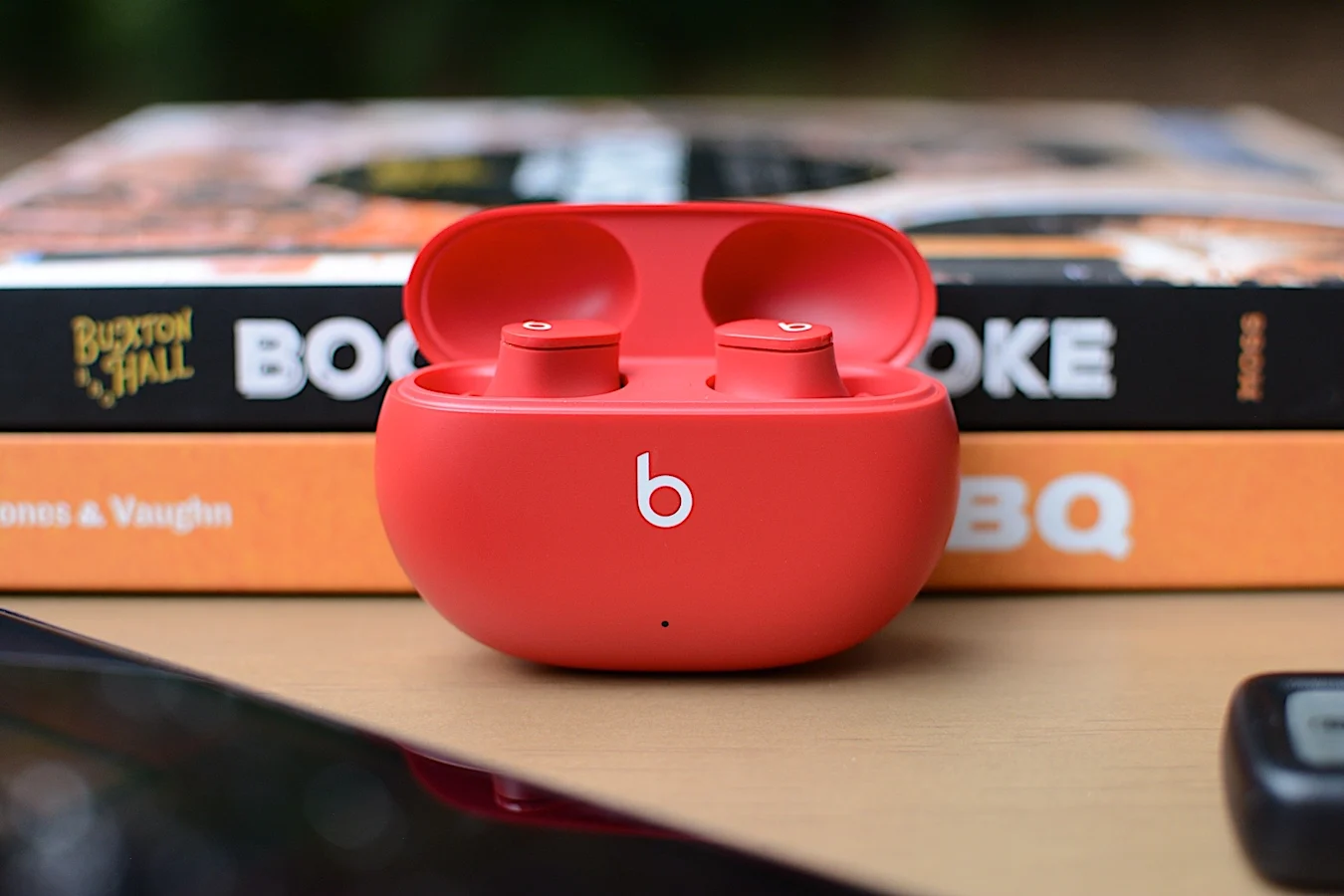
The Beats Studio Buds are back on sale for $100, or $50 off their usual rate. These are some of the best Beats earbuds for most people and we gave them a score of 84 for their comfortable design, good sound quality and ANC and fast pairing with both iOS and Android devices.
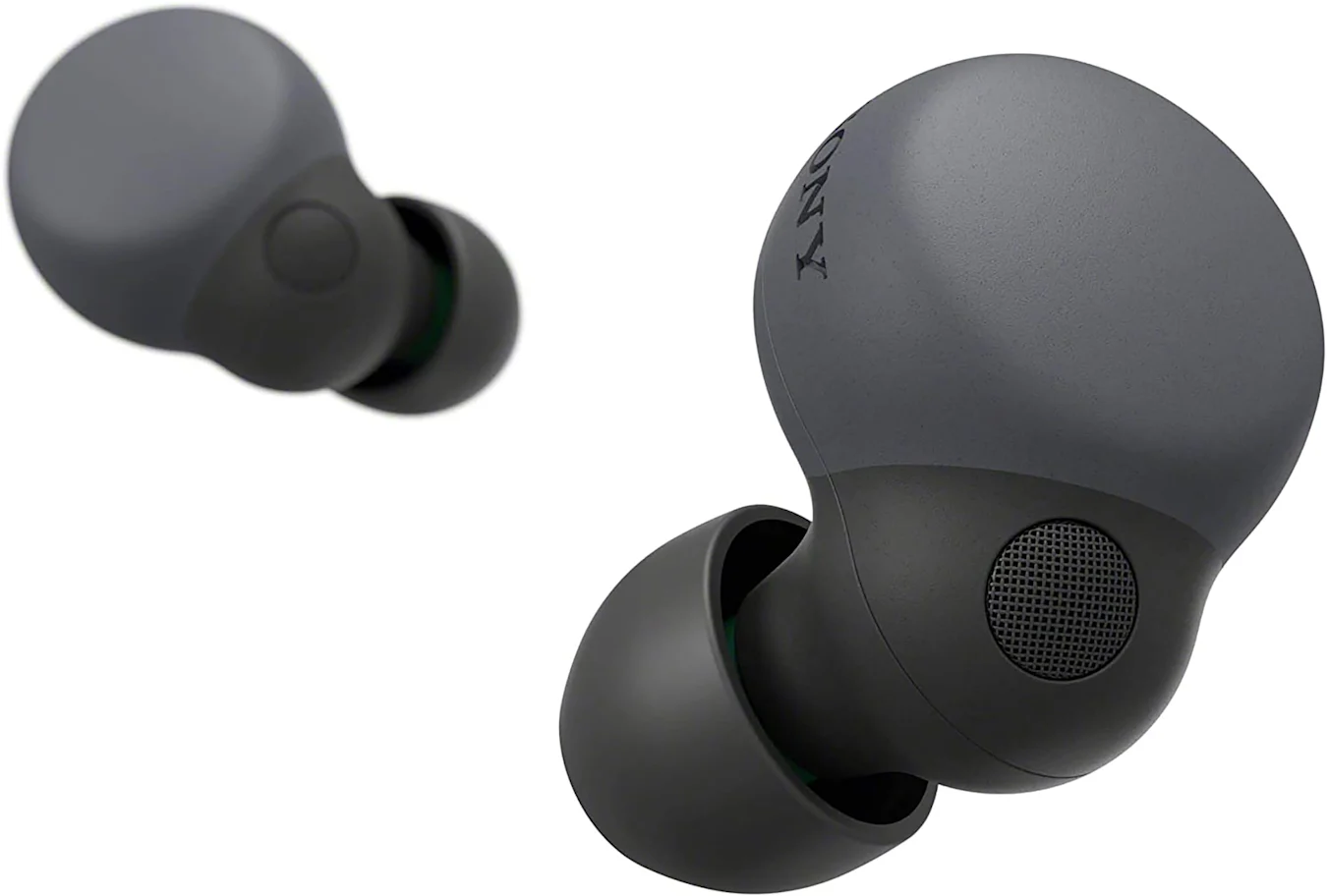
Sony's LinkBuds S are on sale for $148, which is 26 percent off and a new all-time low. These buds came out earlier this year and support smart playback, which lets them automatically play and pause music depending on what you're doing.
Jabra's Elite 3 earbuds are on sale for $58 right now, which is 28 percent off their normal price.We gave them a score of 88 for their comfortable fit, impressive sound quality and good battery life.