One of the first images taken by the James Webb Telescope that was released by NASA was the "sharpest infrared image of the distant universe to date." It's a wondrous photo showing a detailed cluster of galaxies. It's also currently being used by bad actors to infect systems with malware. Security analytics platform Securonix has identified a new malware campaign that uses the image, and the company is calling it the GO#WEBBFUSCATOR.
The attack starts with a phishing email containing a Microsoft Office attachment. Hidden within the document's metadata is a URL that downloads a file with a script, which runs if certain Word macros are enabled. That, in turn, downloads a copy of Webb’s First Deep Field photo (pictured above) that contains as a malicious code masquerading as a certificate. In its report about the campaign, the company said all anti-virus programs were unable to detect the malicious code in the image.
Securonix VP Augusto Barros told Popular Science that there are a couple of possible reasons why the bad actors chose to use the popular James Webb photo. One is that the high-resolution images NASA had released come in massive file sizes and can evade suspicion in that regard. Also, even if an anti-malware program flags it, reviewers might pass it over since it's been widely shared online in the past couple of months.
Another interesting thing of note about the campaign is that it uses Golang, Google’s open-source programming language, for its malware. Securonix says Golang-based malware are rising in popularity, because they have flexible cross-platform support and are more difficult to analyze and reverse engineer than malware based on other programming languages. Like other malware campaign that starts with a phishing email, though, the best way to avoid being a victim of this attack is to avoid downloading attachments from untrusted sources.
TikTok has denied a security breach after posts on hacking forums claimed to have compromised the app’s source code, as well as account details of potentially billions of people. In a statement posted to Twitter, the company said it “found no evidence of a breach,” following an investigation of the claims. The company also told Bloomberg UK that the alleged source code posted by the hackers “is completely unrelated to TikTok’s backend source code.”
Claims of a potential breach had been circulating among the security community after a post on a hacking forum claimed to be in possession of a database with more than two billion entries related to TikTok and WeChat accounts. The hacking group claimed to have obtained the TikTok records from an insecure cloud server.
The supposed hackers published a sample of the TikTok data but, as security researcher Troy Hunt pointed out, it contained data that was already publicly accessible and thus “could have been constructed without breach.” Hunt, who runs the “haveibeenpwned” service, said the data was overall “pretty inconclusive.”
TikTok prioritizes the privacy and security of our users’ data. Our security team investigated these claims and found no evidence of a security breach. https://t.co/TdCZDUFLPN
While TikTok has strongly denied a breach, the info in the database could have come from other means. As Bleeping Computer notes, it could be the result of a data broker or some other third-party that scraped publicly-available data from the service.
Claims of a security breach come just days after Microsoft researchers disclosed that they had found a “high-severity vulnerability” in TikTok’s Android app that put millions of accounts at risk. Microsoft said the vulnerability was fixed less than a month after it alerted TikTok to the issue in February of 2022. TikTok has long faced questions about its security practices and what user data is shared with parent company ByteDance. The company said last month that Oracle would review its algorithms and content moderation systems in an effort to assuage concerns.
It’s been a while since an iPhone launch genuinely felt like an event, since each new model is only marginally more polished than its predecessor. Not so, says the rumor mill for the iPhone 14, promised to be a ground-up redesign with major changes and new features. The headline tweaks include vastly improved cameras, a punch-hole to replace the notch and an always-on display. But if there’s a sting in this particular tail, it’s the rumor that Apple will save all of these goodies for the Pro model, stiffing the iPhone 14 with last year’s A15 chip.
NASA’s new Space Launch System has suffered yet another high-profile setback as a fuel leak blocked a planned test launch for Artemis 1. The agency conceded it wasn’t possible to launch before the window closes on September 6th. It’s likely the next attempt to get this thing into the air will be in October, but with a planned SpaceX launch due on October 3rd, SLS’ test firing will have to wait until October 17th at the very earliest.
The Internal Revenue Service has admitted it exposed the details of 120,000 US taxpayers through its website. The issue centered around the filing of Form 990-T, which deals with unrelated income from a variety of sources. Both private individuals and non-profit organizations are required to complete the document, but only the latter is meant to be publicly available. Sadly, a coding error meant 120,000 individual records, which included income data, was on the public register for some time. Affected individuals will be hearing from the IRS in the next few weeks, but the body has already said social security numbers were not shared.
Advertising IDs have, once again, been used as a way to track individuals.
For years, civil rights groups have warned that law enforcement agencies could co-opt the advertising industry’s sophisticated surveillance tools. Fog Reveal, a system police bodies have used to pinpoint people’s locations, is the realization of these dire warnings. The low-cost tool harnesses Advertising ID, a unique identifier smartphones have to help target relevant ads based on a user’s location and browsing history. Of more concern is the data does not require a warrant and can track a person’s movements for up to three years.
Isn’t it wonderful you no longer have to choose between a beefy gaming PC or an overpriced, underpowered laptop as your dorm room daily driver? These days, you can get great performance on low-cost hardware, solving your price vs. power dilemmas once and for all. If you’re still on the hunt for a machine to get you through college, you should give our expert guide a once-over.
We’ve always understood that while the iPhone is popular and successful, the sheer volume of Android alternatives means it would never become the majority phone platform in the US. Turns out, the received wisdom might be wrong. Analytics firm Counterpoint Research found iPhones now make up the majority of the US smartphone market. Android still remains the worldwide champ, with more than 70 percent of the global share, but it’s a dramatic shift in the US, and a trend analysts believe could be repeated in many more countries over time.
“The new AirPods Pro will update a model that first went on sale in October 2019,” Gurman writes in his latest Power On newsletter. “I reported last year that new AirPods Pro would arrive in 2022, and now I’m told that Wednesday will be their big unveiling.”
Rumors about the AirPods Pro 2 have been percolating for a few years. Back in 2020, Gurman wrote that Apple had tested a prototype with a more compact design that eliminated the stems so closely associated with the company’s earbuds. At one point, Apple was also reportedly considering adding more fitness-related features.
More recently, the consensus has been that the new AirPods Pro won’t have a dramatically different design. Instead, they will include the company’s next-generation H1 processor for improved audio quality and battery life. The earbuds are also expected to support the company’s lossless audio format and come with a redesigned charging case that features more robust Find My capabilities.
For the first time ever, there are more iPhones in use in the US than any other type of smartphone. Citing data from analytics firm Counterpoint Research, the Financial Times reports the iPhone overtook the entire Android ecosystem in June to claim 50 percent of US market share. In doing so, Apple achieved its highest-ever share of the American smartphone market. Apple achieved the feat on the back of the iPhone’s “active installed base,” a metric that takes into account all the people who are using an iOS device after purchasing one used.
In the early days of the iPhone, iOS (then known as iPhone OS) never had anywhere near 50 percent market share. At that time, companies like Blackberry, Nokia and Motorola dominated the smartphone space. By 2010, two years after its debut, Android overtook iOS to claim the larger install base. Ever since then, Google’s mobile operating system has been the dominant force in the global smartphone market, claiming more than 70 percent market share as of 2022, according to Statcounter.
Google probably has nothing to worry about. After all, the iPhone has always had an outsized presence in the US compared to other markets. Still, the company is likely looking at the situation closely. “This is a big milestone that we could see replicated in other affluent countries across the globe,” Jeff Fieldhack, Counterpoint’s research director, told The Times. To that point, Apple dominated the premium smartphone market in Q2 2022, with the iPhone representing 57 percent of all sales in the segment and shows no signs of slowing down.
Parler, the app that's largely associated with Donald Trump supporters, conservatives and far-right extremists, is once again available for download via the Google Play Store. Billing itself as a "free speech network", Parler was banned and removed from the Android app store in January [2021] after the US Capitol insurrection. A Google spokesperson said at the time that the removal was due to the app's lack of "moderation policies and enforcement that remove egregious content like posts that incite violence."
A Google spokesperson said "As we've long stated, apps are able to appear on Google Play provided they comply with Play’s developer policies. All apps on Google Play that feature user generated content (UGC) are required to implement robust moderation practices that prohibit objectionable content, provide an in-app system for reporting objectionable UGC, take action against that UGC where appropriate, and remove or block abusive users who violate the app's terms of use and/or user policy."
Parler has made substantial modifications to its app to comply with Google's policies. Bloomberg and Axios have reported that the apps' developers have implemented policies to moderate content and remove posts that incite violence, which made it compliant with Google's requirements. Despite its suspension and delisting from the Android app store, people could still download Parler from the company's website and continue to use it.
Parler was reinstated to the iOS app store in May this year, after modifying its AI-based moderation tool to hide content it identifies as "hate." Donald Trump's "Truth Social" has been available on the iOS store since February, though it has yet to launch on Android. Google reportedly has yet to approve that app due to concerns over its violations of standards and inadequate moderation policies.
Ten years ago, Teenage Engineering made a splash with the quirky, “boutique” OP-1 synthesizer. The b-word gets quotes because the OP-1 would go on to be a huge hit, enjoying a 10 year run and several re-stocks along the way. The success of the OP-1 and the equally unique products that followed saw big brands lining up to collaborate in the hope that some of that design magic might do wonders for their own products. Today, Teenage Engineering’s unique style can be found in everything from adorable gaming consoles to living rooms and pant pockets across the globe.
Back here in 2022, the company recently unveiled the sequel to the synth that started it all - and it’s called the OP-1 Field ($1,999). The new “Field” line also includes the TX-6 mixer ($1,199) and it looks like the company is repositioning itself with a new design aesthetic and… price range. Teenage Engineering has always charged a premium for its genre-bending, playful design but given that the original OP-1 cost around $800 at launch and that the OP-1 Field is largely based on it, it’s understandable that some loyal fans are feeling a little… priced out this time around.
Perhaps the bigger question is, will the new Field series offer enough magical music dust and Nordic design delight, to not only justify the expense, but to also keep Teenage Engineering’s unique approach to making music relevant to new and existing artists alike?
@Random Mcranderson (YouTube) - I think what TE missed is the overall negative effect on their reputation this has had.
Introducing the TX-6 and OP-1 Field
Before we can try and understand “Field” and what it means for the company, we should probably get a feel for the latest two products that are dividing fans in comments sections and on forums. We’ll start with the TX-6 as that’s an entirely new product for Teenage Engineering.
In the most simple terms, the TX-6 is a tiny battery-powered mixer and audio interface. Despite its diminutive size it has six stereo inputs, a built-in synth, eight effects, “DJ mode”, an instrument tuner and wireless/Bluetooth MIDI control. For something as portable as a deck of cards, that’s quite impressive. The TX-6 could be your main desktop audio interface by day and the beating heart of your hyper-portable (or not) multi-synth studio by night.
James Trew / Engadget
Unsurprisingly it’s particularly well suited for connecting and mixing smaller studio gear. Not only Teenage Engineering’s own products, but Korg’s Volca range or Roland’s many compact synths and drum machines are also a good fit. Ultimately, anything you can wrangle into a 3.5mm line-level output is fair game here. Anything with either an XLR connection or that requires phantom power is going to be a challenge of course. For outputs there are: main, aux and "cue” (for DJ mode).
@Pretty.mess (Gear Space) If I had enough money to buy one of these, I would probably buy something else. But I do love TE and the built in sequencer and synth looks interesting.
As is often the case with Teenage Engineering products, there are some features that one might not normally expect. On the TX-6 that would be the synth engine that includes drums sounds. Without a MIDI controller you can’t play it chromatically, but it’s unusual to see creative tools like this in most mixers and provides a way to poke out ideas right on the device. The inclusion of Bluetooth MIDI really feels in keeping with the portable form factor and a recent firmware update allowed for recording the mixer’s output directly to USB drives, which means you can lay down tracks without even needing a phone to record into. One might argue some internal storage could have been included for the price, but we presume the density of the hardware doesn’t allow for it (we hope).
The OP-1 Field, on the other hand, is very clearly a successor to the decade-old OP-1. The launch was sold as the new synth being “100 times” better with a list of 100 new features or improvements. In practical terms, the main upgrades seem to be much improved on-board storage, new “tape” modes (more on this later), full stereo signal chain, a new synth engine, a new reverb effect, an improved display, longer battery life and 32-bit float recording.
@Tarekith (OP-Forums) not everything needs to be aimed at the lower end of the market. This is a massive update for an already very capable instrument.
With the Field, the OP-1 has been refreshed to bring it up to date after a decade of user feedback. And this includes squashing some long-held limitations of the original. Most notably, the ability to work on multiple projects on the device without the hassle of backing them up to a PC. Yep, the original OP-1 only had the ability to record one song (or more accurately, one "tape") at a time. Another big one, particularly for the synth and drum engines, is the introduction of stereo.
To show this off, there’s a new synth engine called “Dimension.” It joins the other 10 that were on the original (which already covered most bases). Dimension is a subtractive/analog-style synth with a variable waveform (it gradually changes from various pulse styles through sawtooth and then noise).It also has a chorus feature for a fuller stereo sound. It does a pretty good job of replicating more analog style sounds as well as lush pads and even some horns and wind instruments.
With so many different synth engines you’re not short of choice, but the OP-1 is sometimes considered as having quite a colder, digital sound. This is true to a degree, but – as with most things on this synth – there are creative ways to get around that if you know where to look.
James Trew / Engadget
Instead of there being an internal sequencer, Teenage Engineering decided to imitate recording to tape on the OP-1, with just four tracks, including a physical time limitation of six minutes for each track. The analogy is taken seriously with no “undo” or “copy/paste” instead you “lift” tape and you can drop it back elsewhere. There are modern concessions so that it’s not just about making life needlessly hard – instead it's a very different way of making music that urges you to build songs in a way that most software’s infinite options and endless tracks ironically doesn’t.
But it’s precisely this unusual approach, anachronisms like “tape” and imitating physical limitations in a digital environment that arguably makes Teenage Engineering products stand out. Most electronic music production these days likely happens in software on laptops. As computers became powerful enough to mimic outboard gear, often the only hardware you might see producers using was a MIDI controller for playing software instruments with. In the last decade, at least, there’s been a steady re-emergence of hardware at the center of the workflow. But most don’t employ such a restrictive workflow as the OP-1.
@ellisedwardsx (Reddit) Love it. Everything cool about Op-1 to me but minus the things I didn’t like. I love the new additions.
“It favors those that have playing skills” YouTuber and OP-1 expert Cuckoo told Engadget referring to the OP-1’s live tape recording approach. “Like if you want to be incredibly immediate, and you appreciate that, then it's for you,” he added.
Cuckoo, like many fans of Teenage Engineering, sees the lack of things like a MIDI sequencer or the ability to add and remove effects at any stage in the creation process as a good thing. A typical DAW lets you move single notes around or change almost anything at any time which “feels” more useful (and it’s how most modern production tools work). The OP-1, for example, is just a lot more committal. Once that idea is recorded to tape, you’re limited in what can be done with it. But for some, that’s what makes it so exciting. Everything you do nudges you forward in the song-making process or, at the very least, avoids you jamming away several hours as you trawl through VST presets as often happens in something like Ableton Live.
“Teenage Engineering, they're very good at minimizing your options, and in a good way. Like on a computer, everything is possible. But because everything is possible, it's not like one optimized workflow. You need to find that workflow for yourself. And most people probably don't create like, a tight workflow.” Cuckoo said.
While this alternative way of working does have its fans, it can almost feel like learning a new language if you’re used to a more conventional DAW+MIDI situation. This will likely mean, at the beginning at least, you’ll almost certainly spend as much time googling for answers as you do actually creating. Before long though, you’ll start noticing the exciting things you can do that your faithful old DAW may never have put in your mind (even if it’s something it can do).
James Trew / Engadget
Take the built-in FM radio on the OP-1, for example, as Cuckoo illustrates. “Sometimes I've been performing with an OP-1, and been sampling from the FM radio, chopping up a [drum] kit, making a song, making an improvisation in like, maybe seven minutes or so?” Making a song based on sampling the radio in under 10 minutes is not something most gear inspires you to do.
Most don’t have an FM radio to be fair.
You can also use that radio in other, weird creative ways. You could use it to modulate an LFO, for example (so the song on the radio is controlling a filter or other parameter). Or you can create synth sounds using a random FM sample looped and twisted in creative ways. You can also broadcast over FM (albeit incredibly short distances), which works perfectly with Teenage Engineering’s OB-4 speaker, which also has an FM receiver.
@finc (Reddit) But what is a tiny low powered FM transmitter for?
This is really where Teenage Engineering excels: adding playful touches that open creative opportunities you might not find elsewhere. Along with the FM radio, the OP-1 Field has a gyroscope that can also be used as a modulator, which makes it exciting for live performances.
And while MIDI Bluetooth LE is becoming more common, it makes so much sense in the portable form-factor of both the TX-6 and the OP-1 Field. Using the TX-6 wirelessly with the OP-1 Field was easy to setup and felt very natural. In fact they both play nice with iOS natively too, so if you have a suite of mobile apps you enjoy using already, you can carve out quite a capable mobile studio with a good mix of hardware and software alike.
Using the OP-1 Field together with the TX-6 does feel decadent. The 3.5mm inputs on the mixer naturally makes you think twice about what you might plug into it. I could plug a full-size synth into it, or maybe something like the MPC Live II, but this would also be a bit bizarre. A relatively comprehensive mixer it might be, but its size begs you to, well, take it outside we suppose?
“I think ‘Field’ leads my mind to think about field recordings and to be out in the field, work outside of the office… music that is portable. And I think it's very obvious especially if you look at the TX-6 mixer [...] this thing is so incredibly well designed. And it's hard to convince people that get angry when they see the price tag that how incredibly well engineered it is.” Cuckoo said.
@Brokener Than (YouTube) The personal aspect of buying the OP-1 and what you get out of it is really the only justification you need to overpay for an instrument.
But if portability is the key behind the “Field” moniker, Teenage Engineering has to convince people to part with thousands of dollars when there are apps and even mixers that can combine to do something similar for a fraction of the price.
“A lot of people say, well, ‘you can do all of this with Ableton Live and a computer that costs half the price!’ But it's not the point. It's, I think, if the result is all that counts, the end product you can do a lot of stuff with an iPad, and some apps are free even. The result is not everything, it’s also mastering a device. Like, playing this live is a joy.” Cuckoo said.
James Trew / Engadget
Take a look around on YouTube at who is actually using the OP-1 or the TX-6. If you look (and listen) long enough you’ll maybe start to see that there has maybe long been a corner of the music making world that doesn’t feel at home with the pads of an MPC, or the endless expandability of Ableton Live. A group that doesn’t want to get pulled into the world of modular synthesis or circuit bending. People that have a fondness for alternative methods but with an appreciation for well-designed hardware. As long as they have the means.
It’s hard not to get sucked into the OP-1 Field. I personally struggled with the workflow initially, but I find it curious. Something tells me that if I stick with it and break my old MIDI/DAW habits, great rewards await. The TX-6 mixer on the other hand is a harder sell while still somehow incredibly appealing. Especially if you are already flush with portable gear, it makes a lot more sense. Perhaps the important question is: What is next in the Field series. An OP-Z Field? Some high-end Pocket Operators? Something completely different? Whatever it is, it could be the company’s most crucial device yet, or what ultimately alienates the company’s loyal fan base.
Samsung has disclosed another cybersecurity incident. While an intrusion earlier this year led to hackers getting their hands on Galaxy source code, this time around, attackers obtained some customers' personal information.
The company says that Social Security numbers, as well as credit and debit card numbers, were not accessed. However, the event "may have affected information such as name, contact and demographic information, date of birth and product registration information." It hasn't revealed how many people may have been affected. The company is notifying some customers directly via email.
Samsung says someone gained unauthorized access to its systems in late July. It determined in early August that the attacker had obtained customer data, but consumer devices weren't affected. The company said it has taken steps to secure its systems and that it brought in a third-party cybersecurity firm. It's also in communication with law enforcement.
In an FAQ, Samsung said it's not necessary for customers to take immediate action based on what it has learned so far in its investigation. Still, it suggested that people exercise caution if they receive unsolicited emails and to review their accounts for signs of suspicious activity.
"We are committed to protecting the security and privacy of our customers," Samsung said. "We will continue to work diligently to develop and implement immediate and longer-term next steps to further enhance the security across our systems."
As you gear up to enjoy the Labor Day holiday, you can also save on some of our favorite gadgets across the web. Apple's AirPods Max headphones are $120 off while the Apple TV 4K remains on sale for only $120. Amazon's swiveling Echo Show 10 is down to the best price we've seen since Prime Day in July, and Solo Stove has knocked up to 45 percent off all of its machines — including the new Mesa tabletop fire pit — for the holiday weekend. Here are the best Labor Day tech sales we found for 2022.
Solo Stove
Solo Stove
Solo Stove has discounted all of its fire pits and bundles for the Labor Day holiday. The Ranger 2.0, Bonfire 2.0 and Yukon 2.0 are down to $200, $230 and $430, respectively, and you can save on most bundles, too, including the Bonfire Backyard Bundle 2.0 that gives you a spark shield, stand, shelter, carrying case and lid along with the aforementioned fire pit. The sale also includes the new Mesa tabletop fire pit, which has been discounted from $120 to $80.
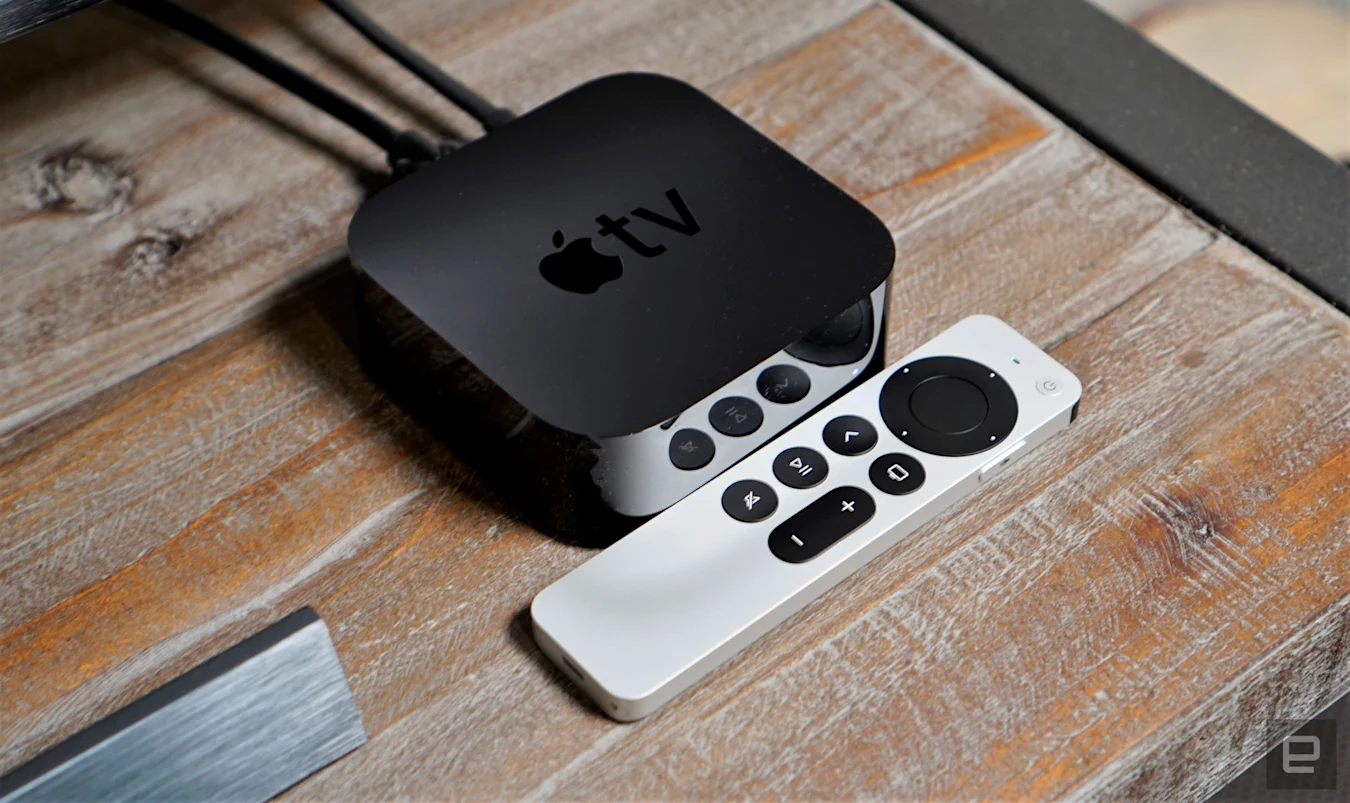
The Apple TV 4K is back in stock at Amazon and on sale for $120. While not quite as cheap as it was on Prime Day last month ($109), this remains one of the best prices we've seen no our favorite high-end set-top box. We gave the device a score of 90 for its fast performance, Dolby Vision and Atmos support, HomeKit integration and much-improved Siri remote.
Apple's AirPods Max are $120 off and down to $429, which is the cheapest price we've seen them on Amazon. We gave the headphones a score of 84 for their excellent sound quality, comfortable fit and strong ANC.
Amazon's Echo Show 10 smart display is $50 off and down to $200, which is the best price we've seen since Prime Day back in July. We gave the device a score of 83 for its excellent audio quality, ability to work as a security camera and automatic panning and zooming capabilities for video calls.
Samsung's Galaxy Buds Pro are down to $149 at Wellbots when you use the code ENGBUDS20 at checkout. While they are no longer Samsung's latest pro-level earbuds, we gave them a score of 85 when they came out for their good sound quality, comfy fit and wireless charging capabilities.
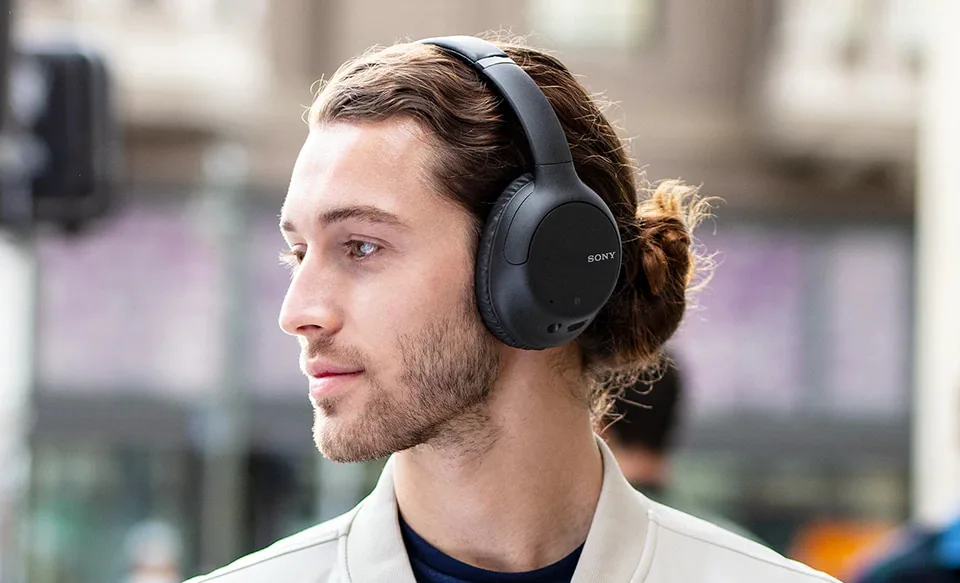
Sony's budget-friendly WH-CH710N headphones are on sale for an excellent price of $98. While we have seen them cheaper before, this 35-percent discount is a good one for these ANC cans. We like them for their comfortable design, solid noise cancellation and long battery life.
HBO Max has discounted its annual plan, so you can save 30 percent if you sign up and pay for one year upfront. If you can deal with ads, the service will cost $70 for 12 months, down from the usual $100. to get an ad-free experience, you'll pay $105, which is $45 off the usual rate.
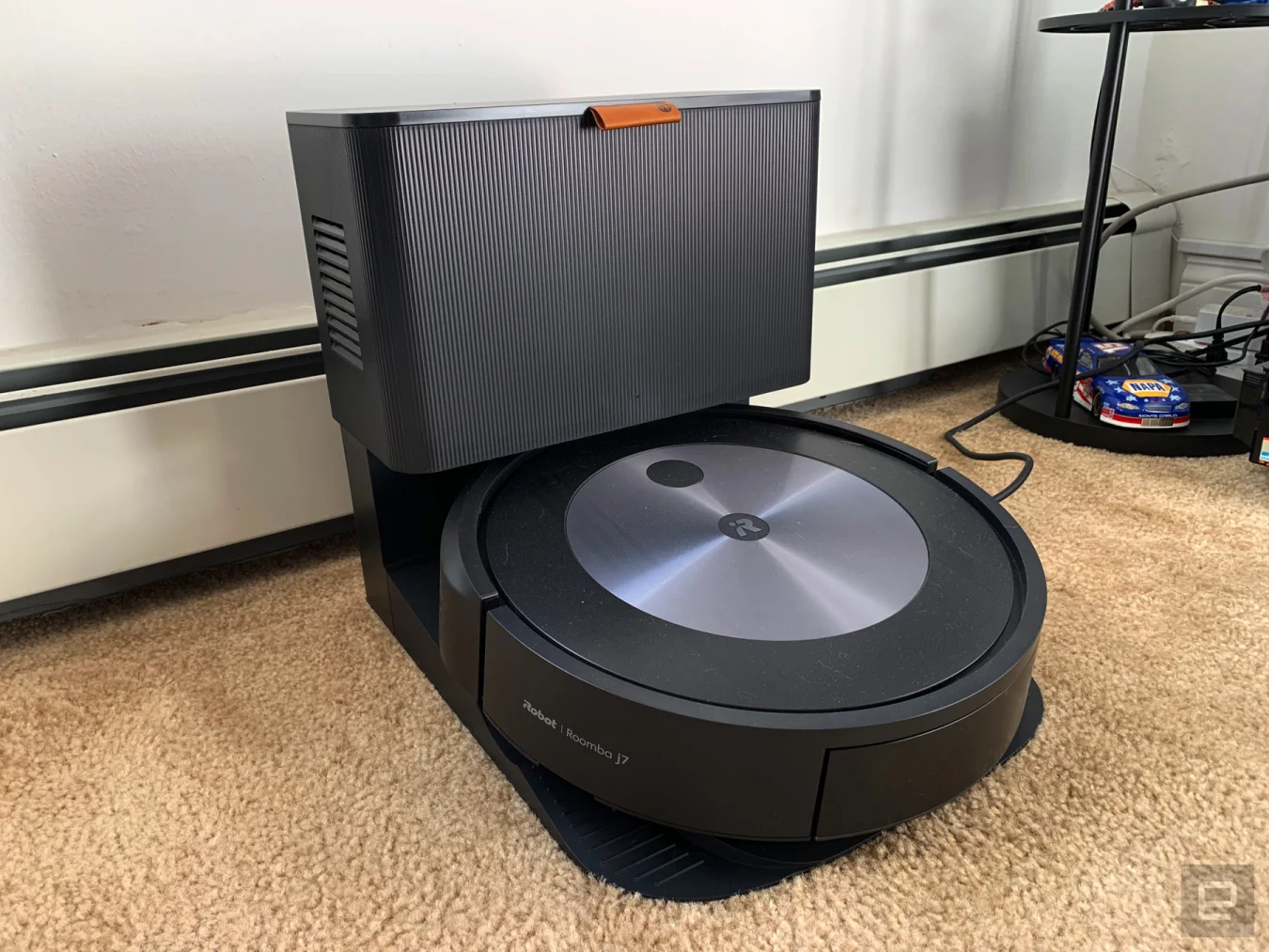
iRobot's Roomba j7+ is $200 off and down to $599 right now, while the s9+ has the same discount and is on sale for $799. These are some of our favorite robot vacuums, and they're made even better by these sale prices. The j7+ has advanced obstacle detection that helps it avoid pet poop and other hazards, while the s9+ has the strongest suction power of any Roomba.
Get ready for some major upgrades to the iPhone and Apple Watch lineup at Apple's "Far Out" event next week. While last year's iPhone 13 was a mostly marginal update (aside from fast ProMotion screens and Cinema Mode on the Pro models), the latest rumors suggest the iPhone 14 will be a considerable step forward. The iPhone 14 Pro may finally lose its notch! We could actually get higher resolution cameras! We're also eager to see what, exactly, Apple means with its cryptic invite and star-laden imagery. Even if you're not looking to upgrade, half the fun of these launch events is predicting what Apple has up its sleeves. So let's speculate!
iPhone 14 and iPhone 14 Pro
Once again, we're expecting to see four iPhone models, but the line-up will likely look different than the last few years. Not too long after the iPhone 13 hit stores, Bloomberg's Mark Gurman reported that the iPhone 14 would be a "complete redesign," which would mark the first major revision since the iPhone X landed in 2017. Additionally, Apple may be giving up on the iPhone Mini, a phone we've always wanted to love, but the short battery life has been a sticking point. Instead, Apple will reportedly unveil a 6.7-inch iPhone 14 Max or Plus, which will likely just have the same hardware as the standard iPhone 14.
iPhone 14 Pro notification render via 9to5Mac.
9to5Mac
While that's unfortunate news for fans of tiny devices, the trend among most consumers is towards larger screens. Apple can't let Samsung have all the fun, after all. Similarly, Apple could be taking a cue from the Galaxy phone maker (and practically every other Android phone company) by introducing pin-hole front cameras on the iPhone 14 Pro models. While early leaks pointed to two separate cut-outs — a circular one for the camera alongside a pill-shaped hole for the FaceID sensor — MacRumors claims (with support from Gurman) they'll show up as a single pill-shaped cut out unified by software. (See image above.) Additionally, 9to5Mac reports that Apple is using the space in the middle of the cut-out for its privacy notification dots, which appear when an app is using your camera or microphone. On existing iPhones, those dots are shoved above the cellular reception bars.
Apple appears to be saving most of its big updates for the Pro iPhones. For one, they could have always-on screens, according to 9to5Mac. That could work well with the revamped lock screens we've seen in iOS 16, which now have room for widgets and far more customization than before.
More controversially, though, is a report claiming that only the Pro models will receive Apple's new A16 Bionic chip. The standard iPhone 14 models may stick with last year's A15 (which is still plenty powerful). As a cost-saving measure, that makes sense, especially chips and other components still in short supply. But it marks the first time Apple has introduced a major performance gulf between its iPhone models. (It's particularly surprising since Apple was also able to squeeze the A15 chip into the tiny iPhone 13 Mini.) Most consumers won't know the difference, but having a more powerful chip would clearly be a big draw for Pro models.
David Imel for Engadget
Typically, Apple has used its camera technology as the big differentiator between the standard and Pro iPhones. That doesn’t appear to be changing. In addition to all of the upgrades above. According to analyst Ming-Chi Kuo, Apple is planning to bump the Pro's wide camera to 48-megapixels, a huge leap from the 12MP cameras the company has relied on for years. More recently, Kuo also claimed that the iPhone 14 Pro ultra-wide sensors will feature larger pixels with better low-light sensitivity. As for the base iPhone 14, it's expected to get the six-element ultra-side camera from the iPhone 13 Pro.
And what are we to make of the "Far Out" text on Apple's event invite? The ever-busy Kuo recently noted that Apple has completed testing on satellite connectivity for the iPhone 14, something that was also rumored to arrive ahead of the iPhone 13's launch. Even though the hardware may be in place, Apple is reportedly still working on partner deals to unlock that connectivity. And while the idea of satellite support seemed wild last year, it makes more sense now that we've seen T-Mobile and SpaceX team up to offer emergency satellite support via StarLink. (Good news for iPhone 13 owners: Kuo claims those phones also have satellite hardware built-in.) Don't expect to be FaceTiming via satellite, though, as the limited bandwidth will only leave room for short text messages and voice calls.
Apple Watch Series 8 and Apple Watch Pro
Much like the iPhone, all eyes will likely be on a "Pro" Apple Watch next week. Bloomberg's Gurman reported in July that the new model could sport a larger 2-inch screen, more durable titanium case and battery life for up to two days, thanks to a new "low power" mode. If all that ends up being true, the Apple Watch Pro would also be significantly larger than the current Series 7 model. Given all of its new hardware, Gurman claims it'll be the biggest redesign of the Apple Watch since the Series 4 landed in 2017. Don't get your hopes up for a round design, though, it sounds like Apple is just evolving its current rectangular style.
The Apple Watch Pro is also rumored to include the new temperature sensor that's rumored for the Watch Series 8. It could potentially alert you if you're running a fever, and suggest that you see a doctor or use a dedicated thermometer for a more accurate reading. It could also be a useful resource for period and fertility tracking apps. Design-wise, the Series 8 isn't expected to change much from last year's models. It may end up running the same dual-core S7 chip as the Series 7, though some higher-end models could have an improved display.
MacRumors
AirPods Pro 2
Given that we're nearing three years since the launch of the AirPods Pro, it's high time Apple followed up with a sequel. Gurman last year initially claimed the AirPods Pro 2 could have a stem-less design, much like Google's Pixel Buds, but a more recent report from MacRumorssuggests that the AirPods Pro 2 won't look much different than before. Instead, leaked renders point to a new case with speaker holes (which would help with alerts for the "Find My" app) and a slot for a strap. The latter would be an anomaly for Apple, but it could be useful for attaching an AirTag. (Better yet, just build that into the case Apple!)
As for sound quality, Kuo claimed earlier this year that the AirPods Pro 2 could include support for Apple's Lossless Audio (ALAC), which could be a draw for audiophiles. (Let's not get into the viability of actually hearing any differences on small earbuds, though.) Additionally, the new headphones may include an updated H1 chip, as well as driver improvements similar to the AirPods 3. But don't hold your breath for any health tracking features, as Gurman recently noted that they won't include heart-rate or body temperature sensors as earlier rumors suggested.
Nathan Ingraham/Engadget
iPad
Apple typically saves its biggest iPad news for its second fall event, but we wouldn't be surprised to see some news about its entry-level model next week. The 10th-generation iPad is expected to include a USB-C port, bringing it in line with the rest of the family, and it could get a speed bump with the A14 Bionic chip. Don't expect any major design changes, though, as the entry-level iPad doesn't get much love from Apple these days. So be prepared to see thick bezels and a home button, once again. But on the plus side, it may finally get 5G support as well as a revamped front-facing camera, according to 9to5Mac.