Posts with «technology & electronics» label

Apple's 10.2-inch iPad drops to $280, plus the rest of the week's best tech deals

A number of our favorite gadgets dropped in price this week across the web. Apple's base iPad remains on sale for the best price we've seen it — only $280. Many GPS + Cellular models of the Apple Watch Series 7 are on sale, some for as low as $379. Considering how minor the updates are to the Series 8, it may be worth it to grab a Series 7 while they're deeply discounted instead. Google's Pixel Buds Pro are back on sale for $175, while Samsung's Galaxy Watch 4 is $50 off its usual price. Here are the best tech deals from this week that you can still get today.

10.2-inch iPad

Nathan Ingraham / Engadget

Apple's entry-level iPad has dropped to a new all-time low of $280. We gave it a score of 86 for its solid performance, excellent battery life and improved Center Stage cameras.

Buy iPad at Amazon - $280

Apple Watch Series 7

Apple

Most 45mm Apple Watch Series 7 models are on sale, so you can pick one up for as low as $300. While the Series 8 just came out, the differences between last year's Watch and the latest one are slim. If you're willing to skip the Series 8, you can pick up a Watch that has all of the same major features for much less.

Shop Apple Watch Series 7 deals at Amazon

2021 Apple TV HD

Apple

Apple's latest HD set-top box is 34 percent off and down to a record low of $99. It may not be the most affordable media player available, but it's the cheapest way to get tvOS into your home, which comes with the ability to play Apple Arcade games on your TV, share content from your iPhone to your TV via AirPlay and more. If you're willing to spend extra, you can still pick up the Apple TV 4K for only $120 at Amazon right now.

Buy Apple TV HD (2021) on Amazon - $99Buy Apple TV 4K at Amazon - $120

MacBook Air M2

Devindra Hardawar/Engadget

The silver MacBook Air M2 with 256GB of storage is $100 off and down to $1,099 right now, matching a deal we saw last month. We gave the updated laptop a score of 96 for its excellent performance, gorgeous display and. ultra-thin design.

Buy MacBook Air M2 (256GB) at Amazon - $1,099

AirPods Max

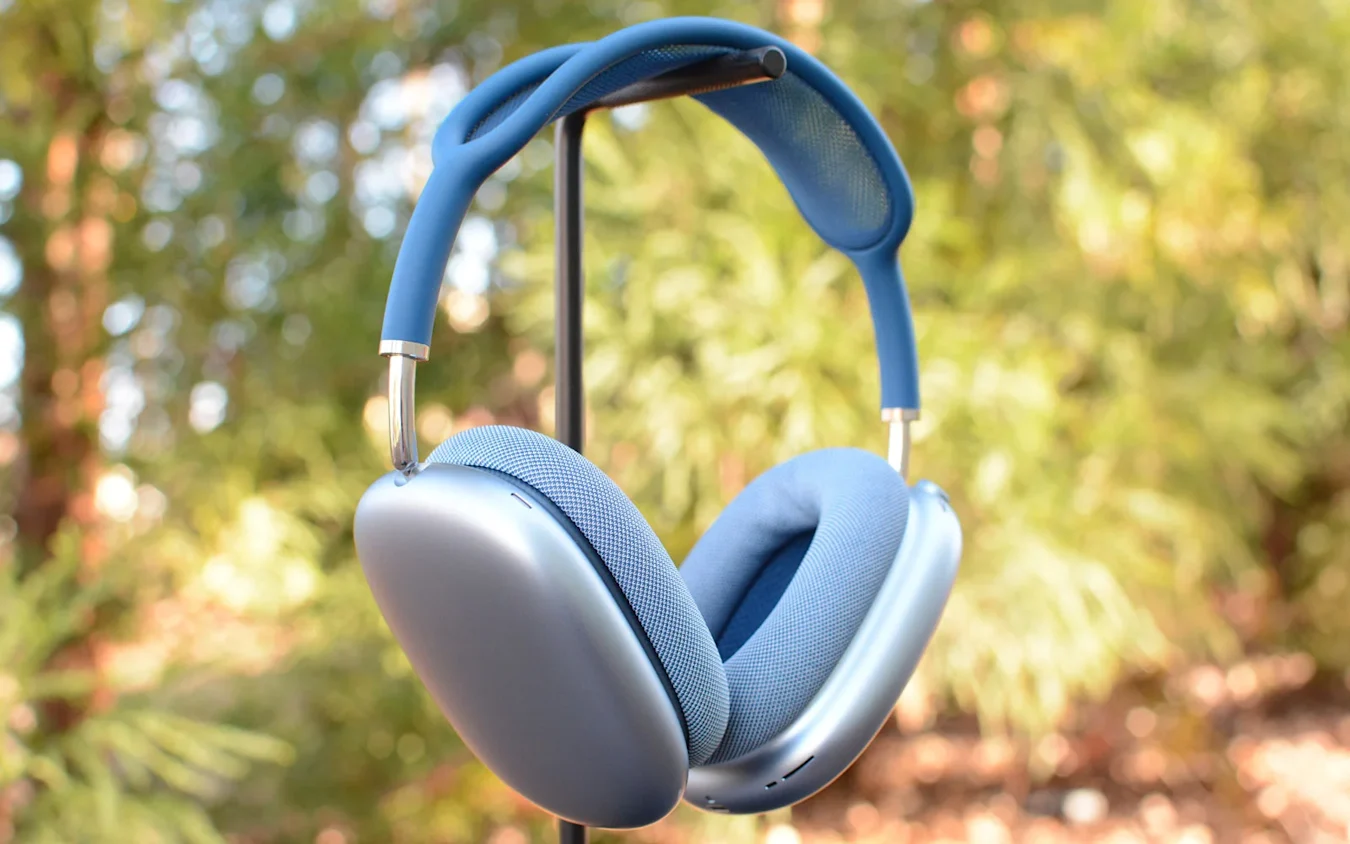
Apple's AirPods Max are $120 off and down to $429, which is the cheapest price we've seen them on Amazon. We gave the headphones a score of 84 for their excellent sound quality, comfortable fit and strong ANC.

Buy Apple AirPods Max at Amazon - $429

Google Pixel Buds Pro

Billy Steele/Engadget

Google's Pixel Buds Pro are back on sale for a record low of $175. We gave them a score of 87 for their deep, punchy bass, reliable touch controls and solid ANC.

Buy Google Pixel Buds Pro at Amazon - $175

Samsung Galaxy Z Fold 4

Engadget

Samsung's Galaxy Z Fold 4 is already $200 off at Amazon, bringing it down to $1,600. The Z Flip 4 also has a discount of $100, so you can pick that one up for as low as $900. Both of these foldables just came out and we gave the Z Fold 4 and the Z Flip 4 scores of 86 each.

Shop Galaxy Z Fold 4 and Flip 4 deals at Amazon

Samsung Galaxy Watch 4

David Imel for Engadget

Samsung has discounted the Galaxy Watch 4 to $200, which is $50 off its usual price. The differences between the Watch 4 and this year's Galaxy Watch 5 are pretty minimal, so you could save a ton by picking up last year's model. We gave it a score of 85 for its attractive design, comprehensive health tracking capabilities and handy WearOS features.

Buy Galaxy Watch 4 at Samsung - $200

Anker Eufy RoboVacs

Anker

Amazon Prime members can save hundreds on Eufy RoboVac robot vacuums right now. The X8 Hybrid mop and vacuum in one is down to $400, or $250 off its normal rate, while the budget-friendly RoboVac 11S is on sale for $140.

Shop Eufy RoboVac sales at Amazon

Samsung T7 Shield

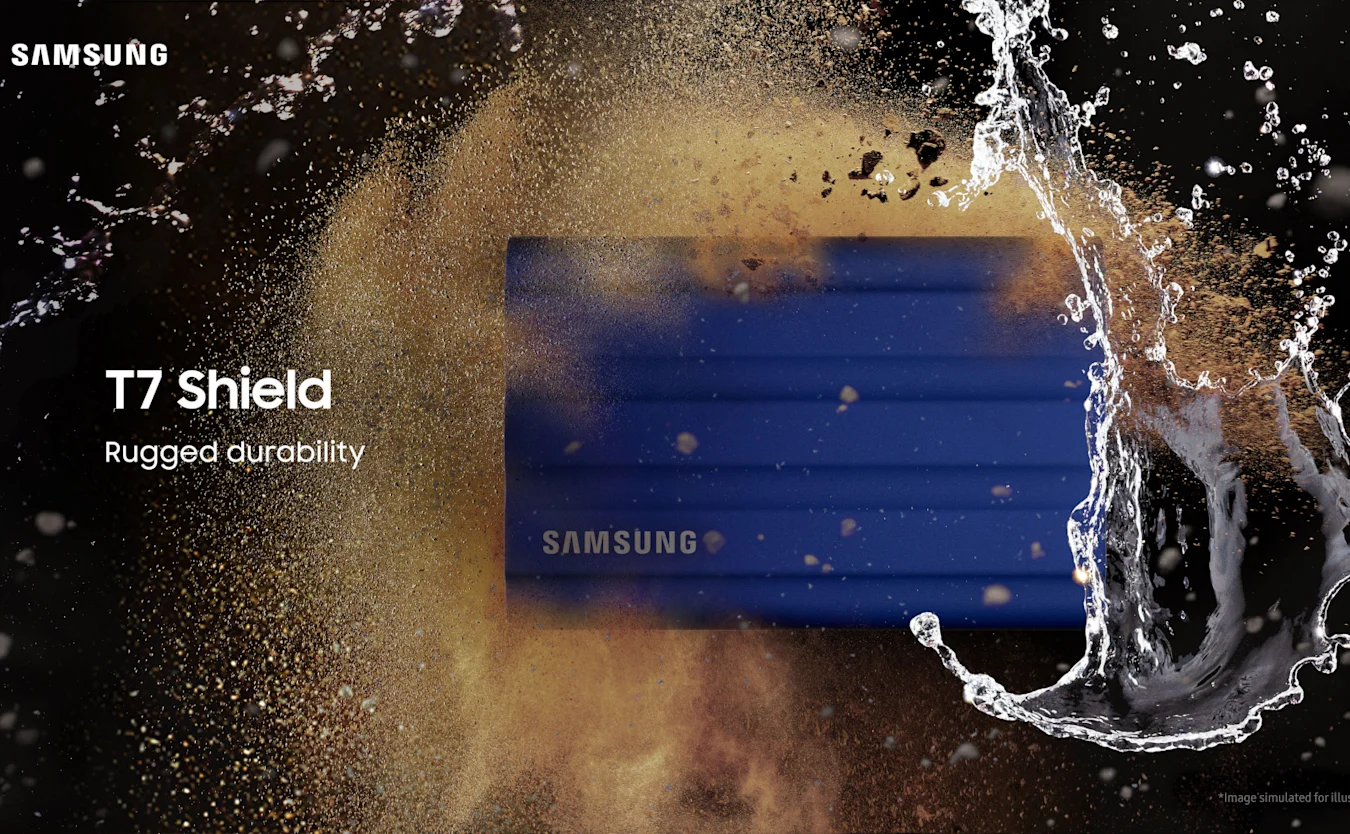
The 1TB model of the Samsung T7 Shield SSD is on sale for $110, which is close to a record-low price. This rugged drive has a tough exterior that can withstand drops from nearly 10 feet, plus an IP65 rating for dust- and water-resistance. It also has the same read/write speeds of the other T7 models and works with a bunch of devices including PC, Mac, Android and even some game consoles.

Buy Samsung T7 Shield at Amazon - $110

Disney+

In honor of Disney+ Day, the House of Mouse has discounted its streaming service to $2 for the first month for new and returning subscribers. That's 75 percent off the normal monthly rate, which is one of the best discounts we've seen even if it only applies to one month of membership. After that first month, your subscription will go back up to $8. You have until September 19th to get this deal.

Subscribe to Disney+ for $2/month

Hulu + Live TV

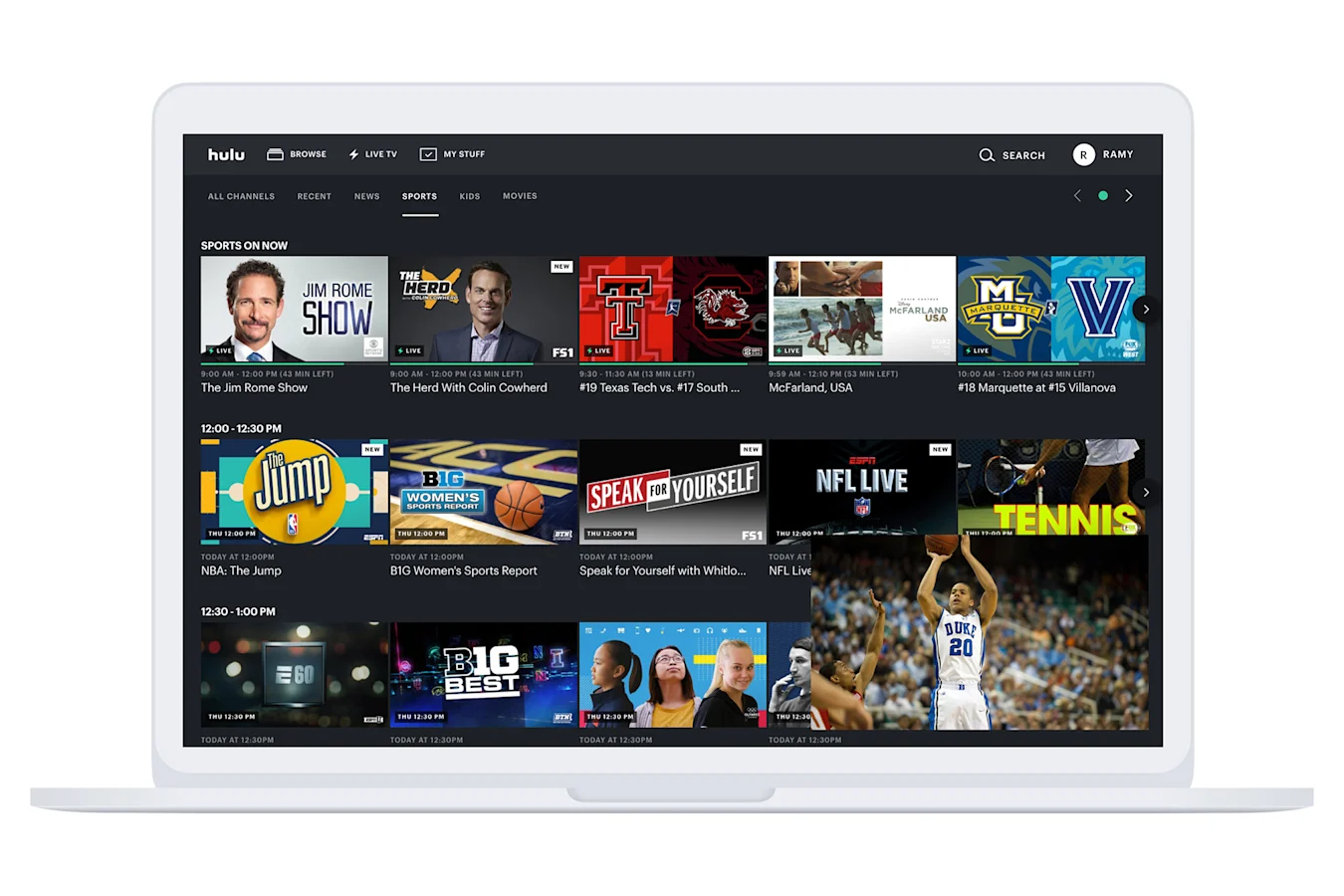
Hulu's latest promotion knocks $20 off its Live TV subscription service for three months for new and returning customers. That means you'll pay $50 per month for the service instead of the usual $70 for the first three months that you're subscribed. You can take advantage of the offer through October 5th, and with it you get live TV access along with standard Hulu streaming as well as access to Disney+ and ESPN+ libraries.

Subscribe to Hulu + Live TV - $50/month

HBO Max

HBO Max has discounted its annual plan, so you can save 30 percent if you sign up and pay for one year upfront. If you can deal with ads, the service will cost $70 for 12 months, down from the usual $100. to get an ad-free experience, you'll pay $105, which is $45 off the usual rate.

Subscribe to HBO Max

ThermoWorks Warehouse deals

ThermoWorks

ThermoWorks has a bunch of warehouse deals available now that are worth considering. The Thermapen is on sale for just over $62, while the cuter, smaller ThermoPop is down to only $21. These are some of our favorite instant-read thermometers, and we like both of them for their attractive yet practical designs and their accurate temperature readings.

Shop ThermoWorks Warehouse deals

Follow @EngadgetDeals on Twitter and subscribe to the Engadget Deals newsletter for the latest tech deals and buying advice.

Apple fixes iOS 16 activation bug affecting iPhone 14 buyers

You might have a rough time activating your iPhone 14. As MacRumorsreports, Apple has fixed an iOS 16 bug that broke activation of iMessage and FaceTime on open WiFi networks. Your brand new device might not work properly out of the box, depending on your situation. You only have to install an iOS 16.0.1 update to address the bug, but you may need to restore the phone with a computer to load the new software.

It's not clear whether Apple will have a solution apart from shipping future devices with iOS 16.0.1. MacRumors says it obtained a company memo indicating the problem was "under investigation," while the support document for the patch only tells users to update. We've asked Apple for comment.

The flaw likely won't last for long and should only affect a small number of users. Still, the timing is less than ideal. The iPhone 14 lineup is just reaching customers as of this writing — their first experience might not be very smooth if they expect to use iMessage and FaceTime on day one.

SteelSeries Arena 9 review: Bringing 5.1 surround sound back to gaming PCs

Once upon a time, desktop computer speakers actually mattered. That was more than a decade ago, long before gaming headsets filled the land and wireless Bluetooth headphones were any good. In the early 2000's, more people also had actual desktops computers chained to desks, so it was worth investing a bit in decent audio. SteelSeries' new Arena 9 surround sound PC speakers reminds me of that era, a time when I eagerly strung cables throughout my dorm room to connect Logitech's legendary Z-680 surround sound speakers. (Apologies for anyone who lived near me. I tried to keep things civil, I swear!)

Luckily, it's not as tough to go surround sound today – though it will still cost you a ton. The $550 Arena 9 connect over USB, so you don't have to worry about a specialized sound card, and they feature wireless rear satellites, which only need to be connected to power and each other. There's no need to string anything to the front speakers. That solves a huge pain point, and it makes the Arena 9 a far more viable option for the cable-averse. But is setting up a surround sound system worth it when gaming headphones are cheaper, more immersive and kinder to your neighbors? You'll have to decide that for yourself.

Assuming you do want to fill your room with speakers, the Arena 9 are notable for existing at all. There aren't many PC alternatives today, and they're mostly several years old, like Logitech's Z906 (released in 2011). You could, of course, set up an amplifier and connect whatever speakers you'd like, but anyone doing that probably isn't in the market for a self-contained kit. SteelSeries is striking a delicate balance between complexity and convenience – for the most part, I think the Arena 9 is a success.

Devindra Hardawar/Engadget

In the box, you'll find two front speakers (both equipped with RGB lighting along their base and rears), two wireless rear satellites, a center channel, a control module, and a 6.5-inch downward-firing subwoofer. The two-way speakers don't exactly feel high-end, but their matte plastic casing should blend in with your keyboards and other PC components. They're also far lighter than I expected, which is rarely a good sign with audio gear. My biggest gripe, though, comes down to the cabling. The front and center speakers are hard-wired to the rear of the subwoofer. From what I can tell, there's no easy way to replace those cables, so you're stuck chucking the entire speaker if something goes wrong (or getting very familiar with soldering). I'd much rather have removable cables instead of superfluous RGB lighting.

SteelSeries

I can understand why SteelSeries chose to include all of its audio inputs behind the subwoofer. It gets more cables away from your desk, and it's a smart place to house the amplifier and power components. But that's also the only place with an aux connection, so you'll need to string a long 3.5mm cable if you want to plug in any other devices. Thankfully, there's also Bluetooth support, which gives you an easy way to wirelessly stream tunes when your computer is off. For devices with digital audio, like the PlayStation 5, you can connect them via an optical cable (there's also optical output port to pass sound to other gear).

Unfortunately, the PS5 can only output 2.1 sound (two front speakers and the subwoofer) over optical or USB. You could upmix that audio across all of your speakers via the control pod, but that would still just be simulated surround. That's a shame for anyone who wants a system that can seamlessly work across their gaming systems and computers. It's also doubly disappointing since the Logitech Z-680 handled Dolby Digital and DTS surround processing from consoles and other devices all the way back in 2003 for just $400. For the price, I'm surprised the Arena 9 can't handle their own decoding.

Devindra Hardawar/Engadget

At least SteelSeries isn't trying to push the Arena 9 as an ideal surround sound system for your home theater. What's notable is that it's the first 5.1 gaming speakers that work over a single USB connection. Typically, PC speakers either rely on three 3.5mm jacks or a digital connection like optical or coaxial. Since it's relying on USB, setup is simple – even for laptop users, who would typically have to get some sort of external sound card to use a 5.1 system.

It only took a few minutes to get the Arena 9's front and center speakers hooked up to the subwoofer, while the rears found homes on bookshelves behind my desk chair. Those took a bit more effort, since I had to find a nearby outlet to power the right rear speaker, as well as string a cable across the floor to the left one. (If you've got a large space, you can also use an extra long RCA cable to connect those speakers.) On my desk, the Arena 9 looks cleaner than the huge KEF Q150 bookshelves I typically use.

Devindra Hardawar/Engadget

I'll be honest, though, I care far more about sound quality than aesthetics when it comes to speakers. Despite their relatively small size and average build quality, the Arena 9 sounds fantastic across games and movies. The opening monster attack in Netflix's The Sea Beast rocked my office with explosions, the sounds of giant waves and the rumble of a pissed off monster. While playing Halo Infinite, I felt fully immersed in every firefight, so much so that I could clearly hear enemies creeping up behind me on the rear speakers. One Halo Infinite match, which equipped everyone with rocket launchers and skewers, sounded like I was front row in a 15-minute long fireworks show.

The Arena 9s are best when you can crank the volume as much as possible – making them ill-suited for apartments and smaller homes. (Do as I say, not as I did.) They’re peppy and energetic enough for games and films with large soundscapes. I would have liked to see a larger subwoofer, though. A 6.5-inch ported unit for a system this expensive just feels limiting. I had to push the subwoofer's volume dial almost to its maximum to get a satisfying amount of low-end punch. A larger sub wouldn't need to work so hard.

Unfortunately, the Arena 9s aren't as well-suited to music, something that seems to be the case for most gaming speakers. They handled some of my typical speaker and headphone testing tracks just fine, like Clint Mansell's "Death is the Road to Awe" from The Fountain, as well as George Benson's “White Rabbit.” But the sound felt trapped by the small front boxes, and the sub was far too boomy for my tastes. Maybe my ears have been spoiled by my KEF speakers, but I would have liked a larger sense of presence from the Arena 9. Flipping on the simulated surround sound, which plays music across all of the speakers, just made the limitations of the entire system all the more clear.

I’ll admit, the Arena 9 have a bit more depth than the Logitech Z-680s, but they can’t touch Klipsch’s classic ProMedia 2.1 speakers when it comes to music. That system is legendary at this point – it was originally released in 2000 (which is when I bought it for college), but the same exact hardware is still being sold today. These complaints won’t matter much if you're focused on gaming, but discerning audiophiles would be better off with a bigger set that's better suited to tunes.

As much as I love great gaming headsets, like SteelSeries’ own Arctis Pro and Nova Pro, there’s something more visceral about having speakers moving the air around you. If you’re a gamer looking for something a bit different, and you have the money and space to spare, the Arena 9 could help you appreciate your favorite titles in entirely new ways. But if you don’t have the freedom to blast your nightly Halo Infinite runs at full volume, it doesn’t make sense to spend $550 on PC surround sound speakers. Get a decent 2.1 system for music, and stick with your headphones for gaming.

Engadget Podcast: Reviewing the iPhone 14, 14 Pro and non-Ultra Apple Watches

So after all the hype last week, are the iPhone 14 and 14 Pro any good? And are the Apple Watch SE and Series 8 worth an upgrade? This week, Cherlynn chats with Devindra about her furious rush to review all of Apple’s latest gear. It turns out the iPhone 14 Pro is a pretty big step forward, but the same can’t be said for the plain 14. Also, they discuss the wider impact of removing SIM cards from this iPhone lineup, as well as the value of the Pro’s new 48MP camera.

Listen above, or subscribe on your podcast app of choice. If you've got suggestions or topics you'd like covered on the show, be sure to email us or drop a note in the comments! And be sure to check out our other podcasts, the Morning After and Engadget News!


Subscribe!


Topics

  • Review of the iPhone 14 Pro and iPhone 14 – 2:10

  • How does the iPhone 14 series stack up against this year’s other phones? – 45:07

  • Apple Watch SE and Series 8 reviews – 48:26

  • A few thoughts on iOS 16 – 54:25

  • Northeastern University VR lab targeted by mail bomb – 56:47

  • Period tracking app Flo gets anonymous mode – 59:22

  • We finally got a trailer for the Legend of Zelda: Tears of the Kingdom – 1:01:11

  • What we’re working on – 1:03:07

  • Pop culture picks – 1:07:31

Livestream

Credits
Hosts: Cherlynn Low and Devindra Hardawar
Producer: Ben Ellman
Music: Dale North and Terrence O'Brien
Livestream producers: Julio Barrientos
Graphic artists: Luke Brooks and Brian Oh

Google's Pixel Buds Pro fall back to an all-time low at Amazon

If you missed the chance to grab Google's Pixel Buds Pro when they went on sale in August, don't worry: The tech giant is giving you another shot at buying the wireless earbuds at a discount. Google's Pixel Buds Pro (in Charcoal and Lemongrass) are currently on sale for $175, or $25 less than their retail price. That's the same price they were listed for the first time they went on sale, and that's also a record low for the model on the website. Seeing as the earbuds only came out a couple of months ago — and they're the first in the line with active noise cancellation (ANC) — that's already a great deal if you've been thinking of getting them in the first place.

Buy Google Pixel Buds Pro at Amazon - $175

We gave the Pixel Buds Pro a score of 87 in our review, where we praised them for having reliable touch controls and a solid ANC. They use a six-core audio chip powered by Google's algorithms for active noise cancellation, and they also have a feature called "Silent Seal" to ensure that they can keep as much ambient noise out as possible. This Silent Seal tool uses sensors to adapt the buds to your ear shape when ANC is on, thereby minimizing sound leaks, as well. 

We also praised the earbuds for delivering a pleasantly punchy bass. And if Volume EQ, which adapts tuning when you adjust loudness, is on, the bass stays punchy even in low volumes. Another thing we liked about the Pixel Buds Pro is that they support wireless charging unlike their predecessors, and they have a quick-charge feature that gives you an hour of ANC listening after just five minutes.

Bottom line, we found the Pixel Buds Pro to be Google's best earbuds to date. They're also the tech giant's most expensive model to date, so you probably wouldn't want to miss this chance to grab them at a lower price. 

Follow @EngadgetDeals on Twitter and subscribe to the Engadget Deals newsletter for the latest tech deals and buying advice.

The Morning After: The Apple Watch Series 8 is the new best smartwatch

Apple is rolling out no fewer than three new smartwatches – and we’ve already spent a week with two of ‘em. While we’re still waiting to put the priciest Watch Ultra through its paces, the $399 Watch Series 8 is now Apple’s best wearable. Crash detection and a new skin temperature sensor for ovulation tracking are the key updates. But dollar for dollar, the new $250 Watch SE seems like a steal. The main features you might miss if you get an SE instead of a Series 8 are the Always On Display (AOD), ECG reader, blood oxygen app and the new skin temperature sensor.

Engadget

If aesthetics are a priority, you may also find the SE’s thicker borders a little off-putting, but it has a larger screen than the last SE model. Both models are available now.

– Mat Smith

The biggest stories you might have missed

Ethereum completes the 'merge' that will make its crypto transactions greener

It now uses 'proof of stake' to approve new transactions.

Ethereum tokens will no longer be minted by "proof-of-work" that uses powerful computers to solve cryptographic tasks. Instead, a new "proof-of-stake" method requires users, called validators, to stake tokens for the chance to approve transactions and earn a small reward. Before now, mining Ethereum (and most cryptocurrencies) demanded vast amounts of energy, and made Ethereum challenging to scale and costly for small transactions.

Continue reading.

Bose QuietComfort Earbuds II review

New tricks deliver improved noise cancellation and other upgrades.

As I wait on upgraded AirPods Pro, there might be another option: Bose has massively improvedhow much sound it can cancel on the QuietComfort Earbuds II, cutting out more everyday noise, including voices. According to Engadget’s Billy Steele, the sound quality is also markedly improved and smaller buds offer a more comfy fit (and less awkward look). At $299, however, they’re still pretty pricey.

Continue reading.

Amazon greenlights 'Blade Runner 2099' sequel series

Ridley Scott will serve as an executive producer.

Amazon

The long-teased Blade Runner sequel series is real. Variety confirms that Amazon has ordered production of a Blade Runner 2099 show for Prime Video, with original movie director Ridley Scott serving as an executive producer. The project could be another ambitious show for Amazon. The first season of The Lord of the Rings: The Rings of Power reportedly cost $465 million to make, but it set a Prime viewing record on its debut.

Continue reading.

Zoom suffered a major outage that may have canceled your video meetings

Oh no, not my Zoom video meetings…

Zoom is recovering from a major outage that prevented users from starting or joining meetings Thursday morning. The company didn't yet have an explanation for the problem but said it had "identified" the cause and will continue to investigate the fault. However, Zoom managed to fix the issue before 12PM ET.

Continue reading.

'Call of Duty: Warzone Mobile' will bring 120-player matches to Android and iOS

'Warzone' is going mobile in 2023.

Call of Duty is doubling down on portable play with Warzone Mobile, a battle royale game heading to smartphones in 2023. The game will support a shared Battle Pass, social features and cross-progression with Modern Warfare II and Warzone 2.0, both of which are due out at the end of 2022. While the game is free, expect microtransactions. In-game purchases were part of Call of Duty: Mobile since its debut in 2019. The studio reportedly made more than $1.5 billion off Android and iOS players in less than three years.

Continue reading.

Apple's MacBook Air M2 is $100 off right now

Apple's MacBook Air M2 blends performance, battery life and a tiny size perhaps better than any previous model, but it's also more expensive. If you've been waiting for a deal, now is a good time to act: The silver 256GB model is on sale at Amazon for $1,099, or $100 off the regular price — matching a deal we saw last month. 

Buy MacBook Air M2 (256GB) at Amazon - $1,100

The MacBook Air hit one of the best Engadget review scores ever for good reason. Apple went to a uniformly thin design with the MacBook Air M2, finally shedding the wedge shape that's existed since Steve Jobs pulled one out of an envelope back in 2008. That makes it more balanced, but also thinner and lighter than ever at 11.3 millimeters and 2.7 pounds — less than an iPad Pro with its Smart Keyboard. 

Apple also managed to slightly increase the size of the 2,560 x 1,664 Liquid Retina screen to 13.6 inches by shrinking the size of the bezels, while nestling the webcam in a (slightly controversial) screen notch up top. It comes with improved speakers and a MagSafe power adapter, along with a pair of USB-C/Thunderbolt 3 ports with support for charging, displays, and data transfers up to 40Gb/s.

Engadget

The M2 processor significantly boosts performance over the Air M1, running nearly as quickly as the 13-inch MacBook Pro M2. It starts rapidly, loads apps quickly and offers snappy performance across the board. And you won't need to sweat if you're far from a power outlet, as it lasted up 16.5 hours in our testing — enough for a plane trip from LA to Sydney. 

Follow @EngadgetDeals on Twitter and subscribe to the Engadget Deals newsletter for the latest tech deals and buying advice.

Microsoft Teams has been storing authentication tokens in plaintext

Microsoft Teams stores authentication tokens in unencrypted plaintext mode, allowing attackers to potentially control communications within an organization, according to the security firm Vectra. The flaw affects the desktop app for Windows, Mac and Linux built using Microsoft's Electron framework. Microsoft is aware of the issue but said it has no plans for a fix anytime soon, since an exploit would also require network access.

According to Vectra, a hacker with local or remote system access could steal the credentials for any Teams user currently online, then impersonate them even when they're offline. They could also pretend to be the user through apps associated with Teams, like Skype or Outlook, while bypassing the multifactor authentication (MFA) usually required. 

"This enables attackers to modify SharePoint files, Outlook mail and calendars, and Teams chat files," Vectra security architect Connor Peoples wrote. "Even more damaging, attackers can tamper with legitimate communications within an organization by selectively destroying, exfiltrating, or engaging in targeted phishing attacks."

Attackers can tamper with legitimate communications within an organization by selectively destroying, exfiltrating, or engaging in targeted phishing attacks.

Vectra created a proof-of-concept exploit that allowed them to send a message to the account of the credential holder via an access token. "Assuming full control of critical seats–like a company’s Head of Engineering, CEO, or CFO — attackers can convince users to perform tasks damaging to the organization."  

The problem is mainly limited to the desktop app, because the Electron framework (that essentially creates a web app port) has "no additional security controls to protect cookie data," unlike modern web browsers. As such, Vectra recommends not using the desktop app until a patch is created, and using the web application instead.

When informed by cybersecurity news site Dark Reading of the vulnerability, Microsoft said it "does not meet our bar for immediate servicing as it requires an attacker to first gain access to a target network," adding that it would consider addressing it in a future product release. 

However, threat hunter John Bambenek told Dark Reading it could provide a secondary means for "lateral movement" in the event of a network breach. He also noted that Microsoft is moving toward Progressive Web Apps that "would mitigate many of the concerns currently brought by Electron."

US border forces are seizing Americans' phone data and storing it for 15 years

If a traveler's phone, tablet or computer ever gets searched at an airport, American border authorities could add data from their device to a massive database that can be accessed by thousands of government officials. US Customs and Border Protection (CBP) leaders have admitted to lawmakers in a briefing that its officials are adding information to a database from as many as 10,000 devices every year, The Washington Post reports. 

Further, 2,700 CBP officers can access the database without a warrant and without having to record the purpose of their search. These details were revealed in a letter Senator Ron Wyden wrote to CBP Commissioner Chris Magnus, where the lawmaker also said that CBP keeps any information it takes from people's devices for 15 years. 

In the letter, Wyden urged the commissioner to update CBP's practices so that device searches at borders are focused on suspected criminals and security threats instead of allowing "indiscriminate rifling through Americans' private records without suspicion of a crime." Wyden said CBP takes sensitive information from people's devices, including text messages, call logs, contact lists and even photos and other private information in some cases. 

While law enforcement agencies are typically required to secure a warrant if they want to access the contents of a phone or any other electronic device, border authorities are exempted from having to do the same. Wyden also pointed out that travelers searched at airports, seaports and border crossings aren't informed of their rights before their devices are searched. And if they refuse to unlock their electronics, authorities could confiscate and keep them for five days.

As The Post notes, a CBP official previously went on record to say that the agency's directive gives its officers the authority to scroll through any traveler's device in a "basic search." If they find any "reasonable suspicion" that a traveler is breaking the law or doing something that poses a threat to national security, they can run a more advanced search. That's when they can plug in the traveler's phone, tablet or PC to a device that copies their information, which is then stored in the Automated Targeting System database.

CBP director of office of field operations Aaron Bowker told the publication that the agency only copies people's data when "absolutely necessary." Bowker didn't deny that the agency's officers can access the database, though — he even said that the number was bigger than what CBP officials told Wyden. Five percent of CBP's 60,000 personnel have access to the database, he said, which translates to 3,000 officers and not 2,700.

Wyden wrote in his letter:

"Innocent Americans should not be tricked into unlocking their phones and laptops. CBP should not dump data obtained through thousands of warrantless phone searches into a central database, retain the data for fifteen years, and allow thousands of DHS employees to search through Americans’ personal data whenever they want."

Two years ago, the Senator also called for an investigation into the CBP's use of commercially available location data to track people's phones without a warrant. CBP had admitted back then that it spent $500,000 to access a commercial database containing "location data mined from applications on millions of Americans’ mobile phones."

Apogee Boom brings its DSP-powered plugins to a budget-friendly audio interface

You might know Apogee for its pocketable headphone or guitar interfaces. Or maybe its microphones. But ask a bedroom producer and most will tell you they know the company for its audio interfaces and software tools. Today, the company unveils the Boom ($300), a new 24-bit/192kHz desktop audio interface with both studio and mobile creators in mind.

Like the popular Duet series, the Boom incorporates a dedicated hardware DSP so it can run Apogee's Symphony ECS channel strip plugin directly on the interface. This can help take a load off of your CPU and also help reduce latency. DSP-enabled interfaces aren’t uncommon, but the Boom is considerably cheaper than most entry-level offerings with similar onboard hardware. A copy of the ECS plugin comes bundled in with the Boom via the companion software. You'll also be able to pick up a "native" (separate/DAW-friendly) copy for half-off - $50 - when you register the device.

The Boom has a pretty standard 2-in/2-out configuration with one XLR-combi input and one 1/4-inch input for instruments. For outputs there’s a pair of 1/4-inch outputs and a headphone jack around the back. The rear placement of a headphone connection always seems a little unhelpful as you fumble trying to find the port, especially if you use your headphones for other things so end up doing this often. There is a gap at the base of the Boom you can feed the cable under which makes things a little neater, but a port on the front seems more practical.

James Trew / Engadget

Fortunately, the Boom is USB-powered so there’s no need for a separate power supply. There is iOS compatibility, too, but given the USB port does double-duty for data and power, this is limited to the iPad Pro as the iPhone won’t be able to drive it, even with a camera-connection kit. Of course, a full-size interface like this doesn’t make much sense for a phone anyway, but in case you were wondering, now you know.

While there's only one XLR input, the pre-amps are plenty loud enough and can drive hungry microphones like the SM7b easily. Using the Symphony plugin's EQ and compressor allows you to fine tune that sound (whatever the mic/instrument). There are a bunch of presets that should cover the most popular recording scenarios, but you can obviously EQ and compress things to your own personal preference, too.

For musicians, this can really help you perfect a mix without having to interfere with any plugins you might have running in your DAW. But for podcasters and streamers in particular it means you can control how your voice sounds without a DAW or other host application running at all — your mic simply presents the EQ'd signal as the standard output. For now it's only Apogee's ECS channel strip that will work with the Boom, though the company confirmed it's entirely possible for its other plugins to be brought over to the DSP side of things.

Apogee’s desktop products often feature a sleek design and the Boom is no different. The purple-colored steel casing gives it some reassuring heft while the single rotary dial is a neat solution to controlling multiple things (two channels of gain and two effects).

At $300, it’s a shade over some of the most popular interfaces like the Scarlett 2i2 and UA Volt - both of which come in under $200. However, with that DSP Apogee might be pitching this as a simpler alternative to the like of the Apollo Solo ($499) also from Universal Audio or the MOTU UltraLite-MK5 ($595).