Next year’s iPhone could introduce a change to Apple’s naming convention. According to Bloombergreporter Mark Gurman, the company could call its largest and most expensive device in 2023 the iPhone 15 Ultra instead of the iPhone 15 Pro Max as you would expect given its recent track record. The shift would reportedly coincide with the most significant redesign of the iPhone since Apple released the iPhone 12 in 2019. Gurman expects the iPhone 15 to feature USB-C, among other “bigger changes.”
Apple’s smartphone line has seen a couple of branding tweaks over the years. In the early days of the iPhone, when the company released a substantial update every two years, iterative models carried an “S” designation. Since 2019 and the diversification of the line to include separate mainstream and premium variants, the company has employed “Pro” and “Pro Max” designations to market its most advanced phones. Moreover, earlier this year saw the return of the Plus branding, which Apple had not used since 2017. Dropping Pro Max in favor of Ultra would make a lot of sense since the Apple Watch line now includes an Ultra model.
The iPhone 15 rumor mill has already produced a few interesting predictions. Gurman previously reported that Apple was testing USB-C iPhones ahead of the European Union implementing a law requiring all new smartphones made after 2024 to feature the port. More recently, display analyst Ross Young said the entire iPhone 15 line would feature the iPhone 14 Pro’s Dynamic Island display cutout.
Looking to the more immediate future, Gurman also wrote today that Apple might not hold another event this fall. He says the company plans to announce new Mac mini, MacBook Pro and iPad Pro models before the end of the year. However, as those will be primarily iterative updates to existing devices, Gurman suggests Apple is “more likely” to share the existence of those products with the world through a series of press releases.
Don't panic that you might miss out on tonight's potentially legendary match-up between the Yankees and Red Sox just because it's on Apple TV+ — there's a good chance you can tune in for free. Apple is streaming the game at no charge as part of its weekly Friday Night Baseball feature, with coverage starting at 6:25PM Eastern and the action starting in earnest at 7PM. It'll require a little bit of work and a compatible device, but you too can see if Aaron Judge will break Roger Maris' American League home run record. Here's how to watch.
You'll need to either sign into or create a free Apple ID account at the Apple TV+ website or a supporting app. You may be prompted to add a credit card, but Apple won't charge you for this or any Friday Night Baseball game. The service is available on the web for Android- and computer-based viewers. iPhone, iPad and Mac users can also try the native app.
You also have many choices for watching in the living room. On top of Apple TV boxes, you can also tune into the Yankees-Red Sox game using the app for recent smart TVs from Samsung, LG, Sony, HiSense, Panasonic and Vizio. PS4, PS5, Xbox One and Xbox Series X/S owners can also watch, as can people with Fire TV, Google TV and Roku media players. Receivers for Comcast's Xfinity and T-Mobile's Magenta TV similarly offer Apple TV+ apps.
Millions of New Yorkers paid their cable bills expecting to see live sports programming. Denying them the chance to watch Aaron Judge step up to the plate to make history tonight is wrong and unfair.
The free viewing might just head off some controversy. New York State Attorney General Letitia James has been worried enough about the TV+ exclusive to issue a statement asking Apple and the MLB to make the game available on the Yankees-oriented YES Network, calling the deal "wrong and unfair." However, James incorrectly claimed people need to "pay extra" to watch — if you're reading her press release or tweet (i.e. you have internet access), you can stream the potentially history-making showdown at no charge. The exclusive is only really a problem if all your devices are too old to use either the app or the web client.
If you're an Apple or Samsung fan, you have a lot of discounted gadgets to choose from this week. Apple's base iPad remains on sale for $280, or you can pick up the 12.9-inch iPad Pro for a record low of $900. On the Samsung side, the 1TB T7 Shield SSD is back on sale for only $100, and you can still get up to $200 off the Samsung Galaxy Z Fold 4. And if you're on the market for a new smart display, Amazon has discounted both its Echo Show 8 and Echo Show 5 models. Here are the best tech deals from this week that you can still get today.
2021 Apple TV 4K
Devindra Hardawar/Engadget
The Apple TV 4K is down to a near record low of $120 right now. It's our favorite high-end streaming device thanks to its support for 4K HDR content with Dolby Vision, plus its excellent, redesigned Siri remote.
Apple's entry-level iPad has dropped to an all-time low of $280. We gave it a score of 86 for its solid performance, excellent battery life and improved Center Stage cameras.
The latest 12.9-inch iPad Pro remains on sale for $200 off, so you can grab one for as low as $900. We gave the tablet a score of 87 for its M1 chipset that provides incredible performance, its gorgeous screen and the new Center Stage cameras.
If you're willing to go for an older model, the MacBook Air M1 is on sale for $850 right now, which is close to its all-time-low price. As one of Apple's first machines with the M1 chipset, it impressed us when it first came out with its blazing fast performance, excellent keyboard and trackpad, plus its lack of fan noise.
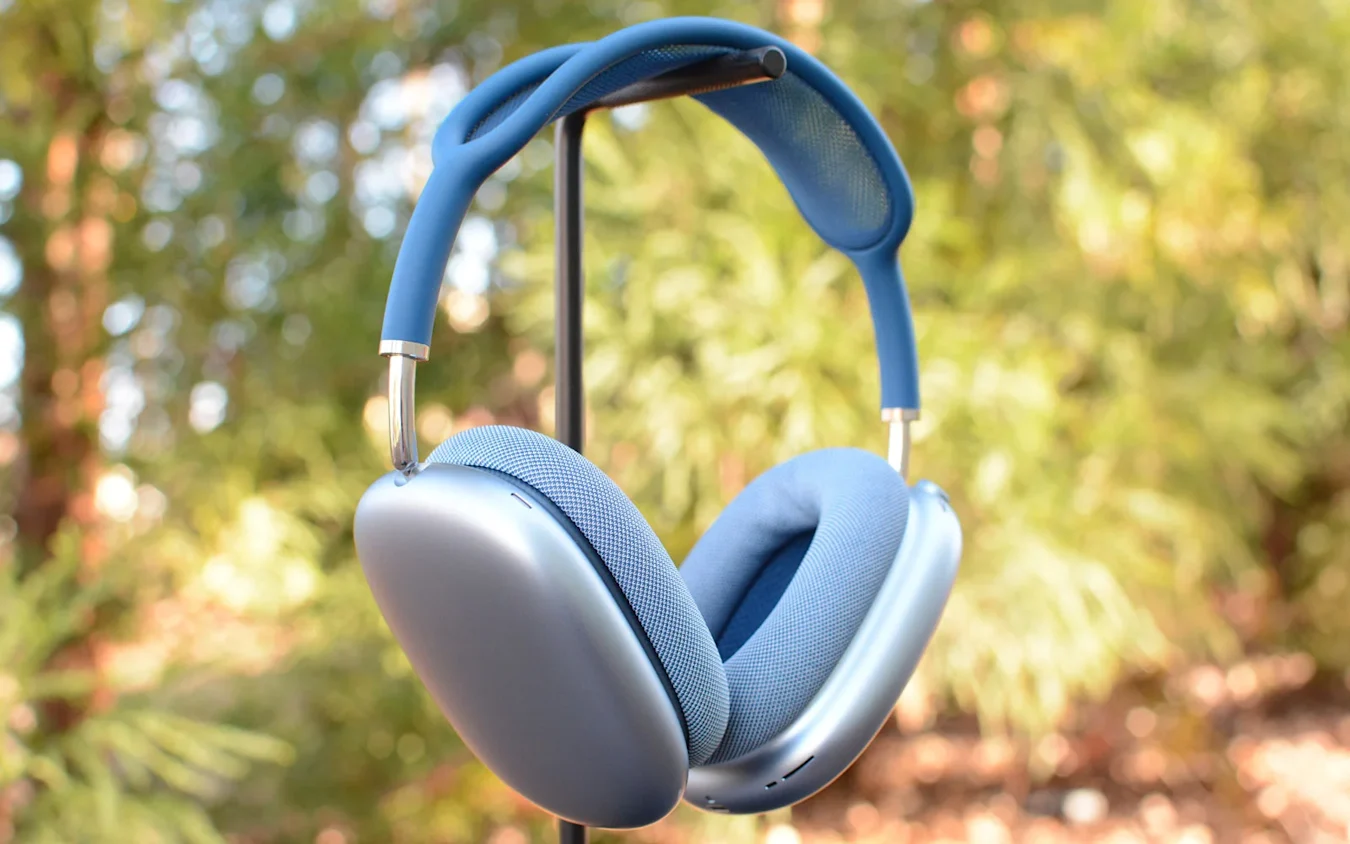
Apple's AirPods Max are $120 off and down to $429, which is the cheapest price we've seen them on Amazon. We gave the headphones a score of 84 for their excellent sound quality, comfortable fit and strong ANC.
Amazon's mid-sized smart display is down to a near record low of $80. We gave it a score of 87 for its improved cameras for video chatting, its solid sound quality and its minimalist design.
The Echo Show 5 is more than half off right now and down to only $40. This is one of our favorite small smart displays, in part because its size makes it a great alarm close. We like its simple design, good sound quality and its tap-to-snooze feature.
The 1TB model of the Samsung T7 Shield SSD is back on sale for $100, which just about the best we've ever seen. This rugged drive has a tough exterior that can withstand drops from nearly 10 feet, plus an IP65 rating for dust- and water-resistance. It also has the same read/write speeds of the other T7 models and works with a bunch of devices including PC, Mac, Android and even some game consoles.
Samsung's Galaxy Z Fold 4 is already $200 off at Amazon, bringing it down to $1,600. The Z Flip 4 also has a discount of $100, so you can pick that one up for as low as $900. Both of these foldables just came out and we gave the Z Fold 4 and the Z Flip 4 scores of 86 each.
HBO Max has discounted its annual plan, so you can save 30 percent if you sign up and pay for one year upfront. If you can deal with ads, the service will cost $70 for 12 months, down from the usual $100. to get an ad-free experience, you'll pay $105, which is $45 off the usual rate.
Amazon's Echo Show smart displays with Alexa voice control are already a good value next to the competition, but a bunch of deals are making them even cheaper. The Show 5 is the best one, on sale right now for just $40, or 53 percent off the regular price. And if you want a larger screen, you can find great deals on the Show 8 and Show 15 — including a free Show 5 with the latter.
The Echo Show 5 scored a very solid 85 score in our Engadget review, as it's small size is ideal if don't have a ton of space on your desk, nightstand or countertop. It has a 5.5-inch, 960 x 480 resolution display that shows things like weather forecasts, calendar events, photos and more.
The 2MP camera can be used to video chat with friends and family, but it can also be used as a makeshift security camera of sorts. And if you prefer you're concerned about privacy, the Show 5 has a built-in camera shutter and mic mute button. It was already a good deal at $85, but at $40, it's a no-brainer. And if you're thinking of getting that model for a youngster, the Echo Show 5 Kids with parental controls is also on sale for $50, or 47 percent off the regular $95 price.
Engadget
If it's a larger screen you're after, the Echo Show 8 also scored high in our review, thanks to the elegant minimalist design, vibrant 1,280 x 800 resolution display and handy video calling functionality. The digital pan-and-zoom face-tracking feature follows you while you move around to keep you in frame, and works with every video calling app out there. It also offers stereo speakers, making it one of the best-sounding smart displays available. You can pick one up for $80, just above the lowest price we've seen.
With a big 15-inch screen, the Echo Show 15 is the big daddy of Amazon's smart display products. You can of course use it to control compatible smart home devices and link it to Echo speakers for richer audio. Family members can have their own profiles, using voice ID and face-recognition to access personalized content like reminders, appointments and music. The only downside is that it doesn't come with a stand as it's meant to be wall mounted. Still, you can grab one for $250 (an $85 discount), and Amazon is throwing in a free Echo 5 to boot.
Apple released its latest iPhone lineup and mobile platforms earlier this month, and a couple of annoying bugs quickly made themselves known to users. The good news is that the tech giant has quickly whipped up patches to fix the issues and has now released them as part of the iOS 16.0.2 update. One of the problems the update solves is the iPhone 14 Pro's compatibility troubles with third-party apps that use its camera, such as Instagram, TikTok and Snapchat.
Users found that when they fire up those apps and use the device's rear cam, the camera view shakes on screen and the phone emanates grinding and rattling noises. In its patch notes, Apple said the update fixes an issue wherein the "[c]amera may vibrate and cause blurry photos when shooting with some third-party apps on iPhone 14 Pro and iPhone 14 Pro Max." The company didn't elaborate on the cause behind it, but it's possible that the apps weren't meshing well with the device's optical image stabilization system, causing the rattling noises.
Another troublesome problem the update fixes is the persistent appearance of permission prompts when trying to copy and paste content between apps. Apple senior manager Ron Huang previously admitted that it was "absolutely not expected behavior" and said the company was dealing with it. iOS 16.0.2 will get rid of other bugs, as well, including one that causes the device's display to go black during setup and another that renders the touch input on some iPhone X, iPhone XR and iPhone 11 displays to be unresponsive after they're serviced.
Felix Krause's discovery that Meta's Facebook and Instagram apps can track iPhone owners across websites hasn't sat well with some people. Bloombergreports users have filed two proposed class action lawsuits accusing Meta of evading Apple's privacy-oriented App Tracking Transparency (ATT) feature and consequently violating both federal and state laws barring unauthorized data gathering. Meta supposedly created a workaround by injecting tracking code into websites when you use its in-app browser, letting it monitor activity regardless of whether or not you gave permission to the app.
Apple introduced App Tracking Transparency as part of the iOS 14.5 update released in April 2021. The technology lets you ask apps not to track you, and requires that you explicitly opt in. Meta has been vocal in its opposition. It encouraged users to allow tracking, and warned that ATT might cost it $10 billion in ad revenue this year.
Meta rejected the allegations in a statement to Engadget. The company said both lawsuits were "without merit," and that it would defend itself "vigorously." It further claimed its in-app browsers honor privacy decisions, including for ads.
The lawsuits aren't certain to obtain class action status, which could lead to compensation for many users. Whether or not the suits are successful, they illustrate the tension between Meta, Apple and privacy advocates — Meta is determined to preserve the targeted advertising that fuels its business, even as critics and rival companies raise more objections.
Starlink satellite internet access has already spread to boats and RVs, and now it might accompany your child on the way home from class. SpaceX told the FCC in a filing that it's piloting Starlink aboard school buses in the rural US. The project would keep students connected during lengthy rides (over an hour in the pilot), ensuring they can complete internet-related homework in a timely fashion even if broadband is slow or non-existent at home.
The spaceflight company simultaneously backed FCC chair Jessica Rosenworcel's May proposal to bring WiFi to school buses, and said it supported the regulator's efforts to fund school and library internet access through the E-Rate program. To no one's surprise, SpaceX felt it had the best solution thanks to rapid satellite deployment, portable dishes and fast service for the "most remote" areas.
We've asked the FCC and SpaceX for comment, and will let you know if they respond. The pitch comes just two months after the FCC cleared the use of Starlink in vehicles, noting that it would serve the "public interest" to keep people online while on the move. The concept isn't new — Google outfitted school buses with WiFi in 2018 following tests, for example.
There's no guarantee the FCC will embrace SpaceX and fund bus-based Starlink service. The Commission rejected SpaceX's request for $885.5 million in help through the Rural Digital Opportunity Fund, and the firm responded by blasting the rejection as "grossly unfair" and allegedly unsupported by evidence. Satellite internet service theoretically offers more consistent rural coverage than cellular data, though, and Starlink competitors like Amazon's Project Kuiper have yet to deploy in earnest.
Verizon (Engadget's former owner) is finally overhauling TracFone's service following the 2020 acquisition, and the reborn service might pique your interest in the right circumstances. The newly launched Total appears built to compete against big prepaid carriers like AT&T's Cricket and T-Mobile's Metro. In addition to more competitive rates than Verizon's self-branded option (more on that later), you'll also get a few new perks. Every plan offers 5G and unlimited calling and texts to Canada and Mexico, while unlimited plans now include a Disney+ subscription at either six months for the $50 plan or indefinitely with the $60 tier.
Service starts at $30 per month (you get 5 percent off with auto-refills) with 5GB of fast data and 5GB of hotspot data. A $0 plan provides 15GB of speedy data with matching hotspot support. The $50 unlimited plan caps you at 10GB of hotspot data, but the $60 offering bumps that to 20GB while also providing ultra-wideband 5G. Additional lines are $35 each, and international roaming is available if you have two or more lines on at least the $40 plan.
Whether or not this is a good value depends on what you're looking for. Total is a better overall bargain than Verizon's self-branded prepaid service. That doesn't dip to $30 per month unless you've been with the carrier for three months ($25 after nine months), and Verizon is generally stingier with freebies. No plans include Disney+ for longer than six months, and you have to spend at least $50 per month ($35 after nine months) to get unlimited calls and texts with Canada and Mexico. Video streaming is typically limited to 480p, but you can contact support to remove that ceiling.
Rival providers are another story. Total is usually more enticing than Cricket, with greater benefits even at $30 per month — Cricket doesn't even enable 480p video streaming until you spring for the $55 unlimited plan. The bundled HBO Max and 150GB of cloud storage in Cricket's $60 level ($55 with auto-pay) might reel you in. With Metro, it's more complicated. While the $30 5GB package is no-frills, you only need to shell out $40 to get unlimited data and a year of Spanish-language ViX+ streaming. Metro asks you to spend a minimum $50 per month to get hotspot data (and just 5GB at that), but that outlay also gives you a 100GB Google One subscription. Jump to $60 and you also get an Amazon Prime membership that could easily pay for itself.
Total isn't a surefire hit as a result. However, it does make Verizon considerably more attractive to the no-contract crowd than before. It may also be alluring if you want Disney+ and don't expect to switch carriers any time soon, particularly in light of upcoming price hikes for standalone subscriptions.
It's long been possible to make extremely small robots, but they usually need some form of direct external control just to operate. Cornell scientists may have solved that problem on a basic level, however. They've created microrobots (no more than 250 micrometers across) with basic electronic "brains" that let them walk autonomously. Two- and six-legged robots move relatively simply, while a four-legged "dogbot" changes speed when an operator sends laser pulses.
The trick was to build a complementary metal-oxide-semiconductor (or CMOS, as computer enthusiasts know it) clock circuit whose signal produces phase-shifted square wave frequencies that set the gait of the robot's platinum-based legs. Photovoltaics control both the legs and the circuit. The design is far from complex at just 1,000 transistors (for context, a GeForce RTX 4090 has 76.3 billion), and it's still large enough that it effectively serves as the robot's body. However, even that is an achievement — the exceptionally low power demands saved Cornell from having to use relatively gigantic photovoltaics.
These inventions are a far cry from the more sophisticated large-scale autonomous robots you see today. They can move forward, but not much else. The researchers see this as just a beginning, though. They believe future microrobots could be crucial to healthcare, where they could perform internal surgery and clean your arteries. Elsewhere, they could detect chemicals and eliminate pollutants. Any such bots are likely years away, but this project suggests they're technically possible.
Three years ago, Apple finally gave the people what they wanted: active noise cancellation (ANC) in a set of AirPods. That first-generation model retained the overall look of the company’s classic earbuds, but added an ear tip for noise isolation along with a better fit. After a total redesign of the “regular” AirPods last year and introducing some over-ear noise-canceling headphones in 2020, Apple finally unveiled its latest premium earbuds alongside the iPhone 14: the second-generation AirPods Pro ($249).
For version 2.0, Apple hasn’t totally re-written the formula. If you were hoping for an updated design for the new AirPods Pro, Apple surely left you disappointed. Instead of a complete overhaul, the company focused instead on the internals, adding several new features and refining what was already there with the help of some new silicon. So, even though Apple didn’t abandon its aesthetic, these AirPods Pro are still vastly different from the previous edition.
Design
We’re now on our fifth set of earbuds from the company and so far it has only tweaked the look of the “regular” AirPods – and that wasn’t until gen three. Even then, the company kept its stickbuds look, a polarizing design element that has become the hallmark of Apple’s true wireless lineup. Expecting the folks in Cupertino to ditch the stem at this point is likely an exercise in futility, but hey, I welcome Apple to prove me wrong.
Even with the familiar look, there are some small but significant changes. First is something you can’t see: the new swipe gesture. The AirPods Pro stem is still clickable for the core controls (play/pause, skipping tracks, sound modes and Siri), but now the side of that panel accepts swipes. This touch gesture is used to control volume and is mirrored on both sides. Unfortunately, you can’t just swipe it or the earbud will fall out of your ear; you have to use your thumb to brace the stem, just like you would if you were going to press the main button. One addition you can see is the extra small (XS) ear tip size that will improve the fit (not to mention passive noise reduction) for even more people. It’s notable Apple is adjusting these AirPods for small ears in an effort to boost overall performance and comfort.
The other key design changes have to do with the AirPods Pro charging case. First, it has a built-in speaker this time around, making it easier to hear pings when you’re looking for the earbuds or activate tones for low battery, charging and pairing. Accordingly, the grille is now visible on the bottom edge. The case is IPX4 rated just like the AirPods Pro, meaning it, too, is sweat and water resistant. Additionally, there’s now a lanyard loop on one side. In true Apple fashion, there isn’t one included in the box, so the added convenience will cost you more money. The company currently sells a lanyard in its online store from Incase for $13, but you can expect other accessory makers to offer alternatives soon enough.
Software and features
Billy Steele/Engadget
All of the features for the AirPods Pro are baked into iOS, so there’s no need to download a separate app to make changes. For this reason, the earbuds seamlessly pair with your phone when you open the case and tap the on-screen pop-up. Just like before, you can quickly access noise cancellation, transparency, spatial audio and head tracking with a long press on the volume slider in the Control Center.
In iOS 16, there’s now a shortcut in the main view of your iPhone settings, saving you the extra taps through the Bluetooth menu. Once you make it to the AirPods Pro settings page, you’ll see battery figures for the earbuds and the case (one number for both). Noise control options for ANC, transparency and turning both off are just below with the ability to reconfigure the long press to activate Siri rather than cycle through those sound modes. Apple’s ear tip fit test also lives in this menu, as do sliders for disabling Adaptive Transparency, in-ear detection, charging case sounds optimized charging and Find My.
Apple has offered Adaptive EQ before, but a new feature for the second-generation AirPods Pro is Adaptive Transparency. This helps when you’re in ambient sound mode by applying a level of noise reduction to loud noises like a siren or a jackhammer. When you sync the AirPods Pro with your Apple Watch, the Noise app will show you how many decibels the earbuds are suppressing in real time. What’s more, that info is then sent to the Health app so you can track auditory exposure levels. Indeed, the AirPods Pro allows you to still hear these things (you’ll want to know about an approaching siren after all), but it noticeably reduces their harshness in the best interest of your ears.
Billy Steele/Engadget
Another new feature Apple introduced on the AirPods Pro is Personalized Spatial Audio. From this main settings menu, you can initiate the process of tuning the device to your ears, which Apple says will improve the immersive quality of Spatial Audio with more accuracy and clarity for dirational elements in movies, TV shows and videos. To set it up, you create a personal profile with the front-facing TrueDepth camera on an iPhone. After taking a scan of your face and ears, your phone does the rest.
It’s similar to setting up FaceID, only you capture the sides of your head too. Sony does a similar thing to tailor 360 Reality Audio to each person with a phone camera and a quick scan. Personalized Spatial Audio will also be available on the first-gen AirPods Pro in addition to third-gen AirPods and AirPods Max. And once you configure it, the sound profile syncs across your iPhone, iPad, Mac and Apple TV
The upgraded charging case houses a U1 chip that enables Precision Finding in Find My. Until now, you got a general location for a missing AirPods case. But with the AirPods Pro, Apple offers direction and distance info like it does for AirTags. As a refresher, U1 is the company’s ultra wideband chip that’s been in every iPhone since the 11 for precise location capabilities. The component does the same thing it’s doing for the new AirPods Pro case on AirTags.
H2 chip
Billy Steele/Engadget
Apple’s H1 chip has powered its earbuds and headphones, including Beats products, for years now. The component handles everything Adaptive EQ and active noise cancellation to hands-free Siri. However, every good piece of tech runs its course and on the new AirPods Pro, Apple is introducing the H2. The company says that the new chip not only offers improved sound quality and improved ANC, but it handles new features like Adaptive Transparency.
H2 is more powerful, but it’s also more efficient. With Adaptive Transparency, for example, the chip is capable of on-device processing 48,000 times per second to recognize and quiet those harsh noises you may encounter. For ANC, Apple says H2 can run algorithms that weren’t possible before on devices as small as AirPods. So, when coupled with the drivers, vents and microphones, AirPods Pro cancels double the noise as the first-gen model. H2 also boosts Adaptive EQ with algorithms for improved and more consistent audio performance and works to help you sound more natural when you’re hearing yourself speak in transparency mode.
I know, that’s several claims of performance boosts in a variety of areas. But all you really need to know is that the new H2 chip makes everything possible that Apple has either added, improved or refined since the 2019 model.
Sound quality
Billy Steele/Engadget
Inside the new AirPods Pro, Apple says new algorithms, amplifier, driver and transducer combine for “richer” sound, increased clarity and consistent performance across volumes and frequencies. It’s a lot of audio jargon, but what you need to know is that the overall sound quality of the second-gen model is massively improved from the first version. Apple wasn’t lying when it promised music would sound better at lower volumes. Even when I turn down the levels, the spacey shoegaze and post-hardcore riffs of The Darling Fire still cut through clean. The band’s atmospheric sound remains intact rather than being compressed down to a muffled murmur. It’s seriously impressive what this new model can do with quieter volume, right down to the bass.
What Apple has done with regular volume is great too. The overall sound is indeed richer with more depth, clarity and a wider soundstage to create a fuller listening experience. The echo on the snaps and the sustain on the low, boomy synth on Lorde’s “Royals” are on equal footing, but at opposite ends of the frequency range. This keeps the track airy and dimensional, showcasing subtle nuance in both sounds. The sound isn’t just immersive, it’s more detailed too.
When it comes to Personalized Spatial Audio, I actually prefer what the AirPods Pro offer out of the box. Once I scanned my face and ears, the customized sound profile was too heavy on the treble for my taste. Music sounded a bit less immersive and thundering or bombastic elements of movies were slightly muted. Spatial Audio benefits movies and shows more than music anyway, unless you’re listening to one of Apple’s live concerts that was specifically captured for the format. Switch on dynamic head tracking and Luke Combs’ recent Apple Music performance sounds much more lifelike. Songs are noticeably louder and clearer in Spatial Audio even without head tracking, but the directional element gives things more of a “live” feel with a band on stage.
The new personalization feature can’t be turned on with a tap either. Once you set up Personalized Spatial Audio, it’s always active, and if you want to stop using it, iOS deletes your profile. To use it again, you have to repeat the scanning process. Apple argues you won’t need to go back and forth because you’ll want it on all the time. I think it would be good to have the option of toggling it on for movies, for example, but being able to use regular Spatial Audio for music.
I also have to mention Apple’s transparency mode. I don’t understand why no other company comes close to AirPods on ambient sound, but the truth is Apple has the most natural sounding audio here. I first noticed it on the AirPods Max, but the new AirPods Pro are just as impressive. You can keep these in during a meeting and it sounds like you’re not even wearing them. You’ll notice the AirPods Pro when you start to speak because your ears are plugged, but that’s about it. It’s the best transparency mode you’ll find on earbuds, and the closest competition is still a ways behind.
Apple has also improved SharePlay audio, so when you’re watching something with a friend, you can now expect 48kHz “cinema quality” audio. I don’t recall any issues with how things sounded like before, but I can tell you that House of the Dragon remains pristine when the audio is beaming audio to two sets of AirPods.
Call quality
Billy Steele/Engadget
Most earbuds can only muster speakerphone-quality audio for calls, and the AirPods Pro do a slightly better job that most of the competition. You won’t sound crystal clear, but the voice performance doesn’t immediately indicate you might be speaking into a phone that’s resting on your desk. The AirPods Pro also do a decent job with background noise, quieting but not all-out silencing things like white noise machines. The best call quality I noticed with Apple’s new is in FaceTime, which shouldn’t come as a surprise.
Group FaceTime calls already had Spatial Audio, but Apple has added dynamic head tracking to the video chat app too. With the newer AirPods models, you can get an even more realistic sense of being in the room with people instead of just conversing virtually. Personalized Spatial Audio also works in FaceTime, so if you enjoy that bit of customization, it will also be applied to your group chats. When you pair Apple’s immersive sound with the natural audio in transparency mode, you only really notice you’re wearing earbuds when you’re speaking. Again, that’s due to your plugged ears.
Battery life
When it comes to battery life, Apple says you can expect up to six hours with ANC on or up to seven hours with noise cancellation disabled. There are three additional charges in the new case which can now be replenished with an Apple Watch charger in addition to MagSafe and Qi-certified accessories or a Lightning cable. If you find yourself in a pinch, five minutes in the case will give you up to one hour of use. The company explains that Personalized Spatial Audio and dynamic head tracking decrease overall listening time by 30 minutes and that you can expect up to 4.5 of purely talk on calls.
During my tests, I managed six hours and fifteen minutes of use with a mix of noise cancellation, transparency mode and calls. That’s more than the previous generation (4.5 hours) and it’s on par with most of the competition these days. Sure, some companies offer 10-plus hours on a charge, but the average is around five to seven for the noise-canceling products I’ve tested. More battery life would always be nice, but the six or seven hours Apple musters is enough to get you through the workday if you take a short break.
The competition
Billy Steele/Engadget
Like Google and Samsung, Apple reserves the best features on the AirPods Pro for the iPhone, iPad and Mac faithful. You can use these earbuds on other devices, but you won’t have access to things like hands-free Siri and Spatial Audio. For that reason, Apple’s buds aren’t really in direct competition with Pixel Buds and Galaxy Buds as all three companies have created a walled garden that rewards loyal customers with the best their audio products have to offer.
If supreme ANC is your goal, the Bose QuietComfort Earbuds II are your best bet. Bose’s latest true wireless product is smaller and more comfortable, with massive upgrades to both overall audio and noise canceling performance. They’re pricey at $299 and they lack basic features like multipoint connectivity and wireless charging. For pure sound quality, look at the Sennheiser Momentum True Wireless 3. The company is consistently at the top in terms of audio performance and that continues with its latest model that debuted this spring. Lastly, if a load of convenient features are what you’re after, Sony’s WF-1000XM4 has a full suite of tools. Other headphone companies have started to ape Sony’s spec sheet, but things like Speak-to-Chat automatic pausing when you speak and location-based sound settings still come in handy.
Wrap-up
Apple’s noise-canceling earbuds were way overdue for an update. While the company didn’t see the need to change the overall design, it did extensive upgrades on the inside, introducing new features and improving performance along the way. Importantly, it made all of these changes while keeping the price at $249. Things like improved audio, more powerful ANC, Adaptive Transparency and even the upgrades to the charging case make the new AirPods Pro a worthwhile update to a familiar formula. Let’s just hope we don’t have to wait another three years for a full redesign.