Posts with «technology & electronics» label

The best October Prime Day deals on Amazon devices we could find

Amazon Prime Day is the best time of the year to pick up a gadget made by Amazon. We saw record-low prices at the first Prime Day back in July, and many of those discounts have returned for the new fall sales event. Most of Amazon's most popular devices are on sale again, including Echo speakers, Kindle e-readers. and Fire TV gadgets, plus you'll find. great discounts on Amazon-owned gadgets like Eero routers and Blink security cameras. Here are the best deals on Amazon devices that you can get during the Prime Fall Deal Event.

Shop Amazon device deals


Echo Show 5

The Echo Show 5 is on sale for $35, or a whopping 59 percent off its usual price. If you want a smart alarm clock, this is the smart display to get. We like its sharp 5-inch display, ambient light sensor, smart home controls and tap-to-snooze feature.

Buy Echo Show 5 at Amazon - $35

Echo Show 8

The Echo Show 8 smart display has dropped to a record low of $70. It earned a score of 87 from us for its attractive design, stellar audio quality and improved camera for video calls.

Buy Echo Show 8 at Amazon - $70

Echo

Amazon's Echo smart speaker is on sale for $60, or $40 off its usual price. We gave it a score of 89 for its solid audio quality, attractive design and its inclusion of a 3.5mm audio jack.

Buy Echo at Amazon - $60

Echo Show 10

Amazon's swiveling Echo Show 10 has been discounted to $170, or $80 off its usual rate. We gave it a score of 83 for its automatic panning and zooming during video calls, excellent audio quality and its ability to double as a security camera.

Buy Echo Show 10 at Amazon - $170

Echo Show 15

The Echo Show 15 has dropped to $170 in this sale, which is $10 less than its previous record-low price. Instead of propping this display up on a table or countertop, it can go on your wall and act as an interactive information board, providing access to things like calendar events, shopping lists and more.

Buy Echo Show 15 at Amazon - $170

Fire 7 (2022)

The 2022 Fire 7 tablet is on sale for $45, or 25 percent off its usual price. If you're looking for a cheap tablet to bring with you everywhere or to give your kid without worry, this is a good option. While it doesn't have the Google Play Store, you can still use it to check email, watch videos, play music and more.

Buy Fire 7 at Amazon - $45

Fire HD 8

The Fire HD 8 tablet is half off and down to $45. We gave it a score of 81 for its decent performance, good battery life, wireless charging capabilities and USB-C port.

Buy Fire HD 8 at Amazon - $45

Fire HD 10

The Fire HD 10 has dropped to only $75 for this October Prime Day. It's the Fire tablet to get if you want the best performance possible and we like its 1080p display, 12-hour battery life and its Show Mode feature that basically lets you use the tablet like an Amazon smart display.

Buy Fire HD 10 at Amazon - $75

Echo Buds (2nd gen)

Amazon's Echo Buds are down to $70 right now, or you can opt for the model with a wireless charging case and get it for only $90. Amazon massively improved these wireless earbuds from the original versions and we gave them a score of 80 for their better sound quality, good ANC and smaller design.

Buy Echo Buds at Amazon - $70Buy Echo Buds (wireless charging case) at Amazon - $90

Echo Frames

The Echo Frames are on sale for $130 right now. We gave them a score of 76 for their lightweight design, hands-free Alexa capabilities and compatibility with prescription lenses.

Buy Echo Frames at Amazon - $130


Fire HD 8 Kids Pro

The 8-inch version of Amazon's kids tablet is on sale for $70. This also comes with a protective case, a two-year warranty and a one-year subscription to Amazon Kids+.

Buy Fire HD 8 Kids Pro at Amazon - $70

Fire HD 10 Kids Pro

The Fire HD 10 Kids Pro is also on sale for $120 right now. You're getting the same thing in this bundle — a protective case, a two-year warranty and a one-year subscription to Amazon Kids+ — along with a larger tablet.

Buy Fire HD 10 Kids Pro at Amazon - $120

Fire TV Cube (previous-gen)

Amazon's previous-generation Fire TV Cube is on sale for $60, or half off its regular price. It supports 4K streaming, Dolby Vision and Atmos, plus hands-free Alexa controls.

Buy Fire TV Cube at Amazon - $60

Fire TV Stick

The standard Fire TV Stick is on sale for $20. It supports 1080p streaming with Dolby Atmos and it comes with an Alexa Voice Remote that has power and volume buttons on it.

Buy Fire TV Stick at Amazon - $20

Fire TV Stick 4K

The Fire TV Stick 4K is on sale for $25 for October Prime Day, which is half off its normal price. This one supports 4K streaming with Dolby Vision along with Dolby Atmos audio and Amazon's Fire TV OS.

Buy Fire TV Stick 4K at Amazon - $25

Fire TV Stick 4K Max

The higher-end Fire TV Stick 4K Max has dropped to $35, which is $20 less than usual and a record low. On top of all of the features in the standard Fire TV Stick 4K, the Max version also supports WiFi 6 and live picture-in-picture viewing.

Buy Fire TV Stick 4K Max at Amazon - $35


Kindle Paperwhite

The Kindle Paperwhite is on sale for $100, which is close to its record-low price. The updated model has 17 front lights, a sleeker design, an adjustable warm light, weeks of battery life and Audible support.

Buy Kindle Paperwhite at Amazon - $100

Kindle Paperwhite Signature Edition

The Kindle Paperwhite Signature Edition has dropped to $135 for for this sale event. This is the best e-reader Amazon makes right now and we gave it a score of 97 for its larger screen, USB-C charging, automatic brightness adjustment and wireless charging support.

Buy Paperwhite Signature Edition at Amazon - $135

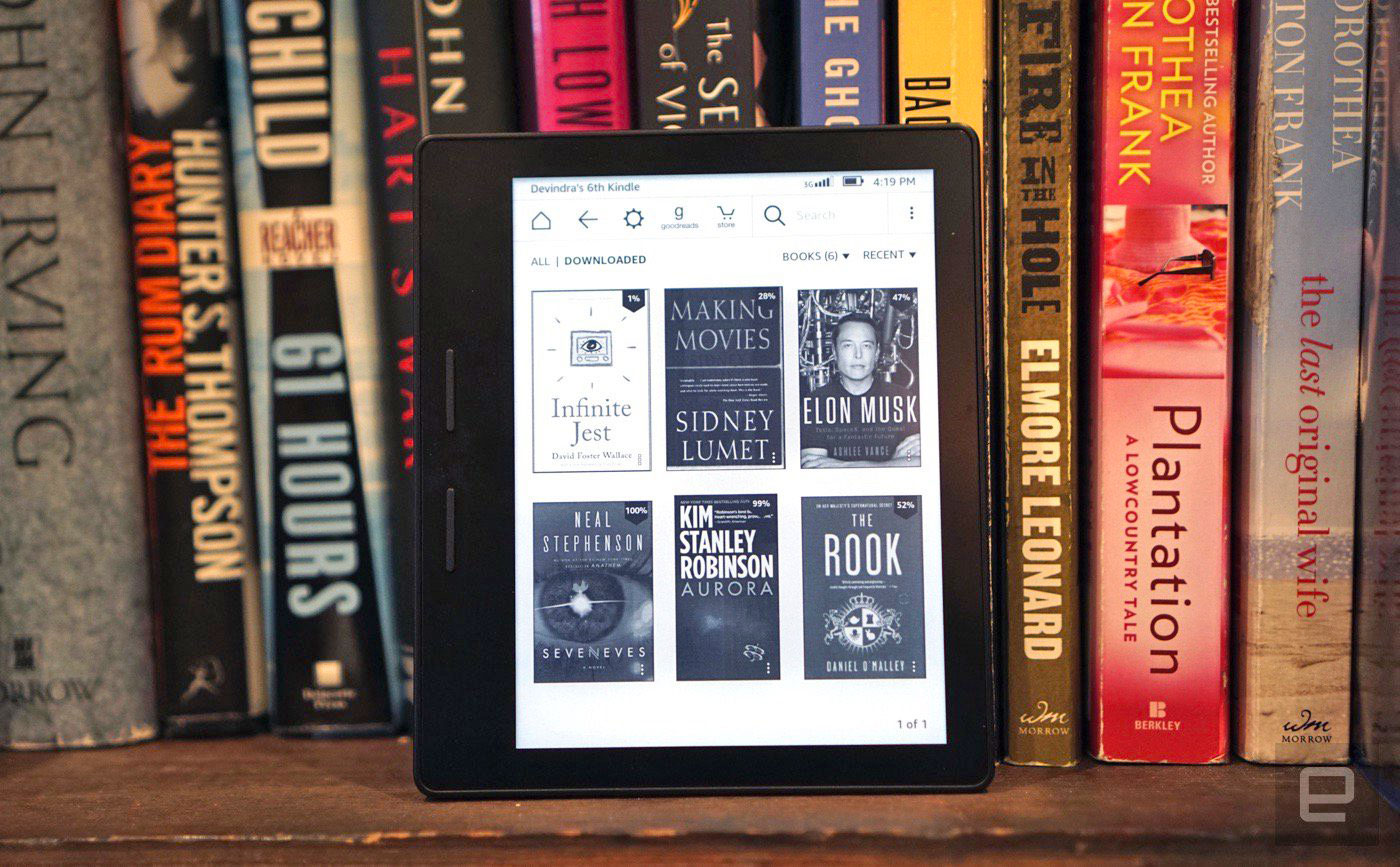
Kindle Oasis

The Kindle Oasis is on sale for $180 right now, or $70 off its usual price. We gave this device a score of 89 for its thin and light design and improved backlighting system.

Buy Kindle Oasis at Amazon - $180

Kindle Paperwhite Kids

The Kindle Paperwhite Kids edition has been discounted to $110. This is essentially a regular Kindle Paperwhite with a few extra perks including a protective case and one year of Amazon Kids+.

Buy Kindle Paperwhite Kids at Amazon - $110

Ring Video Doorbell

Amazon's Ring Video Doorbell is 30 percent off and down to $70. It records 1080p video and lets you see what's going on outside your front door. It also has two-way audio so you can speak to visitors, and a rechargeable battery.

Buy Ring Video Doorbell at Amazon - $70

Eero 6

The Eero 6 dual-band mesh WiFi system has dropped to $75, or 16 percent off its usual rate. One node can cover up to 1,500 square feet and it supports WiFi 6 and has a built-in Zigbee home hub inside.

Buy Eero 6 at Amazon - $75

Eero Pro 6

The three pack of the Eero Pro 6 tri-band system starts at a discounted price of $389 for this October Prime Day. This system can cover up to 2,000 square feet with just one router and it supports WiFi 6 and has a built-in Zigbee home hub inside.

Buy Eero Pro 6 at Amazon - $389

Eero Pro 6E

You can pick up the new Eero Pro 6E WiFi system for as low as $179 during this sale. Amazon recently launched this system and its the most capable WiFi 6 setup in the Eero family. It covers up to 6,000 square feed and supports speeds up to 2.3Gbps.

Buy Eero Pro 6E at Amazon - $179

Eero 6+

The Eero 6+ system is down to $90 right now. This is Amazon's most budget-friendly WiFi 6 router set and the dual-band system supports speeds up to 1Gbps and a coverage area of up to 4,500 square feet.

Buy Eero 6+ at Amazon - $90

Amazon Smart Plug

Amazon's smart plug is 48 percent off and down to only $13. You can plug almost any "dumb" appliance into this accessory to make it a smart one that can be controlled via a companion app and with Alexa voice commands.

Buy smart plug at Amazon - $13

Amazon smart thermostat

Amazon's smart thermostat is on sale for $42 right now. This affordable IoT gadget lets you control your home's temperature from anywhere and it can be adjusted via Alexa commands.

Buy smart thermostat at Amazon - $42

Blink Outdoor

Blink's Outdoor camera is $40 off and on sale for $60 during this sale. It has all of the features of the Indoor model along with a weather-resistant design, so you can use it to monitor the outside of your home.

Buy Blink Outdoor at Amazon - $60

Blink Mini

You can get two Blink Mini wired security cameras for only $30 for this October Prime Day. This camera needs to be plugged in, but we like its compact design, 1080p recording, motion alerts and two-way audio.

Buy Blink Mini (2 pack) at Amazon - $30

Get the latest Amazon Prime Day offers by following @EngadgetDeals on Twitter and subscribing to the Engadget Deals newsletter.

Apple's 256GB 12.9-inch iPad Pro is $300 off and cheaper than ever

This might be your best chance to save money on a 2021 iPad Pro. Ahead of its Prime Early Access Sale, Amazon has discounted the 256GB 12.9-inch model by 25 percent to $899. The more affordable 11-inch iPad Pro is also on sale. However, it appears Amazon only has stock of the 512GB variant. After a 23 percent discount, the 11-inch model is $849, down from $1,099. The promotion applies to both Silver and Space Gray colorways across both 11-inch and 12.9-inch models. 

Buy Apple iPad Pro at Amazon - $849 and up

The iPad Pro is one of the most powerful tablets you can buy at the moment. Engadget awarded the 2021 model a score of 87, praising the device for its speedy M1 processor and mini-LED screen that makes watching HDR content an absolute joy. At the time, it felt like iPadOS wasn’t a perfect match for the iPad Pro's powerful hardware, but with iPadOS 16 on the way and new multitasking features like Stage Manager part of the release, the tablet is about to become more capable.

One thing to keep in mind is that Apple may refresh the iPad Pro later this month. Persistent rumors suggest the company plans to introduce a model that features an M2 processor, MagSafe charging and a handful of other upgrades. For that reason, you may want to wait if you want to buy the most powerful iPad possible. However, if you’re mainly interested in getting the most value for your money, then it’s hard to go wrong with the current M1 model.

Follow @EngadgetDeals on Twitter and subscribe to the Engadget Deals newsletter for the latest tech deals and buying advice.

Samsung's Tizen OS is coming to other brands' TVs

Last week LG announced that it would allow third-party TV manufacturers to use its webOS platform and now its main rival is following suit. Samsung has revealed that it will license its Tizen OS TV platform for use in non-Samsung TV models for the first time, partnering with Akai, RCA and a bunch of other brands (Bauhn, Linsar, Sunny, Vispera) sold in Europe, Australia and New Zealand.

The partnership gives those manufacturers access to Tizen OS features like Samsung TV Plus (a free streaming TV and video platform), Universal Guide for discovery and personalized recommendations, and Samsung's Bixby and other voice assistants.

As we noted when LG first announced it would license webOS to other TV makers, these deals give buyers another option on lower-priced smart TVs that might otherwise run Android TV, Roku or Amazon's Fire TV. While you've probably never heard of many of the brands mentioned, the fact that Samsung is opening its Tizen platform means it could come to TVs sold in the US at some point.

Samsung's Smart TV and LG's webOS are good options instead of Android TV, as both offer good search and personalization capabilities, a choice of multiple voice assistants (their own plus Alexa and Google) and support for Apple Airplay (though not Chromecast). Google TV is a big update from Android TV, but the majority of TVs and streaming boxes like NVIDIA's Shield TV still use the latter — though Google's plan is to eventually have all third-party devices running Google TV. 

The Morning After: What to expect from Microsoft's Surface event

Did you think the big tech events were over for the year? This week, it’s Microsoft’s turn, and we’re expecting lots of Surface news. That might include a long-overdue Surface Studio refresh and even a mini desktop. First up is the Surface Pro 9. It’ll reportedly use 12th-generation Core i5 and i7 U-series processors (considerably faster than the Pro 8’s 11th-gen parts). Don’t expect much to change on the outside, though. It’s likely the Surface Pro 9 will largely resemble its predecessor, with a 13-inch 120Hz display and two Thunderbolt 4 ports.

Some wild cards exist, like the previously teased Project Volterra, a compact desktop for developers building ARM-native Windows apps with AI features. It might look like a Mac mini, but it seems to be pitched at developers. We’ve outlined everything else we’re expecting to see right here. The event kicks off on Wednesday October 12th at 10 AM ET.

– Mat Smith 

The biggest stories you might have missed

All Apple AirPods and Mac accessories could feature USB-C by 2024

Things are suddenly moving fast.

According to Bloomberg’s Mark Gurman, Apple should transition all of its wireless earbuds to the USB-C charging standard by 2024. The company may even refresh accessories like the Magic Mouse with USB-C as early as next year. The reported shift would put most of Apple’s products in compliance with the European Union’s upcoming USB-C mandate. The European Parliament recently voted to make the port the common charging standard across the EU. Once enacted, any new phones, tablets and headphones released in the bloc will need USB-C charging by the end of 2024. This will extend to laptops in 2026.

Continue reading.

Chromecast with Google TV HD review

Super simple 1080p streaming.

For the Chromecast with Google TV (HD), it's clear Google didn't try to do too much. As Engadget’s Sam Rutherford put it, that's totally OK, because the original blueprint works fine. It’s just tailored for 1080p screens this time. You get the same great UI, a nifty compact remote for all the basics and more than good enough performance — for just $30. So if you've got an aging set or secondary display that could benefit from a modern streaming TV OS, this is probably the solution.

Continue reading.

Watch the latest ‘Star Trek: Picard’ trailer

It suggests the series will end with a bang.

Paramount

Paramount has shared a new trailer for the final season of Star Trek: Picard at New York Comic Con. After the previous teasers mostly played up the nostalgia of the principal cast of The Next Generation returning to the franchise, the new trailer finally offers a glimpse at season three’s story. New threats, getting the old band back together and some surprise additions.

Continue reading.

The Engadget Podcast: The Pixel 7 and Google’s new family of devices

Google is getting better at this whole gadget thing.

Engadget

This week, we dived into everything we learned at Google’s Pixel 7 event. Sure, it’s nice to have new phones, but it’s even nicer to see Google developing a cohesive design for all of its new devices. The Pixel Watch actually looks cool! And while we were ready to knock the (way too late) Pixel Tablet, its speaker base seems genuinely useful.

Continue reading.

Epic Games and Match Group want to bring more antitrust allegations against Google

They claim the company paid developers to prevent Play Store competition.

Epic Games and Match Group are attempting to expand their lawsuits against Google. In a motion filed last Friday with a federal court in the Northern District of California, the two companies accused Google of paying off developers who had the means and ability to create competing Android app stores.

Continue reading.

Rivian recalls 13,000 EVs due to a potential steering control problem

That’s almost all the vehicles Rivian has ever delivered.

Rivian is recalling 13,000 EVs – almost all its delivered electric trucks and SUVs – due to an issue that could render drivers unable to steer and control their vehicles. The company issued the recall after seven reports that a fastener connecting the steering knuckle to the vehicle's upper control arm "may not have been sufficiently torqued." The automaker is hoping it can check all affected vehicles within 30 days. Rivian told customers they can bring their vehicles to service centers to have the fasteners tightened in minutes. 

Continue reading.

Google is shutting down its Assistant-powered Driving Mode

After announcing it at I/O 2019, teasing it in 2020 and finally launching it officially last year, Google is shutting down the Assistant Driving Mode dashboard, 9to5Google reported. The feature gives users an Android Auto-lite experience on their smartphone while driving, and was effectively a replacement for the Android Auto smartphone app, which itself was killed last year.

Assistant Driving Mode shows a home screen-style page with Google Assistant up top, a music player and volume controls below that, and buttons to make a call or send a message. It can be accessed from the Assistant by saying "Hey Google, launch Driving Mode," or pinned to your home screen.

Steve Dent/Engadget

If you're confusing the Assistant Driving Mode with the Google Maps feature also called Driving Mode (above), that's understandable. Rather than launching from Assistant or the home screen, though, the Google Maps version launches from a four-dot menu at bottom right when you start navigation. Once open, it shows a row of large icons for calls, messages, and media apps that are easy to see and access while driving. Weirdly, when you first launch that mode within Maps, it offers to pin the other Driving Mode to your home screen.

Google is shutting down Assistant Driving Mode because it noticed that most people were just using the Maps version, it told 9to5Google. However, folks may not have even known the Assistant version existed because of the naming confusion and similarity between the apps. Google should maybe clarify the situation around navigation and entertainment for folks who don't have Android Auto built into their vehicles, because it's pretty darn confusing. 

All Apple AirPods and Mac accessories could feature USB-C by 2024

Apple will more widely adopt USB-C across its product portfolio over the next few years, according to Bloomberg’s Mark Gurman. Writing in his latest Power On newsletter, Gurman says he expects the company to transition all of its wireless earbuds, including the recently refreshed AirPods Pro, to the charging standard by 2024. Additionally, Apple could refresh accessories like the Magic Mouse with USB-C – and a more intuitive design, one would hope – as early as next year.

The reported shift would put most of Apple’s products in compliance with the European Union’s upcoming USB-C mandate. Earlier this week, the European Parliament voted to make the port the common charging standard across the bloc. Once enacted, the legislation will make it so that any new phones, tablets and headphones released in the EU will need to feature USB-C for charging by the end of 2024. The mandate will extend to laptops in the spring of 2026.

In May, Gurman reported that Apple had begun testing USB-C iPhones ahead of the EU adopting the proposed legislation. At the time, he warned that if the company were to proceed with the change, “it wouldn’t occur until 2023 at the earliest.” He now says the iPhone 15 line “is essentially a lock” to receive USB-C next fall.

However, Apple’s switch to USB-C may be short-lived. Gurman expects the company to transition the iPhone and iPad “entirely” to inductive charging “at some point in the next few years.” He notes the company may see the technology as a way to get around the EU’s legislation since it doesn’t cover wireless charging.

Of course, if you’ve been following the Apple rumor mill for long enough, you’ll know that a portless iPhone is something the company has reportedly been thinking about ever since it removed the headphone jack from the iPhone 7 in 2016. Since then, however, Qi charging has created a few problems for Apple – including, most notably, the high-profile cancelation of AirPower in 2019.

Hitting the Books: Steve Jobs' iPhone obsession led to Apple's silicon revolution

The fates of Apple and Taiwanese semiconductor manufacturer TSCM have grown inextricably intertwined since the advent of the iPhone. As each subsequent generation of iPhone hurtled past the technological capabilities of its predecessor, the processors that powered them grew increasingly complex and specialized — to the point that, today, TSCM has become the only chip fab on the planet with the requisite tools and know-how to actually build them. In his new book, Chip War: The Fight for the World's Most Critical Technology, economic historian Chris Miller examines the rise of processor production as an economically crucial commodity, the national security implications those global supply chains might pose to America.

Simon & Schuster

Excerpted from Chip War: The Fight for the World's Most Critical Technology by Chris Miller. Reprinted with permission from Scribner. Copyright 2022.


Apple Silicon

The greatest beneficiary of the rise of foundries like TSMC was a company that most people don’t even realize designs chips: Apple. The company Steve Jobs built has always specialized in hardware, however, so it’s no surprise that Apple’s desire to perfect its devices includes controlling the silicon inside. Since his earliest days at Apple, Steve Jobs had thought deeply about the relationship between software and hardware. In 1980, when his hair nearly reached his shoulders and his mustache covered his upper lip, Jobs gave a lecture that asked, “What is software?” 

“The only thing I can think of,” he answered, “is software is something that is changing too rapidly, or you don’t exactly know what you want yet, or you didn’t have time to get it into hardware.” 

Jobs didn’t have time to get all his ideas into the hardware of the first-generation iPhone, which used Apple’s own iOS operating system but outsourced design and production of its chips to Samsung. The revolutionary new phone had many other chips, too: an Intel memory chip, an audio processor designed by Wolfson, a modem to connect with the cell network produced by Germany’s Infineon, a Bluetooth chip designed by CSR, and a signal amplifier from Skyworks, among others. All were designed by other companies.

As Jobs introduced new versions of the iPhone, he began etching his vision for the smartphone into Apple’s own silicon chips. A year after launching the iPhone, Apple bought a small Silicon Valley chip design firm called PA Semi that had expertise in energy-efficient processing. Soon Apple began hiring some of the industry’s best chip designers. Two years later, the company announced it had designed its own application processor, the A4, which it used in the new iPad and the iPhone 4. Designing chips as complex as the processors that run smartphones is expensive, which is why most low- and midrange smartphone companies buy off-the-shelf chips from companies like Qualcomm. However, Apple has invested heavily in R&D and chip design facilities in Bavaria and Israel as well as Silicon Valley, where engineers design its newest chips. Now Apple not only designs the main processors for most of its devices but also ancillary chips that run accessories like AirPods. This investment in specialized silicon explains why Apple’s products work so smoothly. Within four years of the iPhone’s launch, Apple was making over 60 percent of all the world’s profits from smartphone sales, crushing rivals like Nokia and BlackBerry and leaving East Asian smartphone makers to compete in the low-margin market for cheap phones. 

Like Qualcomm and the other chip firms that powered the mobile revolution, even though Apple designs ever more silicon, it doesn’t build any of these chips. Apple is well known for outsourcing assembly of its phones, tablets, and other devices to several hundred thousand assembly line workers in China, who are responsible for screwing and gluing tiny pieces together. China’s ecosystem of assembly facilities is the world’s best place to build electronic devices. Taiwanese companies, like Foxconn and Wistron, that run these facilities for Apple in China are uniquely capable of churning out phones, PCs, and other electronic. Though the electronics assembly facilities in Chinese cities like Dongguan and Zhengzhou are the world’s most efficient, however, they aren’t irreplaceable. The world still has several hundred million subsistence farmers who’d happily fasten components into an iPhone for a dollar an hour. Foxconn assembles most of its Apple products in China, but it builds some in Vietnam and India, too. 

Unlike assembly line workers, the chips inside smartphones are very difficult to replace. As transistors have shrunk, they’ve become ever harder to fabricate. The number of semiconductor companies that can build leading-edge chips has dwindled. By 2010, at the time Apple launched its first chip, there were just a handful of cutting-edge foundries: Taiwan’s TSMC, South Korea’s Samsung, and — perhaps — GlobalFoundries, depending on whether it could succeed in winning market share. Intel, still the world’s leader at shrinking transistors, remained focused on building its own chips for PCs and servers rather than processors for other companies’ phones. Chinese foundries like SMIC were trying to catch up but remained years behind. 

Because of this, the smartphone supply chain looks very different from the one associated with PCs. Smartphones and PCs are both assembled largely in China with high-value components mostly designed in the U.S., Europe, Japan, or Korea. For PCs, most processors come from Intel and are produced at one of the company’s fabs in the U.S., Ireland, or Israel. Smartphones are different. They’re stuffed full of chips, not only the main processor (which Apple designs itself), but modem and radio-frequency chips for connecting with cellular networks, chips for WiFi and Bluetooth connections, an image sensor for the camera, at least two memory chips, chips that sense motion (so your phone knows when you turn it horizontal), as well as semiconductors that manage the battery, the audio, and wireless charging. These chips make up most of the bill of materials needed to build a smartphone. 

As semiconductor fabrication capacity migrated to Taiwan and South Korea, so too did the ability to produce many of these chips. Application processors, the electronic brain inside each smartphone, are mostly produced in Taiwan and South Korea before being sent to China for final assembly inside a phone’s plastic case and glass screen. Apple’s iPhone processors are fabricated exclusively in Taiwan. Today, no company besides TSMC has the skill or the production capacity to build the chips Apple needs. So the text etched onto the back of each iPhone — “Designed by Apple in California. Assembled in China”—is highly misleading. The iPhone’s most irreplaceable components are indeed designed in California and assembled in China. But they can only be made in Taiwan.

EA starts rolling out a new PC app to replace Origin

It has been two years since EA announced it was working on a replacement for its Origin PC client, and it's now starting to roll out the new app to Windows users. The publisher claims that the EA app, which has just concluded its open beta phase, is its fastest and lightest PC client to date.

EA is promising a streamlined design and suggests navigation will be easier. It seems the app has improved social features as well, since you'll be able to connect your EA account to platforms including Steam, Xbox and PlayStation — which could come in handy for games with cross-play support, such as Apex Legends and FIFA 23. You'll have a custom EA ID that should make it easy for your pals to recognize you.

The publisher says that it will soon invite Origin users to switch over to the new app. As you might imagine, all your stuff will be present, including your games, save data and friends list. It's worth noting that the new client will only be available on Windows PC for now. If you're a macOS user, you'll continue to use the Origin for Mac app for the foreseeable future. However, EA noted that it will have more to share on that front in the coming months.

Chromecast with Google TV HD review: Just a great little streaming dongle

Google's latest streaming dongle is so similar to the previous one that when I first opened it up, I experienced a little deja vu. The new Chromecast with Google TV still has a puckish oval design, it comes packaged with an identical remote and even the OS powering everything is (largely) unchanged. The only major difference (at least on the outside) is updated packaging that features a label that says "HD." So instead of supporting 4K displays, this new more affordable Chromecast is aimed squarely at people looking to stream shows and movies on 1080p screens. And from where I'm sitting, that's just fine, because while it's limited to HD content, this thing delivers essentially the same great watching experience that we loved on the original.

The basics

I'm not going to bore you with the typical design section, because the Chromecast with Google TV (HD) is incredibly straightforward and almost a carbon copy of its predecessor. There's the Chromecast itself which plugs directly into your TV via HDMI, a separate remote with a built-in mic and Google Assistant button for voice controls and a power adapter with a USB cable that you can use in case your TV can't supply enough juice using only HDMI.

Sam Rutherford/Engadget

Setup is incredibly straightforward too. Thanks to an update in Android 12 for TV (which comes pre-installed), there's a new sign-on process that works by using your phone to scan a QR code in the Google Home app. This cuts out the tedium of having to enter your credentials, connect to WiFi and so on. Though, if you'd like to do things manually, that's still an option too.

Once the Chromecast is up and running, you can log into your favorite streaming apps as normal and then dive into some of the more advanced settings like HDMI CEC (Consumer Electronics Control) which allows the Chromecast to do stuff like automatically turn on when you fire up your TV. You can also use Google's controller pairing setting to program the Chromecast's remote to mirror important functions like adjusting the volume or switching inputs. That means if you're like me and you have a relatively simple setup, you might even be able to stash your TV's remote in a drawer and rely completely on the Chromecast, which is a great way to cut down on clutter.

The streaming experience

Sam Rutherford/Engadget

When it comes to finding something to watch, things couldn't be simpler. There's a dedicated row across that top that makes it easy to find shows, movies, apps and purchased content, along with a Live tab that works with a handful of streaming TV services (YouTube TV, Pluto TV, Sling TV, Philo), so you can jump into currently airing program straight from the main home screen.

Naturally, as this model is focused on 1080p content, you won't get support for 4K videos. But even with the HD model's relatively lightweight specs (just 1.5GB of RAM with an Amlogic S805X2 chip), performance felt very similar to what you get on the original Chromecast with Google TV. Upon startup, there's often a bit of lag as the dongle loads the OS and pulls down art for content recommendations. And if you pay attention, you might also notice some small hitches when you switch between apps or settings really quickly. But generally, things are smooth, especially during playback, which is when it really matters.

The other notable feature you won't get on this new cheaper Chromecast is support for Dolby Vision. That said, this omission doesn't feel like a huge deal as a lot of 1080p TVs (particularly older ones) can't handle that anyway. At least there’s still support for HDR10.

Other new additions in Android 12 for TV

As the first device to feature Android 12 for TV pre-installed, the new Chromecast includes a number of handy quality-of-life improvements that will eventually make their way to other Google TV devices. These include the ability to adjust the text scaling (from 85 percent up to 130 percent), options for matching your content's framerate (which is set to auto by default) and some additional surround sound controls. And just like Android 12 on phones, you'll also get a little pop-up when the Chromecast activates its mic, so there's no confusion about when it's listening to you.

Wrap-up

Sam Rutherford/Engadget

With the Chromecast with Google TV (HD), it's clear the company didn't try to do too much. And that's totally OK, because the original blueprint works fine. It’s just tailored for 1080p screens here. You get the same great UI, a nifty compact remote that covers all the basics, and more than good enough performance — all for just $30. So if you've got an aging set or secondary display that could benefit from a modern streaming TV OS (and haven't already invested in another streaming platforms), the Chromecast with Google TV (HD) is the watch buddy you need.

Amazon's Kindle Paperwhite drops to $100, plus the rest of the week's best tech deals

Amazon's Prime Early Access Sale is coming next week and we've already started to see a number of preview deals pop up. Devices like the Echo Show 5, Fire TV Stick 4K Max and Kindle Paperwhite have been discounted ahead of the event, and we expect to see more deals on Amazon gadgets during the two-day event. You can also pick up either of Samsung's latestfoldables for hundreds of dollars less than usual, or Google's Pixel 6a for only $349. And if you're in need of a new robot vacuum, a handful of Roombas are on sale right now, too. Here are the best tech deals from this week that you can still get today.

Kindle Paperwhite

A bunch of Kindle devices are on sale right now, including the Paperwhite Signature Edition for $135 nd the standard Kindle Paperwhite for $100. We named the Signature Edition the best e-reader, period, thanks to its bigger, more responsive screen, adjustable brightness and warm light, and its wireless charging capabilities, but the regular Paperwhite doesn't fall too far behind it. If you can safely skip wireless charging and the auto-adjusting light, the standard Paperwhite is a good pick.

Shop Kindle sales at Amazon

AirPods Pro (1st gen)

Billy Steele / Engadget

The previous-generation AirPods Pro have dropped down to $170 at Amazon, which is 32 percent off their usual rate. These are still great earbuds, despite the introduction of the second-gen models a few weeks ago, and we like their solid sound quality, good ANC and comfortable fit.

Buy AirPods Pro (1st gen) at Amazon - $170

iPad mini

Valentina Palladino / Engadget

Apple's 2021 iPad mini is back on sale for a record low price of $400. We consider it to be the best small tablet available now, and we gave it a score of 89 for its modern design, solid performance, Center Stage cameras and USB-C charging.

Buy iPad mini at Amazon - $400

Apple Watch SE (1st gen)

Cherlynn Low / Engadget

The previous-generation Apple Watch SE is down to a record low of $199. We consider it to be the best starter smartwatch for most people, and we gave this version a score of 88 for its comfortable design, responsive performance and handy watchOS features.

Buy Apple Watch SE at Amazon - $199

Google Pixel 7

Sam Rutherford/Engadget

If you pre-order the new Google Pixel 7 or Pixel 7 Pro through Amazon, you can choose to get a $100 or $200 (respectively) with your purchase. Check back on Engadget for our full reviews for both phones in the coming days, but if you know you want to upgrade to one of Google's latest handsets, you can do so and get some extra spending money to use at Amazon in the process.

Pre-order Pixel 7 at Amazon - $599Pre-order Pixel 7 Pro at Amazon - $899

Echo Show 5

Amazon

Amazon's Echo Show 5 is on sale for a record low of $35, while the Echo Show 8 is down to $70. These smart displays are arguably the most versatile in Amazon's lineup. The Show 5 makes a great smart alarm clock thanks to its compact size, while the larger Show 8 works well in a living room, on a kitchen countertop and many other places throughout the home.

Buy Echo Show 5 at Amazon - $35Buy Echo Show 8 at Amazon - $70

Fire TV Stick 4K Max

Amazon

The Fire TV Stick 4K Max is 36 percent off and down to only $35 right now. This is the most powerful of Amazon's streaming sticks, with support for WiFi 6 and picture-in-picture view that lets you check out security camera feeds directly from your TV.

Buy Fire TV Stick 4K Max at Amazon - $35

Fire HD 10

Amazon

Amazon's Fire HD 10 is half off and down to $75, while the new Fire 7 tablet is down to $45. If you're looking for a super affordable slab that you can check email, shop online and do other basic things with, the Fire 7 should serve you well. But we'd recommend spending the extra money on the Fire HD 10, since it offers an HD screen, better performance and a longer battery life.

Buy Fire HD 10 at Amazon - $75Buy Fire 7 at Amazon - $45

Google Pixel 6a

Sam Rutherford / Engadget

Google's already affordable Pixel 6a is $100 off and down to only $349 right now. We gave the handset a score of 89 for its attractive design, excellent cameras and long-lasting battery.

Buy Pixel 6a at Amazon - $349

Samsung Galaxy Z Fold 4

Sam Rutherford/Engadget

The 512GB version of the Galaxy Z Fold 4 is on sale for $1,500, which is 22 percent off its normal price. We gave Samsung's flagship foldable a score of 86 for its brighter main screen, upgraded cameras, sleeker hinge and improved battery life.

Buy Galaxy Z Fold 4 at Amazon - $1,500

Samsung Galaxy Z Flip 4

Cherlynn Low / Engadget

You can still pick up the 256GB Galaxy Z Flip 4 for $900, which is the standard price of the base model, so you're essentially getting the extra storage for free. We gave the handset a score of 86 for its more durable design, improved hands-free applications and longer battery life.

Buy Galaxy Z Flip 4 at Amazon - $900

Roomba 694

Valentina Palladino / Engadget

iRobot's Roomba 694 is 27 percent off and down to $199, which is close to its record-low price. It's our favorite budget robot vacuum thanks to its strong cleaning power, slick design and easy to use mobile app. iRobot's higher-end Roomba j7+ and s9+ machines are also on sale for $599 and $799, respectively.

Buy Roomba 694 at Amazon - $199Buy Roomba j7+ at Amazon - $599Buy Roomba S9+ at Amazon - $799

Fitbit Versa 3

Cherlynn Low/Engadget

You can pick up the Fitbit Versa 3 for $50 less than usual at Wellbots when you use the code FITBIT50 at checkout. This smartwatch gives you all-day activity and sleep tracking, plus advanced features like blood oxygen monitoring, built-in GPS, an always-on display and more.

Buy Fitbit Versa 3 at Wellbots - $150

Fitbit Sense

Cherlynn Low / Engadget

Fitbit's Sense smartwatch is $70 off at Wellbots when you use the code FITBIT70 at checkout. We gave Fitbit's most powerful smartwatch a score of 82 for its big, bright display and comprehensive health tracking tools.

Buy Fitbit Sense at Wellbots - $180

Lenovo Smart Clock Essential

Engadget

Lenovo's Smart Clock Essential with Alexa is a whopping 57 percent off and down to only $30. If you prefer a more minimalist smart alarm clock, this is the one to get. Its screen shows the time, date and weather, and it will automatically dim depending on the light levels in your room. It also has a handy tap-to-snooze feature, plus you can use its Alexa capabilities to set alarms, control smart devices and more.

Buy Smart Clock Essential at Amazon - $30

Follow @EngadgetDeals on Twitter and subscribe to the Engadget Deals newsletter for the latest tech deals and buying advice.