Finally the RobotGrrl Interview!
A girl passionate about building robots with a twitter handle @RobotGrrl. Host of the popular Robot Party on google+, Erin speaks, so does her Robotbirrd! 
Via:[Adafruit]


A girl passionate about building robots with a twitter handle @RobotGrrl. Host of the popular Robot Party on google+, Erin speaks, so does her Robotbirrd!
Via:[Adafruit]
A weekend project by Adafruit to print announcements and discount coupons from the internet.
This project uses an Arduino Uno, an ethernet shield, a thermal printer (aka receipt printer) and a Staples easy button to print out the current discount percentages available at the tkts times square booth for Broadway shows.
A beautiful tutorial accompanies the project.
Via:[Adafruit]
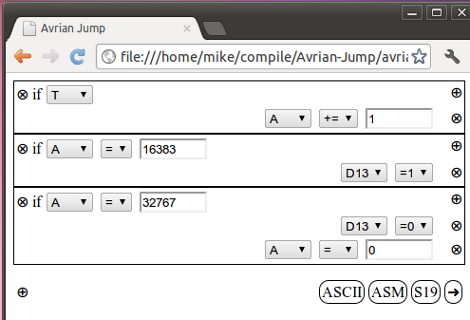
Programming arduino using your smartphone? Indeed! It is possible if we have the IDE in HTML5. With similar thoughts Tadpol started building a browser based AVR compiler. The project is still open for contribution at Github. Hackers, please contribute!
As seen on the screenshot, the current version uses various buttons to input the code.
The project, named Avrian Jump, uses a simple ladder language to feed the compiler, with several different options for output. The most interesting in our mind is a WAV file which can be used to program an AVR from the audio out of your device. That would make programming as simple as connecting the specially modified AVR to your headphone jack. There’s also an ASCII output which allows you to save your programs for later alteration, S19 output for AVRdude programming, and an assembler output for debugging purposes. It’s hard to
Via:[Hackaday]

3D image input is often a challenging task when it comes to irregular objects like a human body. Here is where an arduino, tilt sensors and a little math comes to the rescue. University of Toronto’s Responsive Architecture at Daniels school created one such blanket.
The petals are made up of a conductive material, which are linked to larger network of conductive threads all in the shape of a hexagon. The loads of tilt sensors send the data of their position with respect to a central Arduino-powered computer which is then able to calculate the slopes between the various flowers and petals on the blanket. Thereby giving out a 3D input to the computer.
The concept will be widely applicable to interaction design, video game controls and numerous other fields.
Becky’s latest project over at adafruit shows off some of the possibilities of the cool surplus vending machine coin acceptors they just added to their catalog. It has an Arduino for brains, an LCD shield to report your balance, and an LED that makes piggy squeal glow when you feed him teh monies. The more loot in your hoard, the brighter he glows. And of course it’s done with the usual sparkling clarity and attention to detail that Becky brings to all her videos.

I have to say, looking at those coin acceptor modules has me scheming one of those machines that trains birds to trade coins they find on the ground for food. [Thanks, Becky!]


My article last week about Arduino counterfeits (as in companies actually using the Arduino name, logo, and trademark) and selling them as real Arduinos had some lively debate. Opinion articles are always interesting, because you get a huge spectrum of comments. A variety of opinions were represented for sure: there are folks who think it’s OK to counterfeit because trademarks can’t be enforced all the time around the world. It was also suggested we can’t have or promote open source values like sharing our code and designs and still value intellectually property like trademarks, patents, and copyrights. I don’t see these as incompatible thing: open source works because it’s built on copyright as just one example. This is completely compatible with running a successful business, too, and Red Hat is a good example.
I also heard a few “open source hardware is doomed” comments because we cannot protect our IP. Maybe that will eventually be true for all hardware, but I never met anyone doing really great OSHW who assumed there was any protection possible for the physical bits. Nothing is slowing down the innovation in open source hardware. There are plenty of industries that are basically “open source,” like fashion and food, that are thriving without protection besides trademarks and copyrights (maybe patents, but not really). I think we’ll be OK 
Anyway, instead of letting a few commenters imply I was down on Arduino “clones,” I’m going to do a top-10 list. A “clone” is sometimes called counterfeit and vice versa, but since the two words are sometimes interchanged I’m going to call any “clone” an “Arduino-compatible” just to be super clear. I make a living co-designing, developing, shipping, and supporting Arduino accessories as well as Arduino-compatibles with Limor “Ladyada” Fried and have a nice collection, including an original Arduino I’m trying to get the Computer History Museum to display.
Why are these compatibles on this list? I really like Arduino-compatibles that add value; that’s my opinion and I think that’s what most OSHW makers are doing. By “add value” I mean it’s not just a straight-up identical copy of something or using a trademark from someone else, but instead the creator has actually added something more and shared their design. Maybe it’s lower cost, maybe it’s a new feature, but there’s actual real value added. At the end of the top-10 list I have compatibles that MAKE sells or ones that Adafruit or myself have worked on; I didn’t think it would be fair to put them in a top-10 list, but they’re part of my favorites — skip those if you believe they’re only there for any other reason. Don’t forget to add yours in the comments too.
Here we go!

Diavolino from Evil Mad Science: Super low-cost Arduino-compatible. It’s $13.

The LilyPad Arduino by Leah Buechley: A microcontroller board designed for wearables and e-textiles. It can be sewn to fabric and similarly mounted power supplies, sensors, and actuators with conductive thread. I liked this so much, but wanted more features, so I’m co-designing a wearable Arduino-compatible called the Flora.

Freeduino is a collaborative open source project to replicate and publish Arduino-compatible hardware files. The Freeduino Eagle SCH, BRD, and Gerber production files allow users to create boards that are 100% functionally, electrically, and physically compatible with Arduino hardware. One of the first efforts to have an Arduino-compatible.

Nanode is an open source Arduino-like board that has built-in web connectivity. It’s a low-cost platform for creative development of web-connected ideas. The Nanode was developed in the U.K. by Ken Boak in cooperation with London Hackerspace.

The FreakLabs Freakduino-Chibi is designed for rapid prototyping, experimentation, and deployment of wireless designs at low cost. It has an integrated wireless radio for an inexpensive wireless prototyping system.

Seeeduino Film is an Arduino-compatible development platform for space-sensitive projects. It’s flexible and super slim. Maybe my #1 favorite.

The Teensy is a complete USB-based microcontroller development system, in a very small footprint, capable of implementing many types of projects. It’s super small, and the support from the maker is legendary.

ProtoSnap series from Sparkfun: This is a clever why-didn’t-I-think-of-that design. Each ProtoSnap device comes shipped pre-wired and ready to use — all you have to do is program them.

Sanguino: A red-colored microcontroller board based on the ATmega644P. Handy when you need more horsepower.

Illuminato::Genesis by Liquidware: Arduino-compatible, 42 I/O pins, and 64K code space for bigger DIY projects. Liquidware, in my opinion, makes the most beautiful, dark, gothy boards out there.


Not in the list because I’m connected to them in some way, but they’re in my favorites. Boarduino: one of the first Arduino-compatibles made to fit on a breadboard, designed by Ladyada. And the new Menta that Ladyada, myself, and MAKE developed together. It fits in a mint tin with a huge prototyping area.
OK, post up YOUR favorite clones, er, Arduino-compatibles in the comments!


Lucid dream is a state in which you can control what you dream. Be it winning a million bucks worth lottery, or dating your favorite cine star, it is possible to control your dreams using these DIY goggles!

Simple to build and a nice weekend hack for the bored, these goggles are pretty cost effective and impressive. Put together a pair of glasses, LED, Arduino, a battery and some other minor paraphernalia and you are ready to live your favorite dream in your resting time!
Via:[Hackaday, Madscientist]

In case you are a hardware-hacker with no care for warranty, open up your Xbox 360 controller, attach an arduino uno to the circuit, program it, and turn it into a modded controller chip, which can be reprogrammed to be compatible with new games too!
The parts list and the instructions can be found here.
Game on! \m/
Via:[Instructables]
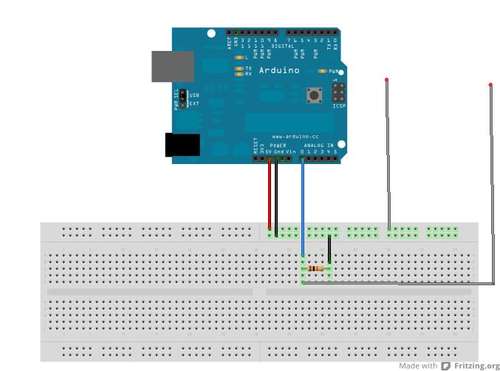
The next time you want to find out which of your little cousins ate the cookie from your jar, you can use your Arduino and everyday electronics items to make your own lie detector!
Materials needed: Arduino, aluminum foil, velcro, wire, a 10 K resistor, breadboard
A detailed step-by-step approach is taught here.
So snap on and find the cookie monster! >:)
Via:[mad-science, Dangerousprototypes]

From ITP student Justin Lange:
I grew up with my Dad’s songs. Some of my first memories are of him and my Mom singing to me and my siblings. A bad fall last winter left my Dad with a dislocated shoulder and detached nerves. His function in his left arm remains very limited. And he sure can’t play guitar.
I thought,’how about I just build something to allow him to get back to his songs?’ Something of a Luddite at heart, he was a little slow warming up to the idea of an electronic device interfacing between him and an acoustic instrument. Furthermore, he was understandably a bit pessimistic; he said, “Justin, that sounds like a great idea if you’ve got a ten-million dollar research budget behind you, but I just don’t think what you’re talking about is possible”. I said, “let me see what I can do”.
Justin’s device, dubbed the Folkbox, has rows of buttons mounted beneath the neck of the guitar that play chords when depressed. The buttons are hooked up to solenoids that depress the proper strings, allowing the user to play a multitude of different chords.
The interface can be easily rebuilt to allow musicians with other disabilities to play as well. For example, someone who has no use of one hand can have a foot pedal array to play chords.

Justin plans on continuing work with the Folkbox, adding an even larger array of chords it can play, and rebuilding the enclosures in acrylic.


