Massachusetts politicians are still pushing for better working conditions for ridesharing drivers. New bills in the state House and Senate would not only pursue collective bargaining rights across companies, as with past measures, but would guarantee a minimum wage, paid sick leave and other benefits. Companies like Uber and Lyft would also have to cover some driver expenses and pour money into the government's unemployment insurance system.
The new legislation wouldn't decide whether drivers are employees or independent contractors. However, Senate bill co-sponsor Jason Lewis told the State House News Service his bill would establish requirements that apply regardless of a driver's status. Previous bills would have tasked workers with negotiating for benefits that are now included, Lewis says.
Massachusetts sued Uber and Lyft in 2020 for allegedly misclassifying drivers as contractors and denying protections granted under state labor law. The companies responded with a proposed ballot measure that would have offered benefits in return for requiring that drivers be treated as contractors. The state's Supreme Judicial Court rejected that proposal last June.
We've asked Uber and Lyft for comment. In a statement, the Service Employees International Union (a bill proponent) says the bill "rewrites the rules" and gives condition drivers have sought for over a decade. The Massachusetts Coalition for Independent Work, an industry-run organization that opposes the legislation, previously claimed that measures granting employee status don't reflect a "vast majority" of drivers that want to remain contractors. The coalition prefers bills that would bring the anti-employee ballot proposal to the legislature as well as create portable benefit accounts.
The state has been one of the major battlegrounds for ridesharing work conditions, but it's only one part of a larger fight. Uber and New York City's Taxi and Limousine Commission have fought over pay raises, while a California law meant to reclassify many gig economy workers as employees has faced unsuccessful attempts to carve out exemptions for companies like Uber and Lyft.
Niantic has created some of the most popular augmented reality games like Ingress and Pokémon Go. But this week the company is launching a new title called NBA All-World that might be the best application of its location-based tech to date.
For people who have played one of Niantic’s previous titles, NBA All-World features a very familiar formula. After installing the free app (available on Android and iOS), you are given a starter player and from there you can use the in-game map to navigate to real-world locations in order to collect items, earn cash or battle other players. The big twist for NBA All-World is that, instead of visiting random points of interest to battle others, you’ll need to visit real-world basketball courts to earn your spot on local leaderboards. And, of course, there’s a roster of big-name ballers like Giannis Antetokounmpo and Paul George to collect.
That might not sound like a major change, but it results in some very notable differences in how you play the game. The first is that instead of hanging out on random street corners like you often do while raiding in Pokémon Go, the need to go to local courts makes NBA All-World feel more grounded in reality. That’s important because Niantic says there’s actually very little overlap between people who play its other titles and more traditional sports gamers (just 10 percent according to Niantic senior producer Marcus Matthews). And after years of people playing basketball game series like NBA2K (or my personal favorite NBA Street) at home, Niantic sees All-World as one of the first games that encourages players to get off the couch and go back outside.
Because you have to physically go to real courts to take part in battles, NBA All-World feels better connected to the basketball community at large. While I didn’t get to try this out myself prior to launch, it’s not a stretch to imagine people going to a park to play All-World only to hop into a real pickup game. Then, when you sub out, you can go back to challenging leaderboards or playing minigames in NBA All-World on your phone while you catch your breath.
Niantic
As for the game itself, Niantic has also worked to integrate basketball culture into every aspect of the app. This includes partnering with companies like Adidas and Puma (but not Nike just yet) so you can buy virtual clothing or footwear that matches what star ballers wear IRL. Players in game are also modeled after their real-life counterparts, so centers like Domantas Sabonis are better at blocking while smaller guards are faster and better at stealing the ball. And while Niantic is keeping many elements of NBA All-World’s gameplay pretty simplistic (like defense, which is mostly automatic), the ability to move and juke in various directions, step back for a jumper or drive to the basket provides a surprising amount of depth.
I also really appreciate that because Niantic already has tons of info provided by users from its other AR games, NBA All-World is populated with tons of in-game locations and hot spots, from courts to places like banks and stores where you can grab items, energy and more. And when the game goes live this week on January 24th, gameplay won’t just be restricted to the US as NBA All-World is getting a full global launch, which really speaks to the international nature of the sport.
However, at this point it’s important to mention that while I think this might be the best use of Niantic’s location-based gaming tech so far, building a new community and playerbase of gamers is a challenge for any developer. This includes some of the company’s previous stumbles, like its ill-fated Harry Potter AR game which is slated to go dark later this month, or its Catan spinoff, which was discontinued in 2021 before ever seeing an official release. But for those looking to dive deeper into the basketball community, NBA All-World looks to offer the best blend of real life and AR integration yet.
There's no such thing as having too much storage on hand. You'll never quite know when you could use a microSD card or SSD, and better safe than sorry. Stocking up when they're on sale is never a bad idea, so it's worth checking out the latest discounts on some SanDisk models at Amazon. For instance, a Nintendo Switch-licensed 512GB microSD card (with cute Animal Crossing branding) has dropped 58 percent from $130 to $58.11. A yellow 256GB card with a Super Mario Super Star logo is 40 percent off at $31.90.
You don't necessarily have to use these cards in a Switch, of course, but depending on what you might use them for, it's worth keeping in mind the read and write speeds. These versions have read speeds of up to 100MB/s and write speeds up to 90MB/s. That might not be fast enough for a camera that shoots 8K footage with high frame rates (you might want a card with a higher capacity for that purpose, anyway), but these cards should be absolutely fine for a Nintendo Switch or Steam Deck, which have maximum read speeds of 104MB/s.
Elsewhere, SanDisk's 2TB Extreme Portable SSD is currently 65 percent off at $160. That's a hefty discount from the regular price of $460. This SSD supports read speeds up to 1,050MB/s and write speeds up to 1,000MB/s. It has USB 3.2 Gen 2 support for data transfers via USB-C.
SanDisk says the SSD has up to two-meter drop protection and IP55 water and dust resistance. There's built-in password protection with 256‐bit AES hardware encryption to protect your data and a carabiner loop to help you physically secure the device.
Poker Face isn’t the sort of show that can be spoiled, but have a warning anyway.
I always think there’s been a gulf between production-line TV and its prestige brethren, but that the internet helped demarcate its edges. NCIS was the most-watched drama series in the US from 2009 onwards, but you don’t see The Ringer giving an essay-length breakdown to every episode. These days, prestige drama in the peak-TV mold is pored over and chewed around by the internet sausage machine. Everything else is deemed disposable, despite the obvious and sustained success of the stuff most people are actually watching on broadcast networks. There’s a lot of snobbery there, but also I suspect the The Rookie audience isn’t too fussed about reading a 2,000-word breakdown by an underemployed Yale grad about last night’s Nathan Fillion fights crime action.
Poker Face, then, is an attempt by what I’ll only-slightly-sarcastically call “prestige TV people” into making production-line TV. Like when a stuffy gourmet chef wants to burnish their “down with the kids” credentials by making the sort of dirty burger you can only appreciate at 3am. Interesting then that, despite the fact its co-creator and star are both poster children for Netflix’s revolution, that the show was set up at Peacock. Created by Rian Johnson, fresh from the success of Glass Onion: A Benoit Blanc Mystery, and Russian Doll’s Natasha Lyonne, Poker Face is an unashamed homage to a lost age of TV. Or, you know, lost if you’re not paying attention to whatever CBS is showing on Thursday and Sunday nights.
Lyonne stars as Charlie Cale, a woman with a troubled past who has developed the miraculous ability to tell when someone is lying. After attempting to use her talent to get rich quickly on a lazy poker tour across the US, she’s caught by a Reno casino magnate. He offers her a hostess job, in exchange for not murdering her to death, making her promise not to use her talent again. When he retires, and his grabby son takes over, he opts to use her talent rather than keep it hidden, embroiling both of them in a murder mystery. Which eventually leads her taking a road trip in her Plymouth Barracuda, solving murders wherever she goes.
And, certainly, the show has leant into the idea that Poker Face is probably the closest thing we’re going to get to a millennial Columbo remake. Certainly, the creative team haven’t been shy about drawing the parallels between the ‘70s classic (and, uh 80/90s less classic) and this. It uses the same Inverted Detective Story structure, with the lead character absent in the first act while we see how the murder was committed and the attempts to build a watertight alibi. Not to mention the choice to title the show with boldface yellow text, complete with copyright date under the title card, and its overall ethos. You’ve got a streetwise, rough-around-the-edges New Yorker with a knack for solving crimes and a classic car. And, much like in its inspiration, Lyonne is going up against a series of A- and B-list guest stars, since the most famous guest star (or stars) is the one that did the murder.
NBC Universal
The differences are mostly down to packaging, since Columbo was conceived as a series of movies-of-the-month. (Columbo was originally 90 minutes, but many episodes were “supersized” to two full hours, very commonly to their detriment.) Poker Face is set up as an “episodic” case-of-the-week show, with streaming’s runtime freedom meaning that some episodes run between 80 minutes and just 50 minutes, when the plot is slender enough to justify the trim. That’s good, because it rarely feels like any episode overstays its welcome, and they often skip along at a breezy old clip.
But this efficiency also robs us of one of the highlights that made classic Columbo as it could often be. Watching a short, scrappy, working-class cop square off against higher status opposition was always a delight. And the show would build up to these confrontations, parceling them out along the way toward the eventual denouement. Star Peter Falk was a great, if difficult, actor, and he would often be squaring off against one of his real-life friends, each one a superstar. And they would load each confrontation with depth, nuance and tension as Lt. Columbo sliced apart their “watertight” alibi with a razor blade. Watching Falk against John Cassavetes, Patrick McGoohan, Robert Culp or the amazing Jack Cassidy was electrifying television. And all of this is cast aside, because Charlie is apparently a human lie detector that knows whenever the guest star lies in her presence. (This is rather unsubtly demonstrated most of the time by Charlie reflexively coughing a naughty word describing male cow poops that we’re no longer allowed to write here.)
In its place, is the recurring twist (if it can be called that) that Charlie was actually present or somehow involved with the situation leading up to the murder. So while Lyonne is absent for the first act of the show, you then see an abbreviated version of those same events showing how Charlie came to be inveigled with the events (and has an emotional stake in solving the crime). In a way, you’ll start wondering how exactly we’ll see Charlie pop up and which scenes that we just saw was she lurking in the periphery of. It’s an elegant way of tying the character and the murder together without making her a shabby police officer in a beige raincoat.
But you don’t need to be a Columbo fan to enjoy Poker Face, and the ultimate litmus test was making my aggressively-Columbo-indifferent wife watch the screeners with me. She said that the show was fun, and it gives you the “joy of seeing how Charlie was there all along.” And that, much like another of her favorite detective shows, Jonathan Creek, you can play along at home, looking for the clues that will eventually point Charlie to solving the case. (The show does play fair, too, and gives you the chance to spot a clue that our hero won’t clock for another few minutes.)
NBC Universal
The benefit of the episodic nature of the series is that you can dip in and out of it as you feel like it. I watched the six (of ten) episodes Peacock made available for review in dribs and drabs, watching one, then taking a day off, then the next, in a way that felt similar to how it’s intended to be seen. The only issue for would-be dippers is that you may not quite understand why, at the end of half the episodes, a character I won’t name pops up to glower at Lyonne. This is something the show has borrowed from older shows, where our hero was always on the move in order to stay out of the clutches of the overarching villain and keep the story going. But you’d be a fool not to at least watch the pilot episode, which was written and directed by Johnson. (The second episode, where he just directs, sags a little as it opts to restate its premise for anyone who decided to watch TV like a psychopath and not just start at the beginning.)
Tonally, Poker Face is breezy, despite its rough-around-the-edges world, and there’s often one killer joke in every episode. As much as some episodes might draw from a darker palette, none are even close to being described as “heavy.” It’s not afraid to be a little silly, either, but I’d spoil the fun in explaining how or why it is, so you’ll have to discover that bit for yourself. In fact, most of the fun of the show is just in the watching, so I can’t imagine anyone will be racing to write 2,000-word essay-length breakdowns about how each episode unfolded. Just repeat to yourself: It’s just a show, I should really just relax.
Poker Face debuts on Peacock on January 26th, 2023, with the first four episodes streaming at launch. A new episode will debut every following Thursday for the next six weeks.
These days it’s not necessary to go to a giant studio with overpriced, pro-grade gear to record a Grammy-winning record. You can do it right from the comfort of your own bedroom in fact, using tools priced for even the most casual of hobbyists. It's not news that the tools of creation or the avenues for distributing art are accessible to more people than ever. But the cultural institutions that have dominated popular music for so long can no longer ignore the bedroom producer or budding Soundcloud star.
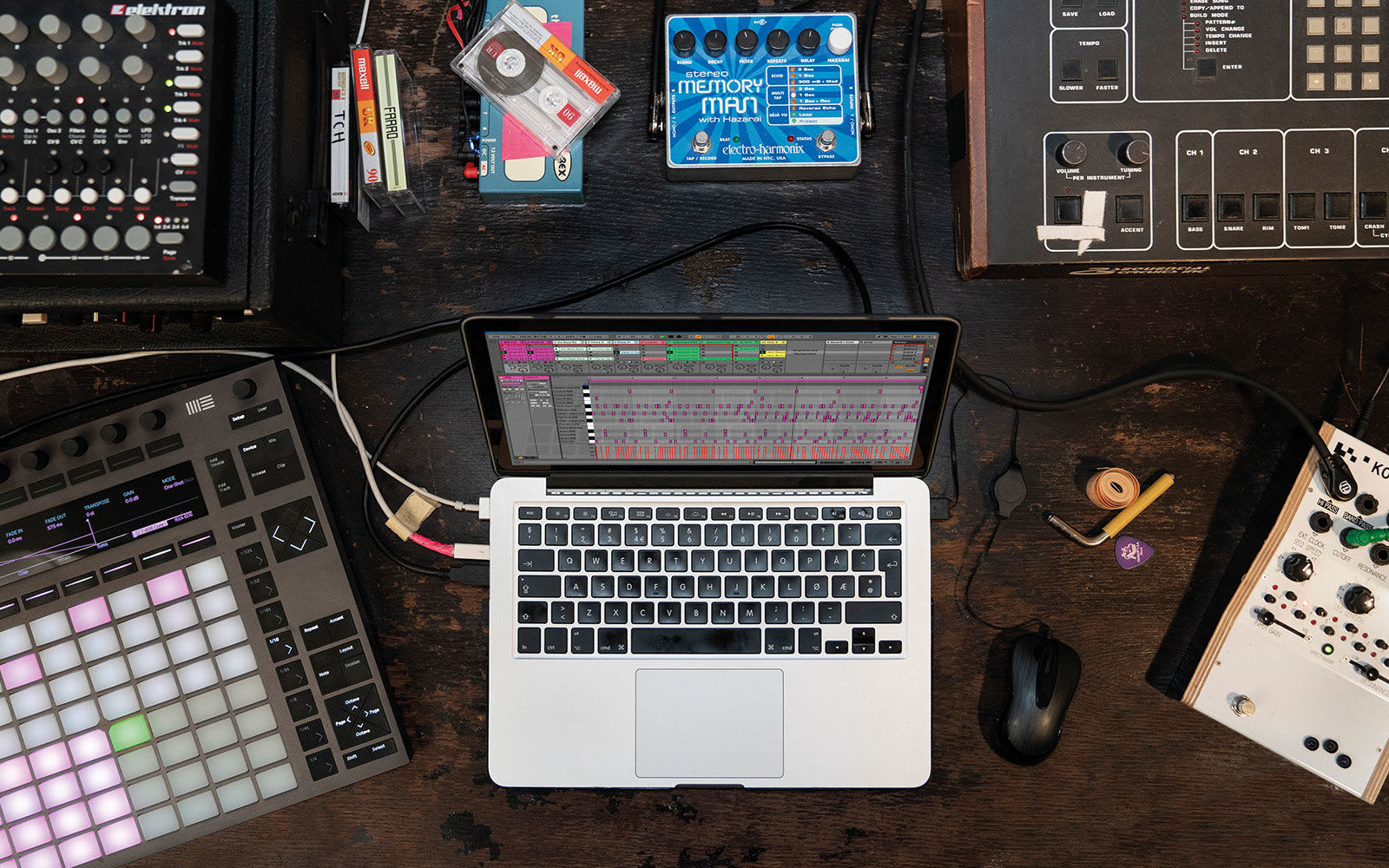
Maybe you've been inspired to build your own home recording studio. And maybe, you're not quite sure where to start. Well, an audio interface, a good mic and a decent set of headphones will get you pretty far. But the first thing you'll need is probably staring you right in the face: a computer.
Computer and a DAW
Justin DeLay, Director of Product and Category Marketing at Reverb, drives home just how important the computer is: "You can strip away everything else and as long as you have a computer you can still create music," he told me. He suggests you "spend the money on a good computer and get other gear — such as audio interfaces, mics, headphones, etc. — used or at reasonable price points."
But, truthfully, you can do quite a lot with whatever computer you have on hand. Joe Pecora, the engineer and producer at Red Room Studio, says your set up "could be as simple as an iPhone/iPad with Garage band." (I know someone who recorded an entire album this way.) While he agrees that the most important part is your computer, he argues it doesn't have to be super powerful. It doesn't even have to be a desktop. JDilla famously created many of his beats on a Roland SP303, and you can basically recreate that experience with an iPad and the $4 Koala Sampler for iOS. And don't forget that Gorillaz recorded an entire album on an iPad.
Which leads us to the next thing you'll need: a DAW, or digital audio workstation. If you're a Mac user, then you're lucky enough to have access to Garage Band, a surprisingly capable free option. And upgrading to Logic Pro X is only a $200 investment. If you're on Windows (or just don't like Logic), I often recommend Ableton Live (starting at $99). But honestly there are plenty of great options out there, like FL Studio, BitWig and Cubase all of which start at $99. And often, stripped down versions come free as part of a software bundle when you buy music-making hardware like MIDI controllers and audio interfaces.
Assuming you already have a computer and you just need the accessories to get recording, you can pick up everything you need for under $500 new. But, if you’re patient, you could build a well equipped bedroom studio with used gear for as little as $250.
MIDI controller
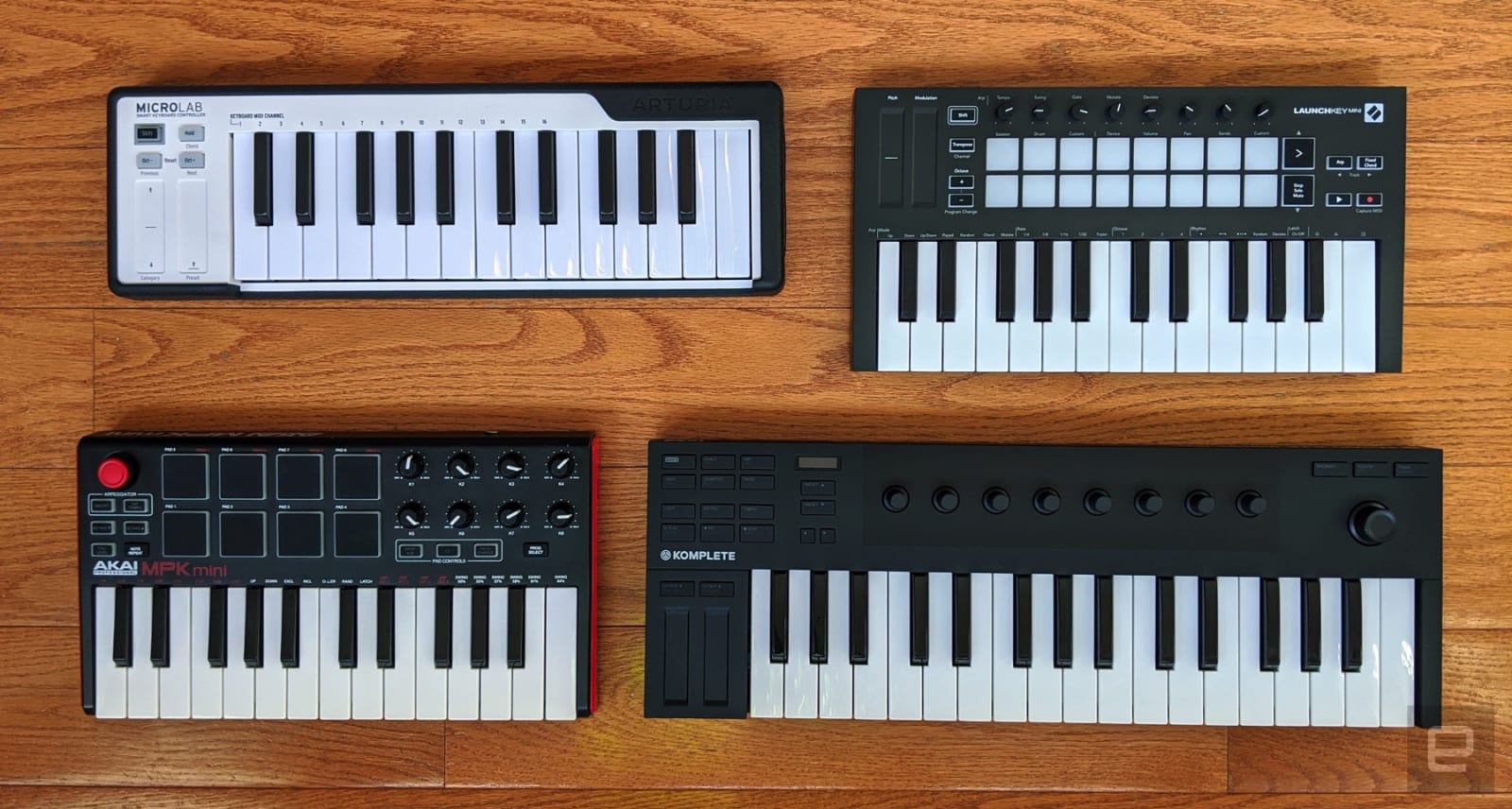
Speaking of which, one of the first additions to your studio should be a MIDI controller. DeLay says this is a piece of gear often overlooked by beginners. "It's not just for playing keyboard sounds," he explained, "it can be used to write drums and percussion, to control mixes and more. It's the creative interface of music production, and you don't have to play the piano in order to harness its power."
Unfortunately there's no gear that will magically turn you into a breathy pop goddess, but a decent mic and audio interface can at least help you sound your best. Now, you could get a USB microphone, like Blue Microphones’ $130 Yeti, and it will certainly get the job done. Heck, that album I mentioned earlier was recorded using the wired headset that came with the iPhone.
But, honestly, your better bet is to get a regular XLR mic and an audio interface. Pecora specifically warns against splurging too much here. "People will look at their favorite artist and see that they use a certain mic or preamp or plugin and want to use the same thing thinking it will get them the same sound." On early singles like "Ocean Eyes" Billie Eilish used an Audio-Technica AT2020 condenser mic, which costs just $100. And I’ve stuck almost exclusively with cheap Shure SM58s and 57s ($100 new, $50-$75 used) whether I was recording demos with my band in college or voice over for review videos at Engadget.
If you fancy yourself a future pop sensation and want to make sure your vocals are the star of the show, you could consider using a significant chunk of your budget on something like the Rode NT1-A ($229) or Shure SM7B ($390). You will get better results with more flexibility for post production, but you can clearly get excellent results with more affordable options.
Audio interface
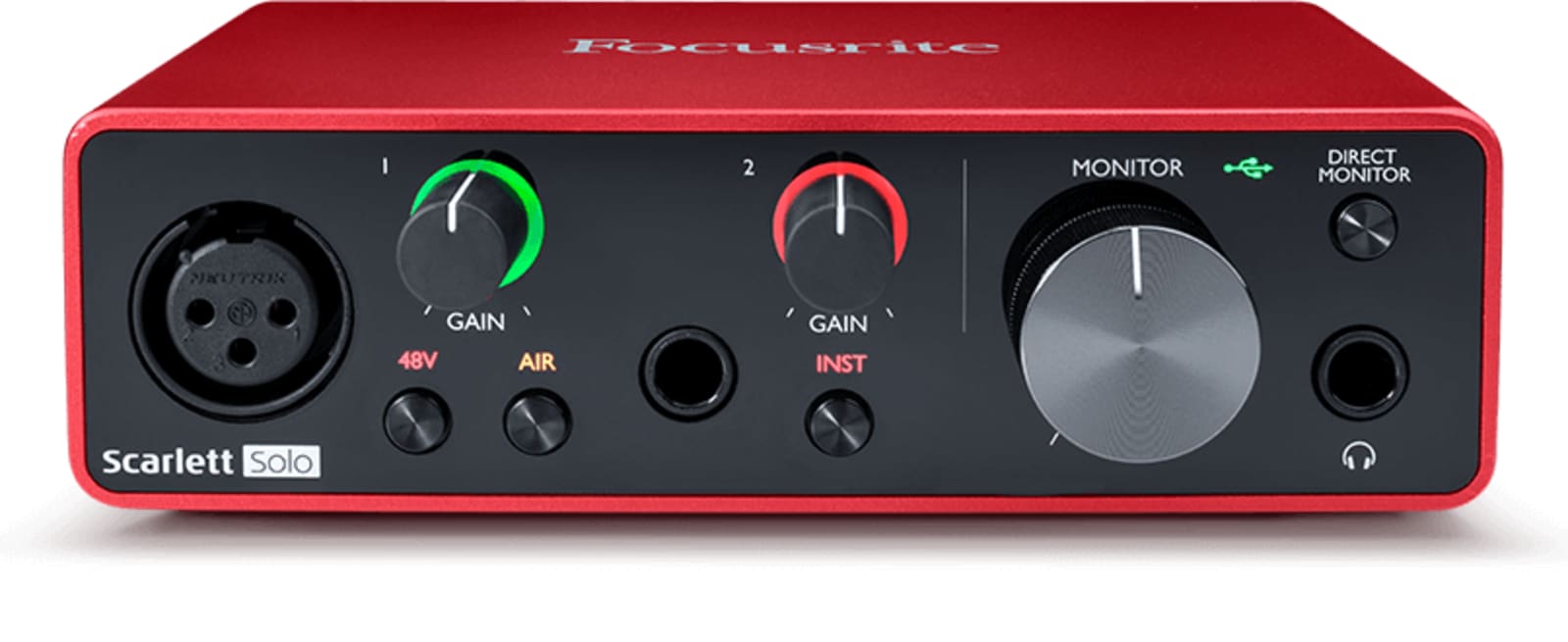
As for the interface, there are tons of great options out there. Companies like Focusrite, Arturia and Tascam make excellent ones. But our new favorites in the budget interface space are Universal Audio’s Volt series. If your budget allows for it we strongly recommend the $299 Volt 276. Though, the $189 Volt 2 is also excellent, it just doesn’t standout from the crowd quite as much.
If you’re trying to save a few bucks, it's hard to beat the Scarlett series from Focusrite (just make sure to get the second- or third-gen models). You can get the latest Scarlett 2i2 for around $130 used, but it's just $180 new (and includes a huge bundle of very useful software).
The reason to opt for an audio interface instead of a simple USB mic is because it offers you a lot more flexibility and room to grow. For one, it offloads a lot of the audio processing from the CPU. Second, it will allow you to connect not just mics (and swap in different ones for different purposes), but also instruments, turntables or anything with an audio-out jack. An audio interface is also necessary if you plan to connect a pair of studio monitors.
Studio monitors and headphones
This is an area that DeLay advises caution. While a good set of studio monitors will obviously be better than the speakers on your laptop and will result in a better mix, it's too easy to get caught up in what he calls monitor envy. "The reality is that monitors at a $300 price point are going to work just fine in most spaces," he says. Plus, your bedroom probably doesn't have the space to really make the most of large, powerful monitors. So, save your money.
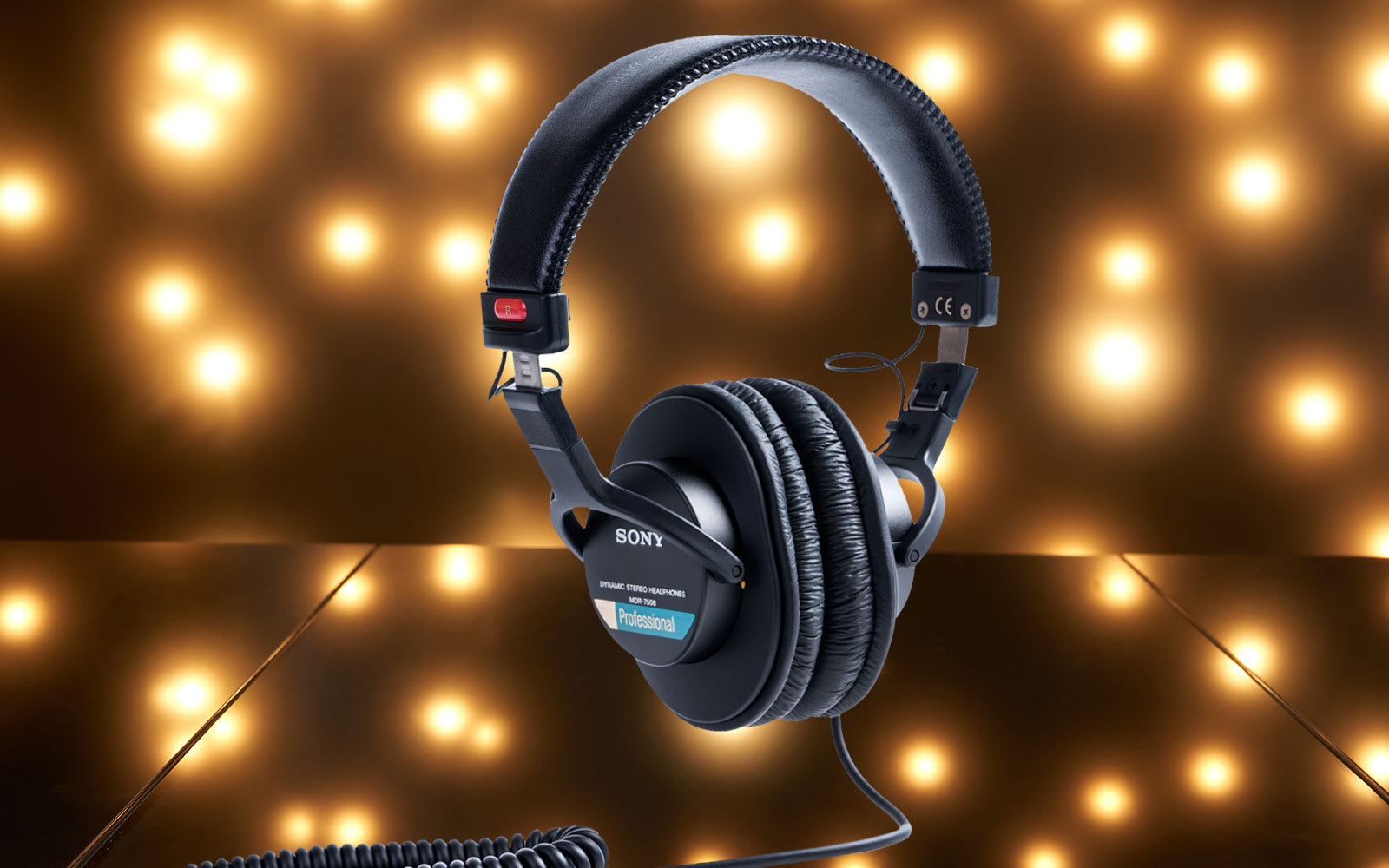
And if you're just starting out, you're probably better off getting a decent set of headphones. There're tons of amazing and affordable studio quality headphones out there for under $200, like the $179 Beyerdynamic DT990PRO (currently down to just $179 on Amazon). But one of our favorites is an old workhorse from Sony, the MDR-7506. They're well under $100 and actual pros have used them for decades to mix music.
One tip DeLay offers for novices: Double check your mixes in the real world. Headphones can over emphasize bass, while smaller studio monitors can have trouble delivering accurate bass response. So make sure to listen to your track on laptop speakers or in a car to get a sense of how it will sound in the wild.
And that's really the key — have the patience to develop your skills and make the most of the gear you have. It's really easy to catch a bad case of GAS (gear acquisition syndrome) when you're first starting out — trust me, I know. But there's no need to shell out thousands of dollars for high-end gear to start making music. You don't even need to buy new gear. Pecora suggests the only thing you absolutely should buy new are headphones. And, presumably, that's just because you don't want to be wearing years worth of someone else's sweat on your ears.
Images: Getty Creative (home studio); Ableton (Ableton Live running on laptop); Focusrite (Scarlett Solo); Will Lipman / Engadget (Arturia KeyStep, Sony MDR-7506)
YouTube Music contractors in the Austin area who voted to unionize are accusing their employers of abusing return-to-office policies to stifle labor organizers. The Alphabet Workers Union (AWU) has filed a complaint with the National Labor Relations Board (NLRB) alleging that YouTube parent Alphabet and staffing firm Cognizant are using an abrupt return-to-office move, due in February, to punish remote workers, many of whom are reportedly pro-union. Some also live outside Austin. Managers have also been sending work to other offices to "chill" union organization efforts in Austin, according to the complaint, while a supervisor purportedly made implicit anti-union threats.
While the workers are contracted, they claim Alphabet and Cognizant represent a "joint employer." If so, Alphabet would be responsible for working conditions and have to negotiate if the Austin-area team votes in favor of a union.
We've asked Alphabet and Cognizant for comment. In a statement to Bloomberg, a Cognizant spokesperson claims staff were "fully aware" of an eventual return to the office before the petition to unionize, and that it has "repeatedly and consistently" told employees about its return-to-office policy since December 2021. Those contractors who willingly left the Austin area and can't come back to in-person work can also be "considered" for other work at Cognizant, the spokeperson says.
This isn't the first increase in tension between Alphabet and pro-union contractors. In spring 2022, Washington state Cognizant employees working on Google Maps warned they would go on strike over an allegedly unreasonable return-to-office schedule. Cognizant pushed back the return by 90 days. At Google, meanwhile, many cafeteria workers quietly unionized during the pandemic as they sought better conditions.
The row comes as Alphabet is cutting 12,000 jobs worldwide in the wake of rough economic conditions and dropping profits. While that figure only covers direct employees, it reflects pressure to slash employment costs. That, in turn, may set up conflicts with pro-union workers seeking better pay and benefits.
One of the best-loved Nintendo 64 games is coming to Switch Online's Expansion Pack this week. Back in September, Nintendo revealed that GoldenEye 007 was coming to the service and now that day is almost upon us. You'll be able to start playing the game on your Nintendo Switch starting on January 27th. The game will be available on Xbox on the same date.
It's unusual to see a licensed game arrive on Nintendo's subscription service, but GoldenEye 007 is one that many fans have been looking forward to replaying (or even playing for the first time). It remains to be seen how well Rare's classic first-person shooter will hold up almost 26 years after it debuted on the N64. Hopefully, Rare has improved the janky controls and awful framerate from the original game.
There are some new additions to the Switch Online version, though, including a widescreen mode and online multiplayer. So, you won't necessarily need to cram around the same TV to take on your friends in a "slappers only" deathmatch.
Rare is also bringing a "recreated" version of GoldenEye 007 to Xbox consoles this Friday with dual analogue stick support, 4K resolution and "a consistent refresh rate." Oddly, there's no online multiplayer on the Xbox version, though there's still four-player splitscreen support. You'll be able to access it through Xbox Game Pass. Owners of the Rare Replay collection can download GoldenEye 007 to their Xbox One or Xbox Series X/S at no extra cost.
Honda has big plans for the new year and electrification will play a huge part of that, the company's recently-promoted SVP of Sales, Mamadou Diallo, told reporters on Tuesday. Expect to see a lot more Honda and Acura hybrids on the road this year, ahead of a major EV push come 2024.
Overall, Honda is officially aiming to move 1.2 million units in 2023, with Acura shooting for 160,000 units, a 20 - 25 percent increase over what they sold in 2022. And although the company managed to maintain a single-digit days' supply of vehicles throughout last year, it enters 2023 with a glut of cars and trucks and a 17-day supply. As such, dealers are going to be looking to move a lot of that inventory before this year's models start arriving so fingers crossed, we could potentially see some Tesla-level price cuts in the near future.
"In 2023, we will see the strategies we've been talking about, including growing sales of light truck models, increasing volume of hybrid-electric models and the start of digital sales at Acura," Diallo said in a Wednesday press release. "All this leads toward our vision of 100-percent electrified sales by 2040 to fulfill our ultimately goal of zero emissions by 2050."
The ZDX and ZDX Type S will be Acura's first full-EV offerings and serve as the harbingers of the company's new, exclusively online EV sales strategy. Diallo didn't have much additional information regarding how the system would work — such as whether haggling was allowed or how individual vehicle prices would be set — but assured the assembled journalists, "as we get closer to [the ZDX debut], we certainly will be discussing this a little bit more with our dealer body and the press in general. For right now we're still finalizing all those details." Acura joins Ford, Volvo, GM and VW in shifting its electrified vehicle sales to the digital marketplace.
For its part, Honda is planning a significant increase in its hybrid vehicle production in 2023, starting with the newly-redesigned Accord and Accord Hybrid (they'll also be Honda's first with Google Built-In). The company "will continue to increase hybrid sales through core models as an important step in bridging customers to full electrified vehicles while reducing GHG emissions," the Wednesday release reads. Honda anticipates a solid half of this year's CR-V and Accord sales to be of the hybrid variety and its efforts bolstered in 2024 with the introduction of a new Civic hybrid. Sales for the all electric Prologue begin this year with deliveries set for 2024.
If you're looking to buy some accessories for your phone, a bunch of Anker powerbanks, cables and chargers are on sale right now at Amazon. One of the best deals in the list is the Anker Magnetic (MagGo) Battery for the iPhone 12, 13 and 14, which is currently 36 percent off at $45. That's $25 less than its usual price and is an all-time low for the device that can stick to the back of your iPhone for on-the-go wireless charging and can double as a kickstand. The 5,000 mAh battery is only 0.5 inches thin and can also charge via USB-C. Its white, purple and blue versions are on sale for $45 at the moment, but you can also get the green variant for $60.
In case you need a portable battery with a much bigger capacity not just for your phone, but for your laptop and tablet, as well, Anker's PowerCore 40K is also on sale for $56. This is the lowest price we've seen for the powerbank, which retails for $100, on the website. Like its name implies, the device has a 40,000 mAh capacity and is capable of 30W USB-C charging. Anker says it can charge an iPhone 13 for up to 8.8 times and a 2020 MacBook Air twice.
Anker's Nano II 45W USB-C Charger is also on sale, if what you're looking for is a single small charger for multiple devices. It can charge Samsung Galaxy devices and the 2020 MacBook Air at full speed, and it can also charge an iPhone 13 faster than Apple's original charger can. But it also works with other devices, such as the iPad, Apple Watch and 13-inch MacBook Pro. This compact foldable charger will set you back $30, or $10 less than its usual price.
If all you need is cables, however, you can also get a three-pack bundle of Anker's Powerline+ II Lightning Cable from the sale. The bundle comes with two three-feet and one six-feet cable and will cost you $26.24, or 25 percent less than retail.
In November, millions of Taylor Swift fans logged on to Ticketmaster to grab tickets for her 2023 tour. However, the site crashed, rendering verified users unable to purchase. Ticketmaster's parent company, Live Nation, explained that while 1.5 million people had signed up as legit customers, over 14 million hit the site when tickets went on sale – many of which were bots.
Live Nation president and CFO Joe Berchtold told the Senate Judiciary Committee on Tuesday that the company "learned valuable lessons" from the Swift debacle. Three senators shoehorned in Taylor Swift quotes into their statements and questions – which I loved.
Berchtold called for Congress to expand the BOTS Act to "increase enforcement." Democratic Senator Richard Blumenthal reminded Berchtold there are already legal options for going after scalpers using bots to procure tickets. "You have unlimited power to go to court," Blumenthal said. "Your approach seems to be that everyone else is responsible here."
NASA is teaming up with the Defense Advanced Research Projects Agency (DARPA) to test a nuclear thermal rocket engine in space, to use the technology for crewed missions to the red planet. The agencies hope to "demonstrate advanced nuclear thermal propulsion technology as soon as 2027," NASA administrator Bill Nelson said. "With the help of this new technology, astronauts could journey to and from deep space faster than ever – a major capability to prepare for crewed missions to Mars." There are, of course, risks involved with NTP engines, such as the possible dispersal of radioactive material in the environment should a failure occur in the atmosphere or orbit. Nevertheless, NASA says the faster transit times NTP engines can enable could lower the risk to astronauts – they could reduce travel times to Mars by up to a quarter. Nuclear thermal rockets could be at least three times more efficient than conventional chemical propulsion methods.
It has medications for 80 common health conditions.
Amazon has launched a new subscription service for customers in the US to get as many eligible medications as they need for $5 a month. The new service, called RxPass, is part of the e-commerce giant's Pharmacy business, which launched in 2020 as a two-day prescription drug delivery for Prime users. That makes RxPass a $5 add-on for Prime, which sets users back $139 a year or $15 a month in the US. Customers will need to pay $5 out of pocket, since the service does not take insurance, like Amazon Pharmacy does, for purchases outside of the program. People enrolled in Medicare, Medicaid and any other government healthcare program will not be able to sign up for RxPass, either.
In Forspoken, you control the agile, angry Frey, slinging elemental attacks (and f-bombs) at multiple monsters before leaping off a cliff face and swinging from a molten outcrop. You keep moving, through the lands of Athia, through the adventure, because it's enjoyable and satisfying, but also because when you slow down, you start to see the cracks. Delayed twice, while the fighting system is generally solid, Forspoken has a lot of sub-quest padding, and most of it's pretty dull.
It's optimized to run fast and efficiently on Mac hardware.
Mac users now have a native version of WhatsApp. The new app is optimized for Mac hardware and built with Mac Catalyst, so it should be faster and more efficient than the current web-wrapped Electron version. You also get a new interface with three panels to easily flip between chats, calls, archived and starred messages, while seeing contacts and interactions at a glance.